

Feb . 11, 2026 00:01 Back to list
discount all types of pvc pipes Technical Analysis
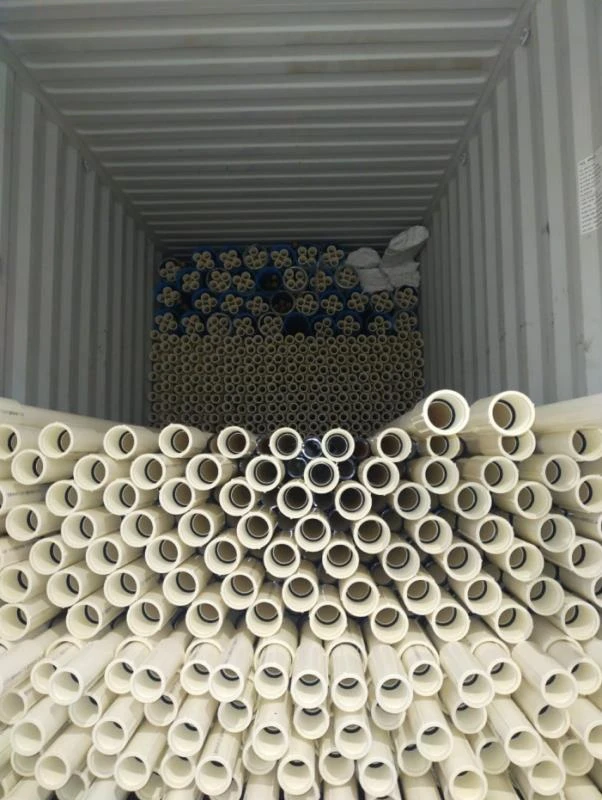
Introduction
Polyvinyl Chloride (PVC) piping represents a ubiquitous and crucial component within modern infrastructure, encompassing applications ranging from potable water distribution and wastewater management to irrigation, industrial fluid transfer, and electrical conduit. The market offers diverse PVC pipe formulations, categorized by schedule number (thickness), diameter, and compound composition, impacting their pressure handling capabilities and suitability for specific applications. This guide provides an in-depth technical analysis of PVC pipes, focusing on material science, manufacturing processes, performance characteristics, failure modes, and relevant industry standards, with consideration to the economic drivers influencing ‘discount’ pricing structures. A primary industry pain point revolves around balancing cost optimization with maintaining long-term durability and regulatory compliance. The fluctuating costs of vinyl chloride monomer (VCM), the primary raw material, directly impact PVC pricing, leading to frequent 'discount' offers. Understanding the nuances of PVC formulations and quality control is vital to differentiating value from mere low price.
Material Science & Manufacturing
PVC is a thermoplastic polymer produced by the polymerization of vinyl chloride monomer (VCM). The resulting PVC resin is inherently rigid and brittle. To enhance its properties, various additives are incorporated, including plasticizers (e.g., phthalates, DINP) to increase flexibility, stabilizers (e.g., tin-based, calcium-zinc-based) to prevent thermal degradation during processing, lubricants to aid extrusion, and impact modifiers (e.g., chlorinated polyethylene) to improve toughness. The type and concentration of these additives significantly influence the final properties of the PVC pipe.
Manufacturing typically involves extrusion. PVC compound is fed into an extruder, where it is heated, melted, and forced through a die to form the desired pipe shape. Key parameters include extruder screw speed, barrel temperature profile (typically 160-210°C), die temperature, and puller speed. Maintaining precise temperature control is crucial to prevent degradation and ensure consistent dimensions. Following extrusion, pipes are cooled (typically water cooling), printed with relevant markings (size, schedule, pressure rating, standard compliance), and cut to length. For larger diameter pipes, continuous extrusion and subsequent cutting are common. Jointing methods include solvent cement welding, threaded connections, and gasketed joints, each offering varying levels of strength and leak resistance. The choice of jointing method is critical, dependent on the application and pressure requirements. The quality of the compound – ensuring consistent additive dispersion and proper molecular weight distribution – is paramount. Batch-to-batch variation can result in inconsistent physical properties and premature failure.

Performance & Engineering
The performance of PVC pipes is dictated by several key engineering properties. Tensile strength, typically ranging from 50-70 MPa, dictates resistance to bursting under internal pressure. Yield strength, typically 35-55 MPa, indicates the point at which permanent deformation occurs. Impact strength (Izod notched impact strength) assesses resistance to brittle fracture, crucial for handling and installation. PVC exhibits low thermal conductivity, making it suitable for applications where temperature retention or prevention of condensation is desired. However, PVC’s glass transition temperature (Tg) is around 80°C, limiting its use in high-temperature applications. Long-term hydrostatic strength (LTHS) is a critical parameter, representing the pipe’s ability to withstand sustained internal pressure over its intended service life (typically 50+ years). LTHS is significantly affected by temperature and the presence of sustained stress. Creep rupture, the slow deformation and eventual failure under constant stress, is a primary concern. External loads, such as soil overburden or traffic loads, must be considered in the design to prevent ovalization or collapse. Soil acidity and the presence of aggressive chemicals can accelerate degradation and reduce service life.
Technical Specifications
| Parameter | Schedule 40 PVC | Schedule 80 PVC | CPVC (Chlorinated PVC) | ASTM D2241 PVC |
|---|---|---|---|---|
| Pressure Rating (psi @ 73°F) | 400 | 600 | 400-1000 | Varies based on size/schedule |
| Tensile Strength (MPa) | 62 | 65 | 70 | 55-70 |
| Impact Strength (Izod Notched, J/m) | 400 | 600 | 800 | 300-800 |
| Maximum Operating Temperature (°F) | 140 | 140 | 180 | 140 |
| Hydrostatic Design Basis (HDB, psi) | 400 | 600 | 400-1000 | Variable |
| Long Term Hydrostatic Strength (LTHS, %) @ 23°C | 43% | 53% | 56% | 35-55% |
Failure Mode & Maintenance
PVC pipes can fail through several mechanisms. Hydrostatic failure, resulting from exceeding the pressure rating, is a catastrophic failure mode. Long-term creep rupture is more common, occurring over years due to sustained stress. Environmental stress cracking (ESC) can occur due to exposure to certain chemicals and stresses, leading to brittle fracture. Ultraviolet (UV) degradation can embrittle the pipe surface, particularly in exposed applications. Improper solvent cement welding can create weak joints susceptible to leakage. Physical damage during handling or installation can cause cracks or punctures. Soil settlement or movement can induce excessive stress on buried pipes. Maintenance involves regular visual inspections for cracks, leaks, and signs of degradation. Properly supporting buried pipes to prevent stress is crucial. Avoiding exposure to incompatible chemicals and UV radiation extends service life. For minor leaks, appropriate PVC repair couplings can be used. For significant damage, pipe replacement is necessary. Periodic pressure testing can identify potential weaknesses before catastrophic failure occurs. Record keeping of installation date, pipe specifications, and operating conditions is essential for assessing remaining service life.
Industry FAQ
Q: What is the significance of the Schedule number (e.g., Schedule 40, Schedule 80) in PVC pipe?
A: The Schedule number directly correlates to the pipe wall thickness. Higher Schedule numbers (like 80) have thicker walls, resulting in higher pressure ratings and increased resistance to impact and deflection. Schedule 40 is typically used for lower-pressure applications like irrigation, while Schedule 80 is preferred for higher-pressure systems and industrial applications.
Q: How does temperature affect the performance of PVC pipes?
A: Increasing temperature reduces the pressure rating and long-term hydrostatic strength of PVC. PVC becomes more susceptible to creep rupture at higher temperatures. Exceeding the maximum operating temperature of 140°F can lead to softening and failure. CPVC, chlorinated PVC, is designed for higher temperature applications.
Q: What is the impact of solvent cement quality on joint integrity?
A: Solvent cement functions by chemically welding the PVC surfaces together. Using the correct type of solvent cement for the specific PVC formulation and following the manufacturer’s instructions (surface preparation, application method, curing time) are critical. Poor quality solvent cement or improper application can create weak, leaky joints prone to failure.
Q: What is the role of stabilizers in PVC pipe formulations?
A: Stabilizers prevent the thermal degradation of PVC during processing and in service. Without stabilizers, PVC would decompose at processing temperatures, releasing hydrochloric acid and causing discoloration and embrittlement. Different stabilizer formulations (tin-based, calcium-zinc-based) offer varying levels of performance and environmental compatibility.
Q: How do different burial depths and soil conditions affect the lifespan of PVC pipes?
A: Deeper burial depths provide greater protection from UV radiation and temperature fluctuations, potentially extending lifespan. However, excessive soil overburden can induce stress on the pipe. Aggressive soil chemistry (high acidity, sulfate content) can accelerate degradation. Proper bedding and backfill materials are crucial to distribute loads evenly and protect the pipe.
Conclusion
PVC piping, despite its relatively low material cost, requires careful consideration of material selection, manufacturing quality, and installation practices to ensure long-term reliability. The ‘discount’ pricing often associated with PVC pipes should not be the sole determinant in procurement decisions; a thorough understanding of the technical specifications and potential failure modes is paramount. Selecting the appropriate Schedule number, jointing method, and additives based on the application requirements is crucial for maximizing service life and minimizing the risk of premature failure.
Future developments in PVC technology are focusing on bio-based plasticizers and more environmentally friendly stabilizers. Advanced non-destructive testing (NDT) methods, such as ultrasonic inspection, are being implemented for quality control during manufacturing and for in-service condition monitoring. Continued research into creep rupture mechanisms and ESC will further refine design criteria and extend the service life of PVC piping systems. Ultimately, a holistic approach encompassing material science, engineering design, and proper maintenance is essential for optimizing the performance and longevity of PVC infrastructure.
-
DN25 HDPE Compression Fitting-HORON INTERNATIONAL|Reliable Irrigation Solutions
NewsFeb.11,2026
-
hdpe coupling joint product Manufacturing Analysis
News2026-11-18
-
ppr pipe heating time products Performance Analysis
News2026-11-16
-
hdpe pipe sizes factory Performance Analysis
News2026-11-09
-
HDPE Pipe Sizes Service Performance Analysis
News2026-10-26
-
wholesale 15mm ppr pipe Material Science and Performance Analysis
News2026-10-20
-
wholesale pvc pipe price per foot Technical Analysis
News2026-09-21
-
wholesale long pvc pipe Technical Analysis and Manufacturing Specifications
News2026-09-15
-
wholesale plumbing kitchen sink water lines Material Performance
News2026-09-15
-
wholesale hdpe drip irrigation Material Science
News2026-09-15
-
wholesale hot water ppr pipe Performance Analysis
News2026-09-15
-
wholesale ppr plumbing Performance Analysis
News2026-09-15
-
wholesale ppr pipe supplier Performance Analysis
News2026-09-13
-
wholesale 50mm ppr pipe Performance Analysis
News2026-09-13
-
wholesale hdpe drip pipe Performance Analysis
News2026-09-13
-
wholesale hdpe pipe 63mm price Manufacturing Specification and Performance Analysis
News2026-09-13