

Feb . 11, 2026 00:01 Back to list
discount 9 inch pvc pipe price Performance Analysis

Introduction
Polyvinyl Chloride (PVC) pipe, specifically 9-inch diameter Schedule 40 and Schedule 80 variants, represents a critical component in a broad spectrum of industrial fluid and material conveyance systems. This technical guide focuses on the properties, manufacturing, performance, failure modes, and maintenance considerations for economically sourced, or 'discount', 9-inch PVC pipe. Within the infrastructure chain, it functions as a pressure-rated conduit for water, wastewater, chemicals, and slurries, replacing traditional materials like cast iron and ductile iron in many applications. Core performance characteristics include its inherent corrosion resistance, lightweight nature relative to metal alternatives, ease of installation via solvent welding or gasketed joints, and cost-effectiveness, particularly with competitively priced sourcing. Understanding the nuanced specifications and potential degradation pathways of PVC is paramount for ensuring long-term system reliability and minimizing lifecycle costs, especially when prioritizing initial procurement price.
Material Science & Manufacturing
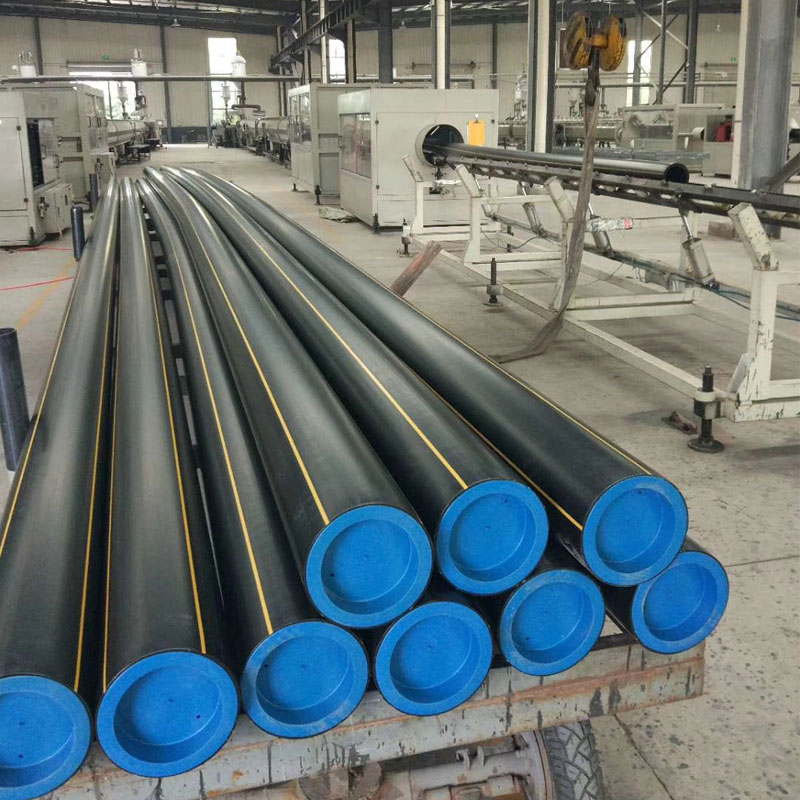
The base material for 9-inch PVC pipe is a thermoplastic polymer synthesized from vinyl chloride monomers. The properties are significantly influenced by the addition of plasticizers, stabilizers, and lubricants during the compounding process. PVC’s inherent rigidity is modified by plasticizers, typically phthalates or increasingly, bio-based alternatives, to achieve flexibility and impact resistance. Stabilizers, often metal-based compounds like tin or calcium-zinc formulations, protect against thermal degradation during processing and UV exposure in service. Lubricants aid in processing and prevent sticking during extrusion. Manufacturing typically involves extrusion. Raw PVC compound is fed into a single or twin-screw extruder where it's heated and homogenized. The molten PVC is forced through a die that defines the pipe's 9-inch inner diameter and wall thickness, corresponding to Schedule 40 (0.237 inches) or Schedule 80 (0.280 inches). Critical parameters include extrusion temperature (160-210°C), screw speed, and die pressure. Post-extrusion, pipes are cooled via water immersion, cut to length, and subjected to rigorous quality control, including hydrostatic pressure testing to verify burst strength and dimensional accuracy. The chemical compatibility of PVC is notable; however, it is susceptible to degradation by certain solvents and aromatic hydrocarbons.
Performance & Engineering
The structural performance of 9-inch PVC pipe is governed by the principles of thin-walled pressure vessel theory. Hoop stress, induced by internal fluid pressure, is the primary stress component. The allowable stress is determined by the material's tensile strength and a safety factor, typically ranging from 4 to 1 for potable water applications. For higher pressure or hazardous fluid services, more conservative safety factors are employed. Burst pressure testing, conducted according to ASTM D1501, confirms the pipe's ability to withstand hydrostatic pressures significantly exceeding the design operating pressure. Engineering considerations extend to joint design. Solvent welding, utilizing PVC cement, creates a homogenous weld stronger than the base material when performed correctly. Gasketed joints, employing elastomeric seals (e.g., SBR, EPDM), provide flexibility and allow for expansion/contraction. Soil loading, in buried applications, must be accounted for via proper bedding and backfill procedures to prevent pipe deformation or cracking. Thermal expansion coefficients of PVC (approximately 8 x 10^-5 in/in/°F) necessitate expansion loops or joints in long pipeline runs to mitigate stress from temperature fluctuations. UV exposure causes surface degradation, leading to embrittlement; therefore, UV stabilization additives and/or protective coatings are crucial for above-ground applications.
Technical Specifications
| Parameter | Schedule 40 | Schedule 80 | ASTM Standard |
|---|---|---|---|
| Nominal Pipe Size (inches) | 9 | 9 | D1785 |
| Outer Diameter (inches) | 9.625 | 9.625 | D1785 |
| Wall Thickness (inches) | 0.237 | 0.280 | D1785 |
| Pressure Rating @ 73°F (PSI) | 280 | 420 | D1785 |
| Burst Pressure (PSI) | 840 | 1260 | D1501 |
| Tensile Strength (PSI) | 6,000 | 6,000 | D638 |
Failure Mode & Maintenance
Common failure modes in 9-inch PVC pipe include: 1) Slow Crack Growth (SCG): Initiated by tensile stresses and exacerbated by exposure to certain chemicals (e.g., chlorine in water treatment). 2) Hydrostatic Failure: Catastrophic rupture due to exceeding the pressure rating or internal flaws. 3) Impact Damage: Cracking or fracture from external forces, especially during handling or installation. 4) UV Degradation: Embrittlement and surface cracking from prolonged sunlight exposure. 5) Joint Failure: Leakage due to improper solvent welding or gasket deterioration. 6) Soil-Induced Cracking: Settlement, improper bedding, or aggressive soil chemistry can induce stress and cracking. Preventative maintenance includes regular visual inspections for cracks, leaks, or deformation. Pressure testing can identify hidden flaws. For SCG, reducing operating pressure and avoiding incompatible chemicals are crucial. UV protection (coating or burial) is essential for above-ground sections. Joints should be periodically inspected for leakage and resealed or replaced as needed. Proper bedding and backfill compaction are vital for buried pipelines. In the event of a crack, repair options include patching with PVC cement and reinforcing sleeves or complete pipe replacement.
Industry FAQ
Q: What is the impact of sourcing 'discount' PVC pipe on long-term performance?
A: Discount PVC pipe may utilize lower-grade plasticizers or stabilizers, potentially accelerating degradation, particularly in demanding applications. It’s crucial to verify that the pipe meets relevant ASTM standards (D1785) regardless of price. Independent lab testing of material composition is advisable for high-stakes projects.
Q: How does water hammer affect 9-inch PVC pipe, and what mitigation strategies are recommended?
A: Water hammer, caused by sudden changes in flow velocity, creates pressure surges that can exceed the pipe's pressure rating, leading to rupture. Mitigation strategies include the installation of surge suppressors (air chambers or pressure relief valves), slow-closing valves, and proper pipe anchoring to minimize movement.
Q: What are the chemical compatibility concerns when using PVC pipe for industrial applications?
A: PVC is incompatible with strong solvents (e.g., toluene, acetone), aromatic hydrocarbons, and concentrated acids. Exposure can cause softening, swelling, or cracking. A chemical compatibility chart should be consulted before using PVC for conveying specific fluids.
Q: What is the recommended bedding material for 9-inch PVC pipe buried underground?
A: A granular bedding material, such as sand or gravel, is recommended to provide uniform support and prevent stress concentrations. The material should be free of sharp objects and properly compacted to minimize settling. Avoid using large rocks or debris.
Q: What is the expected service life of 9-inch PVC pipe in a typical potable water distribution system?
A: With proper installation, maintenance, and water chemistry control, 9-inch PVC pipe can have a service life exceeding 50 years in potable water systems. However, aggressive water conditions (e.g., low pH, high chlorine levels) can significantly reduce its lifespan.
Conclusion
The selection and implementation of 9-inch PVC pipe requires a comprehensive understanding of its material science, manufacturing processes, and performance characteristics. While economically attractive, particularly at discounted pricing, prioritizing adherence to industry standards (ASTM D1785, D1501) and careful consideration of application-specific factors – including fluid compatibility, environmental conditions, and installation practices – are paramount to ensuring long-term system integrity and minimizing the risk of premature failure.
Effective maintenance programs, encompassing regular inspections, pressure testing, and proactive repair of identified defects, are essential for maximizing the service life and return on investment. The continued development of advanced PVC formulations, incorporating improved UV stabilizers and impact modifiers, will further enhance the durability and reliability of this widely used piping material.
-
DN25 HDPE Compression Fitting-HORON INTERNATIONAL|Reliable Irrigation Solutions
NewsFeb.11,2026
-
hdpe coupling joint product Manufacturing Analysis
News2026-11-18
-
ppr pipe heating time products Performance Analysis
News2026-11-16
-
hdpe pipe sizes factory Performance Analysis
News2026-11-09
-
HDPE Pipe Sizes Service Performance Analysis
News2026-10-26
-
wholesale 15mm ppr pipe Material Science and Performance Analysis
News2026-10-20
-
wholesale pvc pipe price per foot Technical Analysis
News2026-09-21
-
wholesale long pvc pipe Technical Analysis and Manufacturing Specifications
News2026-09-15
-
wholesale plumbing kitchen sink water lines Material Performance
News2026-09-15
-
wholesale hdpe drip irrigation Material Science
News2026-09-15
-
wholesale hot water ppr pipe Performance Analysis
News2026-09-15
-
wholesale ppr plumbing Performance Analysis
News2026-09-15
-
wholesale ppr pipe supplier Performance Analysis
News2026-09-13
-
wholesale 50mm ppr pipe Performance Analysis
News2026-09-13
-
wholesale hdpe drip pipe Performance Analysis
News2026-09-13
-
wholesale hdpe pipe 63mm price Manufacturing Specification and Performance Analysis
News2026-09-13