

Feb . 11, 2026 00:01 Back to list
discount 8 hdpe corrugated pipe Performance Analysis
Introduction
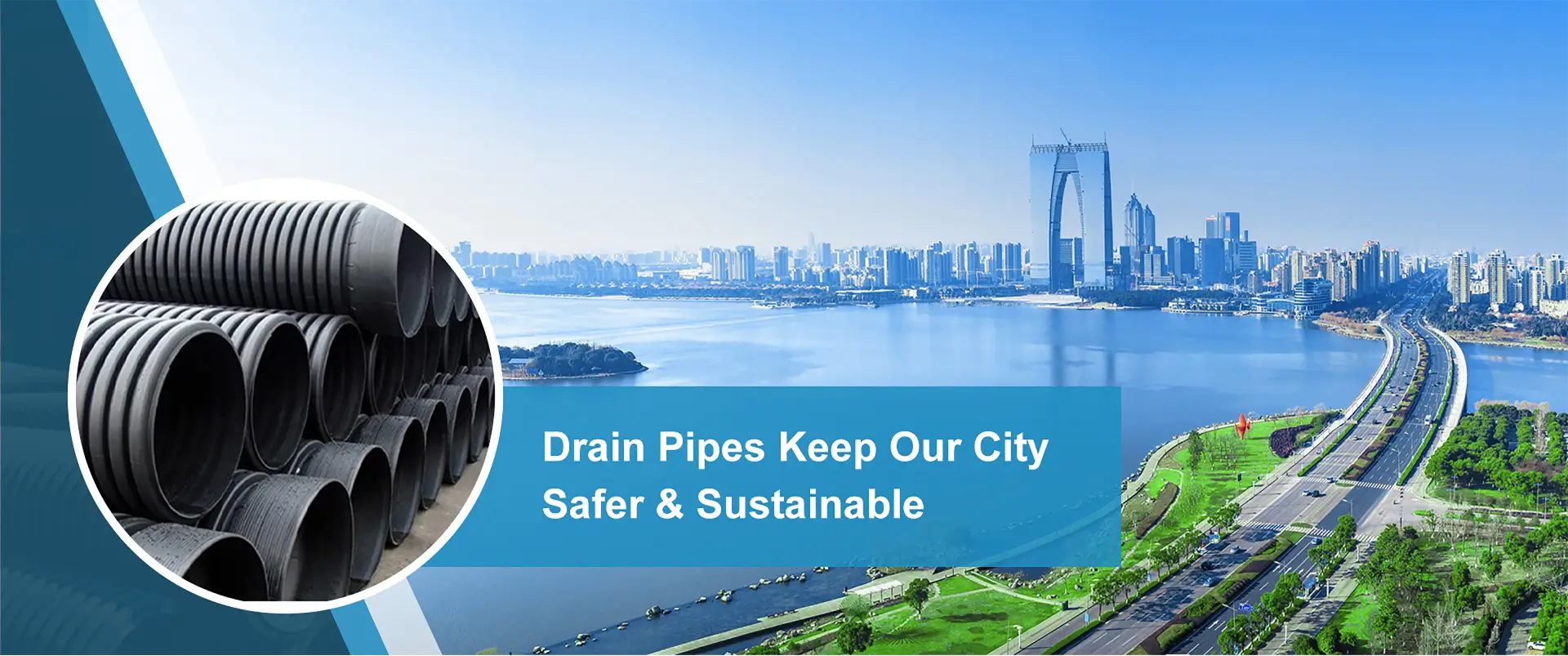
Discount 8 HDPE corrugated pipe represents a cost-effective solution for subsurface drainage, stormwater management, and conduit applications. Classified within the broader family of polyethylene (PE) piping, it’s characterized by its corrugated outer structure and smooth inner bore, optimized for high flow capacity. Positioned within the infrastructure supply chain, it directly replaces traditional materials such as concrete, galvanized steel, and PVC in numerous applications. Its core performance characteristics revolve around lightweight construction, exceptional durability, and resistance to chemical degradation, offering a prolonged service life with minimal maintenance. The '8' designation refers to the nominal pipe diameter in inches, and ‘discount’ indicates a price-point focused offering. Understanding its material properties, manufacturing processes, and limitations is crucial for effective engineering design and long-term operational reliability.
Material Science & Manufacturing
The primary raw material for discount 8 HDPE corrugated pipe is High-Density Polyethylene (HDPE), a thermoplastic polymer renowned for its high strength-to-density ratio. HDPE resin exhibits excellent tensile strength, typically ranging from 20 to 30 MPa, and a flexural modulus between 800-1200 MPa, depending on the grade. Crucially, HDPE possesses superior chemical resistance, impervious to most acids, bases, and solvents encountered in typical soil environments. The manufacturing process initiates with HDPE resin pelletization, followed by extrusion. This involves melting the resin and forcing it through a die to create a continuous profile. The corrugated outer layer is formed via a corrugated molding process, simultaneously extruding the smooth inner liner. Parameters critical to control include extrusion temperature (typically 180-220°C), die pressure, and cooling rate. Inconsistent cooling can induce warping or dimensional instability. The corrugated profile's geometry—specifically the rib height and spacing—directly influences the pipe’s ring stiffness and load-bearing capacity. Quality control involves rigorous dimensional checks, hydrostatic pressure testing to verify leak-proof integrity, and melt flow index (MFI) assessment of the resin to ensure consistent material characteristics. UV stabilizers are often incorporated into the HDPE formulation to mitigate degradation from prolonged sunlight exposure.
Performance & Engineering
The performance of discount 8 HDPE corrugated pipe is critically defined by its ability to withstand external loads, maintain structural integrity under varying environmental conditions, and facilitate efficient fluid transport. Force analysis centers around ring stiffness, which measures the pipe’s resistance to flattening under vertical loads – crucial for burial applications subject to traffic or soil overburden. The AASHTO M252 standard specifies minimum ring stiffness requirements based on anticipated loading conditions. Environmental resistance is another key factor. While HDPE is inherently resistant to most chemicals, long-term exposure to ultraviolet (UV) radiation can lead to embrittlement and reduced tensile strength. Therefore, proper backfilling and UV protective coatings are essential in exposed applications. Compliance requirements vary by region but generally adhere to ASTM F2306 for corrugated HDPE pipe, dictating dimensions, material specifications, and performance testing protocols. The smooth inner bore minimizes friction loss, enhancing hydraulic efficiency. Darcy-Weisbach equation governs fluid flow calculations, considering pipe diameter, length, flow rate, and Manning’s roughness coefficient (typically 0.011 for HDPE). Joints are typically bell-and-spigot with rubber gaskets, ensuring watertight seals. Proper joint assembly—adhering to manufacturer’s specifications for insertion depth and gasket compression—is vital to prevent infiltration or exfiltration.
Technical Specifications
| Parameter | Unit | Typical Value | Test Standard |
|---|---|---|---|
| Nominal Pipe Diameter | in | 8 | ASTM F2306 |
| Material | - | HDPE | ASTM D3350 |
| Ring Stiffness | psi | 34 | ASTM D2412 |
| Tensile Strength | MPa | 22-28 | ASTM D638 |
| Melt Flow Index | g/10min | 0.5-1.0 | ASTM D1238 |
| Hydrostatic Design Head | ft | 25 | ASTM F2306 |
Failure Mode & Maintenance
Discount 8 HDPE corrugated pipe, while robust, is susceptible to specific failure modes. Long-term creep deformation under sustained loads can lead to ovality and reduced flow capacity. This is exacerbated by inadequate bedding support. Fatigue cracking can occur from repeated loading cycles, particularly in high-traffic areas. The presence of sharp objects in the backfill can initiate stress concentrations and accelerate crack propagation. Chemical attack, while rare, is possible in environments with highly concentrated solvents or aggressive chemicals. Environmental stress cracking (ESC) can occur when HDPE is exposed to certain chemicals under tensile stress. Delamination of the corrugated layers, though uncommon, can result from manufacturing defects or improper installation. Maintenance primarily involves visual inspection for cracks, deformation, or joint leakage. Regular cleaning to remove debris and sediment buildup is recommended to maintain optimal flow capacity. For damaged sections, localized repairs using appropriate HDPE couplers and sealant are preferred over complete pipe replacement. Preventive measures include ensuring proper bedding and backfill compaction, avoiding the use of corrosive chemicals near the pipe, and implementing a periodic inspection program. Proper UV protection through adequate burial depth or protective coatings is vital to prevent embrittlement.
Industry FAQ
Q: What is the maximum allowable burial depth for discount 8 HDPE corrugated pipe?
A: The maximum allowable burial depth depends on the pipe’s ring stiffness and the anticipated live load. Generally, a pipe with a ring stiffness of 34 psi can be buried up to a depth of approximately 8-10 feet, assuming proper bedding and backfill compaction. Consult local codes and engineering specifications for precise limits.
Q: How does temperature affect the performance of HDPE corrugated pipe?
A: HDPE’s mechanical properties are temperature-dependent. Lower temperatures increase brittleness, while higher temperatures can reduce strength and stiffness. However, HDPE maintains adequate performance within a broad temperature range (-40°C to 60°C). Thermal expansion and contraction must be considered during installation to prevent stress on joints.
Q: What type of backfill material is recommended for HDPE corrugated pipe installations?
A: Granular backfill materials, such as sand or gravel, are recommended to provide uniform support and promote proper drainage. Avoid using materials with sharp objects (rocks, debris) that could damage the pipe. Compaction should be performed in layers to achieve a minimum 85% Proctor density.
Q: Can HDPE corrugated pipe be used in corrosive soil environments?
A: HDPE exhibits excellent resistance to most chemicals commonly found in soil. However, prolonged exposure to highly concentrated acids or solvents could potentially cause degradation. A soil analysis is recommended to assess the corrosive potential of the site and determine if additional protective measures are needed.
Q: What is the service life expectancy of discount 8 HDPE corrugated pipe?
A: With proper installation and maintenance, discount 8 HDPE corrugated pipe can have a service life exceeding 50 years. The actual lifespan depends on factors such as soil conditions, loading, UV exposure, and chemical environment. Regular inspections and timely repairs can significantly extend its operational life.
Conclusion
Discount 8 HDPE corrugated pipe offers a compelling combination of cost-effectiveness, durability, and ease of installation, making it a viable alternative to traditional piping materials across numerous applications. Its inherent material properties—high strength, chemical resistance, and lightweight construction—contribute to a prolonged service life with minimal maintenance requirements. Understanding the nuances of its manufacturing process, performance characteristics, and potential failure modes is paramount for successful implementation.
Future advancements in HDPE resin technology and corrugated pipe design will likely focus on enhancing UV resistance, increasing ring stiffness, and optimizing joint sealing mechanisms. Furthermore, the integration of smart monitoring systems—incorporating sensors to detect stress, strain, or leakage—will enable proactive maintenance and extend the operational life of these critical infrastructure components. Continued adherence to industry standards and best practices remains essential for ensuring long-term reliability and maximizing the economic benefits of HDPE corrugated pipe systems.
-
DN25 HDPE Compression Fitting-HORON INTERNATIONAL|Reliable Irrigation Solutions
NewsFeb.11,2026
-
hdpe coupling joint product Manufacturing Analysis
News2026-11-18
-
ppr pipe heating time products Performance Analysis
News2026-11-16
-
hdpe pipe sizes factory Performance Analysis
News2026-11-09
-
HDPE Pipe Sizes Service Performance Analysis
News2026-10-26
-
wholesale 15mm ppr pipe Material Science and Performance Analysis
News2026-10-20
-
wholesale pvc pipe price per foot Technical Analysis
News2026-09-21
-
wholesale long pvc pipe Technical Analysis and Manufacturing Specifications
News2026-09-15
-
wholesale plumbing kitchen sink water lines Material Performance
News2026-09-15
-
wholesale hdpe drip irrigation Material Science
News2026-09-15
-
wholesale hot water ppr pipe Performance Analysis
News2026-09-15
-
wholesale ppr plumbing Performance Analysis
News2026-09-15
-
wholesale ppr pipe supplier Performance Analysis
News2026-09-13
-
wholesale 50mm ppr pipe Performance Analysis
News2026-09-13
-
wholesale hdpe drip pipe Performance Analysis
News2026-09-13
-
wholesale hdpe pipe 63mm price Manufacturing Specification and Performance Analysis
News2026-09-13