

Feb . 11, 2026 00:01 Back to list
discount 75mm pvc pipe Performance Analysis
Introduction
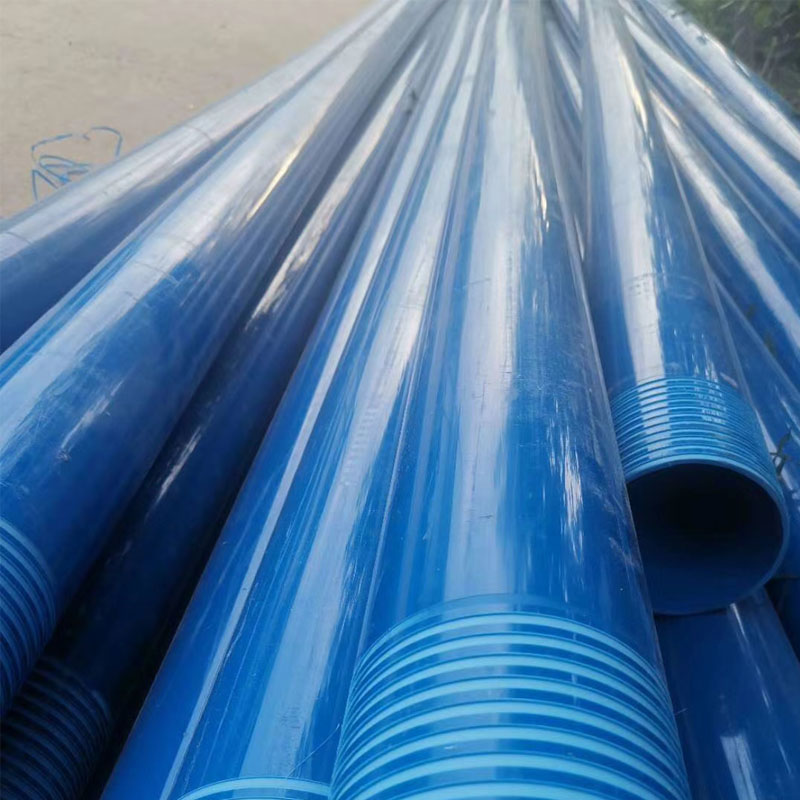
75mm Polyvinyl Chloride (PVC) pipe, particularly the ‘discount’ variants, represents a crucial component in a wide array of fluid conveyance systems across industrial, agricultural, and infrastructural applications. This guide provides an in-depth technical analysis of this product, focusing on material composition, manufacturing processes, performance characteristics, potential failure modes, and relevant industry standards. Positioned within the broader polymer piping industry, 75mm PVC pipe serves as a cost-effective alternative to metal piping in applications where corrosion resistance and non-conductivity are paramount. Core performance metrics center around pressure rating, tensile strength, impact resistance, and long-term hydrostatic strength, all significantly impacted by material formulation and processing parameters. The ‘discount’ designation generally implies optimization of material usage or manufacturing scale, potentially affecting certain performance characteristics compared to premium-grade PVC pipe.
Material Science & Manufacturing
The primary raw material for 75mm PVC pipe is Polyvinyl Chloride resin, a thermoplastic polymer produced by the polymerization of vinyl chloride monomer (VCM). The PVC resin is rarely used in its pure form; it’s typically compounded with a variety of additives to enhance its properties. These additives include plasticizers (like phthalates or DINP) to increase flexibility, impact modifiers (like acrylics or MBS resins) to improve toughness, heat stabilizers (like calcium-zinc or lead-based compounds – though lead is increasingly restricted due to environmental concerns) to prevent thermal degradation during processing, lubricants to aid in extrusion, and UV stabilizers to protect against degradation from sunlight exposure. The specific formulation dictates the pipe's performance characteristics. Manufacturing typically involves extrusion. PVC resin and additives are fed into an extruder, where they are heated and mixed. The molten PVC is then forced through a die, shaping it into a 75mm diameter pipe. Cooling is achieved via water baths, followed by cutting to desired lengths. Key parameters in this process include die temperature, extrusion speed, cooling rate, and the degree of vacuum maintained within the extruder. Proper control of these parameters is critical for achieving dimensional accuracy, consistent wall thickness, and optimal mechanical properties. The degree of crystallinity in the PVC, influenced by cooling rate, directly impacts tensile strength and chemical resistance. Wall thickness is crucial as it directly correlates to the pipe’s pressure rating.
Performance & Engineering
The performance of 75mm PVC pipe is governed by several engineering principles. Hydrostatic design stress (HDS) is a critical parameter, defining the long-term allowable stress the pipe can withstand under internal pressure. This is calculated using Barlow’s formula (S = PD/2t, where S is stress, P is pressure, D is diameter, and t is wall thickness). Tensile strength, determined by ASTM D2412, indicates the pipe’s resistance to longitudinal stress. Impact strength, assessed via ASTM D2444, measures the energy absorbed during sudden impact, crucial for resisting damage during installation and operation. The pipe’s resistance to soil loading is determined by its stiffness, often measured as a modulus of elasticity. Chemical resistance is another key factor; PVC is generally resistant to acids, alkalis, and many solvents, but can be affected by prolonged exposure to certain aromatic hydrocarbons and ketones. Long-term creep resistance is vital. PVC, being a thermoplastic, exhibits creep – gradual deformation under sustained load. This creep must be accounted for in design, especially in applications involving continuous pressure or temperature variations. Joint integrity is also paramount; solvent cementing creates a chemical weld between pipe sections, and the strength of this weld is crucial for preventing leaks. The performance is further influenced by temperature. Higher temperatures reduce the pipe's strength and increase its susceptibility to creep.
Technical Specifications
| Parameter | Unit | Typical Value (Schedule 40) | Typical Value (Schedule 80) |
|---|---|---|---|
| Nominal Pipe Size | mm | 75 | 75 |
| Outside Diameter | mm | 88.9 | 88.9 |
| Wall Thickness | mm | 2.67 | 3.37 |
| Pressure Rating @ 23°C | Bar | 10.3 | 15.5 |
| Tensile Strength | MPa | 55 | 55 |
| Impact Strength (Izod Notched) | J/m | 60 | 75 |
| Hydrostatic Design Stress (HDS) | MPa | 8.27 | 12.41 |
Failure Mode & Maintenance
75mm PVC pipe, while durable, is susceptible to several failure modes. Long-term hydrostatic failure (LTHS) is a common concern, resulting from creep and stress cracking under sustained pressure. This is exacerbated by high temperatures and aggressive chemical environments. Brittle fracture can occur due to impact, especially at low temperatures or in areas of stress concentration (e.g., around fittings). Environmental Stress Cracking (ESC) arises from the combined effect of tensile stress and exposure to specific chemicals, leading to cracking. UV degradation causes embrittlement and discoloration, reducing the pipe’s mechanical properties. Loose joints are a frequent issue, often due to improper solvent cementing techniques or inadequate surface preparation. Maintenance involves regular visual inspections for cracks, leaks, and signs of degradation. Pressure testing can identify hidden leaks. For minor cracks, repairs can be made using PVC repair compounds or sleeves. However, extensive damage necessitates pipe replacement. Preventative maintenance includes protecting the pipe from direct sunlight (e.g., using protective coatings or burying it adequately), avoiding exposure to incompatible chemicals, and ensuring proper installation techniques, including correct solvent cementing procedures and adequate support to prevent stress on the pipe.
Industry FAQ
Q: What is the impact of using a lower-cost plasticizer in 'discount' PVC pipe on its long-term performance?
A: Lower-cost plasticizers, such as certain phthalates, can leach out of the PVC matrix over time, leading to embrittlement and reduced flexibility. This migration reduces the pipe's impact resistance and increases its susceptibility to cracking, particularly in applications with fluctuating temperatures or exposure to certain chemicals. Premium-grade pipes utilize more durable plasticizers, or alternative non-phthalate plasticizers, to minimize this leaching effect.
Q: How does the wall thickness of Schedule 40 vs. Schedule 80 PVC pipe affect its suitability for different applications?
A: Schedule 80 pipe has a thicker wall than Schedule 40, resulting in a significantly higher pressure rating and improved impact resistance. Schedule 40 is suitable for lower-pressure applications, like irrigation or drainage, while Schedule 80 is preferred for higher-pressure systems, industrial processes, or locations subject to mechanical stress.
Q: What are the key considerations when solvent cementing 75mm PVC pipe to ensure a reliable joint?
A: Proper surface preparation is crucial – both pipe and fitting surfaces must be clean, dry, and free of grease. Use a PVC primer to soften the surfaces and create a chemical bond. Apply solvent cement evenly and quickly to both surfaces, and immediately join the parts with a slight twisting motion to ensure complete coverage. Allow sufficient curing time before pressurizing the system. Temperature and humidity also affect curing time.
Q: How does UV exposure affect the lifespan of PVC pipe, and what mitigation strategies are available?
A: UV radiation degrades PVC, causing embrittlement and discoloration. This reduces its impact resistance and tensile strength. Mitigation strategies include using UV-stabilized PVC formulations, painting the pipe with a reflective coating, burying the pipe below ground, or shielding it with opaque materials.
Q: What temperature limits should be observed when using 75mm PVC pipe, and what are the consequences of exceeding these limits?
A: PVC pipe has a maximum operating temperature typically around 60°C (140°F). Exceeding this limit can lead to softening of the material, reduction in pressure rating, and increased creep. Long-term exposure to elevated temperatures accelerates degradation and reduces the pipe’s lifespan. Additionally, the pipe's dimensional stability can be compromised, leading to leaks or failures.
Conclusion
75mm PVC pipe, even in ‘discount’ variants, remains a viable and cost-effective solution for numerous fluid conveyance applications. However, understanding the intricacies of its material science, manufacturing processes, and performance characteristics is essential for ensuring reliable and long-lasting performance. Careful consideration of the application’s operating conditions, including pressure, temperature, and chemical exposure, along with proper installation and maintenance practices, are paramount.
The longevity and efficiency of 75mm PVC pipe installations are inherently linked to the quality of materials used and adherence to established engineering principles. While cost optimization is a driving factor in the ‘discount’ market, compromising on fundamental material properties or neglecting proper installation protocols can lead to premature failure and increased life-cycle costs. Future advancements in PVC formulations and processing techniques will continue to enhance the performance and durability of this widely used piping material.
-
DN25 HDPE Compression Fitting-HORON INTERNATIONAL|Reliable Irrigation Solutions
NewsFeb.11,2026
-
hdpe coupling joint product Manufacturing Analysis
News2026-11-18
-
ppr pipe heating time products Performance Analysis
News2026-11-16
-
hdpe pipe sizes factory Performance Analysis
News2026-11-09
-
HDPE Pipe Sizes Service Performance Analysis
News2026-10-26
-
wholesale 15mm ppr pipe Material Science and Performance Analysis
News2026-10-20
-
wholesale pvc pipe price per foot Technical Analysis
News2026-09-21
-
wholesale long pvc pipe Technical Analysis and Manufacturing Specifications
News2026-09-15
-
wholesale plumbing kitchen sink water lines Material Performance
News2026-09-15
-
wholesale hdpe drip irrigation Material Science
News2026-09-15
-
wholesale hot water ppr pipe Performance Analysis
News2026-09-15
-
wholesale ppr plumbing Performance Analysis
News2026-09-15
-
wholesale ppr pipe supplier Performance Analysis
News2026-09-13
-
wholesale 50mm ppr pipe Performance Analysis
News2026-09-13
-
wholesale hdpe drip pipe Performance Analysis
News2026-09-13
-
wholesale hdpe pipe 63mm price Manufacturing Specification and Performance Analysis
News2026-09-13