

Feb . 11, 2026 00:01 Back to list
discount 60mm pvc pipe Performance Analysis
Introduction
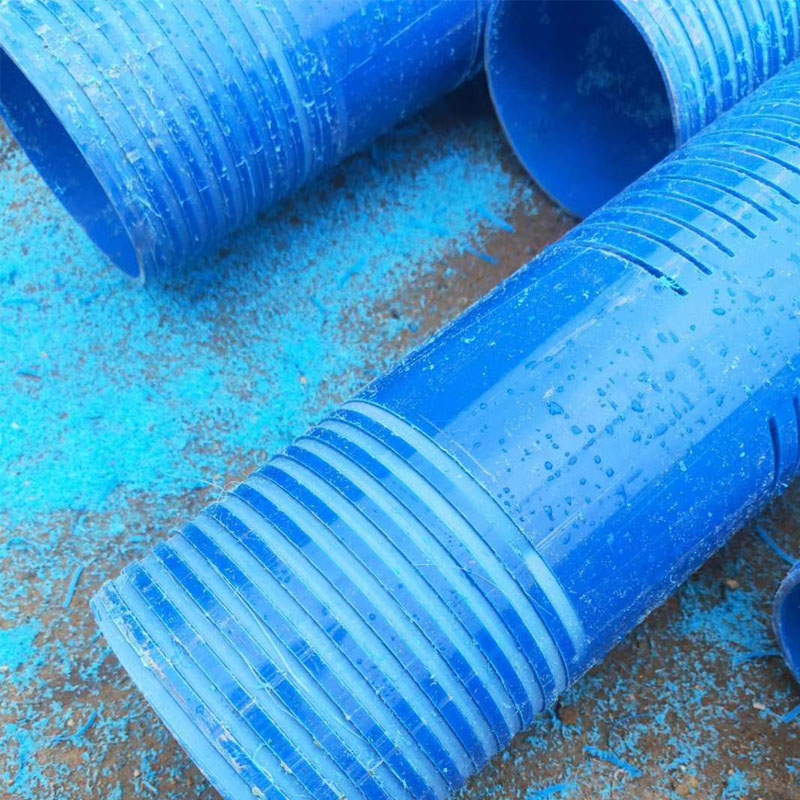
Discount 60mm PVC pipe refers to a schedule 40 polyvinyl chloride pipe with a nominal diameter of 60 millimeters, offered at a reduced price point compared to standard market offerings. Positioned within the broader plastic piping industry, it serves as a critical component in potable water distribution, irrigation systems, drainage, and various industrial fluid transfer applications. Its technical position lies in providing a cost-effective alternative to metal piping, specifically addressing the demands for corrosion resistance, lightweight construction, and ease of installation. Core performance characteristics include its pressure rating, tensile strength, impact resistance, and adherence to relevant industry standards. The competitive landscape is often defined by the balance between initial cost and long-term durability, making the 'discount' aspect a key differentiator. A major industry pain point is maintaining consistent quality at lower price points, as material variations can significantly impact long-term performance and lead to premature failure.
Material Science & Manufacturing
The primary raw material for 60mm PVC pipe is Polyvinyl Chloride (PVC) resin, a thermoplastic polymer produced by the polymerization of vinyl chloride monomer. Critical physical properties include a density of approximately 1.4 g/cm³, a glass transition temperature (Tg) around 80°C, and a tensile strength ranging from 55-70 MPa depending on the specific formulation. PVC is inherently brittle, necessitating the inclusion of plasticizers, stabilizers, and lubricants to enhance its workability and impact resistance. Common plasticizers include phthalates or alternatives like DINP. Stabilizers, typically based on organotin compounds or calcium-zinc formulations, prevent degradation due to heat and UV exposure during processing and service life. Manufacturing typically employs extrusion processes. PVC resin, along with additives, is fed into a single-screw or twin-screw extruder where it’s heated and homogenized. The molten PVC is then forced through a die of the desired 60mm diameter and wall thickness (dictated by the schedule 40 specification). Cooling is achieved using a water bath, followed by hauling and cutting to length. Key parameter control includes precise temperature regulation along the extruder barrel, accurate die sizing to ensure dimensional consistency, and maintaining proper screw speed and pressure to achieve a homogeneous melt. Chemical compatibility with the transported fluid is also vital; PVC exhibits good resistance to many acids and bases but can be affected by aromatic hydrocarbons and ketones.

Performance & Engineering
The performance of 60mm PVC pipe is governed by several engineering considerations. Hydrostatic pressure testing is crucial, ensuring the pipe can withstand sustained internal pressure without failure. Schedule 40 PVC pipe typically has a pressure rating of around 450 PSI at 73°F. Force analysis involves calculating hoop stress (the stress acting circumferentially on the pipe wall due to internal pressure) using the Barlow’s formula: σ = (PD)/(2t), where P is the internal pressure, D is the pipe diameter, and t is the pipe wall thickness. Environmental resistance is a significant factor. While PVC is inherently resistant to corrosion, prolonged UV exposure can lead to embrittlement and surface cracking. Temperature sensitivity is also important; PVC’s mechanical properties degrade at elevated temperatures. Compliance requirements are defined by various standards (detailed in the footer). Long-term performance is impacted by creep, the tendency of the pipe to slowly deform under sustained stress. Understanding the fluid being conveyed is critical. While chemically resistant to many substances, some solvents can cause swelling or degradation of the PVC material. Fatigue analysis, considering cyclic pressure fluctuations, is important for applications involving frequent pressure changes. Installation practices – proper bedding and support – are essential to prevent stress concentrations and potential failures.
Technical Specifications
| Parameter | Unit | Schedule 40 PVC | Discount 60mm PVC (Typical Range) |
|---|---|---|---|
| Nominal Pipe Size | mm | 60 | 60 |
| Outside Diameter | mm | 60.3 | 60.3 ± 0.5 |
| Wall Thickness | mm | 3.2 | 3.2 ± 0.2 |
| Pressure Rating (73°F) | PSI | 450 | 400-450 |
| Tensile Strength | MPa | 62 | 55-65 |
| Impact Strength (Izod Notched) | J/m | 80 | 60-80 |
| Density | g/cm³ | 1.4 | 1.38-1.42 |
Failure Mode & Maintenance
Common failure modes in discount 60mm PVC pipe include brittle fracture, particularly at low temperatures or due to impact loading. Long-term hydrostatic stress can lead to creep rupture, a slow, time-dependent failure. UV degradation causes surface cracking and reduces the pipe's impact resistance. Chemical attack from incompatible fluids can cause swelling, softening, or leaching of plasticizers, leading to weakening of the pipe wall. Improper installation, such as insufficient bedding or excessive bending radius, introduces stress concentrations that can initiate cracking. Delamination can occur if the PVC material is not properly mixed or processed. Failure analysis often involves visual inspection for cracks, discoloration, or deformation, followed by material testing (tensile strength, impact strength) to determine the extent of degradation. Maintenance primarily focuses on preventative measures: protecting the pipe from UV exposure (e.g., burying it or using UV-resistant coatings), avoiding contact with incompatible chemicals, and ensuring proper support and bedding during installation. Periodic visual inspections are recommended to identify any signs of degradation. For minor cracks, repair sleeves or wraps can be used as a temporary fix, but complete replacement is typically required for significant damage. Flushing the pipe system regularly can remove debris and prevent blockages.
Industry FAQ
Q: What is the impact of using recycled PVC in discount pipe on its long-term durability?
A: The use of recycled PVC can introduce variations in material properties compared to virgin PVC. While acceptable levels of recycled content are permitted under relevant standards, higher percentages can reduce tensile strength, impact resistance, and UV stability. Discount pipe manufacturers often use a blend of virgin and recycled material. It’s crucial to verify the percentage of recycled content and the manufacturer’s quality control procedures to ensure the pipe meets performance requirements.
Q: How does temperature affect the pressure rating of 60mm PVC pipe?
A: PVC’s pressure rating decreases with increasing temperature. This is because the material becomes more flexible and less able to withstand internal pressure at higher temperatures. Pressure ratings specified in standards are typically at 73°F (23°C). Manufacturers provide derating factors for higher temperatures. For example, the pressure rating may be reduced by 50% at 100°F (38°C).
Q: What are the implications of using different types of PVC formulations (e.g., PVC-U vs. PVC-C)?
A: PVC-U (Unplasticized PVC) is the standard formulation for most piping applications. PVC-C (Chlorinated PVC) offers higher temperature resistance and improved impact strength but is generally more expensive. The choice of formulation depends on the application's operating temperature and mechanical stress requirements. Discount pipe typically utilizes PVC-U. Using the wrong formulation can lead to premature failure.
Q: What is the recommended bedding material for 60mm PVC pipe installations to prevent stress cracking?
A: Proper bedding is critical. A uniform bedding of fine sand or soil, free of rocks and sharp objects, is recommended. The bedding should extend at least 4 inches below the pipe and completely surround it. Compaction should be controlled to avoid over-compaction, which can induce stress. Avoid using coarse gravel or rocky backfill directly beneath the pipe.
Q: How do I verify that a discount PVC pipe meets relevant industry standards?
A: Look for markings on the pipe indicating compliance with relevant standards (e.g., ASTM D1785, NSF/ANSI 61). Request a Certificate of Compliance (COC) from the manufacturer, which documents the testing and verification performed. Independent third-party certifications (e.g., NSF) provide additional assurance of quality and compliance.
Conclusion
Discount 60mm PVC pipe represents a cost-effective solution for a broad spectrum of fluid conveyance applications, predicated on the fundamental properties of PVC – corrosion resistance, lightweight nature, and relative ease of installation. However, achieving reliable long-term performance necessitates a thorough understanding of the material's limitations, including its susceptibility to UV degradation, temperature sensitivity, and potential for creep rupture. The 'discount' aspect demands careful consideration of material quality and manufacturing processes, ensuring adherence to established industry standards.
Successfully implementing this piping solution relies on stringent quality control during manufacturing, adherence to recommended installation practices, and consistent monitoring for signs of degradation. Future advancements may involve the development of more durable PVC formulations incorporating enhanced UV stabilizers and impact modifiers, as well as the integration of smart sensing technologies to monitor pipe health and predict potential failures, ultimately maximizing the lifecycle and reducing the total cost of ownership.
-
DN25 HDPE Compression Fitting-HORON INTERNATIONAL|Reliable Irrigation Solutions
NewsFeb.11,2026
-
hdpe coupling joint product Manufacturing Analysis
News2026-11-18
-
ppr pipe heating time products Performance Analysis
News2026-11-16
-
hdpe pipe sizes factory Performance Analysis
News2026-11-09
-
HDPE Pipe Sizes Service Performance Analysis
News2026-10-26
-
wholesale 15mm ppr pipe Material Science and Performance Analysis
News2026-10-20
-
wholesale pvc pipe price per foot Technical Analysis
News2026-09-21
-
wholesale long pvc pipe Technical Analysis and Manufacturing Specifications
News2026-09-15
-
wholesale plumbing kitchen sink water lines Material Performance
News2026-09-15
-
wholesale hdpe drip irrigation Material Science
News2026-09-15
-
wholesale hot water ppr pipe Performance Analysis
News2026-09-15
-
wholesale ppr plumbing Performance Analysis
News2026-09-15
-
wholesale ppr pipe supplier Performance Analysis
News2026-09-13
-
wholesale 50mm ppr pipe Performance Analysis
News2026-09-13
-
wholesale hdpe drip pipe Performance Analysis
News2026-09-13
-
wholesale hdpe pipe 63mm price Manufacturing Specification and Performance Analysis
News2026-09-13