

Feb . 11, 2026 00:01 Back to list
discount 6 hdpe corrugated pipe Performance Analysis
Introduction
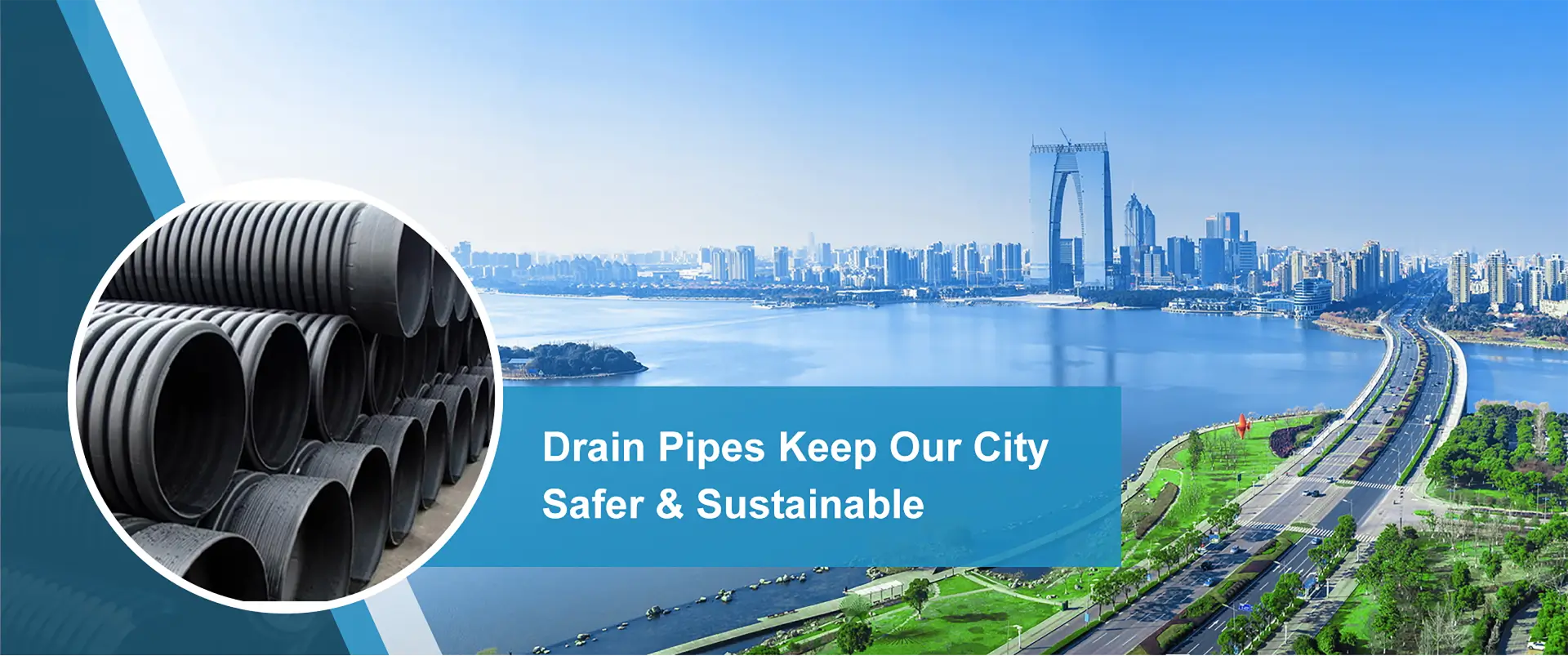
High-Density Polyethylene (HDPE) corrugated pipe, specifically designated as “discount 6” referencing a 6-inch nominal diameter, is a widely employed solution for subsurface drainage, stormwater management, and conduit applications in civil engineering and construction projects. Positioned within the broader pipeline infrastructure industry, it serves as a cost-effective alternative to traditional materials like concrete, PVC, and steel. The core performance characteristics revolve around its lightweight nature, exceptional corrosion resistance, flexibility allowing for installation in challenging terrains, and cost efficiency. It’s generally manufactured to meet or exceed ASTM standards for corrugated polyethylene drainage pipe, and its adoption rate is rising due to increasingly stringent environmental regulations favoring plastic alternatives and demanding more sustainable infrastructure solutions. Understanding its material properties, manufacturing tolerances, and potential failure mechanisms is critical for engineers and procurement managers alike to ensure long-term system reliability and minimize lifecycle costs.
Material Science & Manufacturing
The fundamental material of discount 6 HDPE corrugated pipe is high-density polyethylene (HDPE), a thermoplastic polymer created from the polymerization of ethylene. HDPE boasts a high strength-to-density ratio, excellent chemical resistance, and is relatively inert. Crucially, the grade of HDPE used – typically ranging from HDPE 3408 to HDPE 3608, identified by cell classification per ASTM D3350 – directly impacts the pipe's long-term performance, particularly its environmental stress crack resistance (ESCR) and hydrostatic design basis (HDB). Manufacturing begins with HDPE resin pellets, which are melted and extruded into a sheet. This sheet is then corrugated using a process involving contoured rollers that impart the characteristic ring-like structure. The corrugations significantly enhance the pipe’s structural rigidity and ring stiffness. Critical parameters during extrusion include melt temperature (typically 180-210°C), extrusion rate, and cooling rate, which influence the crystallinity and ultimately the mechanical properties of the HDPE sheet. The corrugated sheets are subsequently formed into a circular shape and joined longitudinally via a heated seam welding process. Seam integrity is paramount, requiring precise temperature control and pressure application to ensure a complete and uniform weld. Quality control measures throughout the process include dimensional checks, visual inspection for weld defects, and periodic testing of mechanical properties such as tensile strength and impact resistance.
Performance & Engineering
The engineering performance of discount 6 HDPE corrugated pipe centers around its ability to withstand anticipated loads, both external and internal. External loads include soil cover, traffic loading (if applicable), and hydrostatic pressure. The pipe’s ring stiffness, a measure of its resistance to flattening under external loads, is a critical design parameter dictated by the anticipated soil overburden. Finite element analysis (FEA) is frequently employed to model pipe behavior under various loading conditions. Hydrostatic design basis (HDB) calculations, as outlined in ASTM F2306, determine the maximum allowable internal pressure based on the HDPE grade, pipe dimensions, and desired safety factor. Long-term creep performance is a significant consideration, as HDPE exhibits time-dependent deformation under sustained loads. Factors like temperature and the presence of internal fluids influence creep rates. Environmental resistance is another key aspect. HDPE demonstrates excellent resistance to most chemicals commonly found in soil and wastewater, but prolonged exposure to strong oxidizing agents or aromatic hydrocarbons can lead to degradation. Installation practices directly affect long-term performance. Proper bedding and backfill compaction are essential to distribute loads evenly and prevent localized stress concentrations. The pipe’s flexibility allows it to accommodate minor ground movements and settlements without compromising integrity, reducing the risk of joint separation or cracking. Compliance with local and national regulations, such as stormwater management ordinances and building codes, is also a vital performance consideration.
Technical Specifications
| Parameter | Units | Typical Value (Discount 6 HDPE) | Test Standard |
|---|---|---|---|
| Nominal Diameter | inches | 6 | ASTM F405 |
| Outside Diameter | inches | 6.625 – 6.75 | ASTM F405 |
| Corrugation Profile Height | inches | 0.75 – 1.0 | ASTM F405 |
| Ring Stiffness | psi | 35 – 60 | ASTM F2412 |
| Hydrostatic Design Basis (HDB) | psi | 75 – 125 (dependent on HDPE grade) | ASTM F2306 |
| Environmental Stress Crack Resistance (ESCR) | Hours to Failure | > 1000 | ASTM D1694 |
Failure Mode & Maintenance
Discount 6 HDPE corrugated pipe, while durable, is susceptible to several failure modes. Environmental Stress Cracking (ESC) is a primary concern, particularly in aggressive soil environments. This occurs when sustained tensile stress, combined with exposure to certain chemicals, leads to crack initiation and propagation. Fatigue cracking can arise from repeated loading cycles, especially under heavy traffic conditions. Deformation and ovalization can occur due to inadequate bedding or backfill compaction, leading to reduced flow capacity and potential joint separation. Joint failures are another common issue, often resulting from improper welding parameters during manufacturing or damage during installation. Oxidation, while less common in HDPE than in other polymers, can occur over extended periods, particularly with exposure to UV radiation and elevated temperatures. Maintenance primarily focuses on preventative measures. Regular inspections, especially after significant weather events or ground disturbances, are crucial for identifying potential problems early on. Maintaining proper vegetation control around the pipe minimizes root intrusion, which can damage joints and restrict flow. Ensuring adequate drainage around the pipe prevents hydrostatic pressure buildup. For minor joint separations, repair sleeves can be used to restore integrity. In cases of significant deformation or cracking, pipe replacement is typically required. Periodic cleaning to remove sediment buildup can maintain flow capacity and prevent blockages.
Industry FAQ
Q: What is the impact of soil corrosivity on the long-term performance of HDPE corrugated pipe?
A: Soil corrosivity, specifically the presence of sulfates, chlorides, and organic acids, can accelerate environmental stress cracking in HDPE. Higher concentrations of these substances necessitate the use of HDPE grades with enhanced ESCR properties, and potentially, the application of protective coatings or the implementation of more robust bedding materials to isolate the pipe from the corrosive environment. Thorough soil testing prior to installation is crucial to assess the level of corrosivity and select appropriate pipe materials and installation techniques.
Q: How does temperature affect the load-bearing capacity of HDPE corrugated pipe?
A: Elevated temperatures reduce the stiffness and strength of HDPE, leading to a decrease in load-bearing capacity. The material becomes more susceptible to creep and deformation. Design calculations should account for the maximum anticipated operating temperature and incorporate appropriate safety factors. Conversely, very low temperatures can increase brittleness, making the pipe more prone to cracking under impact loads.
Q: What are the best practices for ensuring proper joint integrity during installation?
A: Proper joint integrity is paramount. This involves ensuring the welding equipment is properly calibrated and maintained, that the HDPE surfaces are clean and dry before welding, and that the welding parameters (temperature, pressure, and dwell time) adhere to the manufacturer’s recommendations. Visual inspection of the weld bead for defects is essential, and non-destructive testing methods like ultrasonic testing can be employed for critical applications.
Q: Can HDPE corrugated pipe be used in applications with significant hydraulic head?
A: Yes, but careful consideration must be given to the hydrostatic design basis (HDB). The pipe’s HDB must exceed the maximum anticipated internal pressure, including surge pressures. Proper anchoring and restraint mechanisms may be required to prevent pipe movement and buckling under high hydraulic head conditions. The surrounding soil must also provide adequate support to resist external hydrostatic forces.
Q: What is the expected service life of discount 6 HDPE corrugated pipe in typical drainage applications?
A: With proper material selection, installation, and maintenance, discount 6 HDPE corrugated pipe can have a service life exceeding 50 years in typical drainage applications. However, the actual service life is dependent on site-specific factors such as soil conditions, traffic loading, and exposure to harsh chemicals. Regular inspections and preventative maintenance can further extend the service life.
Conclusion
Discount 6 HDPE corrugated pipe represents a versatile and cost-effective solution for a wide range of subsurface drainage and conduit applications. Its inherent material properties – high strength-to-density ratio, excellent chemical resistance, and flexibility – contribute to its long-term durability and performance. However, successful implementation relies on a thorough understanding of its engineering principles, potential failure modes, and adherence to established installation best practices.
Looking forward, advancements in HDPE resin technology and manufacturing processes are expected to further enhance the performance characteristics of corrugated pipe, including improved ESCR, increased ring stiffness, and enhanced UV resistance. The increasing emphasis on sustainable infrastructure solutions will likely drive continued adoption of HDPE as a preferred material, particularly as regulations regarding traditional materials become more stringent. A proactive approach to material selection, installation quality control, and regular maintenance will be critical to maximizing the lifecycle value of these systems.
-
DN25 HDPE Compression Fitting-HORON INTERNATIONAL|Reliable Irrigation Solutions
NewsFeb.11,2026
-
hdpe coupling joint product Manufacturing Analysis
News2026-11-18
-
ppr pipe heating time products Performance Analysis
News2026-11-16
-
hdpe pipe sizes factory Performance Analysis
News2026-11-09
-
HDPE Pipe Sizes Service Performance Analysis
News2026-10-26
-
wholesale 15mm ppr pipe Material Science and Performance Analysis
News2026-10-20
-
wholesale pvc pipe price per foot Technical Analysis
News2026-09-21
-
wholesale long pvc pipe Technical Analysis and Manufacturing Specifications
News2026-09-15
-
wholesale plumbing kitchen sink water lines Material Performance
News2026-09-15
-
wholesale hdpe drip irrigation Material Science
News2026-09-15
-
wholesale hot water ppr pipe Performance Analysis
News2026-09-15
-
wholesale ppr plumbing Performance Analysis
News2026-09-15
-
wholesale ppr pipe supplier Performance Analysis
News2026-09-13
-
wholesale 50mm ppr pipe Performance Analysis
News2026-09-13
-
wholesale hdpe drip pipe Performance Analysis
News2026-09-13
-
wholesale hdpe pipe 63mm price Manufacturing Specification and Performance Analysis
News2026-09-13