

Feb . 11, 2026 00:01 Back to list
discount 20mm ppr pipe price Technical Analysis
Introduction
Polypropylene Random (PPR) pipe, specifically the 20mm diameter variant offered at a discounted price, represents a significant material choice in modern fluid conveyance systems. PPR piping, distinguished by its homogeneity resulting from the random copolymerization of propylene, occupies a critical position in building infrastructure, industrial processes, and agricultural applications. Unlike traditional metal piping, PPR offers inherent corrosion resistance and a smoother internal surface, minimizing frictional losses and scaling. This guide provides an in-depth technical analysis of discount 20mm PPR pipe price, encompassing its material composition, manufacturing processes, performance characteristics, potential failure modes, and relevant industry standards. The focus is on providing a comprehensive understanding for procurement managers, engineers, and maintenance personnel concerned with long-term reliability and cost-effectiveness. The primary pain point addressed is optimizing lifecycle cost—balancing initial purchase price with long-term operational integrity and reduced maintenance frequency.
Material Science & Manufacturing
The core material of 20mm PPR pipe is polypropylene random copolymer. Polypropylene itself is a thermoplastic polymer produced through the polymerization of propylene monomer. The ‘random’ designation signifies the arrangement of the comonomer (typically ethylene) within the polymer chain, contributing to improved flexibility and crack resistance compared to homopolymer polypropylene. The raw material, polypropylene granules, typically possess a MFI (Melt Flow Index) ranging from 1.0 to 3.0 g/10min, influencing the processing characteristics. Manufacturing begins with the extrusion process. Granules are fed into a plastic extruder, heated to a precisely controlled temperature profile (typically 190-240°C), and forced through a die to form the pipe's shape. Key parameters during extrusion include temperature consistency across the die, screw speed, and cooling rate. The pipe is then calibrated, marked with relevant specifications (size, pressure rating, material grade, manufacturer), and cut to length. Socket fusion or electrofusion welding are common joining methods. Socket fusion involves heating both the pipe end and fitting socket to a controlled temperature, then inserting the pipe into the fitting, creating a homogenous weld. Electrofusion utilizes an electrical current to melt and fuse the pipe and fitting interface. Proper welding is critical, demanding precise temperature control and sufficient heating time to ensure a robust, leak-proof joint. The chemical resistance of PPR is also influenced by the specific grade; higher grades incorporate stabilizers to enhance resistance to oxidizing agents and chlorine.
Performance & Engineering
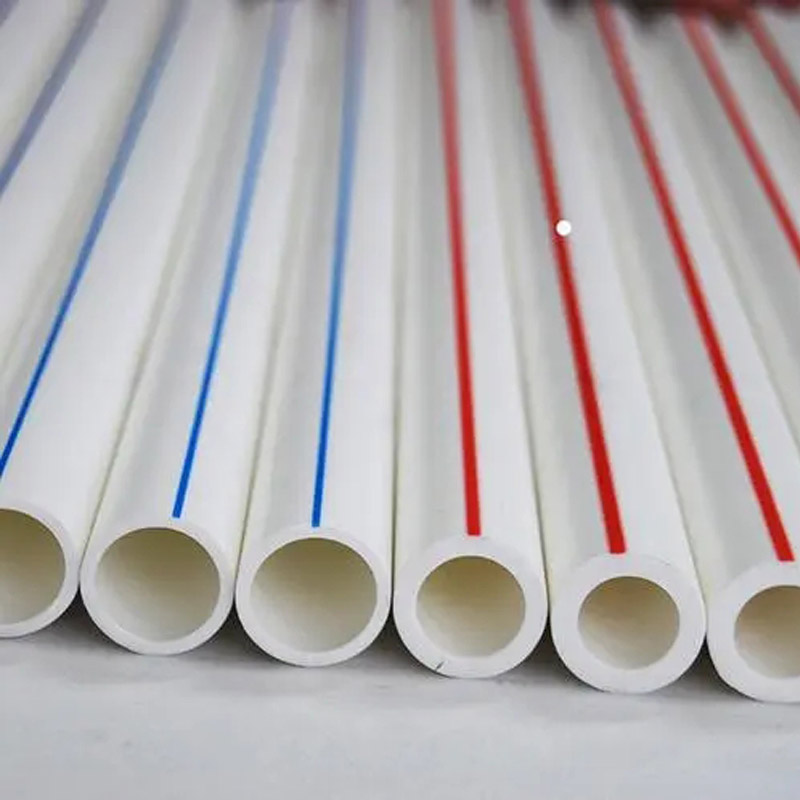
The performance of 20mm PPR pipe is dictated by several engineering principles. Hydrostatic pressure testing, conducted according to ISO 1167, assesses the pipe’s ability to withstand internal pressure without failure. Standard pressure ratings for 20mm PPR pipe range from PN10 (1.0 MPa) to PN20 (2.0 MPa), corresponding to different wall thicknesses. Force analysis considers both internal pressure forces and external loads (soil pressure, thermal expansion/contraction). The pipe's inherent flexibility allows for some degree of deformation under load, but excessive bending can induce stress concentrations and lead to cracking. Environmental resistance is paramount; prolonged UV exposure can cause degradation, necessitating UV stabilizers in the material formulation or protective covering during outdoor installation. Thermal expansion coefficient for PPR is relatively high (approximately 0.15 mm/m°C), requiring expansion loops or flexible connections to accommodate temperature fluctuations and prevent stress buildup. Compliance requirements vary by region; in Europe, EN 1452-2 governs the quality and performance of PPR piping systems. The oxygen barrier properties are important for heating systems, preventing oxygen diffusion into the water, which can cause corrosion in metal components. Furthermore, the sound dampening characteristics of PPR, a direct result of the polymer’s viscoelasticity, can contribute to quieter fluid transport systems.
Technical Specifications
| Parameter | Unit | PN10 (Typical Value) | PN16 (Typical Value) |
|---|---|---|---|
| Nominal Diameter | mm | 20 | 20 |
| Wall Thickness | mm | 2.3 | 2.8 |
| Pressure Rating | MPa | 1.0 | 1.6 |
| Burst Pressure | MPa | 3.0 | 4.8 |
| Melt Flow Index (MFI) | g/10min | 1.5 - 2.5 | 1.0 - 2.0 |
| Maximum Operating Temperature | °C | 95 | 95 |
| Linear Expansion Coefficient | mm/m°C | 0.15 | 0.15 |
Failure Mode & Maintenance
Several failure modes are relevant to 20mm PPR pipe. Long-term hydrostatic pressure can lead to creep rupture, particularly at elevated temperatures. This manifests as slow crack propagation and eventual failure. Fatigue cracking can occur due to repeated stress fluctuations, often associated with water hammer or thermal cycling. Delamination, though less common, can result from inadequate welding or material inhomogeneity. Oxidation, especially with prolonged exposure to high temperatures and oxygen-rich environments, can embrittle the material. UV degradation, as previously mentioned, causes surface chalking and reduced mechanical strength. Failure analysis often reveals weld defects as a primary cause of leaks; incomplete fusion or excessive oxidation during welding compromise the joint integrity. Maintenance primarily focuses on preventative measures. Regular inspection for leaks, especially at joints, is crucial. Proper insulation can mitigate thermal expansion stresses. Avoiding direct sunlight exposure or using UV-resistant coatings extends the pipe's service life. If repairs are necessary, cut out the damaged section and replace it with a new piece of PPR pipe, ensuring proper welding procedures are followed. Avoid using abrasive cleaners or solvents, as these can damage the pipe surface. Periodic flushing of the system helps prevent scale buildup and maintains optimal flow rates. Proper support structures are crucial to avoid excessive bending and mechanical stress.
Industry FAQ
Q: What is the long-term impact of chlorine exposure on PPR pipe, and what grades offer improved resistance?
A: Prolonged exposure to chlorine can cause oxidative degradation of PPR, leading to embrittlement and potential cracking. While standard PPR exhibits limited chlorine resistance, specialized grades incorporating chlorine stabilizers (typically phenolic antioxidants) offer significantly improved performance. These grades are recommended for applications where chlorine-treated water is present, such as in swimming pool circulation systems. Regular monitoring of water chemistry is also essential.
Q: How does the wall thickness of 20mm PPR pipe correlate with its pressure rating and temperature limitations?
A: Wall thickness is directly proportional to the pipe’s ability to withstand internal pressure. Thicker walls provide greater resistance to hoop stress. PN16 rated pipe (1.6 MPa) typically has a thicker wall (2.8mm) than PN10 pipe (1.0 MPa). However, increasing wall thickness also reduces the internal diameter, potentially increasing flow resistance. Temperature limitations are generally consistent across different wall thicknesses within the same PPR grade, but exceeding the maximum operating temperature (95°C) will reduce the pipe's pressure-bearing capacity.
Q: What are the critical parameters to monitor during socket fusion welding to ensure joint integrity?
A: Key parameters include heating temperature (typically 260-270°C), heating time (dependent on pipe diameter and wall thickness, typically 30-60 seconds), and insertion depth. The heating tool must be clean and free of debris. Ensure both the pipe end and fitting socket are heated uniformly. Proper alignment during insertion is critical. Avoid twisting or rotating the pipe during the welding process. A visual inspection of the weld bead should confirm complete fusion and a smooth, consistent profile.
Q: How does PPR pipe compare to CPVC (Chlorinated Polyvinyl Chloride) in terms of chemical resistance and temperature capabilities?
A: CPVC generally exhibits superior chemical resistance, particularly to chlorinated solvents and oxidizing agents. PPR is more susceptible to degradation from prolonged exposure to these substances. CPVC also has a higher maximum operating temperature (typically 105°C) compared to PPR (95°C). However, PPR offers advantages in terms of cost, flexibility, and ease of installation, particularly with socket fusion welding. The choice depends on the specific application and the chemicals present in the conveyed fluid.
Q: What methods can be used to detect hidden leaks in PPR piping systems?
A: Pressure testing is the most reliable method. Isolate the section of piping and pressurize it to a test pressure higher than the operating pressure. Monitor for pressure drop. Acoustic leak detection equipment can also be used to pinpoint the location of leaks by detecting the sound of escaping fluid. Thermal imaging cameras can identify temperature differences caused by leaking fluid, particularly in insulated systems. However, detecting very small leaks can be challenging and may require a combination of methods.
Conclusion
Discount 20mm PPR pipe price offers a compelling solution for fluid conveyance, balancing initial cost with a range of performance benefits, including corrosion resistance, smooth flow characteristics, and ease of installation. However, realizing these benefits requires a thorough understanding of the material’s properties, manufacturing processes, and potential failure modes. Careful attention to welding procedures, environmental factors (UV exposure, temperature fluctuations), and chemical compatibility is crucial for ensuring long-term reliability and minimizing lifecycle costs.
Optimizing the selection and implementation of 20mm PPR pipe necessitates considering the specific application requirements and adhering to relevant industry standards. Proactive maintenance, including regular inspections and preventative measures, further enhances the system's durability and operational efficiency. A comprehensive approach, informed by the technical insights outlined in this guide, will ultimately deliver a cost-effective and robust fluid transport solution.
-
DN25 HDPE Compression Fitting-HORON INTERNATIONAL|Reliable Irrigation Solutions
NewsFeb.11,2026
-
hdpe coupling joint product Manufacturing Analysis
News2026-11-18
-
ppr pipe heating time products Performance Analysis
News2026-11-16
-
hdpe pipe sizes factory Performance Analysis
News2026-11-09
-
HDPE Pipe Sizes Service Performance Analysis
News2026-10-26
-
wholesale 15mm ppr pipe Material Science and Performance Analysis
News2026-10-20
-
wholesale pvc pipe price per foot Technical Analysis
News2026-09-21
-
wholesale long pvc pipe Technical Analysis and Manufacturing Specifications
News2026-09-15
-
wholesale plumbing kitchen sink water lines Material Performance
News2026-09-15
-
wholesale hdpe drip irrigation Material Science
News2026-09-15
-
wholesale hot water ppr pipe Performance Analysis
News2026-09-15
-
wholesale ppr plumbing Performance Analysis
News2026-09-15
-
wholesale ppr pipe supplier Performance Analysis
News2026-09-13
-
wholesale 50mm ppr pipe Performance Analysis
News2026-09-13
-
wholesale hdpe drip pipe Performance Analysis
News2026-09-13
-
wholesale hdpe pipe 63mm price Manufacturing Specification and Performance Analysis
News2026-09-13