

Feb . 11, 2026 00:01 Back to list
discount 2.5 inch hdpe pipe price Performance Analysis
Introduction
High-Density Polyethylene (HDPE) pipe, specifically the 2.5-inch diameter variant offered at competitive pricing, represents a crucial component within modern fluid transfer infrastructure. Its primary application lies in potable water distribution, irrigation, sewer systems, industrial pipelines, and increasingly, gas transportation. HDPE's position within the industry chain is as a direct replacement for traditional materials like ductile iron, PVC, and steel, driven by its superior performance characteristics, long-term durability, and cost-effectiveness. Core performance metrics center around pressure rating (typically measured in PSI, varying with Schedule designation – Schedule 40 and Schedule 80 being common), tensile strength, impact resistance (particularly important in below-ground applications), and long-term environmental stress crack resistance (ESCR). The 'discount' aspect refers to a market positioning strategy emphasizing value without compromising adherence to established industry standards and material specifications. This guide will provide a comprehensive technical overview of 2.5-inch HDPE pipe, covering material science, manufacturing processes, performance characteristics, failure modes, and relevant industry standards.
Material Science & Manufacturing
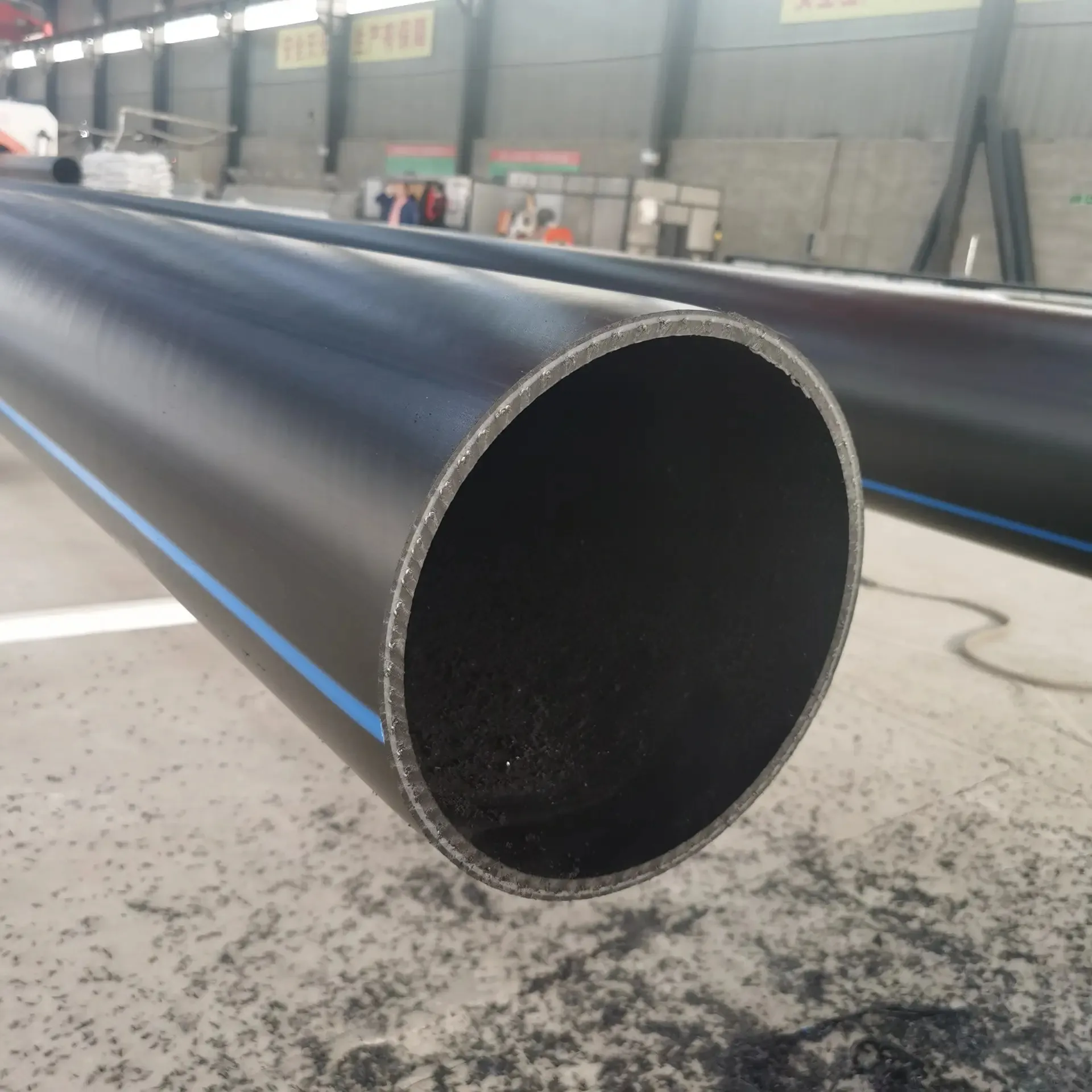
The foundation of 2.5-inch HDPE pipe lies in the polyethylene resin itself. Typically, High-Density Polyethylene (HDPE) resins conforming to ASTM D3350 classifications are employed. These resins are characterized by a high degree of linearity, resulting in strong intermolecular forces and a resulting high tensile strength and rigidity. The density of the HDPE used typically ranges from 0.93 to 0.97 g/cm³. Raw materials often include additives such as carbon black for UV protection, antioxidants to prevent oxidative degradation, and stabilizers to enhance long-term performance. The manufacturing process for 2.5-inch HDPE pipe predominantly utilizes extrusion. HDPE pellets are fed into an extruder, where they are heated and melted. This molten plastic is then forced through a die that forms the pipe’s cylindrical shape. Key parameters controlled during extrusion include melt temperature (typically between 180°C and 210°C), extrusion pressure, die geometry, and cooling rate. The cooling process, often involving a water bath, is critical to achieving dimensional stability and preventing warping. Further processing includes calibration to ensure precise outer diameter and wall thickness, and marking with information regarding size, pressure rating, material designation (e.g., PE3408 or PE4710), and manufacturer identification. The fusion of HDPE pipe segments is typically achieved through butt fusion, electrofusion, or socket fusion, each requiring precise temperature and pressure control to ensure a homogenous and structurally sound weld.
Performance & Engineering
The performance of 2.5-inch HDPE pipe is governed by several engineering principles. Hydrostatic pressure testing, as per ASTM D1597, is a critical quality control measure to verify the pipe’s ability to withstand internal pressure. The allowable stress within the pipe material is determined by the hydrostatic design basis (HDB), which considers factors like long-term creep resistance and safety factors. Environmental resistance is paramount, particularly in buried applications. HDPE exhibits excellent resistance to most chemicals commonly found in soil, however, exposure to strong oxidizing agents should be avoided. Force analysis, especially during installation and operation, considers factors like soil load, traffic load (for above-ground applications), and thermal expansion/contraction. Coefficient of linear thermal expansion for HDPE is approximately 0.21 mm/m°C. This necessitates appropriate expansion loops or flexible joints in long pipeline runs to prevent stress buildup. Compliance with regulations like NSF/ANSI 61 ensures the pipe is safe for potable water applications, preventing leaching of harmful substances. Furthermore, the pipe’s flexibility allows for accommodating ground movement and seismic activity, mitigating the risk of catastrophic failure. The pipe’s smooth inner surface minimizes friction loss, resulting in lower pumping energy requirements compared to pipes with rougher internal surfaces.
Technical Specifications
| Parameter | Schedule 40 | Schedule 80 | Unit |
|---|---|---|---|
| Nominal Pipe Size | 2.5 inches | 2.5 inches | inches |
| Outside Diameter | 2.625 | 2.625 | inches |
| Wall Thickness | 0.154 | 0.218 | inches |
| Pressure Rating (at 73°F) | 200 | 325 | PSI |
| Burst Pressure | 800 | 1300 | PSI |
| Density | 0.94 - 0.96 | 0.94 - 0.96 | g/cm³ |
| Hydrostatic Design Basis (HDB) | 160 | 250 | Hours |
Failure Mode & Maintenance
While HDPE pipe offers exceptional durability, several failure modes can occur. Slow Crack Growth (SCG), or Environmental Stress Cracking (ESC), is a prevalent concern, particularly in areas with high residual stress and exposure to aggressive chemicals. This manifests as brittle cracking over time. Fatigue cracking can occur due to cyclic loading, such as from traffic or repeated pressure surges. Oxidative degradation, induced by UV exposure and elevated temperatures, can lead to embrittlement and loss of mechanical properties. Joint failures are commonly attributed to inadequate fusion parameters during installation (incorrect temperature, pressure, or holding time). Damage during handling and installation (e.g., punctures, gouges) can create stress concentrators and initiate cracks. Maintenance typically involves regular visual inspections for signs of cracking, deformation, or leakage. Pressure testing should be performed periodically to verify system integrity. For minor cracks, heat fusion repairs can be attempted, but the long-term reliability of such repairs is dependent on proper technique and material compatibility. In areas prone to SCG, cathodic protection may be considered to mitigate the risk of corrosion. Proper bedding and backfill materials are crucial to prevent external loading and stress concentration. Furthermore, implementing a robust quality control program during installation is essential to minimize the risk of fusion-related failures.
Industry FAQ
Q: What is the long-term creep rupture strength of this 2.5-inch HDPE pipe, and how does it compare to ductile iron?
A: The creep rupture strength of HDPE is dependent on the HDB (Hydrostatic Design Basis) of the specific resin used. For PE3408, a typical HDB is 160 hours, while for PE4710, it can be up to 1000 hours or more. Compared to ductile iron, HDPE exhibits superior creep resistance over extended periods, meaning it is less prone to slow, time-dependent deformation under sustained pressure. Ductile iron, while possessing high initial strength, can experience creep over time, potentially leading to leaks or failures.
Q: What impact does soil corrosivity have on the lifespan of this HDPE pipe, and are there any recommended mitigation strategies?
A: HDPE itself is highly resistant to most chemicals found in soil. However, highly corrosive soils with elevated levels of chlorides or sulfates can potentially accelerate environmental stress cracking, particularly if residual stresses are present in the pipe. Mitigation strategies include utilizing higher-grade HDPE resins with enhanced ESCR, ensuring proper bedding and backfill materials to isolate the pipe from corrosive elements, and considering the application of protective coatings in severely corrosive environments.
Q: Can this 2.5-inch HDPE pipe be used for high-pressure gas transmission? What standards apply?
A: While 2.5-inch HDPE pipe can be used for gas transmission, it’s crucial to select a pipe designed specifically for gas service and comply with all applicable standards. Relevant standards include ASTM D2412 (for polyethylene pipe materials), and DOT regulations (in the US) or equivalent national regulations for gas transmission. Higher pressure ratings (e.g., Schedule 80) and specific resin grades (e.g., PE3608 or PE4710) are typically required for gas transmission applications. Regular inspections and leak detection programs are essential.
Q: What is the recommended method for joining 2.5-inch HDPE pipe in a large-diameter pipeline project, and what quality control checks are necessary?
A: Butt fusion is the most common and reliable method for joining large-diameter HDPE pipe. Electrofusion is also used, particularly for fittings. Quality control checks include visual inspection of the fusion weld, measurement of weld bead height and width, and destructive testing (e.g., tensile testing) of sample welds to verify weld strength and integrity. Detailed records of fusion parameters (temperature, pressure, time) must be maintained for traceability.
Q: What is the maximum allowable operating temperature for this HDPE pipe, and how does temperature affect its pressure rating?
A: The maximum allowable operating temperature for typical HDPE pipe is around 140°F (60°C). Higher temperatures reduce the pipe’s pressure rating due to a decrease in tensile strength and increased creep. Pressure derating factors, as specified in ASTM D3261, must be applied to adjust the maximum allowable pressure based on the operating temperature. Operating above the recommended temperature can significantly reduce the pipe’s lifespan and increase the risk of failure.
Conclusion
The 2.5-inch HDPE pipe, particularly when offered at a competitive price point, presents a compelling alternative to traditional piping materials. Its combination of high tensile strength, excellent chemical resistance, long-term durability, and relative ease of installation make it well-suited for a diverse range of applications. Understanding the material science, manufacturing processes, and performance characteristics is critical for ensuring proper selection and long-term reliability.
Ultimately, the success of any HDPE pipeline project hinges on adherence to industry standards, meticulous quality control during installation, and ongoing maintenance. Careful consideration of environmental factors, potential failure modes, and appropriate mitigation strategies will maximize the lifespan and minimize the risk of costly failures, providing a robust and cost-effective fluid transfer solution.
-
DN25 HDPE Compression Fitting-HORON INTERNATIONAL|Reliable Irrigation Solutions
NewsFeb.11,2026
-
hdpe coupling joint product Manufacturing Analysis
News2026-11-18
-
ppr pipe heating time products Performance Analysis
News2026-11-16
-
hdpe pipe sizes factory Performance Analysis
News2026-11-09
-
HDPE Pipe Sizes Service Performance Analysis
News2026-10-26
-
wholesale 15mm ppr pipe Material Science and Performance Analysis
News2026-10-20
-
wholesale pvc pipe price per foot Technical Analysis
News2026-09-21
-
wholesale long pvc pipe Technical Analysis and Manufacturing Specifications
News2026-09-15
-
wholesale plumbing kitchen sink water lines Material Performance
News2026-09-15
-
wholesale hdpe drip irrigation Material Science
News2026-09-15
-
wholesale hot water ppr pipe Performance Analysis
News2026-09-15
-
wholesale ppr plumbing Performance Analysis
News2026-09-15
-
wholesale ppr pipe supplier Performance Analysis
News2026-09-13
-
wholesale 50mm ppr pipe Performance Analysis
News2026-09-13
-
wholesale hdpe drip pipe Performance Analysis
News2026-09-13
-
wholesale hdpe pipe 63mm price Manufacturing Specification and Performance Analysis
News2026-09-13