

Feb . 11, 2026 00:01 Back to list
discount 18 hdpe corrugated pipe Performance Analysis
Introduction
High-Density Polyethylene (HDPE) corrugated pipe, specifically “discount 18” denoting an 18-inch diameter, represents a crucial component in subsurface drainage, stormwater management, and industrial fluid conveyance systems. Positioned within the broader infrastructure supply chain, its technical importance lies in its balance of structural integrity, cost-effectiveness, and ease of installation. This guide provides an in-depth technical analysis of discount 18 HDPE corrugated pipe, covering material properties, manufacturing processes, performance characteristics, potential failure modes, and relevant industry standards. Core performance attributes center around maintaining hydraulic capacity under load, resisting environmental degradation, and providing a durable, long-term solution for fluid transport. The escalating demand for effective water management and aging infrastructure necessitate a comprehensive understanding of this technology, addressing key industry pain points like long-term durability, joint integrity, and compliance with increasingly stringent environmental regulations.
Material Science & Manufacturing
The primary raw material for discount 18 HDPE corrugated pipe is high-density polyethylene (HDPE) resin, typically sourced from ethylene derived from petroleum or natural gas. HDPE’s key physical properties influencing pipe performance include a density ranging from 0.941 to 0.965 g/cm³, a tensile strength between 20-30 MPa, and a relatively high resistance to chemical attack. Manufacturing begins with HDPE resin pelletization. These pellets are then fed into an extruder, where they are heated and melted. The molten HDPE is formed into a continuous profile via a corrugated mold. Critical parameters during extrusion include maintaining a consistent melt temperature (typically 180-220°C) to ensure uniform material distribution and prevent degradation. The corrugation profile – sinusoidal or helical – significantly impacts the pipe’s ring stiffness and load-bearing capacity. Following corrugation, the pipe undergoes cooling, often utilizing a water bath system, to solidify the shape. Quality control during manufacturing focuses on dimensional accuracy (diameter, corrugation height and pitch), wall thickness uniformity (typically 4-8mm for 18” pipe), and the absence of defects like voids or inclusions. The resin grade selected dictates long-term hydrostatic strength (LHS) and environmental stress crack resistance (ESCR), two critical performance indicators. Further processing may involve the application of a protective UV stabilizer to enhance resistance to sunlight degradation, particularly important for exposed applications.
Performance & Engineering
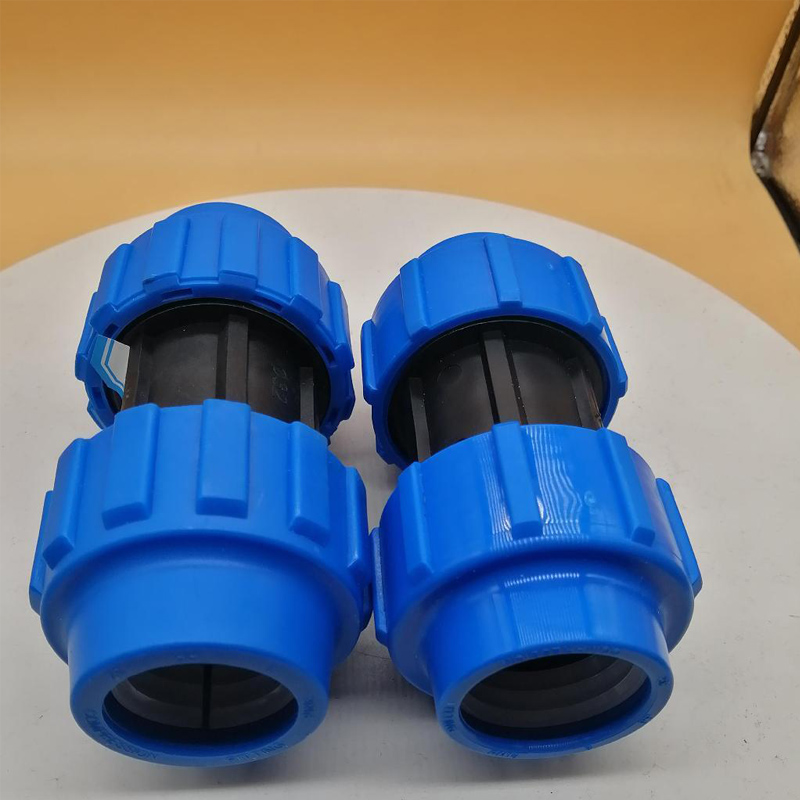
The engineering performance of discount 18 HDPE corrugated pipe is fundamentally dictated by its ability to withstand external loads while maintaining hydraulic integrity. Force analysis considers vertical loads from soil cover (typically up to 20 feet), live loads from traffic (depending on application), and hydrostatic pressure. Ring stiffness, measured in psi, is a key parameter; higher ring stiffness indicates greater resistance to deformation under load. The corrugated profile enhances ring stiffness without requiring significant increases in wall thickness. Environmental resistance is paramount. HDPE exhibits excellent resistance to most acids, bases, and salts, however, long-term exposure to oxidizing agents and hydrocarbons can cause degradation. UV exposure necessitates the inclusion of UV stabilizers. Compliance requirements vary by region and application. Stormwater management applications require adherence to local regulations regarding hydraulic capacity, filtration, and potential pollutant discharge. Buried drainage systems must meet standards for soil loading and long-term durability. Joint integrity is a critical aspect of performance. Common joining methods include bell-and-spigot connections with rubber gaskets, or split sleeve couplers. The selection of the correct joining method and proper installation are crucial to prevent infiltration and exfiltration. Hydrostatic testing is often required to verify the watertightness of installed systems.
Technical Specifications
| Parameter | Value (Typical) | Test Method | Units |
|---|---|---|---|
| Nominal Diameter | 18 | ASTM D2412 | inches |
| Wall Thickness | 6 | ASTM D2412 | mm |
| Corrugation Profile | Sinusoidal | Visual Inspection | - |
| Ring Stiffness | 44 | ASTM D2412 | psi |
| Long-Term Hydrostatic Strength (LHS) | 1600 | ASTM D2837 | psi |
| Environmental Stress Crack Resistance (ESCR) | Pass | ASTM D1693 | - |
Failure Mode & Maintenance
Discount 18 HDPE corrugated pipe, while durable, is susceptible to several failure modes. Fatigue cracking can occur under repeated loading and unloading, particularly at joints or areas of stress concentration. Delamination, the separation of layers within the pipe wall, is often caused by manufacturing defects or improper installation. Environmental degradation, specifically UV exposure and oxidation, leads to embrittlement and reduced tensile strength. Chemical attack from aggressive soil conditions can also cause degradation. Ground settlement or improper compaction can impose excessive loads, leading to ovalization and cracking. Joint failures, due to improper installation or gasket degradation, result in leakage and infiltration. Maintenance primarily focuses on preventative measures. Regular inspections for signs of cracking, deformation, or joint leakage are crucial. Maintaining proper soil cover is essential to distribute loads and protect the pipe from UV exposure. Addressing any signs of ground settlement promptly prevents excessive stress. For joint failures, gasket replacement or re-coupling may be required. In cases of significant cracking or degradation, pipe replacement is the recommended course of action. Consideration should be given to using geotextile fabrics during installation to provide additional support and filtration, mitigating potential soil-related failures.
Industry FAQ
Q: What is the impact of soil corrosivity on the lifespan of discount 18 HDPE pipe?
A: Soil corrosivity, particularly the presence of sulfates or chlorides, can accelerate degradation of the HDPE material over the long term. While HDPE is generally chemically resistant, prolonged exposure to aggressive soil conditions can lead to embrittlement and cracking. Utilizing a protective coating or backfilling with non-corrosive material can mitigate this risk. Regular soil testing is recommended to assess corrosivity levels.
Q: How does temperature affect the performance of HDPE pipe, particularly in extreme climates?
A: HDPE’s properties are temperature-dependent. High temperatures can reduce the pipe's stiffness and increase its susceptibility to creep under load. Low temperatures can increase brittleness. These effects are generally within acceptable limits for most applications, but extreme temperatures require careful consideration. Design calculations should incorporate temperature derating factors where necessary. UV stabilization is crucial in hot climates.
Q: What are the key considerations for selecting the appropriate jointing method for discount 18 HDPE pipe?
A: The jointing method should be selected based on application requirements, soil conditions, and installation expertise. Bell-and-spigot connections with rubber gaskets are common for buried applications, providing a watertight seal. Split sleeve couplers are suitable for repairs or connecting to existing infrastructure. Proper gasket selection (material compatibility) and installation (lubrication, alignment) are critical to ensure long-term joint integrity.
Q: How does the corrugated profile contribute to the structural integrity of the pipe compared to a smooth-wall HDPE pipe?
A: The corrugated profile significantly enhances the pipe’s ring stiffness and load-bearing capacity without increasing wall thickness. The corrugations act as reinforcing ribs, distributing loads more effectively. This allows the pipe to withstand greater external pressures and maintain its hydraulic integrity under heavier soil cover or traffic loads compared to a smooth-wall pipe of the same material and weight.
Q: What are the common causes of infiltration in HDPE corrugated pipe systems, and how can they be prevented?
A: Infiltration is typically caused by joint failures (improperly sealed gaskets, cracked connections), cracks in the pipe wall (due to stress or damage), or damage to the pipe during installation. Prevention involves proper installation techniques, thorough quality control of joints, the use of appropriate bedding and backfill materials, and avoiding damage during handling and installation. Regular inspections and prompt repairs are also essential.
Conclusion
Discount 18 HDPE corrugated pipe represents a robust and cost-effective solution for various drainage and conveyance applications. Its performance hinges on a combination of material properties, manufacturing precision, and proper installation techniques. Understanding the potential failure modes – fatigue cracking, environmental degradation, and joint failures – is critical for ensuring long-term system reliability. The selection of appropriate joining methods, the implementation of preventative maintenance programs, and adherence to relevant industry standards are all essential components of a successful project.
Looking ahead, advancements in HDPE resin technology, particularly the development of enhanced UV stabilizers and impact modifiers, will further improve the durability and lifespan of these systems. Increasing emphasis on sustainable infrastructure practices will drive demand for HDPE corrugated pipe due to its recyclability and long-term performance. Careful consideration of site-specific conditions, including soil corrosivity and loading requirements, will remain paramount in maximizing the benefits of this versatile technology.
-
DN25 HDPE Compression Fitting-HORON INTERNATIONAL|Reliable Irrigation Solutions
NewsFeb.11,2026
-
hdpe coupling joint product Manufacturing Analysis
News2026-11-18
-
ppr pipe heating time products Performance Analysis
News2026-11-16
-
hdpe pipe sizes factory Performance Analysis
News2026-11-09
-
HDPE Pipe Sizes Service Performance Analysis
News2026-10-26
-
wholesale 15mm ppr pipe Material Science and Performance Analysis
News2026-10-20
-
wholesale pvc pipe price per foot Technical Analysis
News2026-09-21
-
wholesale long pvc pipe Technical Analysis and Manufacturing Specifications
News2026-09-15
-
wholesale plumbing kitchen sink water lines Material Performance
News2026-09-15
-
wholesale hdpe drip irrigation Material Science
News2026-09-15
-
wholesale hot water ppr pipe Performance Analysis
News2026-09-15
-
wholesale ppr plumbing Performance Analysis
News2026-09-15
-
wholesale ppr pipe supplier Performance Analysis
News2026-09-13
-
wholesale 50mm ppr pipe Performance Analysis
News2026-09-13
-
wholesale hdpe drip pipe Performance Analysis
News2026-09-13
-
wholesale hdpe pipe 63mm price Manufacturing Specification and Performance Analysis
News2026-09-13