

Feb . 11, 2026 00:01 Back to list
discount 12 inch pvc pipe 20 ft price Performance Analysis
Introduction
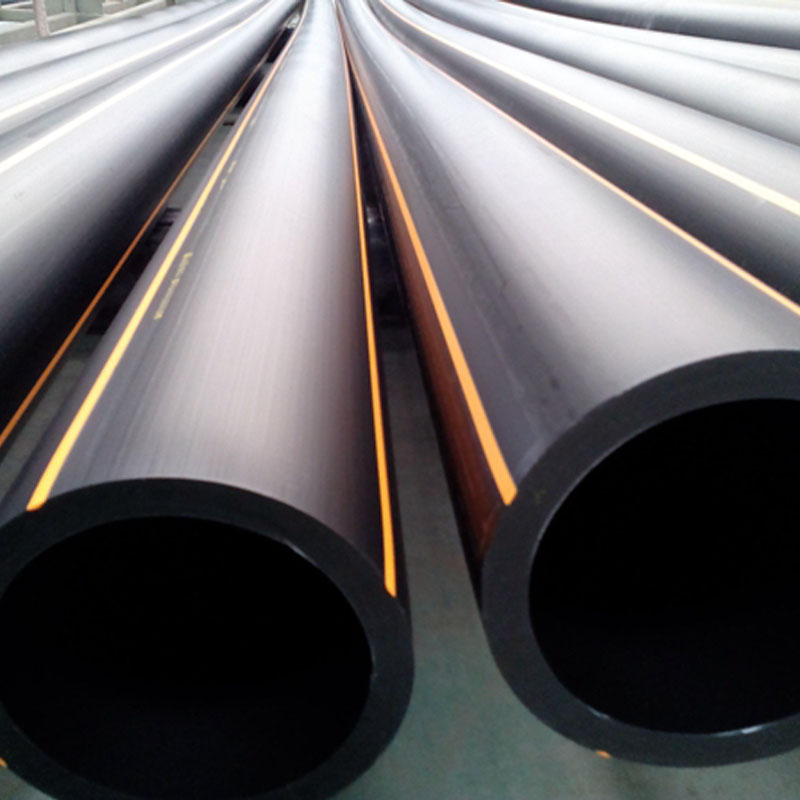
Polyvinyl chloride (PVC) pipe, specifically 12-inch diameter schedule 40 PVC with a 20-foot length, represents a foundational material in modern infrastructure. Its application spans diverse sectors including water distribution, irrigation, drainage, and increasingly, industrial process piping. The inherent properties of PVC – namely its corrosion resistance, durability, and cost-effectiveness – position it as a primary competitor to metallic piping systems. This technical guide provides an in-depth analysis of this specific PVC pipe configuration, focusing on its material science, manufacturing processes, performance characteristics, potential failure modes, and relevant industry standards. The “discount” aspect relates primarily to economies of scale in production and distribution, impacting price point but not fundamentally altering the material’s technical capabilities. Understanding the nuances of PVC pipe selection and proper installation is critical to ensuring long-term system reliability and minimizing lifecycle costs. This document targets engineers, procurement specialists, and maintenance personnel involved in the specification, installation, and upkeep of PVC piping systems.
Material Science & Manufacturing
The foundation of 12-inch PVC pipe lies in the polymerization of vinyl chloride monomer (VCM). The resulting PVC compound is not utilized in its pure form due to brittleness. Instead, plasticizers, primarily phthalates or increasingly, bio-based alternatives, are incorporated to enhance flexibility and impact resistance. Thermal stabilizers, typically organotin compounds or calcium-zinc stabilizers, are crucial to preventing degradation during processing and long-term service. Other additives include lubricants for processing ease, UV stabilizers to mitigate degradation from sunlight exposure, and pigments for color coding. The specific formulation, defining the ratio of PVC resin to additives, dictates the pipe's performance characteristics and compliance with relevant standards.
Manufacturing commonly employs extrusion processes. PVC compound is fed into a single or twin-screw extruder where it is heated, melted, and homogenized. The molten PVC is then forced through a die of the desired diameter and wall thickness. The extruded pipe is subsequently cooled through water baths to maintain dimensional stability. Schedule 40, denoted by a specific wall thickness, is achieved by precise die design and process control. Quality control involves continuous monitoring of melt temperature, extrusion rate, and dimensional accuracy. Jointing methods include solvent cementing (using PVC primers and cement) which creates a chemical weld, threaded connections for smaller diameter pipes, and gasketed joints utilizing rubber o-rings for larger diameter applications. Parameter control during extrusion is paramount; fluctuations in temperature, pressure, or screw speed can lead to variations in wall thickness, affecting the pipe’s pressure rating and long-term performance. Post-extrusion testing includes hydrostatic pressure testing to verify burst strength and leak tightness.

Performance & Engineering
The performance of 12-inch PVC pipe is governed by several key engineering principles. Tensile strength, typically around 55 MPa for Schedule 40 PVC, dictates the pipe’s resistance to longitudinal stresses. Yield strength, approximately 40 MPa, represents the point at which permanent deformation occurs. The modulus of elasticity, around 3.5 GPa, influences the pipe’s stiffness and resistance to bending. Hydrostatic design stress (HDS) is a critical parameter determined by standardized testing, defining the maximum allowable internal pressure based on long-term creep resistance. The HDS is significantly impacted by temperature; higher temperatures reduce the allowable pressure.
Environmental resistance is a key consideration. While PVC exhibits excellent resistance to many chemicals, it can be affected by prolonged exposure to strong oxidizing agents and certain hydrocarbons. UV degradation can cause embrittlement and discoloration, necessitating the use of UV stabilizers, particularly in above-ground applications. Thermal expansion and contraction, with a coefficient of thermal expansion of approximately 8 x 10⁻⁵ /°C, must be accounted for in pipeline design to prevent stress concentrations and potential joint failures. Buried pipelines benefit from the thermal stability provided by surrounding soil. Force analysis must consider internal pressure, external loads (soil backfill, traffic loads), and bending moments caused by pipe supports and fittings. Compliance with standards such as ASTM D1785 (for PVC pipe) and ASTM D2412 (for PVC fittings) ensures that the pipe meets minimum performance requirements.
Technical Specifications
| Parameter | Value (Schedule 40, 12-inch PVC) | Testing Standard | Units |
|---|---|---|---|
| Nominal Pipe Size | 12 | ASTM D1785 | inches |
| Outside Diameter | 12.75 | ASTM D1785 | inches |
| Wall Thickness | 0.295 | ASTM D1785 | inches |
| Pressure Rating | 200 | ASTM D1785 | psi |
| Hydrostatic Design Stress (HDS) | 4000 | ASTM D1785 | psi |
| Tensile Strength | 55 | ASTM D638 | MPa |
| Flexural Modulus | 3.5 | ASTM D790 | GPa |
Failure Mode & Maintenance
PVC pipe, while durable, is susceptible to several failure modes. Slow Crack Growth (SCG) is a common issue, particularly in systems exposed to sustained tensile stress and certain chemicals. SCG initiates from surface flaws or stress concentrations and propagates slowly over time, eventually leading to brittle fracture. Another failure mode is Environmental Stress Cracking (ESC), exacerbated by the presence of aggressive chemicals and mechanical stress. Fatigue cracking can occur in pipelines subject to cyclic loading, such as those near pumping stations or vehicular traffic. UV degradation causes embrittlement and loss of impact resistance, primarily in exposed sections. Joint failures can result from improper solvent cementing, gasket degradation, or excessive stress on the joints.
Preventative maintenance is crucial. Regular visual inspections should identify cracks, discoloration, or signs of joint leakage. Pressure testing can verify the integrity of the pipeline. UV-exposed sections should be coated with UV-resistant paint or shielded from direct sunlight. Solvent cement joints should be inspected for proper adhesion. Gasketed joints should be periodically checked for gasket deterioration and replaced as needed. For systems handling aggressive chemicals, compatibility testing should be conducted to ensure the PVC formulation is suitable. In cases of SCG or ESC, repair options include pipe replacement or the use of specialized repair sleeves. Proper backfilling practices, avoiding sharp rocks and uneven loading, are essential to prevent mechanical damage. A comprehensive maintenance program, incorporating regular inspections and proactive repairs, will significantly extend the service life of the PVC piping system.
Industry FAQ
Q: What is the impact of soil corrosivity on the long-term performance of buried 12-inch PVC pipe?
A: While PVC is inherently corrosion-resistant, highly corrosive soils can indirectly affect its performance. Aggressive soil chemistries can lead to the degradation of surrounding backfill materials, potentially creating voids that can lead to pipe settlement and stress. Furthermore, certain soil conditions can accelerate the degradation of plasticizers in the PVC compound over extended periods. Conducting a soil analysis and selecting appropriate bedding materials are essential mitigation strategies.
Q: How does temperature affect the pressure rating of Schedule 40 PVC pipe?
A: The pressure rating of PVC pipe decreases with increasing temperature. This is due to the reduction in the material’s tensile strength and creep resistance at higher temperatures. ASTM D1785 provides derating factors that must be applied to the pressure rating based on the operating temperature. Exceeding the derated pressure rating can lead to catastrophic failure.
Q: What are the key differences between solvent cementing and gasketed joints for 12-inch PVC pipe, and when should each be used?
A: Solvent cementing creates a chemical weld, resulting in a stronger and more monolithic joint, ideal for high-pressure applications. However, it requires careful surface preparation and proper application technique. Gasketed joints offer faster installation and are more tolerant of minor misalignment, making them suitable for applications with lower pressure requirements and frequent disassembly. For 12-inch pipe, gasketed joints are commonly used for large diameter water mains, while solvent cementing is preferred for smaller diameter, high-pressure industrial process lines.
Q: What type of backfill material is recommended to provide adequate support and prevent damage to buried 12-inch PVC pipe?
A: A properly graded granular material, such as sand or gravel, is recommended. The material should be free of rocks, sharp objects, and organic matter. Compaction should be controlled to avoid over-compaction, which can induce stress on the pipe. Bedding material conforming to ASTM D2412 specifications is highly recommended. Geo-textile fabrics can be used to prevent migration of fines and provide additional support.
Q: What are the considerations for supporting long runs of 12-inch PVC pipe to prevent sag and ensure proper drainage?
A: Support spacing should be calculated based on the pipe’s weight, internal pressure, and soil conditions. Concrete cradles or supports are commonly used to provide stable support at regular intervals. The supports should be designed to distribute the load evenly and prevent stress concentrations. For drainage applications, a minimum slope should be maintained to ensure proper flow and prevent sediment buildup.
Conclusion
12-inch Schedule 40 PVC pipe, offered at competitive “discount” prices, remains a cornerstone material for fluid conveyance in a variety of applications. Its inherent chemical resistance, coupled with established manufacturing processes, provides a cost-effective and reliable solution. However, realizing its full potential requires a thorough understanding of the material’s limitations, proper installation techniques, and a proactive maintenance strategy. Addressing potential failure modes such as slow crack growth and environmental stress cracking through material selection, appropriate bedding and backfill, and regular inspections is paramount for ensuring long-term system integrity.
Future developments in PVC technology are focused on enhancing material properties, such as increased impact resistance and improved UV stability. The adoption of bio-based plasticizers and sustainable manufacturing practices will further improve the environmental footprint of PVC pipe. Continued adherence to industry standards like ASTM D1785 and ongoing research into novel repair techniques will ensure that 12-inch PVC pipe continues to provide a durable and cost-effective solution for fluid conveyance infrastructure.
-
DN25 HDPE Compression Fitting-HORON INTERNATIONAL|Reliable Irrigation Solutions
NewsFeb.11,2026
-
hdpe coupling joint product Manufacturing Analysis
News2026-11-18
-
ppr pipe heating time products Performance Analysis
News2026-11-16
-
hdpe pipe sizes factory Performance Analysis
News2026-11-09
-
HDPE Pipe Sizes Service Performance Analysis
News2026-10-26
-
wholesale 15mm ppr pipe Material Science and Performance Analysis
News2026-10-20
-
wholesale pvc pipe price per foot Technical Analysis
News2026-09-21
-
wholesale long pvc pipe Technical Analysis and Manufacturing Specifications
News2026-09-15
-
wholesale plumbing kitchen sink water lines Material Performance
News2026-09-15
-
wholesale hdpe drip irrigation Material Science
News2026-09-15
-
wholesale hot water ppr pipe Performance Analysis
News2026-09-15
-
wholesale ppr plumbing Performance Analysis
News2026-09-15
-
wholesale ppr pipe supplier Performance Analysis
News2026-09-13
-
wholesale 50mm ppr pipe Performance Analysis
News2026-09-13
-
wholesale hdpe drip pipe Performance Analysis
News2026-09-13
-
wholesale hdpe pipe 63mm price Manufacturing Specification and Performance Analysis
News2026-09-13