

Feb . 11, 2026 00:01 Back to list
discount 12 inch diameter pvc pipe Performance Analysis
Introduction
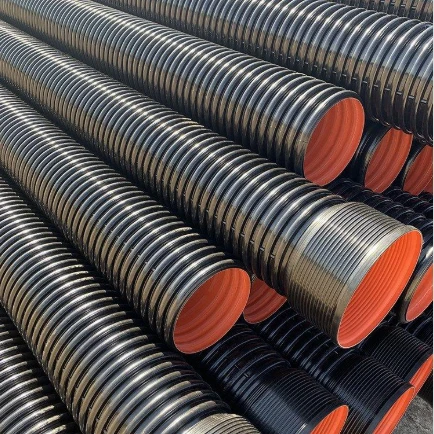
Polyvinyl chloride (PVC) pipe, specifically the 12-inch diameter variant frequently offered at discounted rates, represents a fundamental component in a diverse range of infrastructure projects. Its primary application lies in the conveyance of fluids – potable water, wastewater, irrigation, and various industrial liquids – as well as in drainage, venting, and electrical conduit systems. Within the industry value chain, 12-inch PVC pipe sits downstream from ethylene and chlorine production (feedstock materials) and PVC resin manufacturing. Core performance characteristics center around its pressure rating (measured in PSI), its ability to maintain structural integrity under load, and its long-term resistance to chemical degradation. The ‘discount’ designation typically refers to volume purchasing, manufacturing efficiencies, or end-of-line stock, rather than a compromise in adherence to established industry standards. A key industry pain point involves ensuring consistent wall thickness and material composition to guarantee long-term performance and prevent catastrophic failures, especially in critical applications like municipal water distribution.
Material Science & Manufacturing
The foundational material for 12-inch PVC pipe is PVC resin, a thermoplastic polymer produced through the polymerization of vinyl chloride monomer (VCM). PVC exhibits a glass transition temperature (Tg) of approximately 80°C, influencing its behavior at varying temperatures. Additives – plasticizers (phthalates, adipates), stabilizers (organotin compounds, calcium-zinc stabilizers), lubricants, and impact modifiers – are crucial for tailoring PVC’s properties. Plasticizers increase flexibility, stabilizers prevent thermal degradation during processing, lubricants aid in extrusion, and impact modifiers enhance toughness. Manufacturing primarily utilizes extrusion. PVC resin and additives are fed into a heated extruder where they are melted and homogenized. This molten material is then forced through a die, shaping it into a seamless pipe. Critical parameters include die temperature (180-220°C), screw speed, haul-off speed (controlling pipe dimensions), and cooling rate (influencing crystallinity and dimensional stability). Wall thickness is tightly controlled using calibrated dies and online monitoring systems. Quality control involves rigorous testing of tensile strength, impact resistance (Izod or Charpy tests), and hydrostatic pressure capacity. The specific PVC compound used (Schedule 40, Schedule 80) dictates the material’s density, rigidity, and pressure-bearing capability. Improper cooling can lead to internal stresses and dimensional inconsistencies, contributing to long-term failure.
Performance & Engineering
The performance of 12-inch PVC pipe is dictated by its ability to withstand internal hydrostatic pressure, external loads (soil loading, traffic loads), and long-term environmental factors. Force analysis focuses on hoop stress (circumferential stress) resulting from internal pressure, calculated using the Barlow formula: σ = (PD)/(2t) where P = internal pressure, D = pipe diameter, and t = wall thickness. External loads induce bending stresses, requiring adequate bedding and backfill support to prevent pipe deformation and cracking. Environmental resistance is critical. UV exposure can cause embrittlement, necessitating UV stabilizers in the PVC formulation or burial to minimize exposure. Chemical resistance is generally good for many common substances, but prolonged exposure to certain solvents and aggressive chemicals can cause swelling, cracking, or leaching of plasticizers. Compliance requirements are stringent, governed by standards like ASTM D1785 (for PVC pipe) and AWWA C900 (for potable water distribution). Installation practices – proper jointing (solvent welding, rubber gasket joints), adequate bedding, and corrosion protection – are essential for ensuring long-term performance. Failure to account for thermal expansion and contraction can induce stresses at joints, leading to leaks.
Technical Specifications
| Parameter | Schedule 40 | Schedule 80 | ASTM D1785 Compliance |
|---|---|---|---|
| Nominal Pipe Size (inches) | 12 | 12 | Yes |
| Outside Diameter (inches) | 12.68 | 12.68 | Yes |
| Wall Thickness (inches) | 0.375 | 0.438 | Yes |
| Pressure Rating (PSI at 73°F) | 280 | 450 | Yes |
| Burst Pressure (PSI) | 840 | 1350 | Yes |
| Material | PVC (Polyvinyl Chloride) | PVC (Polyvinyl Chloride) | Yes |
Failure Mode & Maintenance
Common failure modes for 12-inch PVC pipe include cracking (due to overpressure, external loads, or material defects), joint failure (improper solvent welding, gasket failure), slow crack growth (SCG) induced by sustained tensile stress and chemical attack, and brittle fracture (especially at low temperatures). Fatigue cracking can occur in areas subjected to cyclic loading. Delamination can occur due to poor material mixing or inadequate processing. Oxidation, particularly from UV exposure, leads to embrittlement and surface cracking. Maintenance involves regular visual inspections for cracks, leaks, and deformation. Pressure testing can identify leaks. For minor cracks, epoxy-based repair compounds can provide a temporary fix, but complete pipe replacement is often recommended for significant damage. Prevention strategies include proper installation, adequate bedding and backfill, surge protection (to mitigate water hammer), and corrosion protection (cathodic protection in aggressive soil environments). Preventative maintenance programs, including periodic inspections and pressure testing, are crucial for maximizing service life. Proper storage of PVC pipe is also critical; it should be protected from direct sunlight and extreme temperatures.
Industry FAQ
Q: What is the impact of temperature fluctuations on the performance of 12-inch PVC pipe?
A: PVC experiences thermal expansion and contraction with temperature changes. This movement can induce stress at joints and potentially lead to leaks if not properly accounted for during installation. Expansion joints or flexible couplings should be used in long pipeline runs to accommodate thermal movement. Furthermore, the material’s impact resistance decreases at lower temperatures, increasing the risk of brittle fracture.
Q: How does soil corrosivity affect the longevity of buried PVC pipe?
A: While PVC is generally resistant to corrosion, aggressive soil conditions – high acidity, high chloride content, or the presence of stray electrical currents – can accelerate degradation. Corrosion can lead to material weakening and eventual failure. Cathodic protection may be necessary in highly corrosive environments. Proper bedding and backfill materials can also help to isolate the pipe from corrosive elements.
Q: What are the key differences between Schedule 40 and Schedule 80 PVC pipe, and when would I choose one over the other?
A: Schedule 80 pipe has a thicker wall than Schedule 40 pipe, resulting in higher pressure ratings and greater resistance to impact. Schedule 40 is suitable for lower-pressure applications, such as irrigation and drainage, where cost is a primary concern. Schedule 80 is preferred for higher-pressure applications, such as municipal water distribution and industrial processes, where greater strength and durability are required.
Q: What are the acceptable solvent welding procedures for joining 12-inch PVC pipe?
A: Proper solvent welding is critical for creating leak-proof joints. Surfaces must be clean, dry, and free of debris. The correct primer and solvent cement must be used, compatible with the PVC formulation. Primer is applied first to soften the PVC surface, followed by the solvent cement. The pipe and fitting are immediately joined with a slight twisting motion to ensure even cement distribution. Sufficient curing time must be allowed before pressurizing the system.
Q: What quality control checks should be performed upon delivery of a discounted shipment of 12-inch PVC pipe?
A: Despite being a ‘discount’ shipment, rigorous quality control is paramount. Visually inspect each pipe section for surface defects, cracks, and dimensional inconsistencies. Verify the pipe diameter and wall thickness using calibrated measuring tools. Conduct a hydrostatic pressure test on a representative sample to confirm its pressure-holding capacity. Check for proper markings indicating material grade, size, and pressure rating. A certificate of compliance from the manufacturer should also be requested.
Conclusion
The 12-inch diameter PVC pipe, even in discounted offerings, remains a highly versatile and cost-effective solution for fluid conveyance and infrastructure applications. Its performance, however, is intrinsically linked to meticulous attention to material selection, manufacturing quality control, proper installation practices, and ongoing maintenance. Understanding the nuances of PVC material science – including the role of additives, the impact of temperature, and susceptibility to specific chemical exposures – is critical for ensuring long-term reliability and preventing premature failure.
Future developments in PVC technology are focused on enhancing impact resistance, improving UV stability, and developing more sustainable formulations. The adoption of smart monitoring systems – incorporating sensors to detect leaks, pressure fluctuations, and internal corrosion – will further optimize pipeline performance and extend service life. Continued adherence to established industry standards (ASTM, AWWA) and best practices remains essential for maintaining the integrity and safety of PVC pipeline infrastructure.
-
DN25 HDPE Compression Fitting-HORON INTERNATIONAL|Reliable Irrigation Solutions
NewsFeb.11,2026
-
hdpe coupling joint product Manufacturing Analysis
News2026-11-18
-
ppr pipe heating time products Performance Analysis
News2026-11-16
-
hdpe pipe sizes factory Performance Analysis
News2026-11-09
-
HDPE Pipe Sizes Service Performance Analysis
News2026-10-26
-
wholesale 15mm ppr pipe Material Science and Performance Analysis
News2026-10-20
-
wholesale pvc pipe price per foot Technical Analysis
News2026-09-21
-
wholesale long pvc pipe Technical Analysis and Manufacturing Specifications
News2026-09-15
-
wholesale plumbing kitchen sink water lines Material Performance
News2026-09-15
-
wholesale hdpe drip irrigation Material Science
News2026-09-15
-
wholesale hot water ppr pipe Performance Analysis
News2026-09-15
-
wholesale ppr plumbing Performance Analysis
News2026-09-15
-
wholesale ppr pipe supplier Performance Analysis
News2026-09-13
-
wholesale 50mm ppr pipe Performance Analysis
News2026-09-13
-
wholesale hdpe drip pipe Performance Analysis
News2026-09-13
-
wholesale hdpe pipe 63mm price Manufacturing Specification and Performance Analysis
News2026-09-13