

Feb . 11, 2026 00:01 Back to list
discount 1 2 ppr pipe in mm Performance Analysis
Introduction
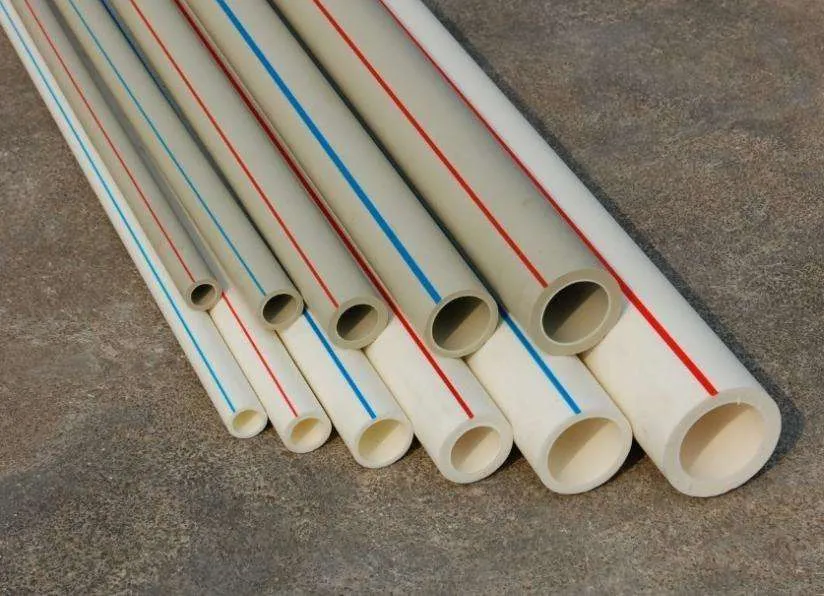
Polypropylene Random (PPR) pipe, specifically the discount 1 2 PPR pipe in mm designation, represents a significant advancement in fluid transport systems across diverse applications including potable water distribution, industrial piping, and heating/cooling systems. PPR pipe’s technical position in the industry chain lies between the raw polypropylene resin production and the final installation of plumbing and piping networks. It offers a robust, corrosion-resistant, and cost-effective alternative to traditional metallic piping materials. Core performance characteristics center around pressure resistance, thermal stability, and hygienic properties, making it suitable for conveying fluids up to elevated temperatures. This guide provides an in-depth exploration of its material science, manufacturing processes, performance capabilities, potential failure modes, and relevant industry standards. The 1/2" (12mm) dimension is a frequently used size for residential and small commercial applications.
Material Science & Manufacturing
The foundational material for discount 1 2 PPR pipe in mm is polypropylene random copolymer. This material exhibits superior impact resistance and crack resistance compared to homopolymer polypropylene. Specifically, the random copolymerization introduces ethylenic units into the polypropylene chain, disrupting crystallinity and enhancing flexibility. Raw material properties critical to pipe performance include Melt Flow Index (MFI), density (typically between 0.905-0.925 g/cm³), and Vicat softening temperature (typically 135-145°C). Manufacturing commences with the extrusion process. Polypropylene granules are fed into a plastic extruder, melted, and forced through a die to form a seamless pipe. Key parameters in extrusion include die temperature (190-230°C), extrusion speed, and cooling rate. The cooling process is crucial as it dictates the pipe's crystallinity and dimensional stability. Socket fusion welding or electrofusion welding are standard joining methods. Socket fusion involves heating both the pipe end and the fitting socket and pressing them together to create a homogenous weld. Electrofusion utilizes an electrically heated fitting and precise time/temperature control for a stronger, more reliable joint. Precise control of these parameters is vital to maintain consistent pipe wall thickness, diameter, and mechanical strength. The addition of UV stabilizers is also important for outdoor applications, protecting the polymer from degradation due to ultraviolet radiation.
Performance & Engineering
Performance of discount 1 2 PPR pipe in mm is governed by several engineering principles. Hydrostatic pressure testing, according to standards like ISO 1167, confirms the pipe’s ability to withstand internal pressure without rupture or leakage. Force analysis reveals that hoop stress (tangential stress in the pipe wall due to internal pressure) is the primary stress component. The pipe's wall thickness is engineered to maintain allowable stress levels well below the material's yield strength. Environmental resistance is a critical consideration. While PPR exhibits excellent resistance to many chemicals, it can be affected by strong oxidizing agents and certain organic solvents. Temperature fluctuations induce thermal expansion and contraction, necessitating the inclusion of expansion loops or flexible connectors in long pipe runs to prevent stress cracking. Compliance requirements are stringent, particularly for potable water applications. PPR materials must meet standards for leachables, ensuring that no harmful substances migrate into the water supply. The pipe's smooth inner surface minimizes friction loss, reducing pumping energy requirements. Furthermore, the material's low thermal conductivity minimizes heat loss in hot water systems, enhancing energy efficiency. The long-term hydrostatic strength (LTHS) of PPR is a critical performance parameter, typically assessed through accelerated aging tests and extrapolated to predict service life at different temperatures and pressures.
Technical Specifications
| Parameter | Unit | Value (Typical) | Test Standard |
|---|---|---|---|
| Nominal Diameter | mm | 12 (1/2") | ISO 15876 |
| Wall Thickness | mm | 2.0 - 3.2 | ISO 15876 |
| Pressure Rating (PN) | bar | 16, 20, 25 | ISO 15876 |
| Tensile Strength | MPa | >25 | ISO 527 |
| Elongation at Break | % | >300 | ISO 527 |
| Vicat Softening Temperature | °C | 135-145 | ISO 306 |
Failure Mode & Maintenance
Failure modes of discount 1 2 PPR pipe in mm can be categorized as follows: 1) Mechanical failure: Fatigue cracking can occur under cyclic pressure loads, particularly at stress concentration points (e.g., around fittings). Impact damage can lead to brittle fracture. 2) Chemical failure: Exposure to incompatible chemicals (strong oxidizing agents, certain solvents) can cause swelling, embrittlement, and ultimately, leakage. 3) Thermal failure: Excessive temperatures can cause softening and creep, leading to deformation and reduced pressure resistance. 4) UV degradation: Prolonged exposure to ultraviolet radiation can cause surface cracking and loss of mechanical properties. 5) Joint failure: Improperly executed socket fusion or electrofusion welds can result in weak joints prone to leakage. Maintenance primarily involves visual inspection for cracks, leaks, or signs of degradation. Regular pressure testing can identify potential weaknesses. For minor leaks at joints, re-welding may be possible, but it requires skilled technicians and proper equipment. Preventive maintenance includes protecting pipes from direct sunlight exposure with appropriate shielding or coatings. Avoiding the use of abrasive cleaning agents is also crucial, as they can create surface scratches that act as stress risers. Periodically flushing the system to remove sediment buildup can prevent blockage and maintain flow rates. Proper support and anchoring of the pipes are essential to prevent excessive stress and strain.
Industry FAQ
Q: What is the long-term performance expectation of PPR pipe in a potable water system, and how does temperature affect this?
A: The long-term performance, quantified by the Long-Term Hydrostatic Strength (LTHS), is typically projected to exceed 50 years at room temperature (20°C) under normal operating pressures. However, elevated temperatures significantly reduce LTHS. For example, at 60°C, the projected service life may be reduced to 10-15 years. Therefore, careful consideration of operating temperatures is crucial during system design.
Q: How does PPR pipe compare to CPVC (Chlorinated Polyvinyl Chloride) in terms of chemical resistance?
A: While both PPR and CPVC offer good chemical resistance, CPVC generally exhibits superior resistance to chlorinated water and a broader range of aggressive chemicals. PPR is susceptible to degradation by strong oxidizing agents and certain organic solvents that CPVC can withstand. The choice between the two depends heavily on the specific chemical environment the pipe will be exposed to.
Q: What are the key considerations for ensuring a reliable socket fusion weld?
A: Ensuring a reliable socket fusion weld requires precise temperature control of both the pipe and fitting, appropriate alignment, sufficient insertion depth, and adequate cooling time. The welding tool must be calibrated regularly. Surface cleanliness is also paramount – both surfaces must be free from dirt, debris, and moisture. Visual inspection of the weld bead is essential to confirm a complete and uniform fusion.
Q: Is PPR pipe suitable for outdoor applications, and what precautions should be taken?
A: While PPR possesses inherent UV resistance, prolonged exposure to direct sunlight can cause surface degradation and embrittlement. Therefore, for outdoor applications, it's crucial to use UV-stabilized PPR formulations and/or protect the pipes with opaque coatings or shielding materials. Darker colors generally provide better UV protection than lighter colors.
Q: What is the recommended maximum flow velocity for PPR pipe, and what are the potential consequences of exceeding it?
A: The recommended maximum flow velocity for PPR pipe is typically around 2-2.5 m/s. Exceeding this velocity can lead to increased friction loss, noise generation (water hammer), and potentially, erosion of the pipe wall over time, particularly at bends and fittings. Proper pipe sizing is essential to maintain flow velocities within acceptable limits.
Conclusion
Discount 1 2 PPR pipe in mm represents a versatile and cost-effective solution for a broad spectrum of fluid conveyance applications. Its inherent corrosion resistance, relatively simple installation via fusion welding, and compliance with stringent potable water standards make it a preferred choice in residential, commercial, and industrial settings. However, its performance is critically dependent on proper material selection (UV stabilized grades for outdoor use), meticulous installation techniques, and awareness of its limitations regarding chemical compatibility and temperature sensitivity.
Looking forward, advancements in PPR formulations, such as the incorporation of nanoparticles to enhance mechanical properties and UV resistance, are likely to further expand its application range. Continued adherence to international standards and rigorous quality control measures are essential to ensure the long-term reliability and safety of PPR piping systems. The increasing focus on sustainable building practices also positions PPR favorably, owing to its recyclability and contribution to reduced energy consumption in hot water systems.
-
DN25 HDPE Compression Fitting-HORON INTERNATIONAL|Reliable Irrigation Solutions
NewsFeb.11,2026
-
hdpe coupling joint product Manufacturing Analysis
News2026-11-18
-
ppr pipe heating time products Performance Analysis
News2026-11-16
-
hdpe pipe sizes factory Performance Analysis
News2026-11-09
-
HDPE Pipe Sizes Service Performance Analysis
News2026-10-26
-
wholesale 15mm ppr pipe Material Science and Performance Analysis
News2026-10-20
-
wholesale pvc pipe price per foot Technical Analysis
News2026-09-21
-
wholesale long pvc pipe Technical Analysis and Manufacturing Specifications
News2026-09-15
-
wholesale plumbing kitchen sink water lines Material Performance
News2026-09-15
-
wholesale hdpe drip irrigation Material Science
News2026-09-15
-
wholesale hot water ppr pipe Performance Analysis
News2026-09-15
-
wholesale ppr plumbing Performance Analysis
News2026-09-15
-
wholesale ppr pipe supplier Performance Analysis
News2026-09-13
-
wholesale 50mm ppr pipe Performance Analysis
News2026-09-13
-
wholesale hdpe drip pipe Performance Analysis
News2026-09-13
-
wholesale hdpe pipe 63mm price Manufacturing Specification and Performance Analysis
News2026-09-13