

Feb . 11, 2026 00:01 Back to list
whole sale pvc pipe factory Technical Analysis

Introduction
Polyvinyl chloride (PVC) pipe represents a cornerstone material in modern infrastructure, serving diverse applications from potable water distribution and wastewater management to irrigation and industrial fluid conveyance. Whole sale PVC pipe factories are critical suppliers to these sectors, demanding consistent quality and adherence to stringent performance standards. This guide provides an in-depth technical analysis of PVC pipe, covering material science, manufacturing processes, performance characteristics, failure modes, and relevant industry standards. The core challenge within the industry revolves around balancing cost-effectiveness with long-term durability, chemical resistance, and compliance with increasingly complex regulatory landscapes. Effective procurement requires a thorough understanding of PVC resin grades, manufacturing nuances, and potential degradation pathways to ensure optimal lifecycle performance and mitigate risks associated with system failures.
Material Science & Manufacturing
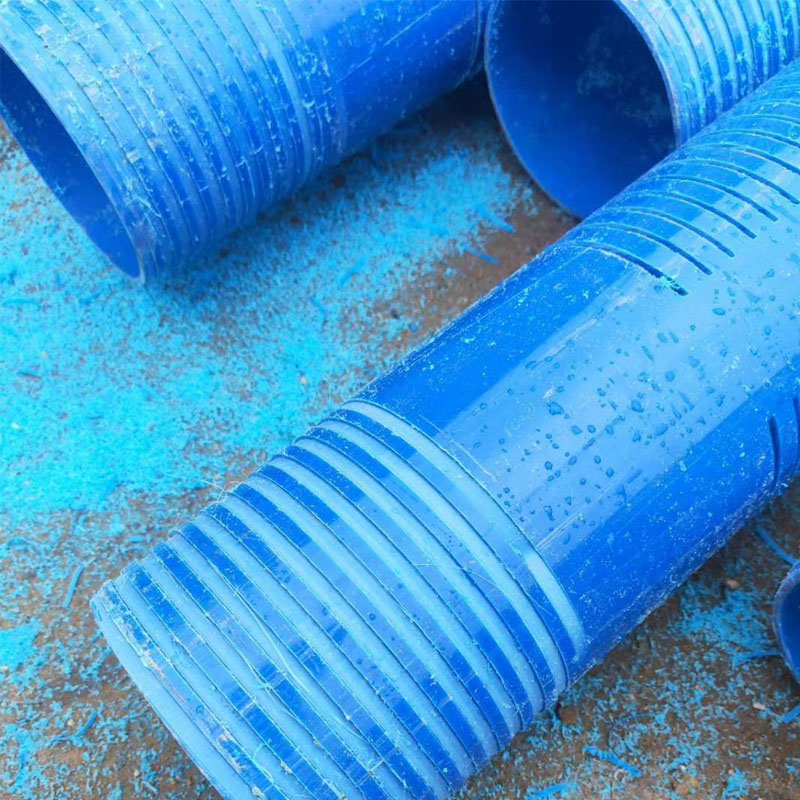
PVC is a thermoplastic polymer produced by the polymerization of vinyl chloride monomer (VCM). The raw material's properties are heavily influenced by the specific resin grade (e.g., PVC-U, PVC-C, CPVC) and the inclusion of additives such as plasticizers, stabilizers, lubricants, and impact modifiers. PVC-U (Unplasticized PVC) is the most common form used for pressure piping, offering excellent rigidity and strength. Manufacturing typically involves compounding the PVC resin with additives, followed by extrusion. Extrusion parameters – temperature profile (melt temperature ranging from 180-220°C), screw speed, die design, and cooling rate – critically impact the pipe’s dimensional accuracy, surface finish, and mechanical properties. The cooling process, often employing a water bath, must be carefully controlled to prevent warping or internal stresses. Jointing methods, such as solvent cementing, threading, or gasketed connections, introduce additional complexity and require compatible materials and proper application techniques. Raw material quality control, particularly monitoring the molecular weight distribution and chlorine content of the PVC resin, is paramount to ensuring consistent product performance. Furthermore, the type and concentration of stabilizers (typically based on calcium-zinc or organotin compounds) are vital for long-term thermal and UV stability.
Performance & Engineering
The performance of PVC pipe is dictated by its ability to withstand hydrostatic pressure, external loads, and environmental stresses. Hydrostatic pressure testing, conducted according to ASTM D1597, assesses the pipe's resistance to internal pressure, revealing potential defects or weaknesses. External load resistance is critical in buried applications, where soil cover and traffic loads can induce bending stress and potential cracking. Soil conditions (compaction, moisture content, and presence of aggressive chemicals) significantly influence the load-bearing capacity of the surrounding soil. PVC’s relatively low modulus of elasticity necessitates careful consideration of pipe wall thickness and bedding material to prevent deformation or failure. Chemical resistance is another crucial parameter, as exposure to certain solvents, acids, or bases can cause swelling, degradation, or embrittlement. Long-term creep behavior, particularly under sustained pressure, must also be considered in design calculations. Finite element analysis (FEA) is increasingly employed to model the stress distribution within PVC pipe systems and optimize designs for specific applications. Compliance with relevant codes and standards, such as NSF/ANSI 61 for potable water applications, is non-negotiable.
Technical Specifications
| Parameter | Unit | ASTM D1785 (Schedule 40) | ASTM D2466 (Schedule 80) |
|---|---|---|---|
| Nominal Pipe Size | inches | 0.5 - 12 | 0.5 - 24 |
| Pressure Rating | psi | Up to 400 | Up to 600 |
| Wall Thickness | inches | 0.065 - 0.375 | 0.085 - 0.555 |
| Outside Diameter | inches | 0.625 - 13.500 | 0.625 - 13.500 |
| Tensile Strength | psi | > 6,000 | > 6,000 |
| Flexural Modulus | psi | > 400,000 | > 400,000 |
Failure Mode & Maintenance
PVC pipe is susceptible to several failure modes, including brittle fracture, cracking, and degradation. Brittle fracture can occur due to impact loads, particularly at low temperatures. Cracking can arise from sustained stress, exposure to corrosive chemicals, or improper installation. Long-term degradation is primarily caused by UV radiation, thermal oxidation, and hydrolysis. UV radiation breaks down the polymer chains, leading to embrittlement and discoloration. Thermal oxidation, accelerated at elevated temperatures, causes chain scission and loss of mechanical properties. Hydrolysis, the reaction with water, can lead to the release of hydrochloric acid (HCl), further accelerating degradation. Maintenance involves regular visual inspections for cracks, leaks, or discoloration. Proper bedding and backfill procedures are essential to prevent external stresses. Avoiding the use of incompatible solvents or cleaning agents is crucial. For repairs, solvent cementing with compatible adhesives is the most common method, but proper surface preparation and application techniques are essential. In cases of significant damage, pipe replacement may be necessary. Preventative measures include utilizing UV-stabilized PVC compounds for exposed applications and implementing corrosion protection measures in aggressive environments.
Industry FAQ
Q: What is the impact of chlorine content in the PVC resin on the long-term performance of the pipe?
A: The chlorine content directly affects the pipe's thermal stability and resistance to degradation. Higher chlorine content generally leads to better flame retardancy but can also increase the potential for HCl release during degradation. Precise control of chlorine content during resin manufacturing is crucial for consistent product performance.
Q: How does the type of stabilizer used in PVC pipe affect its lifespan?
A: Stabilizers prevent thermal and UV degradation. Calcium-zinc stabilizers are considered more environmentally friendly but may offer lower long-term performance compared to organotin stabilizers, particularly in demanding applications. The choice of stabilizer depends on the intended application and regulatory requirements.
Q: What are the key considerations when selecting a solvent cement for joining PVC pipes?
A: Compatibility with the PVC resin type is paramount. The solvent cement must dissolve the PVC surface to create a fused joint. Factors such as viscosity, curing time, and temperature resistance should also be considered. Always follow the manufacturer's instructions for application.
Q: How can you mitigate the risk of brittle fracture in PVC pipes exposed to low temperatures?
A: Using impact-modified PVC formulations can significantly improve toughness at low temperatures. Ensuring proper bedding and backfill to prevent stress concentrations is also critical. Avoiding sudden impacts or shock loads is essential.
Q: What are the implications of using improper bedding material around buried PVC pipes?
A: Inadequate bedding can lead to uneven support, stress concentrations, and potential cracking. Sharp rocks or debris can damage the pipe. Proper bedding material (e.g., sand or gravel) provides uniform support and protects the pipe from external stresses.
Conclusion
PVC pipe remains a vital material in infrastructure applications due to its cost-effectiveness, durability, and versatility. However, optimizing long-term performance necessitates a comprehensive understanding of the material’s properties, manufacturing processes, and potential failure modes. Rigorous quality control, adherence to industry standards, and proper installation practices are essential for ensuring the reliable operation of PVC pipe systems.
Future developments in PVC technology will likely focus on enhancing its sustainability through the use of recycled materials and bio-based additives. Furthermore, advancements in polymer chemistry are expected to yield PVC formulations with improved impact resistance, thermal stability, and chemical resistance, expanding its application range and extending its service life. Continual monitoring and adaptation to evolving regulations and industry best practices will be critical for maintaining the integrity and longevity of PVC infrastructure.
-
DN25 HDPE Compression Fitting-HORON INTERNATIONAL|Reliable Irrigation Solutions
NewsFeb.11,2026
-
hdpe coupling joint product Manufacturing Analysis
News2026-11-18
-
ppr pipe heating time products Performance Analysis
News2026-11-16
-
hdpe pipe sizes factory Performance Analysis
News2026-11-09
-
HDPE Pipe Sizes Service Performance Analysis
News2026-10-26
-
wholesale 15mm ppr pipe Material Science and Performance Analysis
News2026-10-20
-
wholesale pvc pipe price per foot Technical Analysis
News2026-09-21
-
wholesale long pvc pipe Technical Analysis and Manufacturing Specifications
News2026-09-15
-
wholesale plumbing kitchen sink water lines Material Performance
News2026-09-15
-
wholesale hdpe drip irrigation Material Science
News2026-09-15
-
wholesale hot water ppr pipe Performance Analysis
News2026-09-15
-
wholesale ppr plumbing Performance Analysis
News2026-09-15
-
wholesale ppr pipe supplier Performance Analysis
News2026-09-13
-
wholesale 50mm ppr pipe Performance Analysis
News2026-09-13
-
wholesale hdpe drip pipe Performance Analysis
News2026-09-13
-
wholesale hdpe pipe 63mm price Manufacturing Specification and Performance Analysis
News2026-09-13