

Feb . 11, 2026 00:01 Back to list
upvc column pipes for submersible pumps manufacturer Performance Analysis

Introduction
Unplasticized Polyvinyl Chloride (uPVC) column pipes are critical components in submersible pump systems, serving as the conduit for delivering water from the pump to the surface. Their application is widespread in agriculture, irrigation, dewatering, and potable water supply. Unlike metallic alternatives, uPVC offers inherent corrosion resistance and a lighter weight, simplifying installation and reducing life-cycle costs. This guide provides a comprehensive technical overview of uPVC column pipes specifically engineered for submersible pumps, detailing material science, manufacturing processes, performance characteristics, potential failure modes, and relevant industry standards. The primary function of these pipes is to provide a structurally sound and chemically inert passage for pumped fluids, while simultaneously supporting the weight of the pump and the fluid column itself. The core performance metrics revolve around pressure rating, tensile strength, impact resistance, and long-term hydrolytic stability. A key industry pain point is ensuring consistent wall thickness and material homogeneity to prevent catastrophic failure under sustained operational stress. Achieving reliable and durable submersible pump installations necessitates a thorough understanding of uPVC's properties and limitations.
Material Science & Manufacturing
uPVC column pipes are manufactured from a thermoplastic polymer, Polyvinyl Chloride (PVC), modified with stabilizers and impact modifiers to enhance its physical and chemical properties. The raw material, PVC resin, typically sourced from vinyl chloride monomer (VCM), is compounded with plasticizers (although minimal in rigid uPVC), lubricants, UV stabilizers, and processing aids. The key properties of uPVC relevant to column pipe applications include a tensile strength ranging from 55-75 MPa, a flexural modulus of 3-4 GPa, and a relatively low coefficient of friction. Impact resistance is often improved through the addition of acrylic impact modifiers, increasing the Charpy impact strength. Manufacturing typically employs extrusion processes. PVC compound is fed into a single-screw or twin-screw extruder, where it is heated and plasticized. The molten PVC is then forced through a die to form the desired pipe diameter and wall thickness. Critical process parameters include die temperature (180-220°C), extrusion speed, and cooling rate. Accurate temperature control is vital to prevent degradation and ensure dimensional consistency. Post-extrusion, the pipes undergo calibration to maintain precise outer diameter and wall thickness, followed by cutting to length. Quality control measures include hydrostatic pressure testing to verify pressure rating, and dimensional checks to ensure adherence to specified tolerances (ASTM D1785). Hydrolytic stability, a long-term degradation concern, is addressed through the careful selection of stabilizers and the maintenance of a low residual chlorine content in the PVC resin.
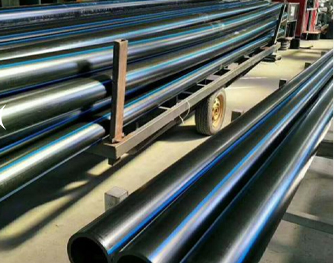
Performance & Engineering
The performance of uPVC column pipes is dictated by their ability to withstand internal hydrostatic pressure, external loads (weight of the pump and fluid column), and environmental stresses. Force analysis considers hoop stress (due to internal pressure), longitudinal stress (due to axial load), and bending stress (due to pipe deflection). The long-term hydrostatic design basis (LHDBS) is a critical engineering parameter, representing the allowable stress level over a specified design life (typically 50 years). Environmental resistance is crucial, particularly in applications involving exposure to UV radiation and varying temperatures. UV stabilizers are incorporated into the PVC compound to mitigate degradation caused by prolonged sunlight exposure. The pipe’s chemical compatibility with the pumped fluid is also paramount; uPVC exhibits excellent resistance to most acids, alkalis, and salts, but can be affected by certain organic solvents and chlorinated hydrocarbons. Compliance requirements, such as those outlined in NSF/ANSI 61 for potable water applications, dictate acceptable levels of contaminants that can leach from the pipe material. Furthermore, the pipe must be designed to minimize friction losses, which are influenced by pipe roughness and fluid velocity. Threaded connections, if used, must be properly sealed to prevent leakage and ensure structural integrity. Detailed calculations are required to determine the appropriate pipe schedule (wall thickness) to meet the specific demands of the submersible pump system, considering pump head, flow rate, and fluid density. Proper installation procedures, including adequate support and alignment, are essential to prevent stress concentrations and premature failure.
Technical Specifications
| Parameter | Unit | Specification Range | Test Standard |
|---|---|---|---|
| Outer Diameter | mm | 20-315 | ASTM D2466 |
| Wall Thickness | mm | 2.0-10.0 | ASTM D1785 |
| Pressure Rating (PN) | Bar | 6-16 | ISO 14692 |
| Tensile Strength | MPa | 55-75 | ASTM D638 |
| Flexural Modulus | GPa | 3.0-4.0 | ASTM D790 |
| Impact Strength (Charpy) | kJ/m2 | 5-20 (depending on grade) | ASTM D256 |
Failure Mode & Maintenance
uPVC column pipes are susceptible to several failure modes, including hydrostatic failure (bursting due to excessive internal pressure), impact fracture (caused by external impact or sudden pressure surges), stress cracking (induced by sustained tensile stress in the presence of corrosive fluids), and UV degradation (leading to embrittlement and reduced strength). Hydrolytic degradation, a slow process involving the breakdown of the polymer chain due to reaction with water, is a long-term concern, particularly in hot and humid environments. Failure analysis often reveals cracks originating at stress concentrators, such as threaded connections or imperfections in the pipe wall. Delamination can occur if the impact modifier is not adequately dispersed within the PVC matrix. Oxidation, while less common, can occur at elevated temperatures and contribute to material degradation. Preventive maintenance involves regular visual inspections to identify cracks, bulges, or other signs of damage. Periodic pressure testing can verify the integrity of the pipe. Proper installation practices, including adequate support and alignment, are crucial to minimize stress concentrations. If minor cracks are detected, repair with appropriate uPVC cement may be possible, but for significant damage, replacement is recommended. Avoid exposing the pipes to extreme temperatures or corrosive chemicals. Regular cleaning to remove sediment buildup can also help prevent localized stress concentrations and maintain optimal flow rates. Implementing a corrosion monitoring program, especially in aggressive environments, is advisable for long-term reliability.
Industry FAQ
Q: What is the long-term effect of continuous exposure to chlorine in potable water on uPVC column pipe performance?
A: Continuous exposure to chlorine, even at typical disinfection levels, can contribute to slow hydrolytic degradation of the uPVC material over extended periods. This results in a gradual reduction in impact strength and tensile strength. The rate of degradation is influenced by water temperature and the concentration of chlorine. Formulations with high levels of stabilizer are used to mitigate this, and regular water quality monitoring is recommended. Manufacturers often provide data on expected service life under specific chlorine exposure conditions.
Q: How does temperature affect the pressure rating of uPVC column pipes?
A: The pressure rating of uPVC column pipes decreases as temperature increases. This is because the tensile strength and yield strength of uPVC are temperature-dependent. Manufacturers typically provide derating factors for elevated temperatures, specifying the maximum allowable operating pressure at different temperatures. It is crucial to consult these derating curves to ensure safe operation.
Q: What are the recommended procedures for joining uPVC column pipes?
A: Joining uPVC column pipes typically involves solvent cementing using a compatible uPVC cement and primer. The surfaces must be clean, dry, and free of contaminants. The primer softens the pipe and fitting surfaces, while the cement creates a strong, watertight bond. Proper application technique, including sufficient cement coverage and curing time, is critical. Threaded connections, if used, require PTFE tape or a suitable sealant to prevent leakage.
Q: What level of external load can a standard uPVC column pipe withstand before buckling?
A: The buckling load of a uPVC column pipe depends on its diameter, wall thickness, length, and the support conditions. A longer pipe with a larger diameter and thinner wall will be more susceptible to buckling. Finite element analysis (FEA) or empirical calculations based on Euler's buckling formula are used to determine the critical buckling load for specific pipe configurations.
Q: What is the impact of UV exposure on the lifespan of uPVC column pipes used in outdoor applications?
A: Prolonged UV exposure can cause surface chalking, discoloration, and a reduction in impact strength of uPVC. UV stabilizers are added during manufacturing to mitigate these effects. However, the effectiveness of these stabilizers diminishes over time. Painting the pipes with a UV-reflective coating or providing physical shielding can significantly extend their service life in outdoor applications. Regular inspections for signs of UV degradation are crucial.
Conclusion
uPVC column pipes represent a cost-effective and durable solution for submersible pump applications, offering significant advantages in terms of corrosion resistance, weight, and ease of installation. However, their performance is intrinsically linked to proper material selection, manufacturing quality, and adherence to established engineering principles. Understanding the material's limitations regarding temperature sensitivity, hydrolytic stability, and susceptibility to UV degradation is paramount.
Successful implementation requires careful consideration of the specific operating conditions, including fluid chemistry, pressure requirements, and environmental factors. Implementing a robust quality control program, coupled with regular inspection and maintenance procedures, will ensure long-term reliability and minimize the risk of catastrophic failure. Continued advancements in PVC formulations and manufacturing techniques promise to further enhance the performance and lifespan of uPVC column pipes in demanding submersible pump systems.
-
DN25 HDPE Compression Fitting-HORON INTERNATIONAL|Reliable Irrigation Solutions
NewsFeb.11,2026
-
hdpe coupling joint product Manufacturing Analysis
News2026-11-18
-
ppr pipe heating time products Performance Analysis
News2026-11-16
-
hdpe pipe sizes factory Performance Analysis
News2026-11-09
-
HDPE Pipe Sizes Service Performance Analysis
News2026-10-26
-
wholesale 15mm ppr pipe Material Science and Performance Analysis
News2026-10-20
-
wholesale pvc pipe price per foot Technical Analysis
News2026-09-21
-
wholesale long pvc pipe Technical Analysis and Manufacturing Specifications
News2026-09-15
-
wholesale plumbing kitchen sink water lines Material Performance
News2026-09-15
-
wholesale hdpe drip irrigation Material Science
News2026-09-15
-
wholesale hot water ppr pipe Performance Analysis
News2026-09-15
-
wholesale ppr plumbing Performance Analysis
News2026-09-15
-
wholesale ppr pipe supplier Performance Analysis
News2026-09-13
-
wholesale 50mm ppr pipe Performance Analysis
News2026-09-13
-
wholesale hdpe drip pipe Performance Analysis
News2026-09-13
-
wholesale hdpe pipe 63mm price Manufacturing Specification and Performance Analysis
News2026-09-13