

Feb . 11, 2026 00:01 Back to list
upvc column pipes for submersible pumps factory Performance Analysis
Introduction
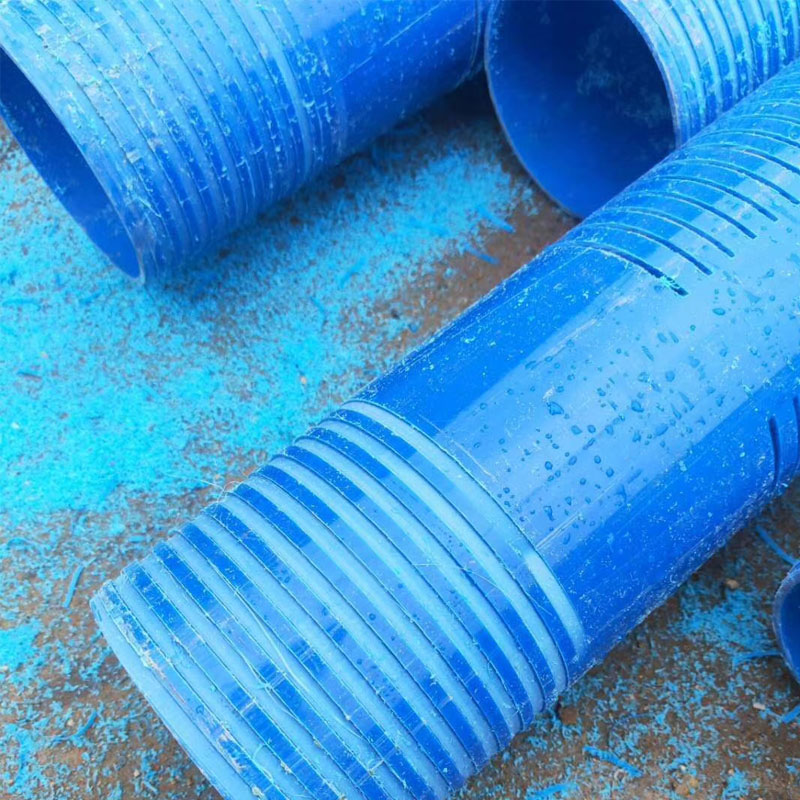
uPVC (Unplasticized Polyvinyl Chloride) column pipes are integral components in submersible pump systems, serving as the conduit for the pumped fluid. These pipes distinguish themselves from standard PVC piping through their rigid, reinforced construction, engineered to withstand the significant hydrostatic pressures and axial loads inherent in deep-well pumping applications. Positioned within the industry chain, they bridge the gap between the submersible pump itself and the surface discharge manifold. Core performance characteristics revolve around maintaining structural integrity under pressure, ensuring chemical compatibility with the conveyed fluid, and delivering long-term durability in harsh subsurface environments. The selection of appropriate uPVC column pipes is paramount to system efficiency, reliability, and longevity, directly impacting operational costs and mitigating potential downtime due to failure. Their increasing adoption stems from a favorable cost-benefit ratio compared to traditional metallic alternatives, coupled with excellent corrosion resistance, particularly in aggressive water chemistries.
Material Science & Manufacturing
The foundational material, uPVC, is a thermoplastic polymer produced through the polymerization of vinyl chloride monomer. Unlike flexible PVC, uPVC lacks plasticizers, resulting in a rigid material possessing high tensile strength and dimensional stability. Key raw materials include PVC resin, stabilizers (typically calcium-zinc or lead-based, though lead is increasingly restricted due to environmental concerns), lubricants, and impact modifiers. Manufacturing typically employs extrusion processes. PVC resin and additives are blended, then fed into an extruder where they are heated and forced through a die to form the pipe. Critical parameters during extrusion include temperature control (affecting melt viscosity and degradation), screw speed (influencing throughput and mixing), and die geometry (dictating pipe dimensions and concentricity). Subsequent processes include cooling (quenching in water baths to solidify the pipe), sizing (to achieve precise outer diameter), and cutting to length. Wall thickness is meticulously controlled, as it directly impacts pressure handling capability. Specialized co-extrusion techniques are employed to create striped pipes for visual indication of wear or damage, enhancing safety and maintenance practices. Quality control measures include hydrostatic pressure testing to verify burst strength and dimensional inspections to ensure adherence to standards. The choice of stabilizer impacts long-term UV resistance and thermal stability. Impact modifiers, such as chlorinated polyethylene (CPE), improve fracture toughness, particularly at lower temperatures.
Performance & Engineering
Performance of uPVC column pipes is fundamentally governed by their ability to withstand internal hydrostatic pressure and external axial loads. Force analysis involves calculating hoop stress (resulting from internal pressure) using the Barlow's formula, modified for PVC’s material properties. Axial loads, generated by the weight of the pump column and fluid, necessitate consideration of the pipe’s compressive strength and buckling resistance. Environmental resistance is critical. While uPVC exhibits excellent resistance to many chemicals, prolonged exposure to certain solvents or concentrated acids can induce swelling and degradation. Temperature also plays a significant role; elevated temperatures reduce the pipe’s yield strength and creep resistance. Compliance requirements are dictated by regional and international standards. Specifically, pipes must meet stringent dimensional tolerances, pressure ratings, and material specifications. Furthermore, the electrical insulation properties of uPVC are beneficial in submersible pump applications, preventing galvanic corrosion between dissimilar metals. The connection method (typically solvent cementing) is equally important. Proper joint preparation and adhesive application are crucial to maintain the pipe’s structural integrity and prevent leakage. Fatigue analysis is relevant for applications involving cyclical loading from pump start/stop events or water hammer effects.
Technical Specifications
| Parameter | Units | Typical Value | Testing Standard |
|---|---|---|---|
| Outside Diameter | mm | 125 - 315 | ISO 1055 |
| Wall Thickness | mm | 5 - 15 | ASTM D2241 |
| Pressure Rating (PN) | Bar | 6 - 16 | ISO 14692 |
| Tensile Strength | MPa | 60 - 75 | ISO 6259 |
| Impact Strength (Charpy) | kJ/m2 | 5 - 10 | ISO 148-1 |
| Water Absorption (24hr) | % | < 0.5 | ASTM D570 |
Failure Mode & Maintenance
Common failure modes in uPVC column pipes include tensile failure (due to overpressure or excessive axial load), cracking (induced by stress corrosion or impact damage), and joint failure (resulting from improper solvent cementing or degradation of the adhesive). Long-term exposure to UV radiation can lead to embrittlement and reduced impact resistance. Chemical attack from aggressive fluids can cause swelling, crazing, and eventual failure. Failure analysis often reveals the root cause to be exceeding the pipe’s pressure rating, inadequate support leading to bending stresses, or the use of incompatible solvents. Maintenance practices should include regular visual inspections for cracks, discoloration, or deformation. Periodic hydrostatic testing can verify the pipe’s integrity. Proper storage is crucial; pipes should be stored in a cool, dry place away from direct sunlight. Joints should be periodically checked for leaks. When replacing sections of pipe, ensure compatibility of materials and adhesives. Avoid sharp bends or abrupt changes in direction, as these create stress concentrations. In cases of suspected chemical attack, the fluid chemistry should be analyzed and the pipe material reassessed. Preventive maintenance, including regular inspections and adherence to operating limits, can significantly extend the service life of the uPVC column pipe system.
Industry FAQ
Q: What is the impact of water hammer on uPVC column pipe systems, and how can it be mitigated?
A: Water hammer, or pressure surge, occurs when the pump is rapidly started or stopped, creating shock waves within the column. This can induce significant stress on the pipe, potentially leading to cracking or joint failure. Mitigation strategies include installing check valves to prevent backflow, employing slow-close valves to gradually regulate flow, and utilizing surge arrestors (air chambers or pressure vessels) to absorb the pressure spike. Properly sized pipes and avoiding abrupt changes in pipe diameter also help minimize water hammer effects.
Q: How does the chemical composition of the pumped fluid affect the longevity of uPVC column pipes?
A: Certain chemicals can significantly degrade uPVC. Strong acids, ketones, esters, and aromatic hydrocarbons are particularly problematic. Long-term exposure can cause swelling, softening, cracking, or leaching of plasticizers (though uPVC doesn't contain plasticizers, the base polymer can be affected). Prior to deployment, a thorough chemical compatibility analysis should be conducted. In aggressive environments, alternative materials like HDPE or stainless steel might be necessary.
Q: What is the recommended solvent cement for joining uPVC column pipes, and what are the critical application steps?
A: A solvent cement specifically formulated for uPVC is essential. Compatibility with the pipe material is paramount. Critical steps include thoroughly cleaning and drying the mating surfaces, applying a uniform layer of cement to both surfaces, immediately joining the pipe sections with a slight twisting motion to ensure complete coverage, and holding the joint firmly for the recommended curing time (typically 30-60 seconds). Proper ventilation is also crucial due to solvent fumes.
Q: What are the considerations for supporting long vertical runs of uPVC column pipe?
A: Long vertical runs require adequate support to prevent bending stresses and buckling. Supports should be placed at regular intervals, typically every 10-15 pipe diameters. Supports should be non-abrasive to prevent damage to the pipe. Expansion and contraction due to temperature variations must be accommodated by allowing for some flexibility in the support system. Consideration should be given to the weight of the fluid within the pipe when calculating support loads.
Q: How do temperature fluctuations impact the performance and lifespan of uPVC column pipes?
A: Elevated temperatures reduce the tensile strength, yield strength, and creep resistance of uPVC. Extreme cold can increase brittleness and susceptibility to impact damage. Thermal expansion and contraction can induce stress on joints and supports. For applications with significant temperature variations, the pipe design should incorporate expansion loops or flexible couplings to accommodate dimensional changes. The operating temperature range specified by the manufacturer should always be observed.
Conclusion
uPVC column pipes represent a robust and cost-effective solution for submersible pump applications, provided careful consideration is given to material selection, manufacturing quality, and operational parameters. Their inherent corrosion resistance and ease of installation offer significant advantages over traditional metallic alternatives. However, understanding their limitations regarding chemical compatibility, temperature sensitivity, and potential failure modes is critical for ensuring long-term system reliability and minimizing downtime.
Future developments in uPVC formulations, such as incorporating advanced impact modifiers and UV stabilizers, will further enhance their performance characteristics. Continued refinement of extrusion techniques and quality control procedures will also contribute to improved product consistency and durability. Adherence to relevant international standards and best practices in installation and maintenance remains paramount for maximizing the lifespan and return on investment of uPVC column pipe systems.
-
DN25 HDPE Compression Fitting-HORON INTERNATIONAL|Reliable Irrigation Solutions
NewsFeb.11,2026
-
hdpe coupling joint product Manufacturing Analysis
News2026-11-18
-
ppr pipe heating time products Performance Analysis
News2026-11-16
-
hdpe pipe sizes factory Performance Analysis
News2026-11-09
-
HDPE Pipe Sizes Service Performance Analysis
News2026-10-26
-
wholesale 15mm ppr pipe Material Science and Performance Analysis
News2026-10-20
-
wholesale pvc pipe price per foot Technical Analysis
News2026-09-21
-
wholesale long pvc pipe Technical Analysis and Manufacturing Specifications
News2026-09-15
-
wholesale plumbing kitchen sink water lines Material Performance
News2026-09-15
-
wholesale hdpe drip irrigation Material Science
News2026-09-15
-
wholesale hot water ppr pipe Performance Analysis
News2026-09-15
-
wholesale ppr plumbing Performance Analysis
News2026-09-15
-
wholesale ppr pipe supplier Performance Analysis
News2026-09-13
-
wholesale 50mm ppr pipe Performance Analysis
News2026-09-13
-
wholesale hdpe drip pipe Performance Analysis
News2026-09-13
-
wholesale hdpe pipe 63mm price Manufacturing Specification and Performance Analysis
News2026-09-13