

Feb . 11, 2026 00:01 Back to list
upvc column pipe price factory Performance Analysis
Introduction
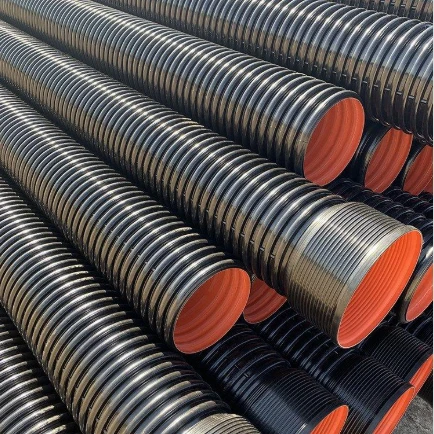
Unplasticized Polyvinyl Chloride (uPVC) column pipes represent a significant advancement in structural support systems across various industries, including construction, agriculture, and water management. These pipes, manufactured by factories specializing in uPVC column pipe price, offer a durable, cost-effective, and lightweight alternative to traditional materials like steel, concrete, and wood. Their primary function is to provide vertical load-bearing support, typically for structures such as greenhouses, awnings, canopies, and building facades. This technical guide details the material science, manufacturing processes, performance characteristics, potential failure modes, and relevant industry standards associated with uPVC column pipes. The competitive landscape for uPVC column pipe price factories is driven by factors like raw material costs, production efficiency, and the ability to meet stringent quality control measures. A key pain point within the industry involves ensuring consistent wall thickness and dimensional accuracy to guarantee structural integrity and avoid premature failure under load.
Material Science & Manufacturing
uPVC column pipes are primarily composed of polyvinyl chloride (PVC) resin, augmented with stabilizers, lubricants, and impact modifiers. The PVC resin itself is a thermoplastic polymer produced through the polymerization of vinyl chloride monomer (VCM). The key physical properties influencing pipe performance include tensile strength (typically 50-70 MPa), flexural modulus (2.5-3.5 GPa), and impact strength (Izod notched impact strength, 40-80 kJ/m² depending on formulation). The addition of stabilizers, typically based on organotin compounds or calcium-zinc formulations, prevents thermal degradation during processing and extends the service life of the pipe by mitigating UV exposure. Lubricants, like stearic acid, facilitate processing and reduce friction within the extrusion equipment. Impact modifiers, commonly chlorinated polyethylene (CPE), enhance toughness and resistance to brittle fracture. Manufacturing primarily utilizes extrusion, where the PVC compound is heated and forced through a die to create the desired pipe profile. Crucial process parameters include extrusion temperature (180-220°C), die pressure, and cooling rate. Maintaining a consistent cooling rate is paramount to prevent warping and ensure dimensional stability. Post-extrusion, pipes are often subjected to hydrostatic testing to verify pressure resistance and dimensional accuracy. Quality control includes monitoring melt flow index (MFI) to assess resin viscosity and conducting Fourier Transform Infrared (FTIR) spectroscopy to confirm the chemical composition of the PVC compound.

Performance & Engineering
The performance of uPVC column pipes is dictated by their ability to withstand axial loads, bending moments, and environmental stressors. Force analysis relies heavily on Euler's buckling formula to determine the critical load at which the pipe will buckle under compression. Factors impacting buckling resistance include pipe diameter, wall thickness, and the modulus of elasticity of the uPVC material. Environmental resistance is a critical concern. While uPVC exhibits excellent resistance to most chemicals, prolonged exposure to strong oxidizing agents can cause degradation. UV radiation can also lead to embrittlement, necessitating the use of UV stabilizers. Temperature fluctuations induce thermal expansion and contraction, which must be accounted for in design and installation. Compliance requirements vary by region but generally adhere to standards such as ASTM D1785 (Standard Specification for Poly(Vinyl Chloride) (PVC) Plastic Pipe, Schedules 40, 80, and 120) and EN 1452 (Plastic piping systems for water supply — Poly(vinyl chloride) (PVC-U) pipes and fittings for pressurized systems). The functional implementation hinges on proper jointing techniques. Solvent welding is the most common method, relying on a PVC solvent cement to create a fusion bond between the pipe and fitting. The strength of the solvent weld is crucial and depends on factors like cement viscosity, application temperature, and curing time. Mechanical couplings are also used, offering ease of disassembly but potentially lower joint strength.
Technical Specifications
| Parameter | Units | Typical Value | Testing Standard |
|---|---|---|---|
| Outer Diameter | mm | 50 - 200 | ISO 10555-1 |
| Wall Thickness | mm | 2 - 6 | ASTM D1785 |
| Tensile Strength | MPa | 55 - 65 | ISO 527-2 |
| Flexural Modulus | GPa | 2.8 - 3.2 | ISO 178 |
| Impact Strength (Izod Notched) | kJ/m² | 60 - 75 | ISO 145-6 |
| Hydrostatic Pressure Rating | MPa | 10 - 16 (dependent on schedule) | ASTM D1598 |
Failure Mode & Maintenance
uPVC column pipes are susceptible to several failure modes. Long-term exposure to UV radiation can lead to photo-degradation, causing the material to become brittle and crack. Creep, the slow deformation under sustained load, is another concern, particularly at elevated temperatures. Impact damage, especially from falling objects, can cause cracks or complete fracture. Solvent weld failures can occur due to improper application, inadequate curing, or the use of incompatible cement. Microcracking, often initiated at stress concentrators, can propagate over time, reducing the load-bearing capacity of the pipe. Maintenance primarily involves regular visual inspections to identify cracks, discoloration, or signs of deformation. Protective coatings can be applied to mitigate UV degradation. Joints should be periodically checked for leaks or signs of separation. In areas prone to mechanical damage, protective barriers should be installed. If cracks are detected, the affected section should be replaced immediately. Avoid applying excessive torque during installation, as this can stress the pipe and lead to premature failure. Proper storage is also essential; pipes should be stored in a cool, dry place away from direct sunlight.
Industry FAQ
Q: What is the impact of temperature on the load-bearing capacity of uPVC column pipes?
A: Elevated temperatures reduce the tensile strength and flexural modulus of uPVC, decreasing its load-bearing capacity. Creep deformation is also accelerated at higher temperatures. Engineering calculations should incorporate temperature derating factors to account for these effects.
Q: How do different PVC formulations affect the performance of column pipes?
A: PVC formulations vary in their stabilizer content, impact modifier concentration, and processing aids. Formulations with higher impact modifier content offer greater toughness, but may have slightly lower tensile strength. Stabilizer type influences UV resistance and long-term durability.
Q: What are the best practices for solvent welding uPVC pipes?
A: Ensure surfaces are clean and dry. Apply the solvent cement uniformly to both the pipe and fitting. Quickly insert the pipe into the fitting and twist slightly to ensure even distribution of the cement. Allow sufficient curing time (typically 24 hours) before applying load.
Q: How does UV exposure affect the lifespan of uPVC column pipes?
A: Prolonged UV exposure causes photo-degradation, leading to embrittlement and reduced impact strength. Using UV-stabilized formulations and applying protective coatings can significantly extend the lifespan of the pipes.
Q: Are there specific regulations regarding the use of uPVC column pipes in greenhouse construction?
A: Regulations vary by region, but generally, greenhouse structures require engineering approval to ensure structural integrity. uPVC column pipes must meet relevant standards for load-bearing capacity, wind resistance, and snow load capacity.
Conclusion
uPVC column pipes offer a compelling combination of strength, durability, and cost-effectiveness, making them a preferred choice for various structural support applications. Their performance is governed by a complex interplay of material properties, manufacturing processes, and environmental factors. Understanding these elements is critical for ensuring the long-term reliability and safety of uPVC column pipe installations.
Future developments in uPVC technology are focused on enhancing impact resistance, improving UV stability, and developing more sustainable formulations. Continued adherence to rigorous quality control standards and adherence to relevant industry regulations will be essential for maintaining the integrity and expanding the applications of uPVC column pipes within the broader construction and engineering landscape.
-
DN25 HDPE Compression Fitting-HORON INTERNATIONAL|Reliable Irrigation Solutions
NewsFeb.11,2026
-
hdpe coupling joint product Manufacturing Analysis
News2026-11-18
-
ppr pipe heating time products Performance Analysis
News2026-11-16
-
hdpe pipe sizes factory Performance Analysis
News2026-11-09
-
HDPE Pipe Sizes Service Performance Analysis
News2026-10-26
-
wholesale 15mm ppr pipe Material Science and Performance Analysis
News2026-10-20
-
wholesale pvc pipe price per foot Technical Analysis
News2026-09-21
-
wholesale long pvc pipe Technical Analysis and Manufacturing Specifications
News2026-09-15
-
wholesale plumbing kitchen sink water lines Material Performance
News2026-09-15
-
wholesale hdpe drip irrigation Material Science
News2026-09-15
-
wholesale hot water ppr pipe Performance Analysis
News2026-09-15
-
wholesale ppr plumbing Performance Analysis
News2026-09-15
-
wholesale ppr pipe supplier Performance Analysis
News2026-09-13
-
wholesale 50mm ppr pipe Performance Analysis
News2026-09-13
-
wholesale hdpe drip pipe Performance Analysis
News2026-09-13
-
wholesale hdpe pipe 63mm price Manufacturing Specification and Performance Analysis
News2026-09-13