

Feb . 11, 2026 00:01 Back to list
types of pipes pvc product Performance Analysis
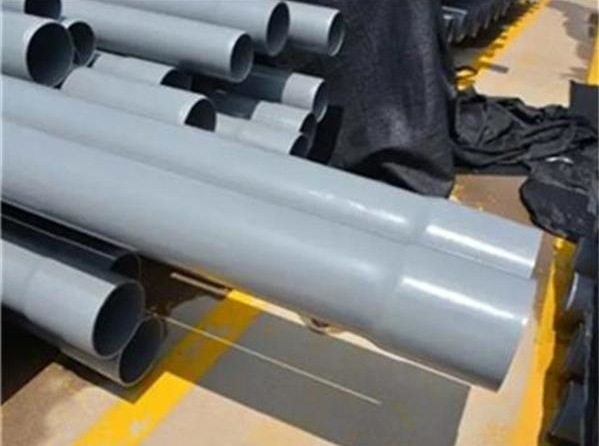
Introduction
Polyvinyl Chloride (PVC) pipes represent a ubiquitous component in modern infrastructure, serving diverse applications ranging from potable water distribution and irrigation to sewage conveyance and industrial fluid handling. This technical guide provides a comprehensive overview of PVC pipe types, encompassing material science, manufacturing processes, performance characteristics, failure modes, and relevant industry standards. PVC pipes are favored due to their cost-effectiveness, corrosion resistance, lightweight nature, and ease of installation. However, selecting the appropriate PVC pipe for a given application necessitates a detailed understanding of the various formulations, pressure ratings, and environmental limitations inherent in each type. This document aims to equip engineers, procurement managers, and technical personnel with the knowledge required to make informed decisions regarding PVC pipe selection and implementation, addressing core industry pain points associated with material degradation, joint integrity, and long-term performance reliability. Different PVC formulations, like Schedule 40, Schedule 80, and CPVC, offer varying levels of rigidity, temperature resistance, and chemical compatibility, and these distinctions are critical considerations in system design.
Material Science & Manufacturing
PVC is a thermoplastic polymer produced through the polymerization of vinyl chloride monomer (VCM). The resulting polymer is inherently brittle; therefore, plasticizers—phthalates being common examples—are added to enhance flexibility and workability. The specific plasticizer content and the type of resin (suspension PVC, emulsion PVC, or bulk PVC) dictate the pipe's properties. PVC compounds also include stabilizers (e.g., tin stabilizers, calcium-zinc stabilizers) to prevent degradation during processing and UV exposure, lubricants to facilitate extrusion, and impact modifiers to improve toughness.
Manufacturing typically involves extrusion. PVC compound is fed into an extruder, where it is heated, melted, and forced through a die to create the desired pipe shape and dimensions. Critical parameters during extrusion include melt temperature (typically 180-210°C), screw speed, die pressure, and cooling rate. Precise control of these parameters is essential to ensure consistent wall thickness, dimensional accuracy, and a smooth surface finish. Post-extrusion processes may include bell-end forming for solvent welding, end-capping, and quality control inspections. CPVC (Chlorinated Polyvinyl Chloride) pipes require a similar process but utilize a different resin with a higher chlorine content, conferring increased temperature resistance. Hydrostatic testing is a standard quality control measure, verifying the pipe's ability to withstand internal pressure without failure. The uniformity of plasticizer distribution is also crucial, as uneven distribution can lead to localized weaknesses and premature cracking.
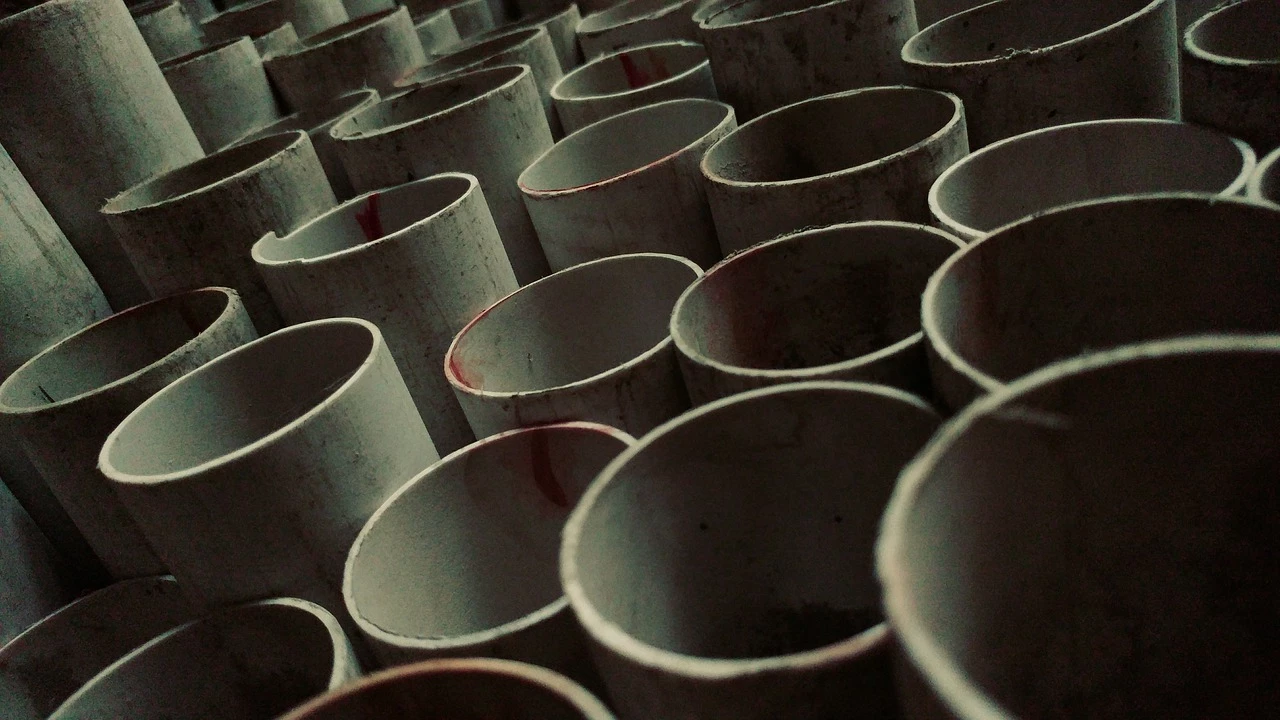
Performance & Engineering
PVC pipe performance is governed by several key engineering considerations. Tensile strength, typically ranging from 50-70 MPa, determines the pipe's resistance to longitudinal stress. The modulus of elasticity (around 3-4 GPa) influences its stiffness and resistance to deformation under load. Impact strength, measured using Izod or Charpy tests, indicates the pipe's ability to withstand sudden shocks.
Environmental resistance is paramount. PVC exhibits good resistance to many acids and bases, but is susceptible to attack by certain solvents and hydrocarbons. UV degradation is a significant concern, especially for outdoor applications. The addition of UV stabilizers mitigates this effect, but prolonged exposure will eventually lead to embrittlement and surface cracking. Thermal expansion and contraction must also be accounted for in system design, utilizing expansion joints and appropriate support structures. Pressure rating is determined by the pipe's dimensions (diameter and wall thickness) and the material's strength. Burst pressure testing, conducted according to ASTM D1500, establishes the maximum internal pressure the pipe can withstand before failure. Long-term hydrostatic strength (LTHS) is a critical parameter, representing the maximum sustained pressure the pipe can handle over an extended service life (typically 50 years). Finite element analysis (FEA) is increasingly used to model stress distribution within PVC pipe systems, optimizing designs for specific loading conditions and environmental factors. Proper bedding and backfill are crucial to prevent external stresses from compromising the pipe’s integrity.
Technical Specifications
| Pipe Schedule | Nominal Pipe Size (inches) | Wall Thickness (inches) | Pressure Rating (PSI at 73°F) |
|---|---|---|---|
| Schedule 40 | 1/2 | 0.065 | 400 |
| Schedule 40 | 1 | 0.083 | 350 |
| Schedule 40 | 2 | 0.112 | 300 |
| Schedule 80 | 1/2 | 0.095 | 600 |
| Schedule 80 | 1 | 0.138 | 540 |
| Schedule 80 | 2 | 0.179 | 460 |
Failure Mode & Maintenance
PVC pipe failure can manifest in several forms. Embrittlement, resulting from UV exposure or thermal degradation, leads to cracking and fracture. Solvent crazing occurs when the pipe is exposed to incompatible solvents, causing a network of microcracks. Hydrostatic failure results from exceeding the pipe’s pressure rating, leading to catastrophic rupture. Joint failure is a common problem, often caused by improper solvent welding techniques, inadequate surface preparation, or the use of incompatible primers and cements. Slow crack growth (SCG), particularly in chlorinated water environments, involves the slow propagation of cracks under sustained tensile stress. Fatigue cracking can occur in systems subjected to cyclic pressure fluctuations.
Preventive maintenance is crucial for extending PVC pipe service life. Regular visual inspections should be conducted to identify signs of cracking, discoloration, or deformation. Joints should be inspected for leaks and evidence of solvent degradation. UV protection, such as painting or shielding, should be employed for outdoor applications. Systems should be operated within their specified pressure and temperature limits. For CPVC pipes, maintaining water pH within acceptable ranges can mitigate degradation. In cases of minor cracks, repairs can be attempted using appropriate PVC repair compounds, but complete replacement is often the most reliable solution for significant damage. A comprehensive record-keeping system documenting installation details, maintenance activities, and inspection findings is essential for long-term asset management.
Industry FAQ
Q: What is the difference between Schedule 40 and Schedule 80 PVC pipe, and when should each be used?
A: Schedule 40 and Schedule 80 refer to the pipe wall thickness. Schedule 80 has a thicker wall and, therefore, a higher pressure rating. Schedule 40 is typically used for lower-pressure applications like irrigation and cold water distribution, while Schedule 80 is preferred for higher-pressure systems, industrial applications, and situations where increased mechanical strength is required. The cost of Schedule 80 is also higher.
Q: How does temperature affect the performance of PVC pipe?
A: PVC's mechanical properties degrade with increasing temperature. Higher temperatures reduce tensile strength, impact resistance, and pressure rating. CPVC is specifically designed for higher temperature applications, maintaining its structural integrity at temperatures up to 180°F (82°C). For standard PVC, operating temperatures should generally be kept below 140°F (60°C) to ensure long-term performance.
Q: What are the common causes of leaks in PVC pipe joints?
A: Leaks often stem from improper solvent welding. Insufficient cleaning and priming of the pipe and fitting surfaces, using incorrect cement, applying insufficient cement, or allowing insufficient curing time are common mistakes. Also, mechanical stress on the joint immediately after assembly can cause failure. Ensuring proper surface preparation and adherence to the manufacturer's instructions is paramount.
Q: How can I mitigate UV degradation of PVC pipe in outdoor applications?
A: UV stabilizers are incorporated into PVC formulations to slow down degradation, but prolonged exposure will still cause embrittlement. Painting the pipe with a UV-resistant coating, covering it with opaque materials, or using PVC compounds specifically designed for UV resistance are effective mitigation strategies. Buried pipes are less susceptible to UV degradation, but those exposed to sunlight should be protected.
Q: Is PVC pipe suitable for potable water applications?
A: Yes, PVC pipe is widely used for potable water distribution. However, it’s crucial to use PVC formulations specifically certified for potable water contact, meeting standards like NSF/ANSI Standard 61. These formulations ensure that no harmful chemicals leach into the water supply.
Conclusion
PVC pipe remains a dominant material in fluid conveyance systems due to its inherent advantages in cost, corrosion resistance, and ease of installation. However, realizing these benefits requires a thorough understanding of the various PVC formulations, manufacturing processes, and performance characteristics. Proper material selection, meticulous installation practices, and proactive maintenance are critical to ensuring long-term system reliability and mitigating potential failure modes. The continued development of advanced PVC compounds, incorporating enhanced UV stabilizers, impact modifiers, and plasticizers, promises to further extend the service life and broaden the application range of this versatile material.
Future trends in PVC pipe technology include the development of bio-based plasticizers, reducing reliance on fossil fuels and minimizing environmental impact. Increased adoption of smart pipe technologies, incorporating sensors for leak detection and structural health monitoring, will enable proactive maintenance and optimized system performance. Furthermore, ongoing research into SCG mechanisms and mitigation strategies will contribute to enhancing the long-term durability of PVC pipe systems, particularly in challenging water quality environments. A holistic approach to system design, encompassing material science, engineering principles, and proactive maintenance, is essential for maximizing the value and sustainability of PVC pipe infrastructure.
-
DN25 HDPE Compression Fitting-HORON INTERNATIONAL|Reliable Irrigation Solutions
NewsFeb.11,2026
-
hdpe coupling joint product Manufacturing Analysis
News2026-11-18
-
ppr pipe heating time products Performance Analysis
News2026-11-16
-
hdpe pipe sizes factory Performance Analysis
News2026-11-09
-
HDPE Pipe Sizes Service Performance Analysis
News2026-10-26
-
wholesale 15mm ppr pipe Material Science and Performance Analysis
News2026-10-20
-
wholesale pvc pipe price per foot Technical Analysis
News2026-09-21
-
wholesale long pvc pipe Technical Analysis and Manufacturing Specifications
News2026-09-15
-
wholesale plumbing kitchen sink water lines Material Performance
News2026-09-15
-
wholesale hdpe drip irrigation Material Science
News2026-09-15
-
wholesale hot water ppr pipe Performance Analysis
News2026-09-15
-
wholesale ppr plumbing Performance Analysis
News2026-09-15
-
wholesale ppr pipe supplier Performance Analysis
News2026-09-13
-
wholesale 50mm ppr pipe Performance Analysis
News2026-09-13
-
wholesale hdpe drip pipe Performance Analysis
News2026-09-13
-
wholesale hdpe pipe 63mm price Manufacturing Specification and Performance Analysis
News2026-09-13