

Feb . 11, 2026 00:01 Back to list
submersible pump column pipe manufacturer Performance Analysis
Introduction
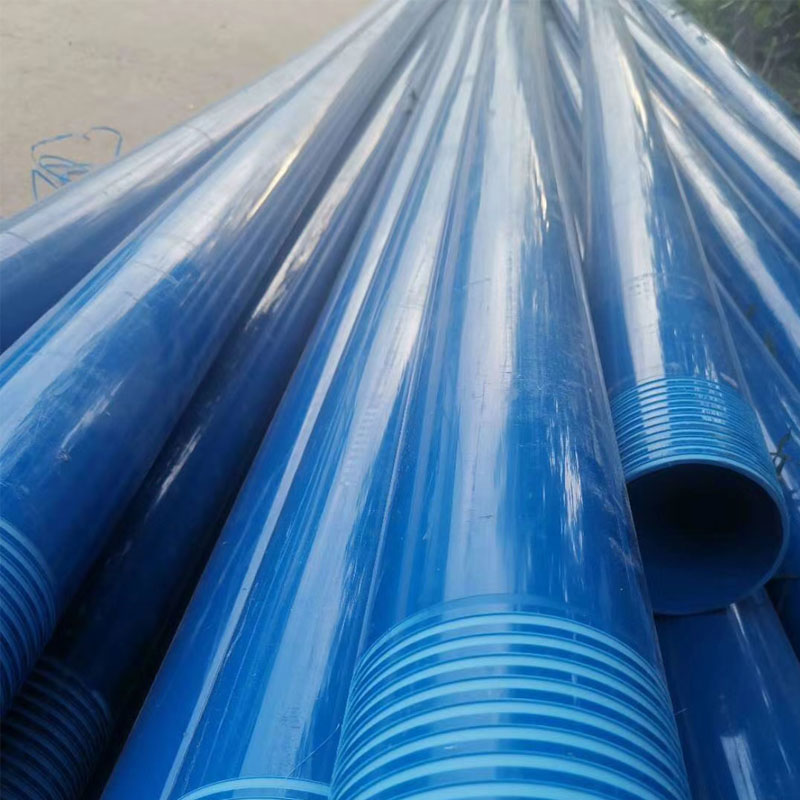
Submersible pump column pipe is a critical component in deep-well pumping systems, serving as the conduit for conveying fluids – typically water, but also potentially oil or slurry – from the pump located at the well's bottom to the surface. Unlike surface suction piping, column pipe is designed to operate under significant hydrostatic pressure and tensile stress due to the weight of the fluid column and the pump itself. Its technical position within the industry chain lies between the submersible pump set (impeller, diffuser, motor) and the surface discharge infrastructure. Core performance characteristics are defined by its tensile strength, corrosion resistance, hydraulic smoothness (minimizing friction loss), and dimensional accuracy to ensure proper alignment and prevent pump inefficiencies. The industry faces consistent challenges regarding material selection to counteract corrosive well fluids, ensuring long-term reliability in harsh downhole environments, and managing manufacturing tolerances for optimized system performance. Degradation in column pipe performance directly impacts pumping efficiency and can lead to costly well downtime.
Material Science & Manufacturing
The predominant material for submersible pump column pipe is carbon steel, specifically grades like AISI 1018, 1045, and variations thereof. These steels offer a balance of tensile strength and machinability. However, the specific steel alloy is often dictated by the well fluid's chemistry. In corrosive environments (high chloride content, hydrogen sulfide presence), duplex stainless steels (e.g., 2205, 2507) or even higher alloy austenitic stainless steels (e.g., 316L, 317L) are employed. Manufacturing typically involves a seamless extrusion process, offering superior strength compared to welded pipes. Key parameters include controlled cooling rates during extrusion to refine grain structure and optimize mechanical properties. Following extrusion, pipes undergo multiple stages of heat treatment (normalizing, quenching, and tempering) to achieve desired hardness and ductility. Threading is a critical step, employing CNC machining to ensure precise thread dimensions and alignment, conforming to API standards. Internal surface finishing (pickling and passivation for stainless steels) reduces friction and minimizes corrosion initiation sites. Quality control includes hydrostatic testing to verify structural integrity and non-destructive testing (NDT) such as ultrasonic testing (UT) and magnetic particle inspection (MPI) to detect internal flaws or surface cracks.

Performance & Engineering
The primary engineering considerations for submersible pump column pipe revolve around tensile stress analysis, buckling prevention, and fatigue resistance. The weight of the pump and fluid column exerts significant tensile force on the uppermost sections of the pipe. Finite element analysis (FEA) is routinely used to model stress distribution under varying well depths and fluid densities. Buckling is a concern for long column strings, particularly during installation and startup. Pipe wall thickness is carefully calculated based on Euler's buckling formula, incorporating safety factors. Hydraulic analysis is crucial to minimize friction losses, impacting pump efficiency and energy consumption. Darcy-Weisbach equation and Moody diagram are used to determine friction factors based on pipe roughness and flow velocity. Column pipe must also withstand cyclic loading due to pump start-stop cycles and potential fluid pulsations, leading to fatigue failure. S-N curves (stress-life curves) are utilized to assess fatigue performance. Compliance requirements vary depending on the region but generally adhere to API RP 11AX (Recommended Practice for Submersible Pump Systems) and relevant national well construction standards. Furthermore, electrical isolation joints are frequently incorporated to prevent stray electrical currents from causing corrosion.
Technical Specifications
| Material Grade | Outer Diameter (mm) | Wall Thickness (mm) | Tensile Strength (MPa) |
|---|---|---|---|
| AISI 1045 | 89 | 6.35 | 655 |
| AISI 1018 | 60 | 4.8 | 572 |
| 2205 Duplex Stainless Steel | 89 | 7.11 | 780 |
| 316L Stainless Steel | 60 | 5.08 | 620 |
| AISI 1045 (High Strength) | 114 | 8.0 | 790 |
| 2507 Super Duplex Stainless Steel | 114 | 8.5 | 930 |
Failure Mode & Maintenance
Common failure modes in submersible pump column pipe include fatigue cracking (particularly at threaded connections), corrosion (localized pitting corrosion in chloride-rich environments, galvanic corrosion between dissimilar metals, and stress corrosion cracking), erosion (due to abrasive particles in the fluid), and thread stripping. Fatigue cracks typically initiate at stress concentrators, such as thread roots and surface imperfections. Corrosion is accelerated by the presence of oxygen, hydrogen sulfide, and other corrosive agents. Failure analysis often involves fractography (examining fracture surfaces under a microscope) to determine the root cause. Preventive maintenance includes regular visual inspection for signs of corrosion or damage, thread tightening checks, and implementation of corrosion inhibitors. If corrosion is detected, cathodic protection may be employed. Regular monitoring of pump performance (flow rate, pressure) can also indicate potential column pipe issues, such as blockages or internal damage. Replacement of damaged sections is usually necessary, requiring careful alignment and thread sealant application during re-installation. For severe corrosion, complete column pipe replacement is often the most practical solution. Regularly checking for and mitigating stray electrical currents is also critical for preventing electrolytic corrosion.
Industry FAQ
Q: What is the impact of well fluid temperature on column pipe material selection?
A: Elevated temperatures generally accelerate corrosion rates. Higher temperatures also reduce the tensile strength of steel, making it more susceptible to failure under stress. Therefore, for high-temperature wells, materials with superior high-temperature strength and corrosion resistance, such as super duplex stainless steels or even nickel-based alloys, are often required. Temperature also influences the effectiveness of corrosion inhibitors.
Q: How does the quality of the thread sealant affect the long-term reliability of column pipe connections?
A: Thread sealant is crucial for preventing galling, corrosion, and leaks at threaded connections. Inferior sealants can degrade over time, leading to thread stripping and fluid ingress. Sealants must be compatible with the well fluid chemistry and capable of withstanding the operating temperature and pressure. Proper application technique, including sufficient sealant volume and even distribution, is also essential.
Q: What are the advantages of using seamless pipe versus welded pipe for column pipe applications?
A: Seamless pipe offers superior strength and resistance to failure, particularly under tensile stress and pressure cycling. Welded pipes have inherent weaknesses at the weld seam, which can act as stress concentrators and corrosion initiation sites. Seamless pipe eliminates these weaknesses, providing a more reliable and durable solution for demanding downhole environments.
Q: What role does the internal surface roughness of the column pipe play in pump efficiency?
A: Higher internal surface roughness increases friction losses, reducing pump efficiency and increasing energy consumption. A smoother internal surface minimizes friction and allows for more efficient fluid flow. Pickling and passivation treatments are commonly used to achieve a smoother surface finish, especially for stainless steel pipes.
Q: How often should a comprehensive inspection of the column pipe be conducted?
A: The frequency of inspection depends on the well conditions (fluid chemistry, temperature, pressure) and operating history. However, a comprehensive inspection, including visual inspection, hydrostatic testing, and non-destructive testing, should be conducted at least every 3-5 years, or more frequently in highly corrosive or abrasive environments. Regular performance monitoring can help identify potential issues and trigger more frequent inspections if necessary.
Conclusion
Submersible pump column pipe is a critical, yet often overlooked, component of deep-well pumping systems. Its proper selection, manufacturing, and maintenance are paramount for ensuring reliable and efficient operation. The choice of material must be carefully considered based on the well fluid’s composition, temperature, and pressure, with a strong emphasis on corrosion resistance and mechanical strength.
Advancements in materials science, such as the development of high-alloy stainless steels and non-metallic composite materials, are continually expanding the performance envelope of column pipe, enabling operation in increasingly challenging environments. Continued adherence to industry standards (API, ISO) and best practices in manufacturing and maintenance is essential for maximizing the lifespan and reliability of these vital systems.
-
DN25 HDPE Compression Fitting-HORON INTERNATIONAL|Reliable Irrigation Solutions
NewsFeb.11,2026
-
hdpe coupling joint product Manufacturing Analysis
News2026-11-18
-
ppr pipe heating time products Performance Analysis
News2026-11-16
-
hdpe pipe sizes factory Performance Analysis
News2026-11-09
-
HDPE Pipe Sizes Service Performance Analysis
News2026-10-26
-
wholesale 15mm ppr pipe Material Science and Performance Analysis
News2026-10-20
-
wholesale pvc pipe price per foot Technical Analysis
News2026-09-21
-
wholesale long pvc pipe Technical Analysis and Manufacturing Specifications
News2026-09-15
-
wholesale plumbing kitchen sink water lines Material Performance
News2026-09-15
-
wholesale hdpe drip irrigation Material Science
News2026-09-15
-
wholesale hot water ppr pipe Performance Analysis
News2026-09-15
-
wholesale ppr plumbing Performance Analysis
News2026-09-15
-
wholesale ppr pipe supplier Performance Analysis
News2026-09-13
-
wholesale 50mm ppr pipe Performance Analysis
News2026-09-13
-
wholesale hdpe drip pipe Performance Analysis
News2026-09-13
-
wholesale hdpe pipe 63mm price Manufacturing Specification and Performance Analysis
News2026-09-13