

Feb . 11, 2026 00:01 Back to list
sprinkler hdpe pipe manufacturer Performance Analysis
Introduction
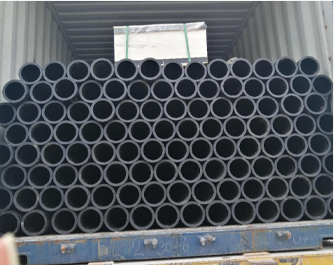
High-Density Polyethylene (HDPE) pipe for sprinkler systems represents a significant advancement in fire protection infrastructure. Positioned as a direct substitute for traditional metallic piping, HDPE sprinkler pipes offer advantages in corrosion resistance, installation efficiency, and long-term cost-effectiveness. Within the broader industry chain of fire suppression, HDPE pipe fabrication constitutes a critical component, bridging raw material production (polyethylene resin) with the final installation in commercial, industrial, and residential buildings. Core performance characteristics center around pressure bearing capability, flow rate capacity, and adherence to stringent fire safety standards. The increasing adoption of HDPE is driven by the escalating costs of metallic piping, coupled with the growing demand for sustainable and durable infrastructure solutions. This guide provides a comprehensive technical overview of HDPE sprinkler pipe, encompassing material science, manufacturing processes, performance parameters, failure modes, and relevant industry regulations.
Material Science & Manufacturing
The foundational material for sprinkler HDPE pipe is high-density polyethylene (HDPE), a thermoplastic polymer renowned for its exceptional properties. HDPE resin is derived from the polymerization of ethylene, a process typically conducted via Ziegler-Natta or metallocene catalysis. Key physical properties influencing pipe performance include a density ranging from 0.93 to 0.97 g/cm³, a tensile strength between 20-35 MPa, and a relatively low coefficient of friction. Chemical compatibility is a critical consideration; HDPE exhibits excellent resistance to most chemicals commonly found in fire suppression systems (water, glycol-based antifreeze), but prolonged exposure to strong oxidizers should be avoided.
Manufacturing typically involves extrusion, where HDPE resin is melted and forced through a die to create a seamless pipe. Critical parameters during extrusion include maintaining consistent melt temperature (180-240°C), controlling the extrusion rate to achieve desired wall thickness, and precise die calibration to ensure dimensional accuracy. Subsequent to extrusion, pipes undergo cooling, sizing, and quality control checks, including hydrostatic pressure testing to verify burst resistance. The polyethylene grade used—PE3408, PE4710, or PE100—directly impacts the pipe’s minimum required strength (MRS) and slow crack growth resistance (SCGR), influencing its suitability for specific pressure and temperature applications. Fusion joining methods – specifically, butt fusion, socket fusion, and electrofusion – are employed to create leak-proof connections, with weld parameters (temperature, pressure, dwell time) meticulously controlled to ensure structural integrity.

Performance & Engineering
The performance of HDPE sprinkler pipe is fundamentally governed by its ability to withstand internal hydrostatic pressure, accounting for both static and dynamic (surge) conditions. Force analysis involves calculating hoop stress (σh = PD/2t, where P=pressure, D=diameter, and t=wall thickness) to ensure the pipe’s structural integrity under maximum operating pressure. Environmental resistance is a major advantage; HDPE exhibits superior resistance to corrosion, UV degradation (when formulated with carbon black), and scaling compared to metallic alternatives. However, prolonged exposure to high temperatures (>60°C) can reduce its strength and creep resistance.
Compliance requirements are dictated by NFPA 13 (Standard for the Installation of Sprinkler Systems) and local building codes. These standards specify minimum pressure ratings, allowable temperature ranges, and acceptable joining methods. HDPE pipe must demonstrate compatibility with fire suppression agents and not contribute to the propagation of flame. Engineering considerations also extend to thermal expansion and contraction; HDPE has a significantly higher coefficient of thermal expansion than steel, necessitating the incorporation of expansion loops or flexible couplings to prevent stress buildup and potential joint failures. Furthermore, proper support spacing is crucial to prevent pipe sagging and maintain hydraulic flow characteristics.
Technical Specifications
| Parameter | Unit | PE3408 | PE4710 |
|---|---|---|---|
| Minimum Required Strength (MRS) | MPa | 8.0 | 10.0 |
| Hydrostatic Pressure Rating (PN) | Bar | 10 | 12.5 |
| Slow Crack Growth Resistance (SCGR) | Hours | 500 | 1600 |
| Density | g/cm³ | 0.93 - 0.95 | 0.95 - 0.97 |
| Service Temperature Range | °C | -20 to 60 | -20 to 60 |
| Outside Diameter | mm | 20-160 | 20-315 |
Failure Mode & Maintenance
Sprinkler HDPE pipe, while durable, is susceptible to certain failure modes. Fatigue cracking can occur due to repeated pressure cycling, particularly at stress concentration points such as joints or fittings. Slow Crack Growth (SCG) is a time-dependent failure mechanism initiated by sustained tensile stress and exacerbated by the presence of surfactants or certain chemicals. Delamination can occur during manufacturing if improper processing parameters lead to inadequate layer adhesion. Oxidation, though relatively slow, can embrittle the material over extended periods, especially at elevated temperatures.
Preventative maintenance involves regular visual inspections for signs of cracking, deformation, or corrosion at fittings. Hydrostatic testing at predetermined intervals (e.g., every 5-10 years) is recommended to verify system integrity. If SCG is suspected, a thorough chemical analysis of the water supply should be conducted to identify potential contaminants. For minor cracks, repair sleeves or patch compounds can be used, but complete pipe replacement is often the most reliable solution for significant damage. Proper storage of HDPE pipe is crucial; it should be protected from direct sunlight, extreme temperatures, and physical damage. Adherence to manufacturer’s recommendations for installation and joining procedures is paramount to minimize the risk of premature failure.
Industry FAQ
Q: What are the primary advantages of HDPE sprinkler pipe compared to traditional steel pipe?
A: HDPE offers superior corrosion resistance, eliminating the need for costly corrosion inhibitors and reducing long-term maintenance. Its lighter weight simplifies installation and reduces labor costs. Furthermore, HDPE's inherent flexibility allows for greater tolerance to ground movement and seismic activity. Finally, it doesn't contribute to galvanic corrosion issues common in systems employing dissimilar metals.
Q: How does temperature affect the performance of HDPE sprinkler pipe?
A: While HDPE can operate effectively within a wide temperature range (-20°C to 60°C), prolonged exposure to temperatures exceeding 60°C can reduce its strength and creep resistance. Conversely, extremely low temperatures can increase brittleness. Thermal expansion and contraction must also be accounted for in system design.
Q: What joining methods are approved for HDPE sprinkler pipe, and what are the key considerations for each?
A: Butt fusion, socket fusion, and electrofusion are the approved joining methods. Butt fusion is typically used for larger diameter pipes and requires skilled operators to ensure proper alignment and pressure. Socket fusion is suitable for smaller diameters and is generally easier to perform. Electrofusion provides the most reliable and consistent welds but requires specialized equipment. All methods require strict adherence to manufacturer’s parameters.
Q: What is Slow Crack Growth (SCG), and how can it be prevented?
A: SCG is a time-dependent failure mechanism caused by sustained tensile stress in the presence of certain chemicals or surfactants. Prevention involves using high-quality HDPE resin with high SCGR ratings, avoiding contact with incompatible chemicals, and ensuring proper installation practices to minimize stress concentrations.
Q: Are there specific standards or regulations governing the use of HDPE sprinkler pipe in fire protection systems?
A: Yes, NFPA 13 (Standard for the Installation of Sprinkler Systems) is the primary standard governing sprinkler system design and installation. Local building codes also apply. HDPE pipe must meet the requirements outlined in these standards, including pressure ratings, material specifications, and joining procedures. Compliance with ASTM standards (e.g., ASTM D2447, ASTM F439) is also typically required.
Conclusion
HDPE sprinkler pipe represents a robust and cost-effective solution for modern fire protection systems. Its inherent properties—corrosion resistance, flexibility, and ease of installation—offer significant advantages over traditional metallic piping. However, successful implementation relies on a thorough understanding of material science principles, meticulous attention to manufacturing and joining procedures, and adherence to stringent industry standards.
Looking ahead, further advancements in HDPE resin technology and fusion joining techniques will likely enhance the performance and durability of these systems. The increasing emphasis on sustainable infrastructure and life-cycle cost analysis will undoubtedly drive continued adoption of HDPE sprinkler pipe as a preferred choice for fire protection applications. Continued research into SCG mitigation and long-term performance prediction will be critical to optimize system reliability and ensure long-term safety.
-
DN25 HDPE Compression Fitting-HORON INTERNATIONAL|Reliable Irrigation Solutions
NewsFeb.11,2026
-
hdpe coupling joint product Manufacturing Analysis
News2026-11-18
-
ppr pipe heating time products Performance Analysis
News2026-11-16
-
hdpe pipe sizes factory Performance Analysis
News2026-11-09
-
HDPE Pipe Sizes Service Performance Analysis
News2026-10-26
-
wholesale 15mm ppr pipe Material Science and Performance Analysis
News2026-10-20
-
wholesale pvc pipe price per foot Technical Analysis
News2026-09-21
-
wholesale long pvc pipe Technical Analysis and Manufacturing Specifications
News2026-09-15
-
wholesale plumbing kitchen sink water lines Material Performance
News2026-09-15
-
wholesale hdpe drip irrigation Material Science
News2026-09-15
-
wholesale hot water ppr pipe Performance Analysis
News2026-09-15
-
wholesale ppr plumbing Performance Analysis
News2026-09-15
-
wholesale ppr pipe supplier Performance Analysis
News2026-09-13
-
wholesale 50mm ppr pipe Performance Analysis
News2026-09-13
-
wholesale hdpe drip pipe Performance Analysis
News2026-09-13
-
wholesale hdpe pipe 63mm price Manufacturing Specification and Performance Analysis
News2026-09-13