

Feb . 11, 2026 00:01 Back to list
pvc stormwater pipe manufacturers Material Science and Performance
Introduction
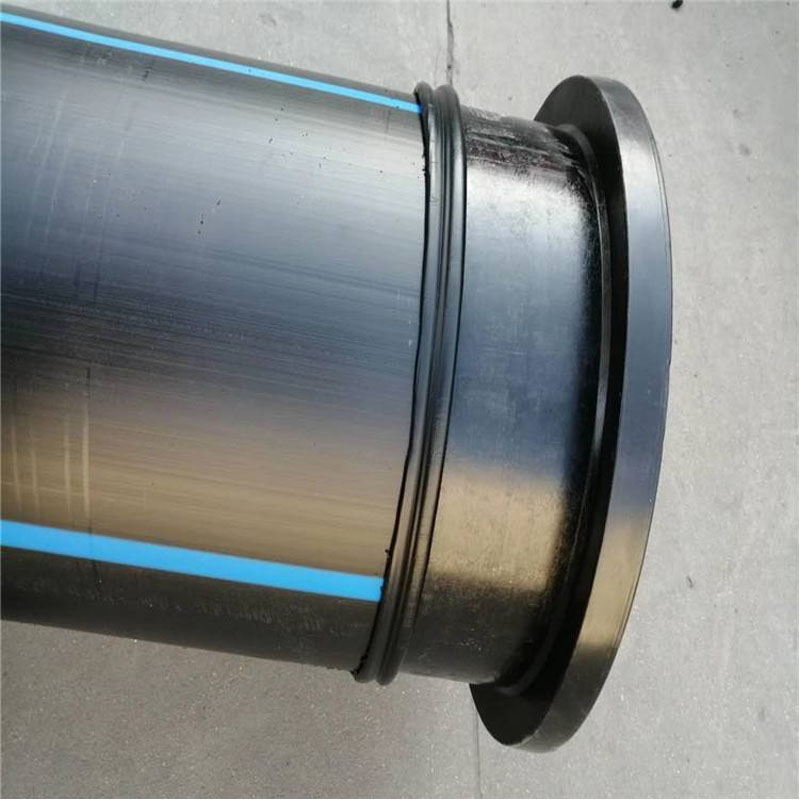
Polyvinyl chloride (PVC) stormwater pipe is a critical component of modern drainage infrastructure, facilitating the efficient removal of excess rainfall and preventing flooding in urban and suburban environments. Positioned within the civil engineering and construction materials supply chain, PVC stormwater pipe directly replaces traditional materials like concrete, corrugated metal, and clay pipe, offering advantages in weight, installation speed, and corrosion resistance. The core performance characteristics – hydraulic capacity, structural integrity under load, and long-term durability – dictate its suitability for varying drainage applications. A key industry pain point lies in balancing cost-effectiveness with adherence to increasingly stringent environmental regulations concerning material sourcing, manufacturing processes, and end-of-life recyclability. Furthermore, ensuring consistent quality control to mitigate risks of joint failure and structural deformation is paramount, driven by the potential for substantial infrastructure damage and public safety hazards if substandard products are utilized. This guide provides an in-depth examination of PVC stormwater pipe, covering its material science, manufacturing processes, performance criteria, failure modes, and relevant industry standards.
Material Science & Manufacturing
PVC stormwater pipe is predominantly manufactured from Polyvinyl Chloride resin, a thermoplastic polymer created through the polymerization of vinyl chloride monomer (VCM). The resin grade selection is crucial, commonly utilizing PVC compounds formulated for rigid applications, typically possessing a K-value (molecular weight indicator) between 65 and 74. Additives play a vital role in modifying the base resin's properties; these include heat stabilizers (typically organotin compounds, though increasingly replaced with calcium-zinc stabilizers for environmental reasons), lubricants (stearates), impact modifiers (acrylic polymers), and processing aids (phosphites). The raw materials’ physical properties, such as resin density (approximately 1.4 g/cm³) and glass transition temperature (Tg around 80°C), significantly influence the final product characteristics.
The primary manufacturing process is extrusion. PVC compound is fed into a single-screw or twin-screw extruder, where it’s heated and homogenized. Extrusion parameters – barrel temperature profile (typically ranging from 170°C to 210°C), screw speed, and die temperature – are critically controlled to ensure complete melting and uniform flow. The molten PVC is then forced through a die that shapes the pipe’s outer diameter and wall thickness. Subsequent cooling, usually via a water bath, solidifies the pipe. Manufacturing tolerances for diameter and wall thickness are stringently monitored, influencing hydraulic capacity and structural strength. Bell and spigot joints are formed either during extrusion via specialized dies or post-extrusion through machining. Quality control involves regular testing of the PVC compound's composition, melt flow index, and the pipe's dimensional accuracy, hydrostatic pressure resistance, and impact strength. Improper parameter control during extrusion can lead to defects like dimensional inconsistencies, surface imperfections, and incomplete fusion of the PVC material.
Performance & Engineering
The performance of PVC stormwater pipe is governed by its ability to withstand hydrostatic pressure, soil loading, and impact forces, all while maintaining its hydraulic capacity over its service life. Stress analysis, employing finite element modeling (FEM), is used to predict pipe behavior under various loading scenarios. The primary failure mechanisms considered are hoop stress due to internal pressure, longitudinal stress from soil overburden, and bending stress from localized loads (e.g., vehicle traffic). The pipe’s stiffness, expressed as its pipe stiffness (PS) value (psi), is a critical parameter determining its ability to distribute loads and prevent deformation.
Environmental resistance is another key consideration. PVC exhibits good resistance to most chemicals commonly found in stormwater runoff, but prolonged exposure to certain solvents or aggressive chemicals can cause degradation. UV resistance is improved through the addition of UV stabilizers to the PVC compound. The pipe’s operating temperature range is typically limited to between 0°C and 60°C. Compliance with relevant standards, such as ASTM D2412 (PVC pipe fittings), ASTM D3212 (PVC pipe), and local building codes, is essential. Proper installation practices, including adequate bedding and backfill compaction, are crucial to ensure the pipe's long-term performance. Incorrect installation can lead to differential settlement, excessive stress on joints, and premature failure. Hydraulic calculations, considering flow rates, pipe slope, and Manning’s roughness coefficient, are necessary to ensure adequate drainage capacity.
Technical Specifications
| Parameter | Units | ASTM D3212 | Typical Value |
|---|---|---|---|
| Nominal Pipe Size | inches | Variable | 4 - 36 |
| Pressure Rating | psi | Variable | 18-50+ |
| Pipe Stiffness (PS) | psi | D2412 | 48 - 64 |
| Tensile Strength | psi | D638 | 6,000 - 8,000 |
| Impact Resistance (Izod Notched) | ft-lb/in | D256 | 10 - 15 |
| Hydrostatic Design Basis (HDB) | psi | D3212 | Variable, based on size & schedule |
Failure Mode & Maintenance
PVC stormwater pipe is susceptible to several failure modes. Fatigue cracking can occur due to repeated loading and unloading, particularly in areas around joints or where the pipe is subjected to localized stress. Joint failure is a common issue, often stemming from improper installation (e.g., insufficient solvent cement, inadequate cleaning) or soil movement. Environmental stress cracking (ESC) can occur when the pipe is exposed to certain chemicals or sustained tensile stress, leading to brittle failure. UV degradation, although mitigated by stabilizers, can still cause surface chalking and embrittlement over extended periods. Soil Settlement can induce excessive bending stresses exceeding the pipe’s capacity.
Preventative maintenance involves regular inspections to identify signs of damage, such as cracks, leaks, or deformation. Joint inspections are crucial. Minor cracks can sometimes be repaired using PVC repair compounds, but significant damage usually requires pipe replacement. Proper bedding and backfill compaction during installation are paramount to prevent soil settlement and excessive stress. Avoiding the use of aggressive chemicals in the vicinity of the pipe is also important. For ESC prevention, ensure the pipe is compatible with the anticipated chemical environment. Routine cleaning to remove debris and sediment can help maintain hydraulic capacity and prevent blockages. Scheduled CCTV inspections can identify internal corrosion and early-stage failures, allowing for proactive repairs.
Industry FAQ
Q: What is the impact of soil corrosivity on the long-term performance of PVC stormwater pipe?
A: Highly corrosive soils can accelerate the degradation of the PVC material, particularly if the soil contains high concentrations of sulfates or chlorides. While PVC is inherently corrosion-resistant, prolonged exposure can lead to embrittlement and cracking. Selecting a PVC compound with enhanced chemical resistance and providing adequate protective bedding (e.g., granular material) can mitigate this risk. Regular soil testing is recommended in areas with known corrosive soils.
Q: How does temperature affect the load-bearing capacity of PVC stormwater pipe?
A: Lower temperatures increase the PVC material’s modulus of elasticity, making it stiffer and more resistant to deformation. However, it also becomes more brittle and susceptible to impact damage. Higher temperatures reduce the modulus of elasticity, making the pipe more flexible but also reducing its load-bearing capacity. Engineering designs should account for the expected temperature range during the pipe’s service life.
Q: What is the significance of the K-value in PVC resin selection for stormwater pipe?
A: The K-value is a measure of the PVC resin’s molecular weight. Higher K-values generally indicate higher molecular weight, resulting in increased strength, toughness, and chemical resistance. For stormwater pipe applications, a K-value between 65 and 74 is typically specified to balance performance and processability. Lower K-values may result in reduced long-term durability.
Q: What are the advantages and disadvantages of using calcium-zinc stabilizers versus organotin stabilizers in PVC pipe manufacturing?
A: Organotin stabilizers are highly effective at preventing PVC degradation but are facing increasing regulatory restrictions due to environmental concerns. Calcium-zinc stabilizers are a more environmentally friendly alternative but generally offer slightly lower thermal stability and may require higher processing temperatures. The choice depends on balancing performance requirements with environmental regulations.
Q: What is the recommended minimum cover depth for PVC stormwater pipe to ensure adequate protection from traffic loads?
A: The recommended minimum cover depth depends on the pipe’s size, schedule, and the anticipated traffic loads. As a general guideline, a minimum cover of 18 inches is typically recommended for standard applications. For heavy traffic loads or areas with unstable soil conditions, a greater cover depth may be required. Consult relevant engineering guidelines and local building codes.
Conclusion
PVC stormwater pipe represents a robust and cost-effective solution for modern drainage systems, offering significant advantages over traditional materials in terms of weight, installation, and corrosion resistance. However, its long-term performance is heavily reliant on proper material selection, manufacturing control, installation practices, and ongoing maintenance. Understanding the potential failure modes – from fatigue cracking and joint failure to environmental stress cracking and UV degradation – is crucial for ensuring the durability and reliability of these systems.
Future development will likely focus on enhanced PVC formulations with improved impact resistance, UV stability, and chemical compatibility, alongside increased utilization of recycled PVC content to promote sustainability. Continued research into non-toxic stabilizer systems and innovative jointing technologies will further enhance the environmental profile and long-term performance of PVC stormwater pipe. Adherence to established industry standards and best practices remains paramount to mitigating risks and ensuring the effective and efficient management of stormwater runoff.
-
DN25 HDPE Compression Fitting-HORON INTERNATIONAL|Reliable Irrigation Solutions
NewsFeb.11,2026
-
hdpe coupling joint product Manufacturing Analysis
News2026-11-18
-
ppr pipe heating time products Performance Analysis
News2026-11-16
-
hdpe pipe sizes factory Performance Analysis
News2026-11-09
-
HDPE Pipe Sizes Service Performance Analysis
News2026-10-26
-
wholesale 15mm ppr pipe Material Science and Performance Analysis
News2026-10-20
-
wholesale pvc pipe price per foot Technical Analysis
News2026-09-21
-
wholesale long pvc pipe Technical Analysis and Manufacturing Specifications
News2026-09-15
-
wholesale plumbing kitchen sink water lines Material Performance
News2026-09-15
-
wholesale hdpe drip irrigation Material Science
News2026-09-15
-
wholesale hot water ppr pipe Performance Analysis
News2026-09-15
-
wholesale ppr plumbing Performance Analysis
News2026-09-15
-
wholesale ppr pipe supplier Performance Analysis
News2026-09-13
-
wholesale 50mm ppr pipe Performance Analysis
News2026-09-13
-
wholesale hdpe drip pipe Performance Analysis
News2026-09-13
-
wholesale hdpe pipe 63mm price Manufacturing Specification and Performance Analysis
News2026-09-13