

Feb . 11, 2026 00:01 Back to list
pvc pipe vs ppr pipe manufacturer Performance Analysis
Introduction
Polyvinyl Chloride (PVC) and Polypropylene Random Copolymer (PPR) pipes represent dominant solutions within the fluid conveyance industry, particularly for potable water, drainage, and industrial applications. While both are thermoplastic piping systems, their distinct material properties, manufacturing processes, and performance characteristics dictate suitability for specific operational requirements. This guide provides a comprehensive technical analysis, dissecting the materials science, manufacturing techniques, performance criteria, potential failure modes, and relevant industry standards for both PVC and PPR piping. The primary industry pain point lies in selecting the optimal material considering long-term cost-effectiveness, installation complexities, environmental conditions, and fluid compatibility – often demanding a detailed lifecycle assessment beyond initial purchase price.
Material Science & Manufacturing
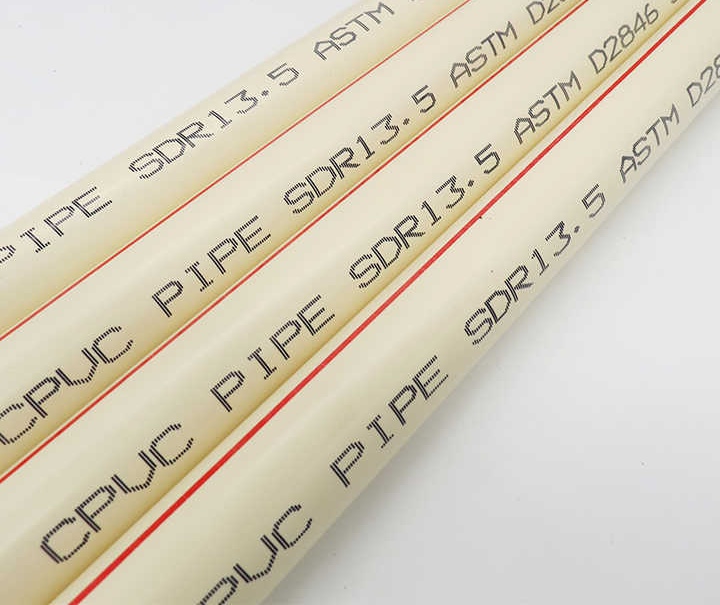
PVC (Polyvinyl Chloride): PVC is synthesized from vinyl chloride monomer through a polymerization process. The resulting polymer is inherently rigid and requires plasticizers (phthalates are common, although increasingly phased out due to health concerns) to impart flexibility. PVC compounds used for piping typically contain stabilizers (e.g., tin-based, calcium-zinc based) to prevent degradation during processing and service, as well as lubricants and impact modifiers. Manufacturing of PVC pipes predominantly utilizes extrusion. The PVC compound is heated and forced through a die, shaping the pipe. Critical parameters include extrusion temperature (160-210°C), die geometry, puller speed, and cooling water temperature. The degree of polymerization and the type and concentration of additives directly influence the pipe's physical properties, such as tensile strength, impact resistance, and chemical resistance. Rigid PVC (uPVC) lacks plasticizers and is used for pressure applications, while chlorinated PVC (CPVC) exhibits higher temperature resistance.
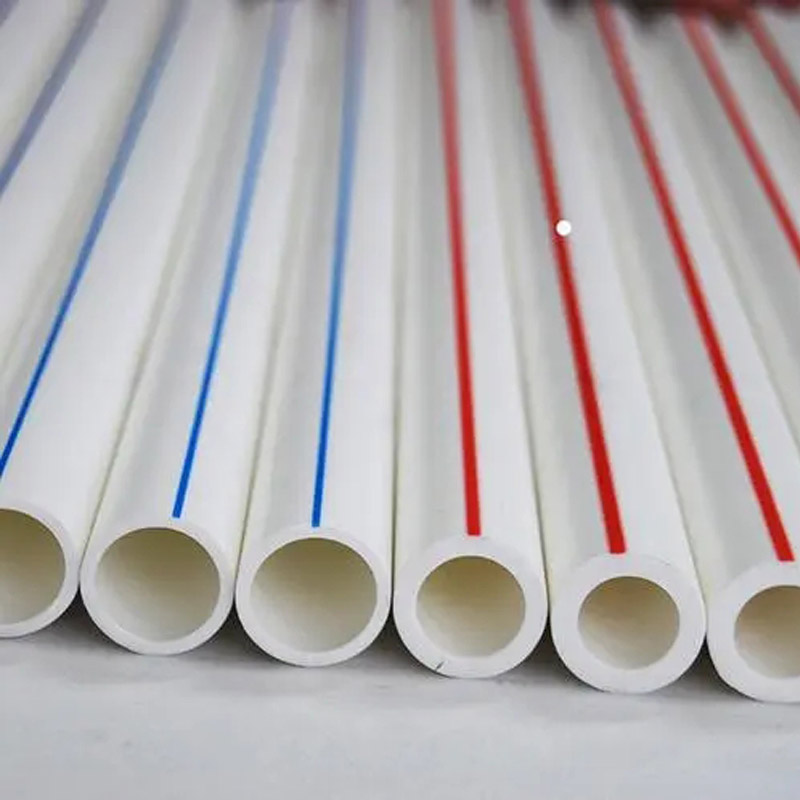
PPR (Polypropylene Random Copolymer): PPR is produced through the copolymerization of propylene with ethylene. The "random" designation refers to the statistical distribution of ethylene units along the polypropylene chain, disrupting crystallinity and enhancing flexibility and impact strength. PPR compounds generally don't require plasticizers. Manufacturing employs extrusion, similar to PVC, but generally at lower temperatures (200-260°C). Hot-plate or socket fusion welding is crucial for joining PPR pipes, creating homogenous joints with strength comparable to the pipe material itself. Control of melt flow index (MFI), polymerization degree, and the ethylene content is paramount for achieving desired mechanical characteristics. The absence of plasticizers contributes to PPR’s better long-term stability and resistance to leaching.
Performance & Engineering
Pressure Rating & Mechanical Strength: Both PVC and PPR exhibit acceptable tensile strength for many applications. However, PPR generally demonstrates superior impact resistance, particularly at lower temperatures. Hydrostatic pressure testing is a critical performance metric. PVC pressure ratings (Schedule 40, Schedule 80) vary based on pipe size and wall thickness. PPR pipes are classified by their ‘S’ value (e.g., PN10, PN16, PN20), representing the nominal pressure in bar. The choice depends on the maximum operating pressure of the system.
Thermal Expansion & Contraction: PVC exhibits a significantly higher coefficient of thermal expansion (approximately 8 x 10⁻⁵ /°C) compared to PPR (approximately 3 x 10⁻⁵ /°C). This necessitates careful consideration of expansion loops and anchoring systems in long pipeline runs to prevent stress build-up and potential joint failure. PPR's lower thermal expansion reduces these engineering complexities.
Chemical Resistance: PVC demonstrates good resistance to many acids, alkalis, and salts, but can be susceptible to degradation by chlorinated hydrocarbons and ketones. PPR offers broader chemical compatibility, with resistance to a wide range of corrosive substances, including many organic solvents. However, prolonged exposure to strong oxidizing agents should be avoided.
Fire Performance: PVC, when burned, releases corrosive hydrogen chloride gas. PPR is combustible, but generally produces less toxic smoke and fumes. Fire resistance classifications vary based on local regulations.
Technical Specifications
| Property | PVC (uPVC) | PPR | Unit |
|---|---|---|---|
| Density | 1.40 - 1.45 | 0.90 - 0.92 | g/cm³ |
| Tensile Strength | 50 - 70 | 35 - 50 | MPa |
| Impact Strength (Izod Notched) | 3 - 8 | 8 - 15 | kJ/m² |
| Coefficient of Linear Thermal Expansion | 8 x 10⁻⁵ | 3 x 10⁻⁵ | /°C |
| Maximum Operating Temperature | 60 | 95 | °C |
| Water Absorption (24hr) | 0.2 - 0.5 | 0.05 - 0.1 | % |
Failure Mode & Maintenance
PVC Failure Modes: PVC pipes are susceptible to brittle failure, particularly at low temperatures or under impact loading. UV degradation can cause embrittlement and cracking, especially in exposed applications. Hydrolytic degradation (slow breakdown due to reaction with water) can occur over extended periods, diminishing mechanical properties. Joint failures commonly result from improper solvent welding techniques (insufficient solvent, improper curing time) or thermal stress. Stress cracking can occur due to prolonged exposure to certain chemicals.
PPR Failure Modes: PPR pipes are less prone to brittle failure but can exhibit creep deformation under sustained load at elevated temperatures. Oxidation can occur over long-term exposure to high temperatures and oxygen. Improper hot-plate or socket fusion welding is a primary cause of joint failures, resulting in inadequate fusion or incomplete weld penetration. Long-term exposure to strong oxidizing agents can lead to degradation.
Maintenance: Regular visual inspections for cracks, leaks, and signs of degradation are crucial for both materials. For PVC, avoid mechanical damage and protect from prolonged UV exposure. For PPR, ensure proper welding procedures are followed during installation and repair. Periodically check the integrity of welded joints. Flush pipelines periodically to remove sediment buildup, which can contribute to corrosion and bacterial growth.
Industry FAQ
Q: What are the long-term cost implications of selecting PVC versus PPR for a large-scale potable water distribution system?
A: While PVC typically has a lower initial material cost, PPR’s superior long-term durability, reduced maintenance requirements (fewer joint failures, resistance to leaching), and lower thermal expansion-related stresses can result in lower lifecycle costs. A detailed cost-benefit analysis accounting for installation, maintenance, replacement, and potential water loss is essential.
Q: How does the chemical compatibility of PPR compare to CPVC for industrial wastewater applications?
A: PPR generally offers broader chemical compatibility than CPVC, particularly with organic solvents. However, CPVC maintains higher temperature resistance, making it suitable for handling hot industrial effluents. A thorough chemical resistance chart evaluation, specific to the wastewater composition, is crucial for material selection.
Q: What are the primary concerns regarding the use of phthalate plasticizers in PVC pipes intended for potable water?
A: Phthalates can leach into the water supply over time, raising potential health concerns. Regulatory bodies are increasingly restricting or banning the use of phthalates in potable water applications. Alternative plasticizers (e.g., bio-based plasticizers) are available, but may impact the pipe's performance characteristics.
Q: What are the key welding parameters to control during PPR pipe installation to ensure a robust and leak-proof joint?
A: Precise control of heating plate temperature, welding time, and pressure applied during socket fusion is critical. Adhering to the manufacturer's recommended parameters for specific pipe dimensions is essential. Proper alignment of the pipe and fitting, and removal of any debris before welding, are also crucial.
Q: How does the fire performance of PVC compare to PPR in the context of building codes and safety regulations?
A: PVC releases corrosive and toxic hydrogen chloride gas when burned, posing a significant hazard. PPR, while combustible, generally produces less toxic smoke and fumes. Building codes often impose stricter fire safety requirements for PVC piping systems, potentially necessitating fire suppression measures or alternative materials.
Conclusion
The selection between PVC and PPR piping necessitates a rigorous engineering assessment, considering a multitude of factors beyond initial cost. PVC remains a viable option for many applications, particularly where budget constraints are paramount and operating temperatures are moderate. However, PPR’s superior impact resistance, lower thermal expansion, broader chemical compatibility, and absence of potentially harmful plasticizers often make it the preferred choice for demanding applications, including potable water distribution, industrial process piping, and underfloor heating systems.
Future trends point towards the development of more sustainable and environmentally friendly PVC formulations, utilizing bio-based plasticizers and improved stabilizers. Continued advancements in PPR polymerization techniques will likely yield materials with enhanced mechanical properties and extended service life. Ultimately, a holistic lifecycle assessment, incorporating both economic and environmental considerations, is critical for making an informed decision.
-
DN25 HDPE Compression Fitting-HORON INTERNATIONAL|Reliable Irrigation Solutions
NewsFeb.11,2026
-
hdpe coupling joint product Manufacturing Analysis
News2026-11-18
-
ppr pipe heating time products Performance Analysis
News2026-11-16
-
hdpe pipe sizes factory Performance Analysis
News2026-11-09
-
HDPE Pipe Sizes Service Performance Analysis
News2026-10-26
-
wholesale 15mm ppr pipe Material Science and Performance Analysis
News2026-10-20
-
wholesale pvc pipe price per foot Technical Analysis
News2026-09-21
-
wholesale long pvc pipe Technical Analysis and Manufacturing Specifications
News2026-09-15
-
wholesale plumbing kitchen sink water lines Material Performance
News2026-09-15
-
wholesale hdpe drip irrigation Material Science
News2026-09-15
-
wholesale hot water ppr pipe Performance Analysis
News2026-09-15
-
wholesale ppr plumbing Performance Analysis
News2026-09-15
-
wholesale ppr pipe supplier Performance Analysis
News2026-09-13
-
wholesale 50mm ppr pipe Performance Analysis
News2026-09-13
-
wholesale hdpe drip pipe Performance Analysis
News2026-09-13
-
wholesale hdpe pipe 63mm price Manufacturing Specification and Performance Analysis
News2026-09-13