

Feb . 11, 2026 00:01 Back to list
PVC Pipe Used for Product Performance Analysis
Introduction
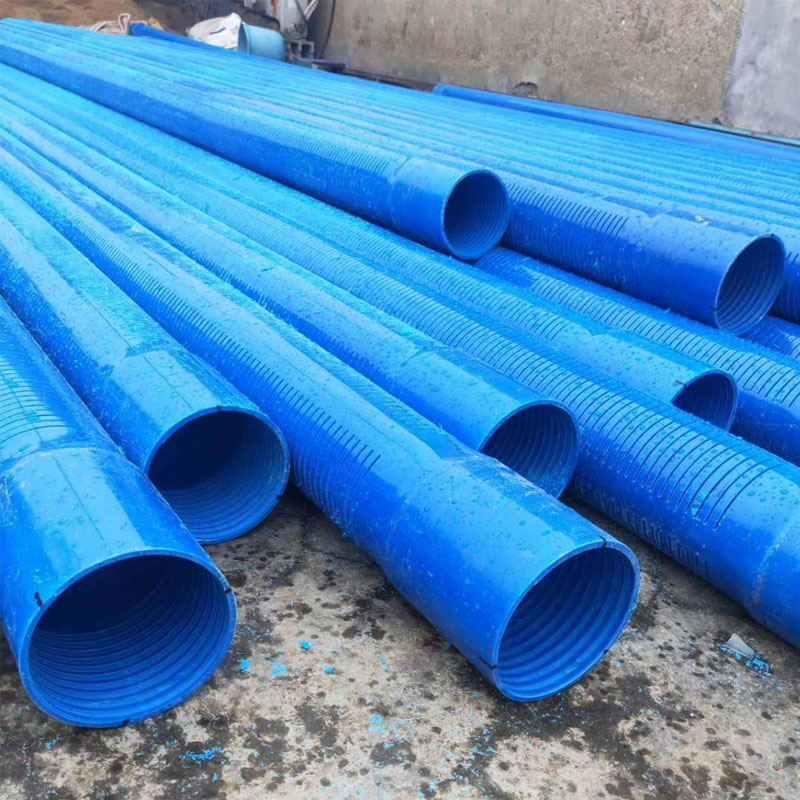
Polyvinyl chloride (PVC) pipe is a ubiquitous material in modern infrastructure, serving a diverse range of applications from potable water distribution and irrigation to drainage, sewage, and industrial fluid transfer. Its position within the broader piping industry is defined by its cost-effectiveness, durability, and relative ease of installation compared to metallic alternatives. This technical guide provides an in-depth analysis of PVC pipe, encompassing material science, manufacturing processes, performance characteristics, failure modes, and relevant industry standards. Core performance attributes include pressure resistance, chemical inertness, and long-term structural integrity. The prevalent pain points in PVC pipe application center around long-term degradation due to UV exposure, temperature fluctuations, and the potential for stress cracking in demanding operational environments. Selection criteria must prioritize appropriate formulation (rigid vs. flexible PVC) and installation techniques to mitigate these risks.
Material Science & Manufacturing
PVC is a thermoplastic polymer synthesized from the polymerization of vinyl chloride monomer (VCM). The raw material, ethylene dichloride (EDC), is cracked to produce VCM, which then undergoes polymerization. The resulting PVC resin exists in both rigid and flexible forms, dictated by the amount of plasticizers added during compounding. Rigid PVC, possessing a high glass transition temperature (Tg), is characterized by its strength and resistance to deformation, while flexible PVC gains ductility through the incorporation of plasticizers like phthalates or adipates.
Manufacturing processes for PVC pipe commonly employ extrusion. PVC resin, along with stabilizers (typically lead-based or calcium-zinc based), lubricants, impact modifiers, and pigments, is thoroughly mixed and fed into an extruder. The extruder utilizes a rotating screw to melt and homogenize the mixture, forcing it through a die that shapes the PVC into the desired pipe dimensions. Critical process parameters include die temperature, screw speed, and cooling rate, which directly impact the pipe's dimensional accuracy, surface finish, and mechanical properties. Post-extrusion, pipes undergo cutting, beveling, and quality control inspections, including hydrostatic pressure testing to verify burst strength. The selection of stabilizers is crucial, directly influencing the pipe's resistance to thermal degradation and UV exposure. Calcium-zinc stabilizers are increasingly favored due to environmental concerns associated with lead-based stabilizers. Further processing, like socketing or threading, can occur depending on the application.
Performance & Engineering
The structural performance of PVC pipe is governed by its mechanical properties, notably its tensile strength, yield strength, and elongation at break. These parameters are highly dependent on the PVC formulation and manufacturing process. Under internal pressure, PVC pipe experiences hoop stress, which is the circumferential tensile stress acting on the pipe wall. The Barlow’s formula is commonly used to calculate the allowable internal pressure based on pipe dimensions, material strength, and a safety factor: P = (2SΔt)/D, where P is the internal pressure, S is the allowable tensile stress, Δt is the wall thickness, and D is the outside diameter.
Environmental resistance is another critical performance characteristic. PVC is inherently resistant to many chemicals, including acids, bases, and salts, making it suitable for a wide range of fluid transfer applications. However, prolonged exposure to certain solvents and hydrocarbons can cause swelling and degradation. UV radiation can also degrade PVC, leading to embrittlement and cracking; UV stabilizers are therefore essential, particularly for outdoor applications. Furthermore, temperature significantly impacts PVC's performance. Elevated temperatures reduce its strength and increase its susceptibility to creep. Compliance with relevant standards (e.g., ASTM D1785, D2241, D3212) ensures that PVC pipe meets minimum performance requirements for specific applications. Hydrostatic testing, as mandated by these standards, verifies the pipe’s ability to withstand sustained internal pressure without failure. Considerations for soil loading and external impact resistance are also essential during installation, particularly for buried pipelines.
Technical Specifications
| Parameter | Units | Typical Value (Schedule 40 PVC) | Typical Value (Schedule 80 PVC) |
|---|---|---|---|
| Tensile Strength | psi | 6,000 | 7,500 |
| Yield Strength | psi | 4,000 | 5,000 |
| Elongation at Break | % | 30 | 20 |
| Flexural Modulus | psi | 300,000 | 350,000 |
| Water Absorption (24hr) | % | 0.05 | 0.05 |
| Coefficient of Linear Thermal Expansion | in/in°F | 0.000065 | 0.000065 |
Failure Mode & Maintenance
PVC pipe is susceptible to several failure modes, depending on operational conditions and material quality. Stress cracking, particularly environmental stress cracking (ESC), occurs when sustained tensile stress is combined with exposure to aggressive chemicals. This can lead to brittle failure even at stresses below the yield strength. UV degradation causes chain scission, reducing the pipe’s impact resistance and tensile strength, resulting in surface cracking and eventual failure. Fatigue cracking can occur under cyclic loading, such as those experienced in pumping systems.
Thermal deformation can occur at elevated temperatures, leading to dimensional instability and potential leaks. Improper installation, such as insufficient support or excessive bending, can also induce stress and contribute to failure. Maintenance strategies include regular visual inspections for cracks, leaks, and signs of degradation. Proper jointing techniques (solvent welding or mechanical fittings) are crucial to prevent leaks. For buried pipelines, cathodic protection may be considered to mitigate corrosion of any metallic components. If ESC is suspected, switching to a more chemically resistant PVC formulation or reducing operating stresses is recommended. UV-resistant coatings can extend the service life of exposed PVC pipe. Corrective actions should adhere to relevant industry best practices and local regulations.
Industry FAQ
Q: What is the impact of water hammer on PVC pipe systems?
A: Water hammer, or hydraulic transient, can generate significant pressure surges within a PVC pipe system. These surges exceed the pipe’s design pressure, potentially causing catastrophic failure through burst or joint separation. Mitigation strategies include the use of surge arrestors, slow-closing valves, and proper pipe anchoring to absorb shock waves. The pipe’s pressure rating must adequately exceed the anticipated maximum surge pressure.
Q: How does soil corrosivity affect buried PVC pipe?
A: While PVC itself is corrosion-resistant, the corrosivity of surrounding soil can affect any metallic components in the pipeline system, such as fittings or couplings. Corrosion of these components can compromise the structural integrity of the system. Soil testing is essential to determine the corrosivity level and implement appropriate protective measures, such as cathodic protection or the use of corrosion-resistant alloys.
Q: What is the difference between Schedule 40 and Schedule 80 PVC pipe?
A: Schedule 40 and Schedule 80 refer to the pipe wall thickness. Schedule 80 pipe has a thicker wall than Schedule 40 pipe, resulting in higher pressure rating and increased impact resistance. Schedule 40 is suitable for lower-pressure applications, while Schedule 80 is preferred for high-pressure and demanding environments. The schedule number directly correlates to the allowable internal pressure.
Q: What are the considerations for using PVC pipe in cold climates?
A: In cold climates, PVC pipe can become brittle at low temperatures. Proper burial depth is crucial to protect the pipe from freezing. Thermal expansion and contraction must be accounted for during installation to prevent stress buildup. Using a PVC formulation with enhanced low-temperature impact resistance is also recommended.
Q: What are the environmental impacts associated with PVC production and disposal?
A: PVC production involves the use of chlorine and ethylene, and the disposal of PVC waste can release harmful dioxins if incinerated improperly. However, advancements in PVC manufacturing processes and recycling technologies are minimizing these impacts. Calcium-zinc stabilizers are replacing lead-based stabilizers, and PVC recycling programs are gaining momentum. Responsible disposal practices, such as controlled incineration or material recovery, are essential to mitigate environmental concerns.
Conclusion
PVC pipe remains a cornerstone material in numerous industries due to its balance of cost-effectiveness, durability, and versatility. A comprehensive understanding of its material science, manufacturing processes, and performance characteristics is paramount for engineers and procurement managers alike. The selection of the appropriate PVC formulation, coupled with meticulous installation practices and ongoing maintenance, is critical for ensuring long-term structural integrity and preventing premature failure.
Future advancements in PVC technology will likely focus on developing more sustainable formulations, enhancing resistance to degradation, and improving recycling processes. Continuous monitoring of industry standards and best practices is essential to optimize the performance and longevity of PVC pipe systems. Addressing the pain points of UV degradation and chemical compatibility through innovative additive technologies and material modifications will continue to drive improvements in this vital infrastructure component.
-
DN25 HDPE Compression Fitting-HORON INTERNATIONAL|Reliable Irrigation Solutions
NewsFeb.11,2026
-
china hdpe coupling price Performance Analysis
News2026-06-01
-
china dual wall perforated corrugated pipe Performance Analysis
News2026-06-01
-
china ppr pipe 63mm Performance Analysis
News2026-06-01
-
china 63mm hdpe pipe price Performance Analysis
News2026-06-01
-
china ppr water pipe Performance Analysis
News2026-06-01
-
china 2.5 inch hdpe pipe price Performance Analysis
News2026-05-31
-
china 20mm pvc pipe Performance Analysis
News2026-05-31
-
china hdpe pipe company Performance Analysis
News2026-05-31
-
china water pipe for kitchen sink Material Performance
News2026-05-31
-
china 12 inch diameter pvc pipe for sale Performance Analysis
News2026-05-31
-
china 2 inch upvc column pipe price Performance Analysis
News2026-05-30
-
china hdpe to pvc coupling Performance Analysis
News2026-05-30
-
china 2 hdpe to pvc coupling Performance Analysis
News2026-05-30
-
china 48 inch hdpe pipe cost Performance Analysis
News2026-05-30
-
china upvc column pipe price Performance Analysis
News2026-05-30