

Feb . 11, 2026 00:01 Back to list
ppr pipe 50mm price product Performance Analysis
Introduction
Polypropylene Random Copolymer (PPR) pipe, specifically the 50mm variant, represents a significant advancement in fluid conveyance systems. Its position within the building infrastructure chain is as a core component for both hot and cold water distribution networks, as well as industrial applications requiring chemical resistance. PPR pipe distinguishes itself from traditional materials like galvanized steel and CPVC through a combination of thermal stability, corrosion resistance, and ease of installation. The 50mm diameter is a commonly utilized size, balancing flow capacity with cost-effectiveness for residential and light commercial projects. Core performance characteristics include pressure resistance, temperature endurance (up to 95°C for sustained periods), and a smooth inner surface minimizing friction loss. A key industry pain point is ensuring long-term weld integrity and mitigating the risk of oxidative degradation, impacting lifespan and requiring robust quality control procedures during manufacturing and installation.
Material Science & Manufacturing
PPR pipes are manufactured from polypropylene random copolymer, a thermoplastic polymer created by polymerizing propylene with ethylene. The “random” designation refers to the statistical arrangement of ethylene monomers within the polypropylene chain, disrupting the polymer’s crystallinity and improving its impact resistance and flexibility. Raw material quality is paramount; virgin PP resin with a Melt Flow Index (MFI) within a specified range (typically 1.0 – 3.0 g/10min at 230°C/2.16kg) is crucial for consistent processing and optimal mechanical properties. The manufacturing process primarily employs extrusion. PP granules are fed into an extruder, heated to a molten state (around 200-240°C), and forced through a die to create the pipe’s desired diameter and wall thickness. Key parameter control includes maintaining precise temperature profiles throughout the extruder to prevent degradation and ensuring uniform die pressure for dimensional accuracy. Subsequent cooling via water baths stabilizes the pipe’s shape. Socket fusion welding is the predominant joining method, requiring specialized heating tools to melt both the pipe and fitting surfaces, creating a homogenous weld. Proper welding time and temperature (typically 130-170°C depending on pipe diameter and wall thickness) are critical to avoid under- or over-welding, directly impacting joint strength. The chemical compatibility of PPR is excellent with most common water types, but prolonged exposure to certain organic solvents and oxidizing agents should be avoided.
Performance & Engineering
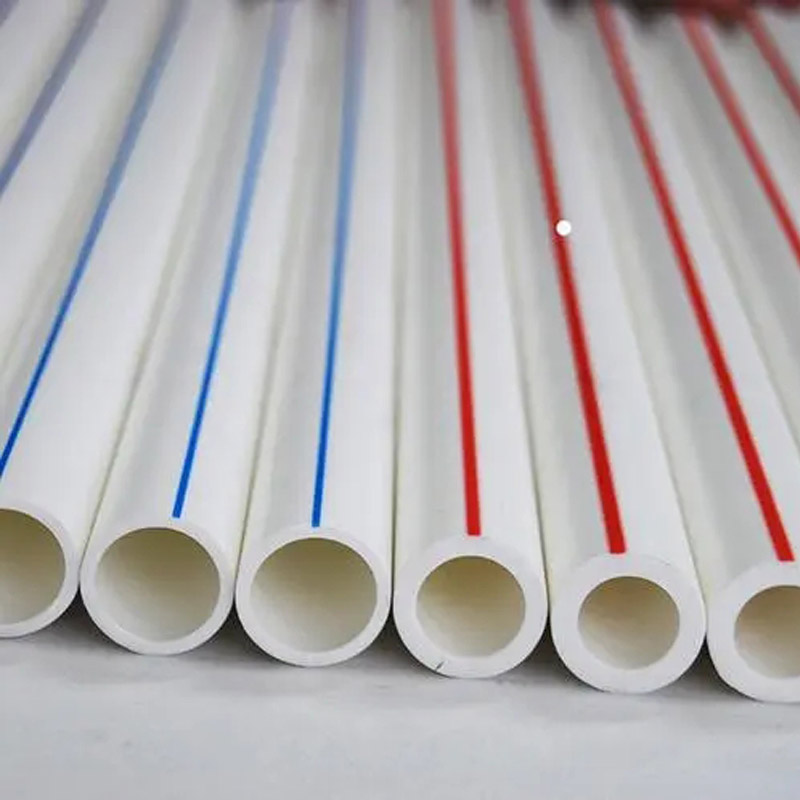
The performance of a 50mm PPR pipe is dictated by its ability to withstand hydrostatic pressure, thermal stress, and mechanical loads. Hydrostatic pressure testing, typically conducted per industry standards (detailed in the footer), validates the pipe's resistance to bursting under internal fluid pressure. The pipe’s pressure rating is typically expressed in bars or PSI at a specified temperature (e.g., PN20 – 2.0 MPa or 290 PSI at 20°C). Force analysis during installation considers bending moments from pipe support spacing and weight of the fluid conveyed. Excessive bending radii can induce stress concentrations, leading to premature failure. Thermal expansion and contraction are significant considerations, particularly in hot water systems. PPR has a coefficient of thermal expansion approximately ten times higher than steel, necessitating the incorporation of expansion loops or flexible connectors to prevent stress buildup and potential joint failure. Environmental resistance primarily centers on UV exposure. Prolonged sunlight exposure can cause oxidative degradation, reducing the pipe’s mechanical properties. Therefore, above-ground installations require UV stabilization measures, such as coatings or protective cladding. Compliance requirements include adherence to drinking water regulations (ensuring the material doesn't leach harmful substances into the water) and building codes related to plumbing and fire safety. The smooth inner surface reduces friction losses, improving flow efficiency and lowering pumping energy requirements. The pipe’s relatively low weight simplifies handling and installation compared to metallic alternatives.
Technical Specifications
| Parameter | Unit | Value (Typical) | Test Standard |
|---|---|---|---|
| Nominal Diameter | mm | 50 | ISO 15876 |
| Pressure Rating (PN) | bar | 20 | DIN 8077 |
| Wall Thickness | mm | 4.2 | ASTM D2412 |
| Burst Pressure | bar | 80 | ISO 11671 |
| Maximum Operating Temperature | °C | 95 | DIN 8077 |
| Melt Flow Index (MFI) | g/10min | 2.0 | ISO 1133 |
Failure Mode & Maintenance
PPR pipe failures typically manifest in several forms. Slow Crack Growth (SCG) is a prevalent issue, particularly in systems exposed to sustained tensile stress and aggressive water chemistry. This is initiated by micro-cracks at weld points or material defects and propagates slowly over time, eventually leading to leakage. Oxidative degradation, exacerbated by UV exposure and elevated temperatures, causes embrittlement of the material, reducing its impact resistance and increasing susceptibility to cracking. Improperly executed socket fusion welds are a common failure point, resulting from insufficient heating, inadequate insertion depth, or contamination of the welding surfaces. Delamination can occur if the PP material is of poor quality or subjected to excessive stress. Maintenance primarily focuses on preventative measures. Regular visual inspections for leaks, cracks, or discoloration are crucial. Periodic flushing of the system removes sediment buildup, minimizing the risk of abrasion and corrosion. For systems in areas with hard water, implementing water softening measures can reduce scale formation, improving flow rates and extending pipe lifespan. In the event of a leak, the affected section of pipe should be cut out and replaced using proper socket fusion welding techniques. Avoid using abrasive cleaning agents or solvents that can damage the PP material. Protect exposed pipe sections from direct sunlight with UV-resistant coatings or shielding.
Industry FAQ
Q: What is the long-term effect of chlorine in potable water on PPR pipe?
A: While PPR exhibits good chemical resistance to chlorine, prolonged exposure to high concentrations can lead to oxidative degradation over many years. The rate of degradation is influenced by temperature, chlorine concentration, and the presence of other oxidizing agents. It is recommended to use PPR pipe with stabilized formulations designed to resist chlorine degradation and adhere to water quality standards.
Q: How does the pipe’s wall thickness impact its pressure rating?
A: Wall thickness is directly proportional to a pipe’s pressure rating. A thicker wall provides greater resistance to hoop stress under internal pressure. Increasing the wall thickness increases the pipe’s burst pressure and allows it to withstand higher operating pressures. The specific relationship is governed by the pipe’s material properties and geometric parameters, as defined in relevant standards like ISO 15876.
Q: What are the key considerations for supporting a long run of 50mm PPR pipe?
A: Support spacing should be designed to minimize bending moments and prevent excessive sag. Support intervals typically range from 2-3 meters, depending on the fluid temperature and pipe load. Supports should be non-corrosive and designed to distribute the load evenly. Expansion loops or flexible connectors should be incorporated to accommodate thermal expansion and contraction.
Q: Can PPR pipe be used for compressed air lines?
A: Generally, PPR pipe is not recommended for compressed air lines operating at high pressures. While some specialized PPR formulations are rated for lower pressure air applications, the material’s inherent permeability to air and susceptibility to cracking under cyclical pressure make it unsuitable for most compressed air systems. Alternative materials like polyethylene (PE) or nylon are preferred.
Q: What is the impact of improper welding technique on the lifespan of the system?
A: Improper welding is the most common cause of premature failure in PPR systems. Under-welding results in a weak joint susceptible to leakage, while over-welding can degrade the material and reduce its strength. Consistent adherence to manufacturer’s recommended welding parameters (temperature, time, pressure) and proper operator training are essential for ensuring long-term weld integrity.
Conclusion
PPR pipe, and specifically the 50mm variant, offers a robust and cost-effective solution for a broad spectrum of fluid conveyance applications. Its combination of corrosion resistance, thermal stability, and ease of installation makes it a compelling alternative to traditional piping materials. However, realizing its full potential demands a thorough understanding of material properties, manufacturing processes, and proper installation techniques. Addressing industry pain points such as weld integrity and oxidative degradation through rigorous quality control and preventative maintenance is critical.
Looking ahead, advancements in PPR formulations, including enhanced UV stabilization and improved resistance to chlorine degradation, will further expand its applicability. The increasing focus on sustainable building practices will also drive demand for PPR, given its recyclability and long service life. Continued adherence to evolving international standards and best practices will be paramount in ensuring the long-term reliability and performance of PPR piping systems.
-
DN25 HDPE Compression Fitting-HORON INTERNATIONAL|Reliable Irrigation Solutions
NewsFeb.11,2026
-
hdpe coupling joint product Manufacturing Analysis
News2026-11-18
-
ppr pipe heating time products Performance Analysis
News2026-11-16
-
hdpe pipe sizes factory Performance Analysis
News2026-11-09
-
HDPE Pipe Sizes Service Performance Analysis
News2026-10-26
-
wholesale 15mm ppr pipe Material Science and Performance Analysis
News2026-10-20
-
wholesale pvc pipe price per foot Technical Analysis
News2026-09-21
-
wholesale long pvc pipe Technical Analysis and Manufacturing Specifications
News2026-09-15
-
wholesale plumbing kitchen sink water lines Material Performance
News2026-09-15
-
wholesale hdpe drip irrigation Material Science
News2026-09-15
-
wholesale hot water ppr pipe Performance Analysis
News2026-09-15
-
wholesale ppr plumbing Performance Analysis
News2026-09-15
-
wholesale ppr pipe supplier Performance Analysis
News2026-09-13
-
wholesale 50mm ppr pipe Performance Analysis
News2026-09-13
-
wholesale hdpe drip pipe Performance Analysis
News2026-09-13
-
wholesale hdpe pipe 63mm price Manufacturing Specification and Performance Analysis
News2026-09-13