

Feb . 11, 2026 00:01 Back to list
ppr pipe 50mm price factories Performance Analysis
Introduction
Polypropylene Random (PPR) pipe, specifically the 50mm variant, represents a significant component within modern plumbing and industrial fluid transfer systems. PPR piping, fabricated by factories specializing in its production, is a thermoplastic pipe system increasingly favored over traditional metallic alternatives for cold and hot water distribution, industrial applications, and increasingly, specialized chemical conveyance. This guide details the material science, manufacturing processes, performance characteristics, potential failure modes, and relevant industry standards associated with 50mm PPR pipe. The competitive landscape surrounding ‘ppr pipe 50mm price factories’ is driven by factors including raw material costs (polypropylene homopolymer and copolymer ratios), manufacturing efficiency, quality control procedures, and adherence to international regulations. This comprehensive analysis is intended for procurement managers, engineers, and technical personnel involved in specifying, installing, and maintaining PPR piping systems. A primary industry pain point revolves around ensuring consistent material quality and reliable long-term performance, particularly in demanding applications involving elevated temperatures and pressures.
Material Science & Manufacturing
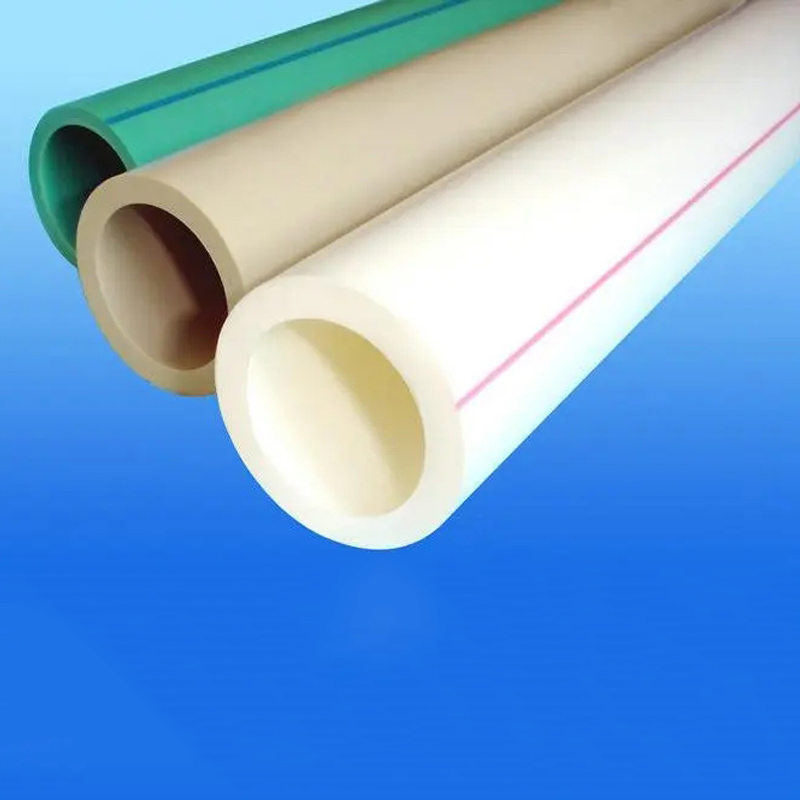
PPR pipe derives its properties from polypropylene (PP), a thermoplastic polymer. Specifically, it utilizes random copolymer polypropylene, distinguished by the random arrangement of comonomers (typically ethylene) along the polymer chain. This randomization disrupts the polymer's crystallinity, resulting in enhanced impact resistance and flexibility compared to homopolymer PP. The raw material's molecular weight distribution is critical; a broader distribution generally enhances processability. Manufacturing begins with the compounding of PP resin with stabilizing additives (antioxidants, UV stabilizers), pigments (for identification purposes – often green for cold water, red for hot), and potentially nucleating agents to refine the crystalline structure. The most common manufacturing process is extrusion. PP granules are fed into an extruder where they are melted and forced through a circular die. Critical parameters during extrusion include melt temperature (typically 190-240°C), screw speed, and die pressure. Maintaining consistent melt temperature is paramount to prevent degradation. Following extrusion, the pipe is cooled via a water bath, sized to the correct 50mm outer diameter, and cut to length. Quality control involves rigorous testing of hydrostatic pressure, impact strength, and material composition according to ISO 15876. The level of ethylene content directly impacts the pipe’s flexibility; higher ethylene content equates to lower stiffness. Variations in the manufacturing process, such as inconsistent cooling rates, can induce residual stresses within the pipe wall, potentially leading to premature failure.

Performance & Engineering
The performance of 50mm PPR pipe is fundamentally governed by its mechanical properties and resistance to environmental factors. Hydrostatic pressure resistance is a critical parameter, dictating the maximum operating pressure the pipe can withstand without failure. This is determined through long-term hydrostatic pressure testing at elevated temperatures (e.g., 20°C, 60°C, 80°C). PPR exhibits excellent chemical resistance to a wide range of substances, including acids, bases, and salts, making it suitable for industrial applications. However, it's susceptible to degradation by strong oxidizing agents. The pipe’s long-term performance is also affected by creep – the gradual deformation under sustained load. Engineering calculations must account for creep, especially in applications involving high temperatures and continuous pressure. Thermal expansion is another crucial consideration; PPR has a significantly higher coefficient of thermal expansion than metallic pipes, necessitating the use of expansion joints and appropriate support systems to prevent stress cracking. Compliance with relevant standards like DIN 19569 and EN ISO 15876 is mandatory. The allowable stress levels specified within these standards are derived from extensive fatigue testing and material characterization. Failure to adhere to these standards can result in catastrophic system failures. Finite element analysis (FEA) is often employed to model stress distribution within the pipe system under various loading conditions.
Technical Specifications
| Parameter | Unit | Value (Typical) | Test Standard |
|---|---|---|---|
| Outer Diameter | mm | 50.0 ± 0.5 | ISO 15876 |
| Wall Thickness | mm | 4.2 - 6.0 (depending on PN rating) | ISO 15876 |
| Pressure Nominal (PN) | bar | PN16, PN20, PN25 | ISO 15876 |
| Hydrostatic Pressure Test (20°C) | bar | >48 bar (PN16), >60 bar (PN20), >75 bar (PN25) | ISO 11671 |
| Long-Term Hydrostatic Pressure (60°C) | bar | >32 bar (PN16), >40 bar (PN20), >50 bar (PN25) | ISO 11671 |
| Impact Strength (20°C, 2J) | kJ/m² | >500 | ISO 14805 |
Failure Mode & Maintenance
Common failure modes in 50mm PPR pipe include slow crack growth (SCG), caused by sustained tensile stress in the presence of aggressive chemicals or UV radiation; thermal fatigue cracking, arising from repeated thermal cycling; and impact damage, particularly during installation or handling. SCG typically initiates at stress concentrators such as fittings or weld points. Oxidation, especially at elevated temperatures, can embrittle the material and reduce its impact resistance. Delamination can occur if the manufacturing process introduces voids or inconsistencies in the pipe wall. Proper installation is critical to prevent premature failure. This includes avoiding excessive bending radii, ensuring adequate support, and preventing galvanic corrosion if connecting to dissimilar metals. Maintenance should focus on visual inspections for cracks, leaks, or discoloration. Regular pressure testing can identify potential weaknesses before they lead to catastrophic failure. For minor leaks, specialized PPR repair fittings can be used. In cases of significant damage, the affected section of pipe must be replaced. Preventative measures include protecting the pipe from direct sunlight and ensuring proper water chemistry to minimize the risk of corrosion. Analysis of failed pipe sections often reveals the root cause of failure, allowing for corrective actions to be implemented.
Industry FAQ
Q: What is the impact of varying water hardness on the lifespan of PPR pipes?
A: High water hardness, particularly with significant calcium and magnesium content, can lead to scale buildup inside the PPR pipe. While PPR itself is resistant to scale adhesion, the buildup reduces the internal diameter, increasing flow resistance and potentially leading to localized stress concentrations. Long-term, heavy scale buildup can contribute to decreased flow rates and, in extreme cases, localized failures. Water softening systems are recommended in areas with high water hardness.
Q: How does the choice of solvent cement affect the long-term integrity of PPR pipe joints?
A: Using the incorrect solvent cement or failing to follow the manufacturer's instructions can compromise joint integrity. PPR pipe requires a specifically formulated solvent cement that chemically welds the pipe and fitting together. Improper application – insufficient cement, excessive cement, or inadequate dwell time – can lead to weak joints prone to leakage. Always use a cement compatible with the specific PPR material and follow the recommended procedures meticulously.
Q: What are the limitations of using PPR pipe in industrial applications involving specific chemicals?
A: While PPR exhibits broad chemical resistance, it’s not universally compatible with all chemicals. Strong oxidizing agents, concentrated acids, and certain solvents can cause swelling, cracking, or degradation. A chemical compatibility chart should always be consulted before using PPR pipe in an industrial application to ensure the material is suitable for the specific fluids being conveyed.
Q: What is the expected service life of a properly installed and maintained 50mm PPR piping system?
A: A properly installed and maintained 50mm PPR piping system can have a service life of 50 years or more under typical operating conditions (temperatures below 60°C, pressures within the PN rating). However, this lifespan is contingent on factors such as water quality, operating pressure, and exposure to UV radiation. Regular inspections and preventative maintenance are crucial to maximizing service life.
Q: Can PPR pipe be used for underground applications, and what considerations are necessary?
A: Yes, PPR pipe can be used for underground applications, but requires careful consideration. It must be adequately protected from soil movement and external loads. Bedding and backfilling materials should be non-aggressive and provide adequate support. PPR pipe should also be shielded from potential damage during excavation and construction activities. Furthermore, the pipe should be clearly traceable using detectable tape or markings.
Conclusion
50mm PPR pipe represents a durable and cost-effective solution for a wide range of fluid transfer applications. Its inherent chemical resistance, coupled with relatively straightforward installation procedures, makes it a preferred alternative to traditional metallic piping in numerous scenarios. However, understanding the material’s limitations, particularly regarding temperature sensitivity, chemical compatibility, and susceptibility to stress cracking, is paramount to ensuring long-term system reliability.
Effective quality control throughout the manufacturing process, adherence to international standards like ISO 15876, and proper installation techniques are crucial for maximizing the lifespan and performance of PPR piping systems. Future developments in PPR technology may focus on enhancing the material's resistance to high temperatures and aggressive chemicals, further expanding its application scope within the industrial sector.
-
DN25 HDPE Compression Fitting-HORON INTERNATIONAL|Reliable Irrigation Solutions
NewsFeb.11,2026
-
hdpe coupling joint product Manufacturing Analysis
News2026-11-18
-
ppr pipe heating time products Performance Analysis
News2026-11-16
-
hdpe pipe sizes factory Performance Analysis
News2026-11-09
-
HDPE Pipe Sizes Service Performance Analysis
News2026-10-26
-
wholesale 15mm ppr pipe Material Science and Performance Analysis
News2026-10-20
-
wholesale pvc pipe price per foot Technical Analysis
News2026-09-21
-
wholesale long pvc pipe Technical Analysis and Manufacturing Specifications
News2026-09-15
-
wholesale plumbing kitchen sink water lines Material Performance
News2026-09-15
-
wholesale hdpe drip irrigation Material Science
News2026-09-15
-
wholesale hot water ppr pipe Performance Analysis
News2026-09-15
-
wholesale ppr plumbing Performance Analysis
News2026-09-15
-
wholesale ppr pipe supplier Performance Analysis
News2026-09-13
-
wholesale 50mm ppr pipe Performance Analysis
News2026-09-13
-
wholesale hdpe drip pipe Performance Analysis
News2026-09-13
-
wholesale hdpe pipe 63mm price Manufacturing Specification and Performance Analysis
News2026-09-13