

Feb . 11, 2026 00:01 Back to list
ppr pipe 3 4 price manufacturer Performance Analysis
Introduction
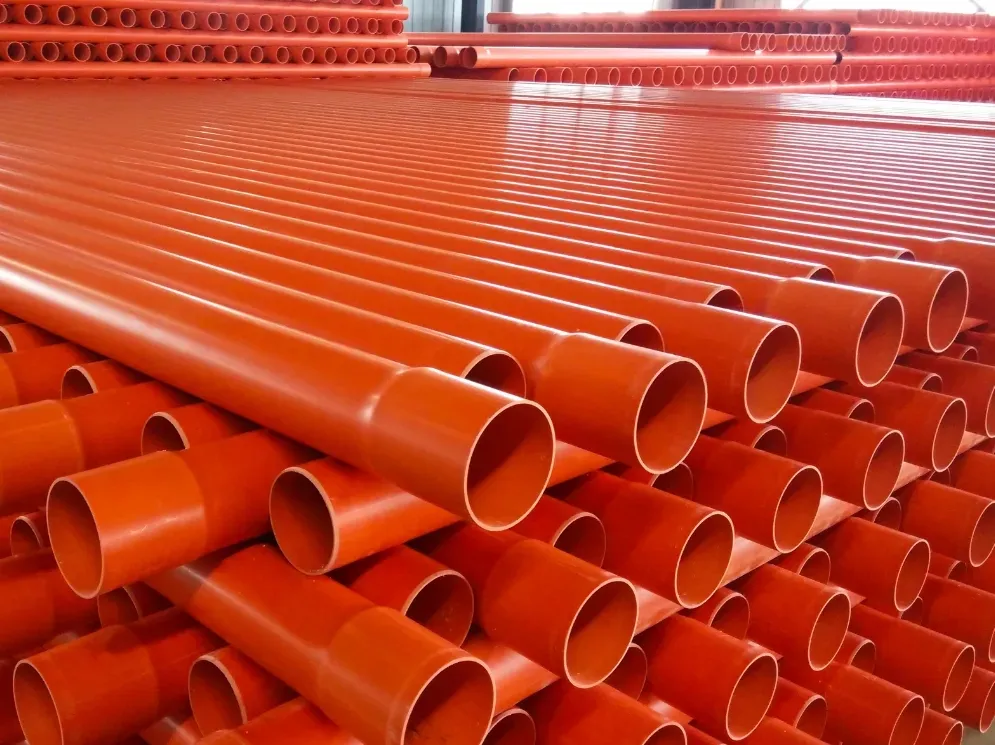
Polypropylene Random (PPR) pipe, specifically in diameters of 3/4 inch, represents a significant advancement in fluid transport systems across various industries, including potable water distribution, heating, and industrial applications. PPR pipe systems are characterized by their robust physical properties, chemical inertness, and ease of installation, offering a compelling alternative to traditional metallic piping. This guide will provide an in-depth technical analysis of PPR pipe, focusing on its material science, manufacturing processes, performance characteristics, potential failure modes, and relevant industry standards. The economic factor, represented by the '3/4 price' aspect of the product, will be contextualized within the overall lifecycle cost analysis, considering longevity and reduced maintenance requirements. Understanding the interplay of these factors is critical for informed procurement and effective system implementation. PPR pipe, specifically in the 3/4" dimension, has become a standard in many construction and industrial projects due to its balance of performance and cost-effectiveness.
Material Science & Manufacturing
PPR pipe is manufactured from polypropylene random copolymer, a thermoplastic polymer derived from propylene monomer. The 'random' designation refers to the random distribution of comonomers (typically ethylene) within the polymer chain, disrupting the crystallinity of polypropylene and imparting increased flexibility and impact resistance. Raw material properties are critical; the polypropylene used must meet stringent purity standards to ensure consistent weldability and long-term performance. Key physical properties include a density of approximately 0.905 g/cm³, a glass transition temperature (Tg) around 0°C, and a melting point between 130-171°C, dependent on the specific copolymer composition. Manufacturing typically involves extrusion. Polypropylene granules are fed into an extruder, melted, and forced through a die to form the pipe. Critical process parameters include melt temperature (maintained within a narrow range of +/- 2°C to avoid degradation), extrusion pressure, and cooling rate. Rapid cooling ensures dimensional stability and prevents warping. Socket fusion and butt fusion are common joining techniques. Socket fusion involves heating both the pipe end and the fitting socket, allowing them to be joined under pressure. Butt fusion, used for larger diameters, involves heating both pipe ends and pressing them together. The consistency of the heating elements and precise control of fusion time are crucial for creating leak-proof joints with adequate strength.

Performance & Engineering
The performance of PPR pipe is dictated by its ability to withstand internal hydrostatic pressure, external loads, and environmental stresses. Hydrostatic pressure testing, conducted according to international standards (see section 7), verifies the pipe’s resistance to bursting. Force analysis reveals that hoop stress (stress acting circumferentially) is the primary stress component under internal pressure. The pipe wall thickness is engineered to provide an adequate safety factor against bursting. PPR exhibits excellent chemical resistance to a wide range of substances, including acids, bases, and salts, making it suitable for diverse applications. However, prolonged exposure to oxidizing agents should be avoided. Environmental resistance is also a crucial factor. UV exposure can cause degradation over time, leading to embrittlement. Therefore, PPR pipe used in outdoor applications should be UV-stabilized or shielded from direct sunlight. Temperature fluctuations also induce stresses due to thermal expansion and contraction. Proper allowance for thermal expansion, through the use of expansion loops or flexible connectors, is essential to prevent stress cracking. Compliance with building codes and industry regulations (e.g., WRAS approval for potable water applications) is paramount. The 3/4" diameter is selected based on flow rate requirements, considering fluid viscosity, pressure drop, and pipe length, as calculated using the Darcy-Weisbach equation and appropriate friction factors.
Technical Specifications
| Parameter | Unit | 3/4" PPR Pipe (Typical) | Testing Standard |
|---|---|---|---|
| Nominal Diameter | inch | 0.75 | ASTM D1785 |
| Outside Diameter | mm | 21.5 | ISO 15876 |
| Wall Thickness | mm | 2.3 | DIN 8077/8078 |
| Hydrostatic Pressure (Short Term) | MPa | 16 | ISO 11671 |
| Hydrostatic Pressure (Long Term) | MPa | 10 | ISO 11671 |
| Tensile Strength | MPa | 28 | ASTM D638 |
| Elongation at Break | % | 300 | ASTM D638 |
Failure Mode & Maintenance
PPR pipe failures typically arise from several mechanisms. Stress cracking, induced by prolonged exposure to tensile stress and aggressive chemicals, is a common failure mode. Fatigue cracking can occur due to repeated pressure fluctuations or mechanical vibration. Improper installation, particularly insufficient fusion during socket or butt welding, creates weak points prone to leakage. Creep, the gradual deformation under sustained load, can occur at elevated temperatures. Oxidation, though less common than with some other polymers, can occur over extended periods, particularly at high temperatures. UV degradation leads to embrittlement and cracking in exposed installations. Maintenance primarily involves visual inspection for leaks, cracks, or deformation. Regular pressure testing can identify hidden leaks before they escalate. In the event of a leak, the damaged section should be cut out and replaced with a new PPR fitting and pipe section, utilizing proper fusion techniques. Preventative maintenance includes ensuring adequate support for the pipe, avoiding excessive bending stresses, and protecting it from direct sunlight and extreme temperatures. For systems carrying potable water, periodic flushing is recommended to remove sediment buildup.
Industry FAQ
Q: What is the long-term impact of chlorine in potable water on PPR pipe, and is pre-treatment necessary?
A: While PPR exhibits good resistance to chlorine, prolonged exposure to high chlorine concentrations (above 2 ppm) can lead to gradual degradation of the polymer matrix, reducing its mechanical properties over time. The rate of degradation depends on the chlorine concentration, water temperature, and pipe thickness. Pre-treatment to reduce chlorine levels is generally not required if chlorine concentrations are within acceptable limits as defined by local water quality standards. However, in areas with exceptionally high chlorine levels, or if water is consistently maintained at elevated temperatures, consideration should be given to a chlorine reduction filter.
Q: What are the specific advantages of using PPR pipe compared to CPVC in industrial chemical handling applications?
A: PPR generally offers superior chemical resistance to a broader range of chemicals compared to CPVC, particularly to bases and some organic solvents. CPVC is more robust in handling highly chlorinated environments, but this is less common in many industrial applications. PPR’s lower thermal conductivity also results in less heat loss or gain in fluid transport. Furthermore, PPR is often more cost-effective than CPVC. However, the operational temperature range of PPR is generally lower than CPVC, a critical consideration for high-temperature processes.
Q: How does the coefficient of linear expansion of PPR pipe affect installation design for long runs in fluctuating temperature environments?
A: PPR has a relatively high coefficient of linear expansion (approximately 0.15 mm/m°C). This means that significant dimensional changes occur with temperature fluctuations. For long pipe runs, it is critical to incorporate expansion loops or expansion joints at regular intervals to accommodate this expansion and contraction. Failure to do so can induce significant stress on the pipe and fittings, leading to cracking or joint failure. The spacing of expansion loops is determined by the anticipated temperature range and pipe length, and should be calculated according to engineering best practices.
Q: What are the key quality control checks performed during PPR pipe manufacturing to ensure consistent weldability?
A: Manufacturers employ rigorous quality control checks throughout the production process. These include melt flow index (MFI) testing to ensure consistent polymer viscosity, density measurements to verify material composition, and hydrostatic pressure testing on finished pipes. Regular inspection of the extrusion die for wear or damage is crucial. Furthermore, samples are periodically subjected to weldability testing, simulating socket or butt fusion, to ensure consistent weld strength and leak-proof joints. Batch traceability is maintained to allow for identification of any potential issues.
Q: What are the considerations for using PPR pipe in seismic regions, and are there specific installation techniques to mitigate risk?
A: In seismic regions, PPR pipe systems require careful consideration of earthquake resistance. PPR’s inherent flexibility provides some advantage, but proper anchoring and bracing are essential. Pipe supports should be designed to withstand seismic loads, and flexible connectors should be used at joints to accommodate ground movement. Avoiding sharp bends and utilizing long, continuous pipe runs can also enhance seismic performance. Local building codes and seismic design standards must be strictly adhered to, and a qualified structural engineer should be consulted to ensure a robust and safe installation.
Conclusion
PPR pipe in the 3/4" dimension offers a compelling combination of performance, cost-effectiveness, and ease of installation for a broad spectrum of fluid transport applications. Its material properties, stemming from the polypropylene random copolymer, provide excellent chemical resistance and durability. However, understanding the limitations – particularly its susceptibility to UV degradation, stress cracking, and thermal expansion – is paramount for ensuring long-term system reliability. Proper installation techniques, including appropriate fusion methods and provisions for thermal expansion, are critical.
The continued evolution of PPR materials, with advancements in UV stabilization and impact modification, is expected to further enhance its performance characteristics. Lifecycle cost analysis, considering reduced maintenance and extended service life, frequently demonstrates PPR's economic advantages over traditional piping materials. By adhering to relevant industry standards and implementing robust quality control measures, PPR pipe systems can provide a safe and reliable solution for fluid transport needs for decades to come.
-
DN25 HDPE Compression Fitting-HORON INTERNATIONAL|Reliable Irrigation Solutions
NewsFeb.11,2026
-
hdpe coupling joint product Manufacturing Analysis
News2026-11-18
-
ppr pipe heating time products Performance Analysis
News2026-11-16
-
hdpe pipe sizes factory Performance Analysis
News2026-11-09
-
HDPE Pipe Sizes Service Performance Analysis
News2026-10-26
-
wholesale 15mm ppr pipe Material Science and Performance Analysis
News2026-10-20
-
wholesale pvc pipe price per foot Technical Analysis
News2026-09-21
-
wholesale long pvc pipe Technical Analysis and Manufacturing Specifications
News2026-09-15
-
wholesale plumbing kitchen sink water lines Material Performance
News2026-09-15
-
wholesale hdpe drip irrigation Material Science
News2026-09-15
-
wholesale hot water ppr pipe Performance Analysis
News2026-09-15
-
wholesale ppr plumbing Performance Analysis
News2026-09-15
-
wholesale ppr pipe supplier Performance Analysis
News2026-09-13
-
wholesale 50mm ppr pipe Performance Analysis
News2026-09-13
-
wholesale hdpe drip pipe Performance Analysis
News2026-09-13
-
wholesale hdpe pipe 63mm price Manufacturing Specification and Performance Analysis
News2026-09-13