

Feb . 11, 2026 00:01 Back to list
ppr pipe 3 4 price factories Performance Analysis

Introduction
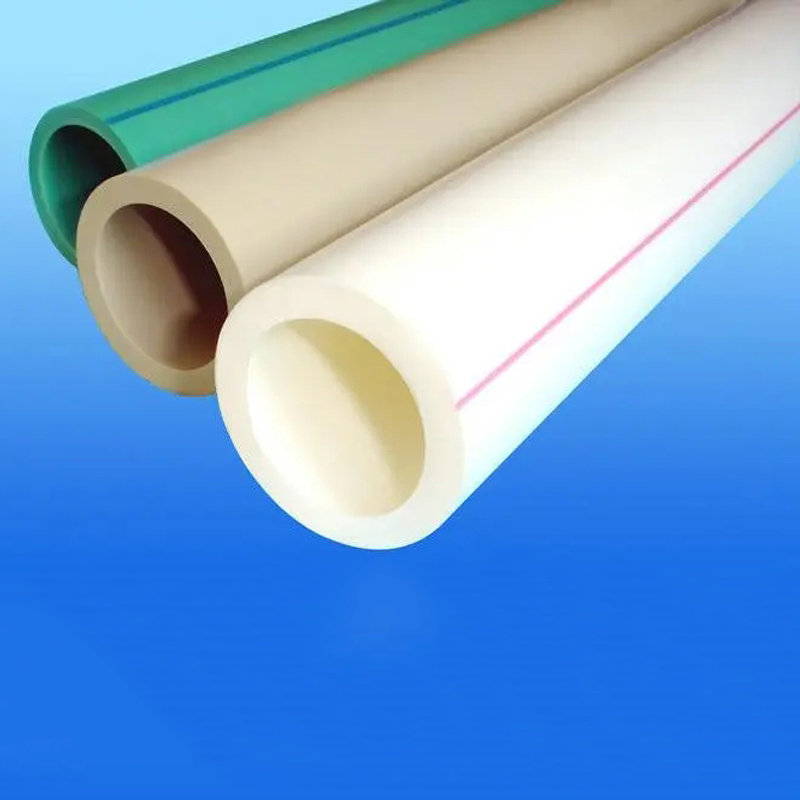
Polypropylene Random (PPR) pipes, specifically those with diameters of 3/4 inch, represent a significant component in modern fluid conveyance systems. These pipes are widely utilized in hot and cold water distribution networks within residential, commercial, and industrial applications. Their prevalence stems from a combination of factors including corrosion resistance, thermal stability, and cost-effectiveness, positioning them as a dominant alternative to traditional metallic piping materials. This guide provides a comprehensive technical analysis of PPR pipes (3/4 inch dimension), covering material science, manufacturing processes, performance characteristics, failure modes, and relevant industry standards, targeting procurement managers and engineers responsible for specifying and deploying these systems. The 'price factories' aspect refers to the competitive landscape of manufacturers and suppliers influencing cost and quality control, critical factors in large-scale projects. Understanding the nuances of PPR composition and manufacturing is essential for mitigating long-term operational risks and ensuring system longevity.
Material Science & Manufacturing
PPR pipes are produced from polypropylene random copolymers. The ‘random’ designation indicates that the comonomers (typically ethylene) are distributed randomly along the polypropylene chain, disrupting the polymer’s crystallinity. This reduction in crystallinity lowers the melting point and enhances impact resistance compared to homopolymer polypropylene. Raw material properties are paramount; the polypropylene resin must meet stringent purity standards to avoid compromising the pipe's mechanical and chemical properties. Additives, such as stabilizers (typically phenolic or phosphite antioxidants) and UV absorbers, are incorporated to enhance long-term durability and resistance to degradation from heat and light exposure.
Manufacturing typically utilizes the extrusion process. Polypropylene granules are fed into an extruder, heated to a plasticized state, and forced through a circular die to form the pipe shape. Critical process parameters include melt temperature (typically 200-230°C), extrusion speed, and die geometry. Maintaining precise temperature control is essential to ensure consistent wall thickness and material homogeneity. Subsequent cooling is typically achieved via a water bath, followed by dimensional stabilization through tensioning or calendaring. Quality control measures at this stage involve regular checks of wall thickness, ovality, and hydrostatic pressure testing to verify structural integrity. For 3/4 inch pipes, maintaining tight dimensional tolerances (typically ±0.1 mm) is critical for ensuring compatibility with fittings and minimizing leakage risk. Socket fusion welding, butt fusion welding, and electrofusion welding are common joining techniques for PPR pipes, each requiring specific equipment and trained personnel.
Performance & Engineering
PPR pipes exhibit excellent resistance to a wide range of chemicals, including acids, bases, and salts, making them suitable for conveying potable water, industrial fluids, and chemical solutions. However, prolonged exposure to strong oxidizing agents (e.g., concentrated chlorine) should be avoided. The pressure-bearing capacity of a PPR pipe is governed by its dimensions (diameter and wall thickness) and the material’s tensile strength and yield strength. According to the Barlow formula (P = 2St/D, where P = pressure, S = tensile strength, t = wall thickness, D = diameter), increasing wall thickness or utilizing higher-grade polypropylene resins significantly enhances pressure resistance.
Thermal expansion is a critical engineering consideration. PPR has a coefficient of thermal expansion approximately ten times higher than that of steel. This expansion and contraction can induce stress on joints and supports, potentially leading to leaks or failures. Expansion loops, flexible connectors, and proper support spacing are essential to accommodate thermal movement. Furthermore, the long-term creep behavior of PPR must be considered, particularly in hot water applications. Creep is the tendency of a material to deform permanently under sustained stress. Selecting appropriately rated pipes and implementing adequate support systems mitigates creep-related failures. The performance of PPR pipe is frequently assessed in accordance with hydrostatic testing standards (e.g., ISO 1167) and long-term pressure testing to simulate real-world operating conditions. Compliance with relevant building codes and plumbing standards is crucial for ensuring safe and reliable performance.
Technical Specifications
| Parameter | Units | 3/4" PPR Pipe (Typical) | Standard Reference |
|---|---|---|---|
| Nominal Diameter | inch | 0.75 | ASTM D2466 |
| Outer Diameter | mm | 21.5 | ISO 15876 |
| Wall Thickness | mm | 2.3-3.2 | DIN 8077/8078 |
| Hydrostatic Pressure (20°C) | MPa | 1.25 | ISO 1167 |
| Hydrostatic Pressure (70°C) | MPa | 0.8 | ISO 1167 |
| Tensile Strength | MPa | >20 | ISO 6259 |
| Linear Expansion Coefficient | mm/m°C | 0.15 | Calculated based on material data |
Failure Mode & Maintenance
Common failure modes in PPR pipe systems include: 1) Fatigue Cracking: Repeated stress fluctuations, particularly near joints, can initiate crack propagation, especially under high-pressure and temperature cycling. 2) Thermal Expansion Stress: Insufficient allowance for thermal expansion can create excessive stress on pipe sections and joints, leading to cracking or leakage. 3) UV Degradation: Prolonged exposure to ultraviolet radiation can cause embrittlement and reduced mechanical strength. 4) Chemical Attack: Exposure to incompatible chemicals (e.g., strong solvents or oxidizing agents) can cause swelling, cracking, or dissolution of the pipe material. 5) Joint Failure: Improperly fused joints (socket fusion, butt fusion) are a frequent source of leaks. Insufficient heating, inadequate pressure, or contamination during the fusion process can result in weak or incomplete welds.
Preventative maintenance includes regular visual inspections for cracks, leaks, and signs of degradation. Periodic hydrostatic testing can verify system integrity. Protection against UV exposure (e.g., shielding pipes with opaque materials) is crucial for outdoor installations. Ensure proper support spacing to accommodate thermal expansion. For joint failures, complete replacement of the affected section is typically recommended. Avoid using abrasive cleaning agents, as these can damage the pipe surface. In cases of chemical contamination, immediately flush the system with clean water and assess the extent of damage. Record keeping of installation details, maintenance activities, and any observed failures is essential for identifying trends and implementing corrective actions.
Industry FAQ
Q: What is the impact of water hardness on the long-term performance of PPR pipes?
A: High water hardness (high mineral content) can lead to scale buildup inside the pipes, reducing the internal diameter and increasing flow resistance. While PPR itself is not directly affected by the minerals, the reduced flow can increase pressure drop and potentially contribute to increased stress on joints. Regular flushing or the use of water softening systems can mitigate this issue.
Q: Can PPR pipes be used for compressed air lines?
A: Generally, PPR pipes are not recommended for compressed air lines. While they can withstand pressure, the material’s permeability to air is higher than that of metal or specialized polymer pipes, leading to air leakage. Furthermore, the constant flexing caused by pressure pulsations can lead to premature fatigue failure.
Q: What are the temperature limitations for hot water applications?
A: PPR pipes typically have a maximum operating temperature of 95°C (203°F) for short-term exposure and 70°C (158°F) for continuous use. Exceeding these temperatures can lead to softening, deformation, and reduced pressure-bearing capacity. The specific temperature rating depends on the grade of polypropylene used.
Q: How does the quality of the welding equipment affect the reliability of PPR joints?
A: The quality and calibration of welding equipment (socket fusion, butt fusion) are critical. Inconsistent heating temperatures, inadequate pressure, or improper tool maintenance can result in weak or incomplete welds, leading to leaks. Regular equipment calibration and operator training are essential.
Q: What is the expected lifespan of a properly installed PPR pipe system?
A: With proper installation, maintenance, and operating conditions, a PPR pipe system can have a lifespan of 50 years or more. However, this is dependent on factors such as water quality, temperature, pressure, and UV exposure. Regular inspections and preventative maintenance are crucial for maximizing lifespan.
Conclusion
PPR pipes represent a robust and cost-effective solution for a wide range of fluid conveyance applications. Their chemical resistance, thermal stability, and ease of installation contribute to their widespread adoption. However, a thorough understanding of the material’s properties, manufacturing processes, and potential failure modes is critical for ensuring long-term reliability and preventing costly failures. Proper design considerations, including allowances for thermal expansion and protection from UV exposure, are paramount.
Future advancements in PPR technology may focus on developing enhanced formulations with improved creep resistance, higher temperature ratings, and increased resistance to chemical attack. Furthermore, the integration of smart sensors for leak detection and performance monitoring could further enhance the reliability and efficiency of PPR pipe systems. Ultimately, selecting the appropriate PPR grade, adhering to established installation practices, and implementing a robust maintenance program will maximize the lifespan and minimize the risks associated with these systems.
-
DN25 HDPE Compression Fitting-HORON INTERNATIONAL|Reliable Irrigation Solutions
NewsFeb.11,2026
-
hdpe coupling joint product Manufacturing Analysis
News2026-11-18
-
ppr pipe heating time products Performance Analysis
News2026-11-16
-
hdpe pipe sizes factory Performance Analysis
News2026-11-09
-
HDPE Pipe Sizes Service Performance Analysis
News2026-10-26
-
wholesale 15mm ppr pipe Material Science and Performance Analysis
News2026-10-20
-
wholesale pvc pipe price per foot Technical Analysis
News2026-09-21
-
wholesale long pvc pipe Technical Analysis and Manufacturing Specifications
News2026-09-15
-
wholesale plumbing kitchen sink water lines Material Performance
News2026-09-15
-
wholesale hdpe drip irrigation Material Science
News2026-09-15
-
wholesale hot water ppr pipe Performance Analysis
News2026-09-15
-
wholesale ppr plumbing Performance Analysis
News2026-09-15
-
wholesale ppr pipe supplier Performance Analysis
News2026-09-13
-
wholesale 50mm ppr pipe Performance Analysis
News2026-09-13
-
wholesale hdpe drip pipe Performance Analysis
News2026-09-13
-
wholesale hdpe pipe 63mm price Manufacturing Specification and Performance Analysis
News2026-09-13