

Feb . 11, 2026 00:01 Back to list
perforated pvc pipe for drainage products Manufacturing Analysis
Introduction
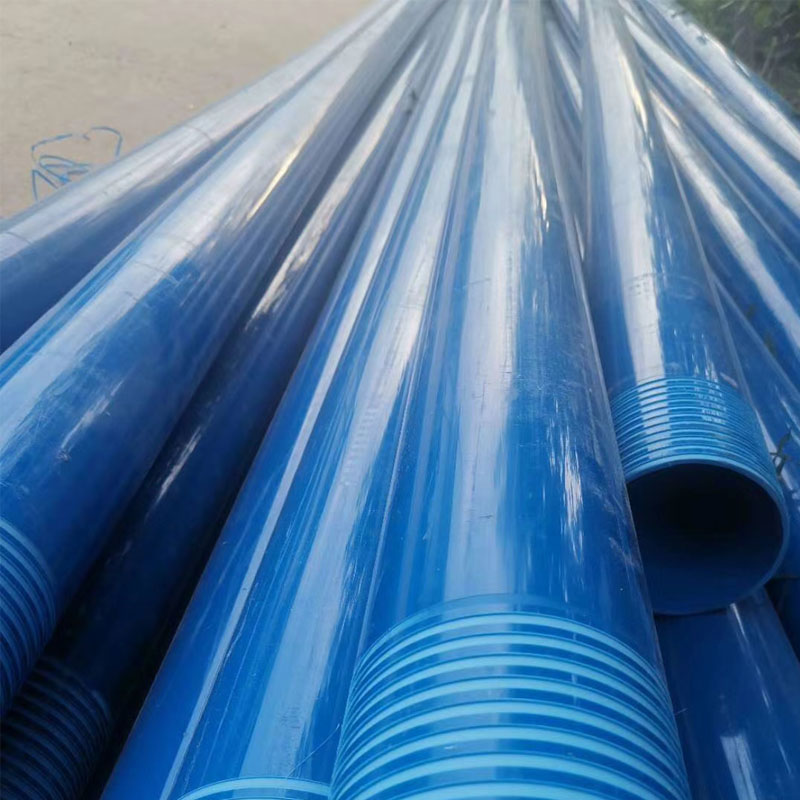
Perforated Polyvinyl Chloride (PVC) pipe is a widely utilized conduit in subsurface drainage systems, primarily for stormwater management, agricultural drainage, and wastewater applications. Positioned within the broader industry of thermoplastic piping, it serves as a critical component in diverting excess water away from foundations, preventing soil saturation, and mitigating erosion. Its core performance characteristics revolve around its flow capacity, structural integrity under load, and resistance to corrosion and chemical degradation. The increasing demand for efficient and sustainable water management solutions directly fuels the growth and refinement of perforated PVC pipe technology. Key performance indicators include flow rate per unit of diameter, crush resistance as defined by ASTM D2412, and the precision of perforation patterns to optimize water ingress while preventing soil intrusion. A significant pain point in the industry revolves around ensuring consistent manufacturing quality, specifically hole diameter uniformity and pattern accuracy, directly impacting long-term drainage efficacy and operational lifespan.
Material Science & Manufacturing
Perforated PVC pipe is primarily manufactured from PVC resin, a thermoplastic polymer produced through the polymerization of vinyl chloride monomer (VCM). The PVC resin is compounded with stabilizers (typically lead or calcium-zinc based), lubricants, and impact modifiers to enhance its processability and performance characteristics. The resulting PVC compound exhibits notable chemical resistance, low thermal conductivity, and good electrical insulation properties. Manufacturing begins with extrusion, where the compounded PVC is melted and forced through a die to create a seamless pipe. The extrusion process parameters, including temperature, pressure, and screw speed, are carefully controlled to ensure consistent wall thickness and dimensional accuracy. Perforation is typically achieved through drilling, punching, or laser cutting. Drilling provides flexibility in hole size and pattern, but can generate burrs. Punching is faster for high-volume production but may cause stress cracking. Laser cutting offers high precision and minimal burr formation but is more expensive. Critical parameters include hole diameter, hole spacing, perforation pattern (inline, staggered, spiral), and the maintenance of pipe wall integrity during perforation. Post-processing involves quality control checks, including dimensional measurements, visual inspection for defects, and hydrostatic pressure testing to ensure leak-proof performance. Chemical compatibility with the intended drainage medium (e.g., stormwater, wastewater) is also considered during material selection and manufacturing.
Performance & Engineering
The performance of perforated PVC pipe is governed by principles of fluid mechanics and structural engineering. Flow capacity is determined by the pipe's diameter, slope, and the size and pattern of the perforations. Darcy-Weisbach equation and Manning's equation are commonly used to calculate head loss and flow rate. The perforations allow water to enter the pipe, reducing hydrostatic pressure behind retaining walls or beneath saturated soil. Engineers must consider the soil permeability surrounding the pipe, as this impacts the rate of water ingress. Structural integrity is critical, especially when the pipe is subjected to backfill load and traffic. The pipe’s ability to withstand crushing, bending, and tensile stresses is crucial. ASTM D2412 defines crush resistance standards. The pipe’s long-term performance is affected by environmental factors such as UV exposure, temperature fluctuations, and chemical attack. UV stabilizers are added to the PVC compound to mitigate degradation from sunlight. The pipe must also comply with relevant building codes and environmental regulations, including those pertaining to stormwater runoff and wastewater discharge. Geotechnical analysis of the surrounding soil is essential to determine the appropriate pipe size, perforation pattern, and backfill material to prevent soil erosion and pipe blockage.
Technical Specifications
| Parameter | Units | Typical Value | Test Standard |
|---|---|---|---|
| Nominal Pipe Size | inches | 4, 6, 8, 10, 12 | ASTM D1785 |
| Wall Thickness | inches | 0.176, 0.218, 0.237 | ASTM D1785 |
| Pipe Schedule | Schedule 40, Schedule 80 | ASTM D1785 | |
| Perforation Diameter | inches | 0.25, 0.50 | Manufacturer Specification |
| Perforation Spacing | inches | 6, 12, 24 | Manufacturer Specification |
| Crush Resistance | psi | >200 | ASTM D2412 |
Failure Mode & Maintenance
Perforated PVC pipe can experience several failure modes in practical applications. Fatigue cracking can occur due to repeated loading and unloading, particularly in areas with concentrated stress, such as around perforations. This is exacerbated by improper installation and inadequate bedding support. Chemical attack from aggressive soil conditions (e.g., high acidity, sulfate concentration) can lead to material degradation and embrittlement. Soil intrusion through the perforations can cause blockage and reduce flow capacity. UV degradation can cause the pipe to become brittle and prone to cracking, especially in exposed areas. Delamination can occur if the PVC compound is not properly mixed or if the extrusion process is not optimized. Maintenance includes periodic inspection for cracks, blockages, and signs of degradation. Hydro-jetting can be used to remove sediment and debris from the pipe. Repairing cracks typically involves using PVC cement and sleeves. Preventative measures include proper installation with adequate bedding support, selecting a PVC compound with appropriate chemical resistance, and protecting the pipe from UV exposure. Addressing root intrusion through root barriers or mechanical removal is often required. Regular flushing of the system is critical to prevent sediment accumulation and maintain optimal performance. A crucial failure analysis step involves identifying the root cause of the failure – was it material degradation, mechanical stress, improper installation, or a combination thereof?
Industry FAQ
Q: What is the optimal perforation pattern for a sandy soil versus a clay soil?
A: For sandy soils, a smaller hole diameter and closer spacing (e.g., 0.25 inch diameter, 6 inch spacing) are preferable to prevent soil fines from entering the pipe. Clay soils, with their finer particle size, require larger diameter holes and wider spacing (e.g., 0.50 inch diameter, 12 inch spacing) to facilitate water entry while minimizing clogging. A staggered pattern is generally recommended for both soil types to provide more uniform water collection.
Q: How does UV exposure affect the long-term performance of PVC pipe?
A: UV exposure causes chain scission in the PVC polymer, leading to embrittlement and reduced impact resistance. This results in increased susceptibility to cracking and failure. UV stabilizers are added to the PVC compound to mitigate this effect, but their effectiveness diminishes over time. Protecting the pipe from direct sunlight through burial or the application of UV-resistant coatings is recommended.
Q: What is the importance of proper bedding material when installing perforated PVC pipe?
A: Proper bedding material, typically gravel or crushed stone, provides uniform support for the pipe, preventing stress concentrations and reducing the risk of crushing or cracking. It also allows for free flow of water around the pipe, ensuring efficient drainage. Inadequate bedding can lead to differential settlement and premature failure.
Q: What are the limitations of using perforated PVC pipe in corrosive environments?
A: PVC exhibits good resistance to many chemicals, but it can be susceptible to attack from strong acids, bases, and solvents. In corrosive environments, the PVC can degrade, become brittle, and lose its structural integrity. Selecting a PVC compound specifically formulated for chemical resistance is crucial. Alternative materials, such as HDPE, may be considered for highly corrosive applications.
Q: How do you determine the required pipe diameter for a specific drainage application?
A: Determining the appropriate pipe diameter requires a comprehensive hydraulic analysis, considering factors such as the design flow rate, pipe slope, Manning’s roughness coefficient, and the surrounding soil permeability. Software tools and engineering calculations are used to ensure the pipe can handle the anticipated flow without exceeding its capacity or causing excessive head loss. Geotechnical investigations are key to determine soil characteristics and inform the hydraulic modeling.
Conclusion
Perforated PVC pipe remains a cornerstone material in modern drainage infrastructure, offering a cost-effective and durable solution for managing subsurface water. Its performance is deeply intertwined with the nuances of material science, manufacturing precision, and sound engineering principles. Understanding the interplay between soil conditions, hydraulic flow, and structural integrity is crucial for successful implementation.
Future advancements will likely focus on developing more sustainable PVC formulations, improving perforation techniques to enhance flow efficiency and reduce clogging, and integrating smart technologies for real-time monitoring of drainage system performance. Continued research into chemical resistance and UV stabilization will also be critical for extending the service life of perforated PVC pipe in challenging environments.
-
DN25 HDPE Compression Fitting-HORON INTERNATIONAL|Reliable Irrigation Solutions
NewsFeb.11,2026
-
hdpe coupling joint product Manufacturing Analysis
News2026-11-18
-
ppr pipe heating time products Performance Analysis
News2026-11-16
-
hdpe pipe sizes factory Performance Analysis
News2026-11-09
-
HDPE Pipe Sizes Service Performance Analysis
News2026-10-26
-
wholesale 15mm ppr pipe Material Science and Performance Analysis
News2026-10-20
-
wholesale pvc pipe price per foot Technical Analysis
News2026-09-21
-
wholesale long pvc pipe Technical Analysis and Manufacturing Specifications
News2026-09-15
-
wholesale plumbing kitchen sink water lines Material Performance
News2026-09-15
-
wholesale hdpe drip irrigation Material Science
News2026-09-15
-
wholesale hot water ppr pipe Performance Analysis
News2026-09-15
-
wholesale ppr plumbing Performance Analysis
News2026-09-15
-
wholesale ppr pipe supplier Performance Analysis
News2026-09-13
-
wholesale 50mm ppr pipe Performance Analysis
News2026-09-13
-
wholesale hdpe drip pipe Performance Analysis
News2026-09-13
-
wholesale hdpe pipe 63mm price Manufacturing Specification and Performance Analysis
News2026-09-13