

Feb . 11, 2026 00:01 Back to list
perforated pvc pipe for drainage manufacturers Manufacturing and Performance Analysis
Introduction
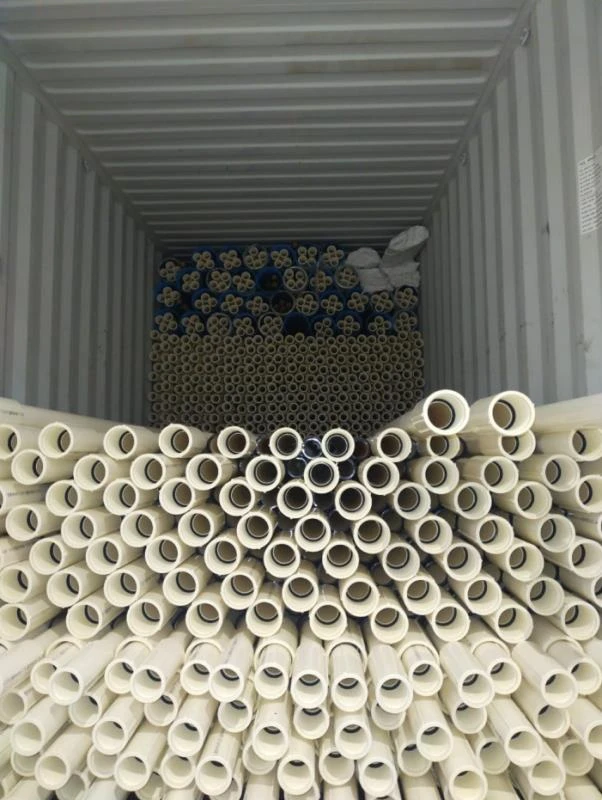
Perforated Polyvinyl Chloride (PVC) pipe is a crucial component in subsurface drainage systems, serving applications ranging from agricultural field drainage to stormwater management and wastewater disposal. Its function centers around efficiently conveying water away from a given area while allowing ingress of water through precisely engineered perforations. Unlike solid PVC pipe used for pressure applications, perforated PVC is specified for gravity-fed systems where maintaining flow capacity and preventing soil intrusion are paramount. The manufacturing process, material composition, and the precision of the perforations directly influence its hydraulic performance and longevity. This technical guide provides a comprehensive overview of perforated PVC pipe for drainage applications, focusing on material science, manufacturing processes, performance characteristics, potential failure modes, and relevant industry standards. Addressing prevalent industry pain points—specifically issues concerning long-term structural integrity, susceptibility to root intrusion, and compliance with evolving environmental regulations—is a primary focus.
Material Science & Manufacturing
The primary material for perforated PVC drainage pipe is Polyvinyl Chloride (PVC), a thermoplastic polymer known for its durability, chemical resistance, and cost-effectiveness. Typically, PVC compounds used in drainage pipe are formulated with additives such as impact modifiers (e.g., chlorinated polyethylene – CPE) to enhance toughness, UV stabilizers (e.g., hindered amine light stabilizers – HALS) to mitigate degradation from sunlight exposure, and processing aids to improve flow during extrusion. The PVC resin’s K-value (molecular weight indicator) significantly influences the pipe’s strength and long-term creep resistance; commonly used K-values range from 67 to 71. The manufacturing process generally involves extrusion. Raw PVC compound is fed into a single or twin-screw extruder, melted, and formed into a continuous pipe profile using a die. Subsequently, the pipe is cooled using a water bath to solidify the shape. Perforations are created through several methods: drilling, punching, or slot cutting post-extrusion. Laser cutting is increasingly utilized for precise slot formation, offering smoother edges and reduced debris generation. Parameter control is critical during extrusion. Temperature profiles must be meticulously maintained to ensure complete fusion of the PVC compound and prevent degradation. Extrusion speed, die pressure, and cooling rates are also closely monitored to achieve consistent wall thickness and dimensional accuracy. The perforation process requires precise positioning and consistent hole size/shape to maintain hydraulic efficiency and prevent soil migration. Quality control includes dimensional checks, hydrostatic pressure testing, and impact resistance assessments according to industry standards.
Performance & Engineering
The performance of perforated PVC pipe is dictated by its hydraulic capacity, structural integrity, and resistance to environmental factors. Hydraulic capacity is determined by the diameter of the pipe, the size and pattern of perforations, and the slope of the drainage system. The Manning’s equation is commonly used to calculate flow rates, considering factors like pipe roughness (typically 0.011 for PVC) and hydraulic gradient. Structural integrity is assessed through ring stiffness testing (ASTM D2412) and flattening tests (ASTM D2412). These tests measure the pipe’s ability to withstand external loads from soil backfill and traffic. The pipe's resistance to chemical degradation is vital, particularly in environments with acidic or alkaline soils, or exposure to industrial effluents. PVC exhibits good resistance to many common chemicals, but prolonged exposure to strong solvents or oxidizing agents can lead to embrittlement. The long-term creep resistance of PVC is a critical consideration, as sustained loading can cause deformation over time, reducing flow capacity. Soil loading, hydrostatic pressure, and temperature fluctuations all contribute to creep. Furthermore, the potential for root intrusion is a significant engineering challenge. Roots can enter through the perforations and obstruct flow, requiring preventative measures such as geotextile wrapping or specialized root barriers. Compliance requirements vary depending on the application and geographic location. Stormwater management systems often require adherence to local regulations regarding water quality and discharge rates. Wastewater disposal systems must meet stringent standards for leak prevention and environmental protection.
Technical Specifications
| Parameter | Unit | Typical Value | Testing Standard |
|---|---|---|---|
| Nominal Pipe Size | inches | 4, 6, 8, 10, 12 | ASTM D1785 |
| Material | - | PVC (Polyvinyl Chloride) | ASTM D1785 |
| Wall Thickness | inches | 0.176, 0.216, 0.260 | ASTM D1785 |
| Ring Stiffness | psi | 35, 45, 55 | ASTM D2412 |
| Perforation Diameter | inches | 0.25, 0.50 | Manufacturer Specification |
| Perforation Pattern | - | Inline, Staggered | Manufacturer Specification |
| Longitudinal Joint Strength | psi | >200 | ASTM D2291 |
Failure Mode & Maintenance
Perforated PVC pipe is susceptible to several failure modes. Cracking can occur due to excessive stress, particularly during installation or from heavy loads. Impact Damage from construction equipment or falling debris can cause punctures or fractures. UV Degradation, despite the inclusion of UV stabilizers, leads to embrittlement and loss of impact resistance over prolonged sun exposure. Chemical Attack from aggressive soil conditions or industrial waste can cause softening, swelling, or cracking. Joint Failure at longitudinal seams can result from improper welding or thermal expansion/contraction. Root Intrusion, as previously mentioned, obstructs flow and reduces hydraulic capacity. Soil Collapse/Deformation can occur if inadequate backfill support is provided, leading to pipe ovality and reduced flow area. Creep Deformation under sustained load can gradually reduce the pipe’s internal diameter. Maintenance strategies include regular inspection for cracks, joint failures, and root intrusion. Hydro-jetting is an effective method for removing debris and root masses. In areas prone to heavy loads, adequate bedding and backfill compaction are crucial. Consideration should be given to using geotextiles to prevent soil migration and root intrusion. Replacement of damaged sections is often necessary, and proper installation techniques are essential to prevent future failures. Preventive maintenance programs, including routine visual inspections and occasional CCTV surveys, can significantly extend the lifespan of the drainage system.
Industry FAQ
Q: What is the optimal perforation pattern for maximizing flow while minimizing soil intrusion?
A: A staggered perforation pattern generally provides a better balance between hydraulic efficiency and resistance to soil intrusion compared to an inline pattern. Staggering helps distribute the inflow more evenly around the pipe’s circumference, reducing localized pressure gradients that can draw in soil. The size of the perforations should also be carefully considered; larger perforations offer higher flow rates but are more susceptible to soil ingress. A 0.25-inch diameter perforation is often a good compromise.
Q: How does the K-value of the PVC resin affect the long-term performance of the pipe?
A: The K-value indicates the molecular weight of the PVC resin. A higher K-value generally corresponds to a higher molecular weight, resulting in greater strength, improved creep resistance, and enhanced long-term durability. However, higher K-value resins can be more difficult to process. K-values between 67 and 71 are commonly used for drainage pipe applications, providing a balance between processability and performance.
Q: What are the key considerations when selecting a geotextile for wrapping perforated PVC pipe?
A: The geotextile should have appropriate filtration properties to allow water to pass through while preventing soil particles from entering the pipe. It should also be resistant to chemical degradation and puncture damage. The Apparent Opening Size (AOS) of the geotextile is a critical parameter; it should be smaller than the surrounding soil particles to prevent their migration. The tensile strength and elongation properties should also be considered to ensure the geotextile can withstand handling and installation stresses.
Q: What is the impact of temperature fluctuations on the performance of perforated PVC pipe?
A: PVC is susceptible to thermal expansion and contraction. Significant temperature fluctuations can cause the pipe to expand and contract, potentially leading to joint failures or stress cracking. Proper installation techniques, including allowing for thermal movement and using flexible joints, are essential to mitigate these effects. The pipe’s modulus of elasticity and coefficient of thermal expansion should be considered during design.
Q: Are there any environmentally friendly alternatives to traditional PVC drainage pipe?
A: While PVC is widely used due to its cost-effectiveness and performance, alternative materials such as High-Density Polyethylene (HDPE) and Polypropylene (PP) are gaining traction due to their enhanced recyclability and reduced environmental impact. However, HDPE and PP generally have lower ring stiffness and may require different installation techniques. Bio-based plastics are also being explored, but their long-term durability and cost-competitiveness are still under evaluation.
Conclusion
Perforated PVC pipe remains a dominant material in subsurface drainage applications, prized for its balance of performance, cost, and ease of installation. However, maximizing its longevity and minimizing failure risks demands a thorough understanding of the material science, manufacturing nuances, and potential degradation pathways. Proper specification, diligent installation, and proactive maintenance are crucial for ensuring the long-term hydraulic efficiency and structural integrity of drainage systems.
Looking ahead, advancements in PVC formulation – particularly in the realm of impact modifiers and UV stabilizers – alongside increasingly sophisticated manufacturing techniques, promise to further enhance the performance and sustainability of perforated PVC pipe. Continued research into alternative materials and innovative design solutions will also play a pivotal role in addressing evolving environmental regulations and performance demands.
-
DN25 HDPE Compression Fitting-HORON INTERNATIONAL|Reliable Irrigation Solutions
NewsFeb.11,2026
-
hdpe coupling joint product Manufacturing Analysis
News2026-11-18
-
ppr pipe heating time products Performance Analysis
News2026-11-16
-
hdpe pipe sizes factory Performance Analysis
News2026-11-09
-
HDPE Pipe Sizes Service Performance Analysis
News2026-10-26
-
wholesale 15mm ppr pipe Material Science and Performance Analysis
News2026-10-20
-
wholesale pvc pipe price per foot Technical Analysis
News2026-09-21
-
wholesale long pvc pipe Technical Analysis and Manufacturing Specifications
News2026-09-15
-
wholesale plumbing kitchen sink water lines Material Performance
News2026-09-15
-
wholesale hdpe drip irrigation Material Science
News2026-09-15
-
wholesale hot water ppr pipe Performance Analysis
News2026-09-15
-
wholesale ppr plumbing Performance Analysis
News2026-09-15
-
wholesale ppr pipe supplier Performance Analysis
News2026-09-13
-
wholesale 50mm ppr pipe Performance Analysis
News2026-09-13
-
wholesale hdpe drip pipe Performance Analysis
News2026-09-13
-
wholesale hdpe pipe 63mm price Manufacturing Specification and Performance Analysis
News2026-09-13