

Feb . 11, 2026 00:01 Back to list
perforated pvc pipe for drainage manufacturer Performance Analysis

Introduction
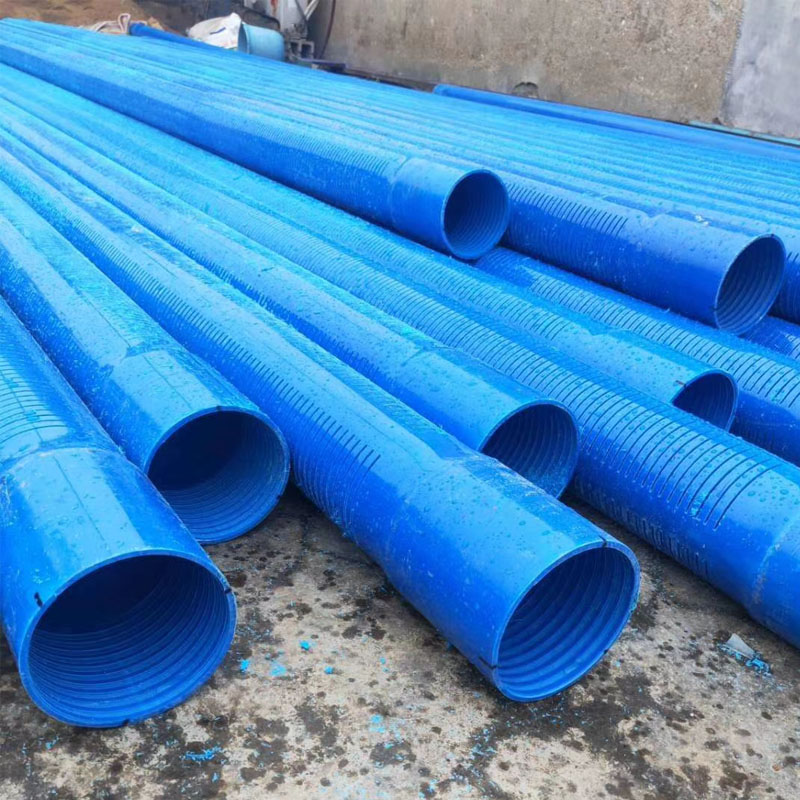
Perforated Polyvinyl Chloride (PVC) pipe is a crucial component in subsurface drainage systems, widely utilized across civil engineering, agriculture, and landscaping applications. Positioned as a successor to traditional drainage materials like clay tile and concrete, perforated PVC pipe offers advantages in terms of weight, corrosion resistance, ease of installation, and cost-effectiveness. This guide provides a comprehensive technical overview of perforated PVC pipe, encompassing its material science, manufacturing processes, performance characteristics, potential failure modes, and relevant industry standards. The core function of this pipe is to effectively remove excess water from soil profiles, preventing waterlogging, stabilizing slopes, and improving foundation integrity. Its prevalence stems from its ability to handle significant hydrostatic pressure, resist chemical degradation in varying soil conditions, and offer a flexible solution for complex drainage layouts. Key performance indicators include flow rate, structural integrity under load, and long-term durability within the operational environment.
Material Science & Manufacturing
Perforated PVC drainage pipe is primarily manufactured from rigid PVC compounds, typically utilizing a Polyvinyl Chloride resin blended with stabilizers, lubricants, and impact modifiers. The PVC resin provides the base structural properties – tensile strength, rigidity, and chemical resistance. Stabilizers, such as tin-based or calcium-zinc compounds, prevent thermal degradation during processing and extend the lifespan of the pipe under UV exposure. Lubricants facilitate the extrusion process, reducing friction and ensuring a smooth internal surface. Impact modifiers, often acrylic or chlorinated polyethylene, enhance the pipe’s resistance to cracking and shattering, particularly in cold temperatures. The selection of these additives significantly impacts the pipe's performance characteristics.
Manufacturing involves several key stages. First, the PVC compound is thoroughly mixed and fed into an extruder, which melts and homogenizes the material. The molten PVC is then forced through a die, shaping it into a continuous pipe. Precise control of extrusion temperature, screw speed, and die pressure is critical to achieve consistent wall thickness and dimensional accuracy. Following extrusion, the pipe is cooled through water baths to solidify the PVC. Perforations are created using drilling, punching, or laser cutting techniques. Drilling is common for larger diameter pipes, while punching is suited for smaller diameters and higher production rates. Laser cutting provides greater precision and flexibility in perforation patterns. Finally, the pipe is inspected for quality, cut to length, and marked with relevant specifications. The perforation pattern (hole size, spacing, and arrangement) is a critical design parameter, directly influencing drainage capacity and filtration characteristics. Quality control involves hydrostatic pressure testing to ensure the pipe can withstand operational loads without failure.
Performance & Engineering
The performance of perforated PVC drainage pipe is governed by several engineering principles. Hydrostatic pressure resistance is paramount, dictating the pipe’s ability to withstand the weight of the soil overburden and the water column. This resistance is directly related to the pipe’s wall thickness, diameter, and the PVC compound’s tensile strength and modulus of elasticity. Flow rate, determined by Manning's equation, is influenced by the pipe’s diameter, slope, and internal roughness. The perforation pattern affects the ingress of water into the pipe and the filtration of soil particles. Larger and more frequent perforations increase flow capacity but may allow more sediment to enter the pipe, potentially leading to clogging.
Environmental resistance is also a critical factor. PVC exhibits excellent resistance to many chemicals commonly found in soil, including acids, alkalis, and salts. However, prolonged exposure to certain solvents and hydrocarbons can cause degradation. UV exposure can also degrade PVC over time, leading to embrittlement and reduced impact strength. Therefore, UV stabilizers are essential in applications where the pipe is exposed to sunlight. Soil loading and backfill compaction are also important considerations. Proper compaction of backfill material around the pipe ensures adequate support and prevents deformation. The pipe's flexibility allows it to conform to ground movements and reduce the risk of cracking. Compliance with relevant standards, such as ASTM D2412 and ASTM F477, ensures that the pipe meets minimum performance requirements for strength, durability, and dimensional accuracy.
Technical Specifications
| Parameter | Units | Typical Value (4" Pipe) | Testing Standard |
|---|---|---|---|
| Nominal Diameter | inches | 4 | ASTM D1785 |
| Wall Thickness | inches | 0.177 | ASTM D2412 |
| Pipe Stiffness (PSI) | psi | 48 | ASTM D2412 |
| Tensile Strength | psi | 7300 | ASTM D638 |
| Impact Resistance (Izod Notched) | ft-lb/in | 12 | ASTM D256 |
| Percent Open Area (Perforation) | % | 8-12 | Manufacturer Specification |
Failure Mode & Maintenance
Perforated PVC drainage pipe can experience several failure modes in practical applications. Crush failure can occur due to excessive soil loading or improper installation. This is particularly prevalent in areas with heavy traffic or deep burial depths. Fatigue cracking can develop over time due to repeated stress from soil movements and hydrostatic pressure. Chemical degradation can occur if the pipe is exposed to incompatible chemicals in the soil. Clogging is a common issue, resulting from the accumulation of sediment, roots, or debris within the pipe, reducing its flow capacity. UV degradation can cause embrittlement and cracking, especially in exposed sections of the pipe. Delamination of the pipe wall can occur due to poor material mixing or manufacturing defects.
Preventative maintenance is crucial for ensuring long-term performance. Regular inspection of the drainage system can identify potential problems early on. Flushing the pipe with high-pressure water can remove sediment and debris, restoring flow capacity. Root intrusion can be addressed using root inhibitors or mechanical removal methods. Proper backfill compaction and the use of geotextile filters around the pipe can prevent soil intrusion and clogging. Avoid exposing the pipe to incompatible chemicals. Replacement of damaged or degraded sections of pipe is necessary when failure is imminent. Consideration of a CCTV inspection can identify structural weaknesses before catastrophic failure.
Industry FAQ
Q: What is the impact of perforation size and spacing on the pipe’s filtration capabilities and susceptibility to clogging?
A: Smaller perforation sizes combined with closer spacing provide better filtration, preventing significant soil particles from entering the pipe. However, this configuration is more prone to clogging as the smaller openings can be easily blocked by sediment and debris. Larger perforations and wider spacing offer increased flow capacity and reduced clogging potential, but they allow more sediment to enter the system, potentially necessitating more frequent maintenance or the use of additional filtration measures like geotextiles.
Q: How does soil corrosivity affect the long-term durability of PVC drainage pipe?
A: While PVC is generally resistant to many soil chemicals, highly corrosive soils containing strong acids, alkalis, or sulfates can accelerate degradation. This can manifest as cracking, embrittlement, and reduced pipe stiffness. Selecting a PVC compound with enhanced chemical resistance and considering protective coatings or encasement in a non-corrosive material are potential mitigation strategies.
Q: What is the recommended backfill material and compaction method to ensure optimal pipe performance and prevent damage?
A: Granular backfill materials, such as sand and gravel, are recommended to provide adequate support and drainage. Avoid using clay or organic materials, as they can retain moisture and exert excessive pressure on the pipe. Compaction should be performed in layers using lightweight equipment to avoid over-compaction, which can crush the pipe. Proper compaction ensures uniform support and minimizes the risk of settlement or deformation.
Q: What are the key considerations when selecting PVC pipe for applications involving significant hydrostatic pressure?
A: In high-pressure applications, selecting a pipe with a higher pipe stiffness (PSI) and wall thickness is crucial. The PVC compound should have a high tensile strength and modulus of elasticity. Consider using a pipe with a reinforced structure, such as a corrugated design, to enhance its load-bearing capacity. Proper installation and adequate backfill support are also essential.
Q: How does temperature affect the performance and lifespan of perforated PVC pipe?
A: Extreme temperatures can impact PVC's performance. Low temperatures can make the pipe more brittle and susceptible to cracking, especially during installation. High temperatures can cause the pipe to soften and lose its shape. UV exposure accelerates degradation, leading to embrittlement and discoloration. Selecting a UV-stabilized compound and avoiding prolonged exposure to extreme temperatures can mitigate these effects.
Conclusion
Perforated PVC pipe represents a reliable and cost-effective solution for a wide range of drainage applications. Its inherent properties – corrosion resistance, lightweight construction, and ease of installation – contribute to its widespread adoption across multiple industries. However, achieving optimal performance and longevity requires careful consideration of material selection, manufacturing quality, installation procedures, and preventative maintenance practices. Understanding the potential failure modes and implementing appropriate mitigation strategies are crucial for ensuring the long-term integrity of the drainage system.
Future advancements in PVC technology may focus on developing compounds with enhanced chemical resistance, UV stability, and impact strength. The integration of smart monitoring systems, capable of detecting clogging or structural damage, could also improve the efficiency and reliability of PVC drainage systems. Continued adherence to industry standards and best practices will remain essential for ensuring the quality and performance of perforated PVC pipe in demanding subsurface environments.
-
DN25 HDPE Compression Fitting-HORON INTERNATIONAL|Reliable Irrigation Solutions
NewsFeb.11,2026
-
hdpe coupling joint product Manufacturing Analysis
News2026-11-18
-
ppr pipe heating time products Performance Analysis
News2026-11-16
-
hdpe pipe sizes factory Performance Analysis
News2026-11-09
-
HDPE Pipe Sizes Service Performance Analysis
News2026-10-26
-
wholesale 15mm ppr pipe Material Science and Performance Analysis
News2026-10-20
-
wholesale pvc pipe price per foot Technical Analysis
News2026-09-21
-
wholesale long pvc pipe Technical Analysis and Manufacturing Specifications
News2026-09-15
-
wholesale plumbing kitchen sink water lines Material Performance
News2026-09-15
-
wholesale hdpe drip irrigation Material Science
News2026-09-15
-
wholesale hot water ppr pipe Performance Analysis
News2026-09-15
-
wholesale ppr plumbing Performance Analysis
News2026-09-15
-
wholesale ppr pipe supplier Performance Analysis
News2026-09-13
-
wholesale 50mm ppr pipe Performance Analysis
News2026-09-13
-
wholesale hdpe drip pipe Performance Analysis
News2026-09-13
-
wholesale hdpe pipe 63mm price Manufacturing Specification and Performance Analysis
News2026-09-13