

Feb . 11, 2026 00:01 Back to list
outside diameter of pvc pipe products Manufacturing Analysis
Introduction
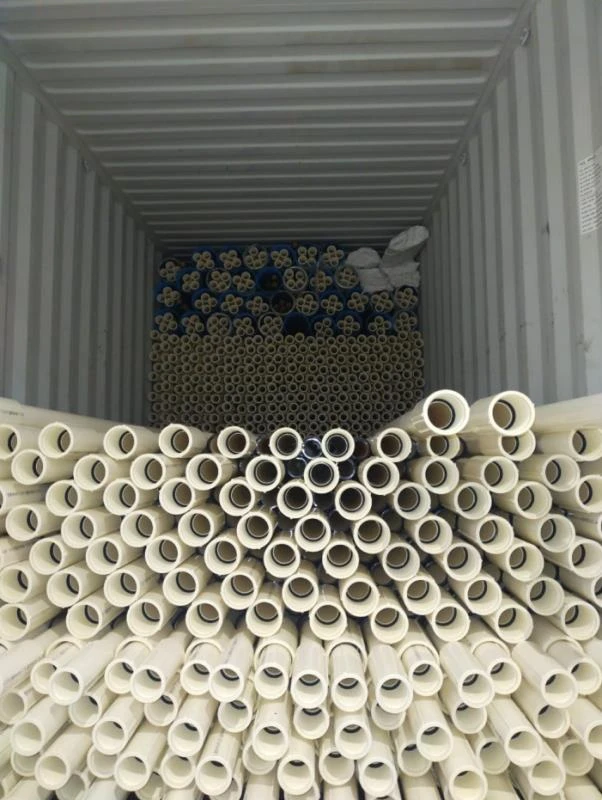
Polyvinyl Chloride (PVC) pipe, a ubiquitous material in infrastructure, construction, and fluid conveyance systems, relies critically on precise control of its outside diameter (OD). This technical guide provides an in-depth examination of PVC pipe OD, covering material science, manufacturing processes, performance considerations, failure modes, and industry standards. The OD is not merely a dimensional specification; it dictates compatibility with fittings, pressure rating, and overall system integrity. Variations in OD can lead to leaks, structural failure, and costly repairs. This document is geared towards engineers, procurement managers, quality control personnel, and anyone involved in the specification, installation, and maintenance of PVC piping systems. Understanding the nuances of PVC pipe OD is fundamental to ensuring long-term reliability and adherence to regulatory requirements.
Material Science & Manufacturing
PVC pipe OD is intrinsically linked to the formulation of the PVC compound and the extrusion process used for manufacturing. PVC is a thermoplastic polymer composed of vinyl chloride monomers. The addition of plasticizers, stabilizers, and lubricants influences its flexibility, impact resistance, and processability. The predominant type used for pressure piping is Rigid PVC (RPVC), which contains minimal plasticizers. Raw materials, primarily ethylene and chlorine, are combined to form vinyl chloride monomer (VCM). This undergoes polymerization to create PVC resin.
Manufacturing involves extrusion. PVC resin, along with additives, is fed into an extruder where it’s heated and melted. A screw conveys the molten PVC through a die, which shapes it into the desired pipe profile. Critical parameters include die temperature, screw speed, haul-off speed, and cooling water temperature. Precise control of these parameters is essential for maintaining dimensional accuracy, including the OD. The haul-off speed directly influences pipe diameter. Faster speeds generally lead to smaller diameters, while slower speeds result in larger diameters. Cooling water rapidly solidifies the PVC, setting the final dimensions. Variations in cooling water temperature or flow rate can cause warping or uneven shrinkage, impacting OD consistency. Post-extrusion, pipes are often tested for OD compliance using laser micrometers and other precision measuring instruments. Shrinkage rates are carefully monitored and accounted for in die design. The quality of the PVC resin also impacts dimensional stability. Resins with inconsistent molecular weight distribution can lead to variations in shrinkage and, consequently, OD deviations. Furthermore, the formulation of stabilizers impacts long-term OD stability, as degradation can alter the material properties and contribute to dimensional changes over time.

Performance & Engineering
The outside diameter of PVC pipe directly affects its structural integrity and ability to withstand internal and external pressures. Hydrostatic design stress (HDS) is a crucial engineering parameter. HDS calculations consider the OD, wall thickness, and material properties to determine the maximum allowable internal pressure. A larger OD, for a given wall thickness, results in a lower HDS. Therefore, maintaining a consistent and accurate OD is vital for ensuring the pipe can safely operate at its intended pressure rating.
External loads, such as soil loading and traffic loads, also influence pipe performance. The OD determines the pipe’s resistance to buckling under external compressive forces. Larger OD pipes generally exhibit greater buckling resistance. Environmental factors, including temperature and UV exposure, can impact PVC pipe dimensions. Thermal expansion and contraction can cause slight variations in OD. While PVC has a relatively low coefficient of thermal expansion, significant temperature fluctuations can still induce dimensional changes. UV exposure can lead to degradation of the PVC material, resulting in embrittlement and potential dimensional instability. Compliance with industry standards, such as ASTM D1785 (Standard Specification for Poly(Vinyl Chloride) (PVC) Plastic Pipe, Schedules 40, 80, and 120), dictates permissible OD tolerances and testing procedures. Installation practices, such as proper bedding and backfill, are also crucial for maintaining the integrity of the pipe and preventing OD distortions caused by external stresses. Finite Element Analysis (FEA) is commonly used in pipe design to simulate stresses and strains under various loading conditions, allowing engineers to optimize pipe dimensions and material properties for specific applications.
Technical Specifications
| Nominal Pipe Size (inches) | Schedule 40 OD (inches) | Schedule 80 OD (inches) | Pressure Rating (psi) - Schedule 40 |
|---|---|---|---|
| 1/2 | 0.625 | 0.750 | 600 |
| 3/4 | 0.840 | 1.050 | 600 |
| 1 | 1.050 | 1.315 | 540 |
| 1 1/2 | 1.250 | 1.660 | 500 |
| 2 | 1.500 | 2.067 | 460 |
| 3 | 1.875 | 2.500 | 420 |
Failure Mode & Maintenance
Deviations from specified OD tolerances, or changes in OD over time, can lead to several failure modes. One common failure is joint failure due to improper fit between the pipe and fittings. If the OD is outside the acceptable range, it may not seal correctly, leading to leaks. Another failure mode is cracking or splitting due to excessive stress concentration. Localized OD variations can create stress points, making the pipe more susceptible to failure under pressure or external loads. Long-term exposure to UV radiation and aggressive chemicals can cause degradation of the PVC material, leading to dimensional changes and reduced strength. This degradation can manifest as a gradual increase in OD due to material loss or as cracking and crazing.
Maintenance primarily focuses on preventative measures and early detection of potential problems. Regular visual inspections can identify signs of degradation or damage. Periodic pressure testing can verify the integrity of the system and detect leaks. Proper installation practices, including adequate bedding and backfill, minimize external stresses on the pipe. Avoiding the use of harsh chemicals and protecting the pipe from prolonged UV exposure can extend its service life. In the event of a detected OD variation or dimensional change, a qualified engineer should assess the situation and determine the appropriate course of action. This may involve replacing the affected pipe section or implementing additional support measures. Monitoring the pipe's performance over time, including pressure readings and flow rates, can provide valuable insights into its condition and help identify potential issues before they escalate into major failures.
Industry FAQ
Q: What is the acceptable OD tolerance for Schedule 40 PVC pipe used in potable water distribution?
A: ASTM D1785 specifies the OD tolerance for Schedule 40 PVC pipe. Typically, the tolerance is +/- 0.010 inches for pipes up to 6 inches in diameter. Exceeding this tolerance can compromise the sealing integrity of joints and fittings, leading to leaks and potential contamination of the potable water supply.
Q: How does the extrusion process impact OD consistency?
A: The extrusion process is highly sensitive to variations in temperature, screw speed, and haul-off speed. Maintaining consistent control of these parameters is crucial for achieving uniform OD. Fluctuations in these parameters can lead to localized variations in diameter, potentially exceeding the specified tolerance.
Q: Can UV exposure affect the OD of PVC pipe over time?
A: Yes, prolonged UV exposure can cause degradation of the PVC material, leading to embrittlement and dimensional changes. While PVC contains UV stabilizers, their effectiveness diminishes over time. This degradation can manifest as a slight increase in OD due to material loss, or as cracking and crazing which affects overall structural integrity.
Q: What steps can be taken to minimize OD variations during installation?
A: Proper bedding and backfill are essential to distribute external loads evenly and prevent distortions in the pipe’s OD. Avoid point loads and ensure adequate support is provided, especially in areas with unstable soil conditions. Also, ensure that fittings are compatible with the pipe OD and are installed correctly.
Q: How does the choice of plasticizer affect OD stability in flexible PVC pipe?
A: The type and concentration of plasticizers significantly impact the dimensional stability of flexible PVC pipe. Some plasticizers are prone to migration, leading to a reduction in flexibility and a gradual decrease in OD over time. Selecting plasticizers with low migration rates is critical for ensuring long-term OD stability.
Conclusion
Maintaining accurate and consistent outside diameters in PVC pipe is paramount to ensuring the long-term performance, safety, and reliability of piping systems. This guide has detailed the intricate relationship between material science, manufacturing processes, and engineering principles that govern PVC pipe OD. Understanding the nuances of OD tolerances, potential failure modes, and relevant industry standards is crucial for professionals involved in the specification, installation, and maintenance of these systems.
Future developments in PVC formulation and extrusion technology will likely focus on improving dimensional stability and reducing the impact of environmental factors on OD. Continued research into advanced stabilizers and improved process control methods will be essential for enhancing the durability and longevity of PVC piping systems. Furthermore, embracing advanced inspection techniques, such as non-destructive testing methods, will allow for proactive identification of potential OD variations and ensure the ongoing integrity of critical infrastructure.
-
DN25 HDPE Compression Fitting-HORON INTERNATIONAL|Reliable Irrigation Solutions
NewsFeb.11,2026
-
hdpe coupling joint product Manufacturing Analysis
News2026-11-18
-
ppr pipe heating time products Performance Analysis
News2026-11-16
-
hdpe pipe sizes factory Performance Analysis
News2026-11-09
-
HDPE Pipe Sizes Service Performance Analysis
News2026-10-26
-
wholesale 15mm ppr pipe Material Science and Performance Analysis
News2026-10-20
-
wholesale pvc pipe price per foot Technical Analysis
News2026-09-21
-
wholesale long pvc pipe Technical Analysis and Manufacturing Specifications
News2026-09-15
-
wholesale plumbing kitchen sink water lines Material Performance
News2026-09-15
-
wholesale hdpe drip irrigation Material Science
News2026-09-15
-
wholesale hot water ppr pipe Performance Analysis
News2026-09-15
-
wholesale ppr plumbing Performance Analysis
News2026-09-15
-
wholesale ppr pipe supplier Performance Analysis
News2026-09-13
-
wholesale 50mm ppr pipe Performance Analysis
News2026-09-13
-
wholesale hdpe drip pipe Performance Analysis
News2026-09-13
-
wholesale hdpe pipe 63mm price Manufacturing Specification and Performance Analysis
News2026-09-13