

Feb . 11, 2026 00:01 Back to list
outside diameter of pvc pipe manufacturers Performance Analysis
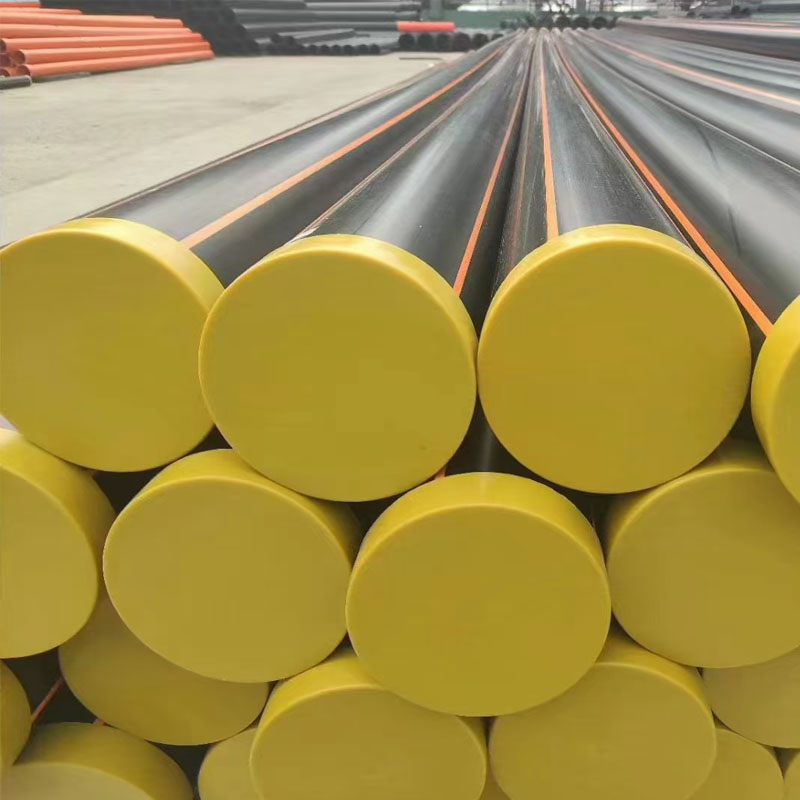
Introduction
Polyvinyl Chloride (PVC) pipe, ubiquitous in municipal water systems, irrigation, and industrial fluid transfer, relies critically on precise outside diameter (OD) control. This technical guide details the factors governing PVC pipe OD, its manufacturing processes, performance characteristics, potential failure modes, and relevant industry standards. Deviations from specified OD tolerances can lead to joint failures, system inefficiencies, and compromised structural integrity, making it a paramount concern for manufacturers and end-users alike. The OD dictates compatibility with fittings, burial depth calculations based on load distribution, and overall system hydraulic performance. We will explore the complexities beyond simply a numerical value, addressing the interplay of materials, processing, and regulatory compliance.
Material Science & Manufacturing
PVC pipe OD is fundamentally linked to the properties of the PVC resin itself. Typically, PVC pipes are produced using suspension PVC (S-PVC), known for its consistent particle size and suitability for extrusion. The resin's molecular weight and K-value (a measure of molecular weight) directly influence melt viscosity, impacting dimensional stability during processing. Additives like stabilizers (typically calcium-zinc or lead-based, though increasingly replaced with more environmentally friendly options), lubricants (stearic acid, waxes), and impact modifiers (acrylic polymers) are compounded with the PVC resin before extrusion. The proportion of these additives affects processing parameters and ultimately the final pipe OD.
Manufacturing predominantly utilizes extrusion. PVC resin, additives, and sometimes regrind (controlled percentage of recycled material) are fed into a twin-screw extruder. The screws mix and heat the materials, transitioning them from a solid to a viscous melt. The die, the shaping component, is critical. A precisely machined spider die is used to establish the initial pipe shape. Critical parameters include die temperature, screw speed, haul-off speed, and cooling water flow rate. The haul-off unit pulls the extruded pipe through the die at a controlled rate, dictating length and, crucially, OD. Cooling is essential to solidify the PVC and maintain dimensional accuracy. Water tanks are employed, and maintaining consistent water temperature is vital. Post-extrusion, pipes undergo inspection for dimensional compliance, often utilizing laser gauging systems to measure OD at multiple points along the pipe length. Variations in cooling rates or uneven die wear can lead to localized OD changes. Hydrostatic testing ensures pressure-bearing capabilities and can reveal dimensional defects.

Performance & Engineering
The OD of PVC pipe is a critical parameter in structural and hydraulic engineering calculations. For buried applications, the OD, along with wall thickness, dictates the pipe’s ability to withstand external loads – soil pressure, traffic loads, and bending moments. Soil stiffness (modulus of subgrade reaction) and the depth of burial are primary factors. The pipe’s ability to deflect under load without failure is governed by its flexural modulus, influenced by the PVC formulation and OD/wall thickness ratio. Excessive deflection can lead to joint separation or cracking.
Hydraulically, the OD determines the internal diameter (ID) and thus the cross-sectional area for fluid flow. Friction losses within the pipe are directly related to the ID, affecting pumping requirements and overall system efficiency. Hazen-Williams and Darcy-Weisbach equations are commonly employed to calculate head loss, factoring in pipe OD, roughness coefficient, flow rate, and fluid viscosity. Chemical resistance is another crucial consideration. While PVC is generally resistant to many chemicals, prolonged exposure to specific solvents or aggressive compounds can cause swelling or degradation, affecting dimensional stability and potentially altering the OD over time. UV exposure can also induce degradation, leading to embrittlement and dimensional changes, particularly in pipes not formulated with UV stabilizers.
Technical Specifications
| Schedule Number | Nominal Pipe Size (inches) | Outside Diameter (inches) | Wall Thickness (inches) |
|---|---|---|---|
| 40 | 1/2 | 0.625 | 0.065 |
| 40 | 3/4 | 0.840 | 0.083 |
| 40 | 1 | 1.050 | 0.095 |
| 40 | 2 | 2.375 | 0.118 |
| 80 | 1/2 | 0.625 | 0.095 |
| 80 | 3/4 | 0.840 | 0.118 |
Failure Mode & Maintenance
Common failure modes related to OD deviations include joint leakage due to improper fit between pipe and fittings, particularly with solvent-welded joints. Dimensional inconsistencies exacerbate stress concentrations, leading to cracking during thermal cycling or under load. Long-term creep, a gradual deformation under sustained stress, can also alter the OD and compromise the integrity of buried pipelines. External corrosion, though PVC is inherently corrosion-resistant, can occur due to soil chemistry and stray electrical currents, potentially leading to wall thinning and localized OD reduction. Impact damage during handling or installation can cause cracking or flattening, affecting the OD.
Maintenance focuses on preventative measures. Proper installation techniques, including adequate bedding and backfill, minimize stress on the pipe. Regular inspections for cracks, leaks, or signs of deformation are crucial. Ground surveys using ground-penetrating radar (GPR) can detect potential pipe damage or misalignment. For solvent-welded joints, periodic visual inspection for signs of solvent degradation or separation is recommended. In areas with aggressive soil conditions, cathodic protection may be necessary to mitigate corrosion. If damage is detected, localized repairs using appropriate coupling fittings are generally preferred over full-scale pipe replacement.
Industry FAQ
Q: What is the acceptable tolerance for OD variation in Schedule 40 PVC pipe?
A: Generally, the acceptable tolerance for OD variation in Schedule 40 PVC pipe, as defined by ASTM D1785, is +/- 0.010 inches. However, this can vary based on the specific application and customer requirements. More stringent tolerances may be specified for critical applications such as potable water distribution.
Q: How does the cooling rate affect the OD of extruded PVC pipe?
A: Faster cooling rates can lead to shrinkage and a slightly smaller OD, while slower cooling rates may result in a larger OD. Maintaining a consistent and controlled cooling water temperature and flow rate is crucial for dimensional stability. Uneven cooling can create localized OD variations.
Q: Can using regrind material in PVC pipe manufacturing affect the OD?
A: Yes, excessive or improperly processed regrind can affect the OD. Regrind material often has a lower molecular weight than virgin resin, which can impact melt viscosity and dimensional control. The percentage of regrind used is typically limited to a maximum of 10% to maintain quality and dimensional accuracy.
Q: What is the role of the die in controlling the OD of PVC pipe?
A: The die is the primary component responsible for establishing the pipe’s OD. Its internal geometry must be precisely machined and maintained to ensure accurate dimensional control. Die wear or damage can lead to OD variations and require periodic inspection and replacement.
Q: How do I determine if an OD deviation is causing a leak in a solvent-welded joint?
A: Inspect the joint area for gaps or misalignment. A slight OD deviation can prevent complete solvent penetration and bonding, resulting in a weak joint prone to leakage. Solvent cement application instructions must be strictly followed to ensure proper wetting and bonding. A pressure test can confirm the leak's location.
Conclusion
Maintaining precise control over the outside diameter of PVC pipe is fundamental to ensuring long-term system reliability and performance. This necessitates a comprehensive understanding of the interplay between material science, manufacturing processes, engineering principles, and industry standards. The factors discussed, ranging from resin properties and extrusion parameters to external loads and chemical exposure, all contribute to the dimensional stability and structural integrity of PVC pipelines.
Future advancements in PVC formulations, extrusion technologies, and non-destructive testing methods will continue to refine OD control and enhance the durability of PVC pipe systems. Adherence to established standards like ASTM D1785 and diligent quality control procedures remain paramount for manufacturers and installers alike, ensuring the continued safe and efficient transport of fluids for years to come.
-
DN25 HDPE Compression Fitting-HORON INTERNATIONAL|Reliable Irrigation Solutions
NewsFeb.11,2026
-
hdpe coupling joint product Manufacturing Analysis
News2026-11-18
-
ppr pipe heating time products Performance Analysis
News2026-11-16
-
hdpe pipe sizes factory Performance Analysis
News2026-11-09
-
HDPE Pipe Sizes Service Performance Analysis
News2026-10-26
-
wholesale 15mm ppr pipe Material Science and Performance Analysis
News2026-10-20
-
wholesale pvc pipe price per foot Technical Analysis
News2026-09-21
-
wholesale long pvc pipe Technical Analysis and Manufacturing Specifications
News2026-09-15
-
wholesale plumbing kitchen sink water lines Material Performance
News2026-09-15
-
wholesale hdpe drip irrigation Material Science
News2026-09-15
-
wholesale hot water ppr pipe Performance Analysis
News2026-09-15
-
wholesale ppr plumbing Performance Analysis
News2026-09-15
-
wholesale ppr pipe supplier Performance Analysis
News2026-09-13
-
wholesale 50mm ppr pipe Performance Analysis
News2026-09-13
-
wholesale hdpe drip pipe Performance Analysis
News2026-09-13
-
wholesale hdpe pipe 63mm price Manufacturing Specification and Performance Analysis
News2026-09-13