

Feb . 11, 2026 00:01 Back to list
outside diameter of pvc pipe factory Performance Analysis

Introduction
Polyvinyl chloride (PVC) pipe, ubiquitous in infrastructure, agriculture, and industrial fluid handling, relies critically on precise control of its outside diameter (OD). This technical guide details the manufacturing, material science, performance characteristics, failure modes, and maintenance considerations for PVC pipe OD, focusing on industrial applications. The OD is not merely a dimensional attribute; it dictates compatibility with fittings, pressure-bearing capacity, and adherence to stringent industry standards. Consistent and accurate OD control is paramount for preventing leaks, ensuring structural integrity, and minimizing lifecycle costs. Variations in OD impact system hydraulics and the long-term reliability of installed piping networks. This guide addresses core pain points, including dimensional stability under varying temperatures, the impact of manufacturing processes on OD tolerances, and methods for rigorous quality control.
Material Science & Manufacturing
PVC pipe OD is fundamentally determined by the raw material properties – primarily the PVC resin, plasticizers, stabilizers, and lubricants. PVC resin, typically produced via suspension polymerization, possesses inherent thermal shrinkage characteristics. Plasticizers, such as phthalates or alternatives like DINCH, are added to enhance flexibility and processability, impacting dimensional stability. Stabilizers, including heat stabilizers (e.g., organotin compounds) and UV stabilizers (e.g., benzotriazoles), mitigate degradation during processing and service, influencing long-term OD consistency. The manufacturing process, predominantly extrusion, is crucial. PVC compound is fed into a single-screw or twin-screw extruder, where it’s heated and homogenized. A die, meticulously machined to the desired OD, shapes the molten PVC. Critical parameters include die temperature, extrusion pressure, screw speed, and cooling rate. Insufficient cooling leads to dimensional instability and potential OD variations. Post-extrusion sizing units, often employing vacuum or pressure, precisely control the OD. Calibration is essential, regularly checking OD against nominal values using laser micrometers and calibrated calipers. The molecular weight distribution of the PVC resin directly affects melt viscosity and dimensional control. A broader distribution generally improves processability but can compromise long-term creep resistance, potentially altering the OD over time. Chemical compatibility of plasticizers with the PVC resin matrix is crucial; incompatibility can cause plasticizer migration, leading to embrittlement and dimensional change.
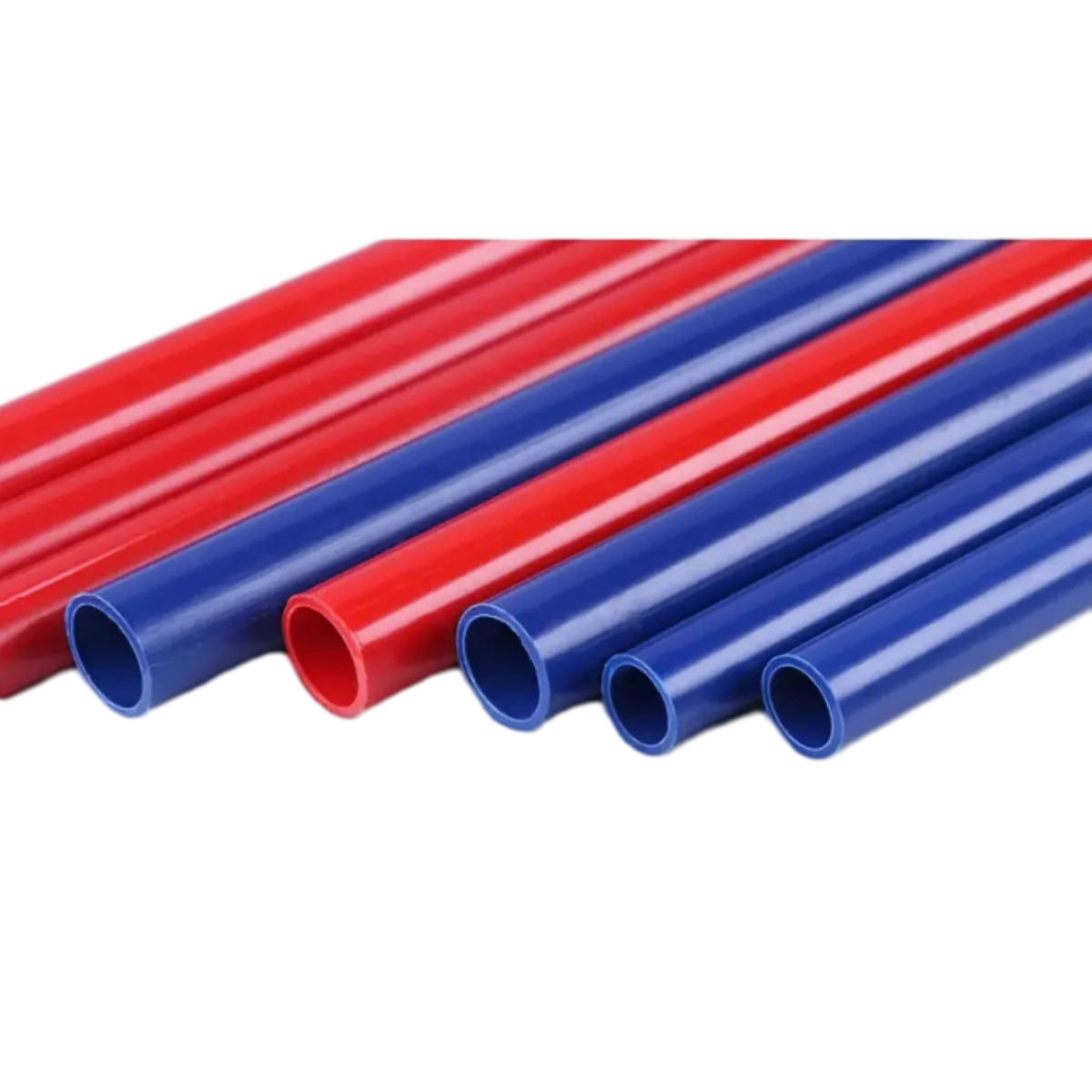
Performance & Engineering
The outside diameter of PVC pipe directly impacts its structural performance under internal pressure and external loads. Hoop stress, the circumferential stress in the pipe wall, is inversely proportional to the OD and wall thickness. Larger ODs for a given wall thickness result in lower hoop stress. Engineering calculations, based on Barlow’s formula or more complex finite element analysis (FEA), are vital for determining appropriate OD and wall thickness for specific operating pressures and temperatures. PVC pipe must also withstand soil loads, traffic loads, and other external forces. The OD influences the bending moment capacity of the pipe when subjected to these loads. Coefficient of thermal expansion is another critical factor. PVC exhibits a relatively high thermal expansion coefficient compared to metals. Changes in temperature cause the OD to expand or contract, which must be accounted for in system design, particularly for buried pipelines. Long-term creep, the slow deformation of the pipe under sustained stress, can also affect the OD. Higher temperatures accelerate creep. Compliance with industry standards, such as ASTM D1785 and D2412, dictates allowable stress levels and OD tolerances. These standards specify hydrostatic design stress (HDS) and pressure ratings based on OD, wall thickness, and material properties. Environmental resistance, including UV exposure and chemical attack, can also impact the OD over time. UV degradation can cause surface cracking and dimensional changes, while exposure to certain chemicals can induce swelling or shrinkage.
Technical Specifications
| Nominal Pipe Size (inches) | Outside Diameter (inches) - ASTM D1785 | Minimum Wall Thickness (inches) - Schedule 40 | Pressure Rating (psi) @ 73°F |
|---|---|---|---|
| 1/2 | 0.625 | 0.065 | 450 |
| 3/4 | 0.840 | 0.083 | 400 |
| 1 | 1.050 | 0.095 | 350 |
| 1 1/2 | 1.250 | 0.110 | 300 |
| 2 | 1.500 | 0.125 | 260 |
| 3 | 1.875 | 0.154 | 220 |
Failure Mode & Maintenance
Common failure modes related to PVC pipe OD include dimensional instability, leading to joint leakage or fitting incompatibility. Thermal cycling can induce stress and creep, altering the OD and compromising sealing integrity. Excessive UV exposure causes surface degradation, reducing wall thickness and potentially affecting the OD. Chemical attack, particularly from aggressive solvents or industrial effluents, can cause swelling, shrinkage, or embrittlement, impacting OD and overall structural integrity. Mechanical damage, such as impact or abrasion, can create localized OD variations and stress concentrations. Fatigue cracking can occur under cyclic loading, initiating at OD imperfections or stress risers. Maintenance strategies focus on preventative measures and early detection of potential issues. Regular visual inspections for surface cracks, discoloration, or dimensional changes are crucial. Hydrostatic testing can verify the pressure-bearing capacity and identify leaks. Soil analysis around buried pipelines can assess chemical attack risks. Proper installation techniques, including adequate bedding and backfill, minimize external stresses. UV-resistant coatings can extend service life in exposed applications. Periodic OD measurements using calibrated instruments ensure continued compliance with specifications. For existing pipelines exhibiting OD variations, repair options include localized reinforcement or complete pipe replacement.
Industry FAQ
Q: What is the acceptable OD tolerance for a 2-inch Schedule 40 PVC pipe used in a potable water distribution system?
A: ASTM D1785 specifies the OD tolerance for 2-inch Schedule 40 PVC pipe as ±0.020 inches. For potable water systems, maintaining this tolerance is critical to ensure proper fitting compatibility and prevent leaks that could compromise water quality. Exceeding this tolerance necessitates rejection of the pipe or potential field correction, depending on the severity and application.
Q: How does the plasticizer content in PVC affect the long-term dimensional stability of the OD?
A: Higher plasticizer content increases flexibility but decreases long-term dimensional stability. Plasticizers can migrate over time, leading to shrinkage and a reduction in OD. Selecting a PVC compound with appropriate plasticizer type and concentration, and utilizing stabilizers to minimize migration, is crucial for maintaining OD consistency over the pipe’s service life.
Q: What is the impact of elevated temperatures on the OD of a PVC pipe system?
A: Elevated temperatures cause PVC to expand. The coefficient of thermal expansion for PVC is approximately 0.000065 inches per inch per degree Fahrenheit. This means a 100-foot length of PVC pipe will expand approximately 0.065 inches for every 1°F increase in temperature. This expansion needs to be accommodated in system design, typically through expansion loops or flexible joints.
Q: What are the common causes of OD ovalization in PVC pipe during extrusion?
A: OD ovalization, a deviation from a perfectly circular cross-section, can be caused by several factors during extrusion, including uneven die wear, improper die temperature control, variations in melt viscosity, and inadequate cooling. Regular die inspection and maintenance, precise temperature control, and consistent material feed rates are essential for minimizing ovalization.
Q: What quality control measures are used to verify the OD of PVC pipes during manufacturing?
A: Manufacturers employ several quality control measures, including laser micrometers for non-contact OD measurement, calibrated calipers for manual checks, and hydrostatic testing to verify pressure-bearing capacity. Statistical process control (SPC) charts are used to monitor OD variations and identify potential process issues. Regular calibration of measurement equipment is also essential for ensuring accuracy.
Conclusion
Maintaining precise control over the outside diameter of PVC pipe is fundamental to ensuring the integrity, reliability, and longevity of piping systems across diverse industrial applications. From material selection and extrusion process optimization to rigorous quality control and proactive maintenance, each stage of the product lifecycle impacts the OD and, consequently, the overall performance. Understanding the interplay between material properties, manufacturing parameters, and environmental factors is crucial for mitigating potential failure modes and maximizing system efficiency.
The industry trend towards higher-performance PVC compounds, incorporating advanced stabilizers and plasticizers, coupled with sophisticated extrusion technologies, promises improved dimensional stability and enhanced resistance to environmental degradation. Continued adherence to stringent industry standards, such as those established by ASTM and ISO, and the adoption of advanced monitoring techniques, like real-time OD measurement during extrusion, will further elevate the quality and reliability of PVC pipe systems, ultimately reducing lifecycle costs and ensuring safe and efficient fluid transport.
-
DN25 HDPE Compression Fitting-HORON INTERNATIONAL|Reliable Irrigation Solutions
NewsFeb.11,2026
-
hdpe coupling joint product Manufacturing Analysis
News2026-11-18
-
ppr pipe heating time products Performance Analysis
News2026-11-16
-
hdpe pipe sizes factory Performance Analysis
News2026-11-09
-
HDPE Pipe Sizes Service Performance Analysis
News2026-10-26
-
wholesale 15mm ppr pipe Material Science and Performance Analysis
News2026-10-20
-
wholesale pvc pipe price per foot Technical Analysis
News2026-09-21
-
wholesale long pvc pipe Technical Analysis and Manufacturing Specifications
News2026-09-15
-
wholesale plumbing kitchen sink water lines Material Performance
News2026-09-15
-
wholesale hdpe drip irrigation Material Science
News2026-09-15
-
wholesale hot water ppr pipe Performance Analysis
News2026-09-15
-
wholesale ppr plumbing Performance Analysis
News2026-09-15
-
wholesale ppr pipe supplier Performance Analysis
News2026-09-13
-
wholesale 50mm ppr pipe Performance Analysis
News2026-09-13
-
wholesale hdpe drip pipe Performance Analysis
News2026-09-13
-
wholesale hdpe pipe 63mm price Manufacturing Specification and Performance Analysis
News2026-09-13