

Feb . 11, 2026 00:01 Back to list
outside diameter of pvc pipe factories Manufacturing Performance Analysis

Introduction
Polyvinyl Chloride (PVC) pipe, ubiquitous in infrastructure applications ranging from potable water distribution to sewage conveyance and irrigation, is critically defined by its outside diameter (OD). The OD isn't merely a dimensional specification; it dictates compatibility with fittings, trenching requirements, pressure bearing capacity, and adherence to stringent regulatory standards. Factories specializing in PVC pipe production face constant pressure to maintain dimensional accuracy, ensuring consistent performance and preventing system failures. This guide provides an in-depth technical overview of the manufacturing, performance characteristics, failure modes, and quality control procedures related to the outside diameter of PVC pipe, aimed at engineers, procurement managers, and quality assurance personnel within the construction and industrial sectors. A core industry pain point is maintaining OD tolerances across varying pipe schedules (thickness) and diameters, impacting joint integrity and long-term system reliability. This document addresses these challenges with a focus on process control and material science.
Material Science & Manufacturing
PVC pipe OD is fundamentally determined by the polymerization of vinyl chloride monomers. The raw material, PVC resin, typically exists as a white powder and requires compounding with stabilizers (e.g., lead, calcium-zinc), lubricants, plasticizers (e.g., DINP, DOP), and impact modifiers (e.g., acrylics) to achieve desired flexibility and processability. The choice of plasticizer significantly impacts the pipe's flexibility, impacting OD control during extrusion. Manufacturing primarily relies on extrusion, where the compounded PVC is melted and forced through a die. The die’s internal geometry directly defines the OD. Critical parameters in the extrusion process include melt temperature (180-210°C), screw speed (30-120 RPM), haul-off speed, and cooling rate. Maintaining a consistent melt viscosity is crucial for OD consistency; variations in resin molecular weight distribution or improper mixing can cause diameter fluctuations. Post-extrusion, pipes undergo sizing via calibrated bushings to ensure precise OD. Quality control involves continuous OD measurement using non-contact laser gauges and hydrostatic pressure testing to verify structural integrity. The material's inherent thermal expansion coefficient (typically 8 x 10⁻⁵ /°C) must be accounted for during manufacturing and installation, particularly in applications with significant temperature variations. Chemical compatibility of PVC with compounding additives also affects dimensional stability. For instance, improper stabilizer formulations can lead to degradation and OD changes over time.
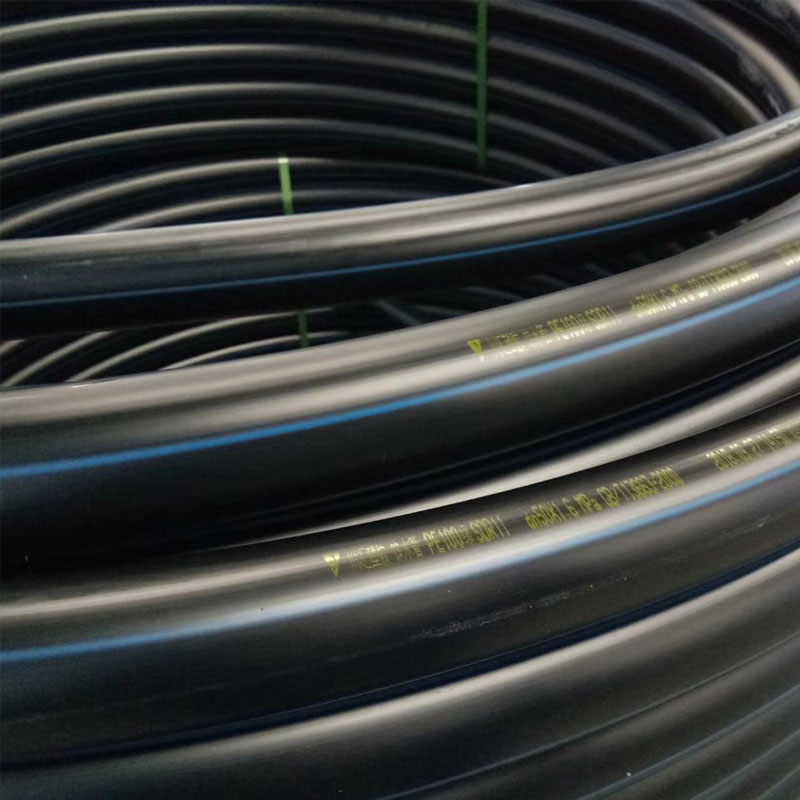
Performance & Engineering
The OD of PVC pipe directly influences its structural performance. Hydrostatic design stress (HDS), a key engineering parameter, is inversely proportional to the square of the pipe’s OD. Larger ODs, for a given schedule, result in lower HDS and reduced pressure-bearing capacity. Force analysis during installation and operation must account for external loads, soil pressure, and potential impact forces. The pipe's ability to withstand these loads is linked to its OD and wall thickness. Environmental resistance is also affected by OD; thicker-walled pipes (smaller OD/diameter ratio) provide greater protection against ground movement and external abrasion. Compliance with industry standards (detailed in the footer) necessitates rigorous testing, including hydrostatic burst pressure testing and long-term creep rupture testing. These tests ensure that the pipe can maintain its structural integrity under sustained pressure and stress. Furthermore, the OD impacts the friction factor in fluid flow calculations, affecting pumping energy requirements. Proper selection of OD and schedule is critical for optimizing hydraulic performance and minimizing energy consumption. OD tolerances, as specified in standards, are essential to ensure proper fitting engagement and prevent leakage, particularly in pressure systems. Dimensional instability caused by UV exposure can also affect OD, particularly in above-ground applications; UV stabilizers in the PVC compound are vital for maintaining dimensional accuracy.
Technical Specifications
| Nominal Pipe Size (inches) | Schedule 40 Outside Diameter (inches) | Schedule 80 Outside Diameter (inches) | Dimensional Tolerance (± inches) - ASTM D1785 |
|---|---|---|---|
| 1/2 | 0.625 | 0.625 | 0.010 |
| 3/4 | 0.840 | 0.840 | 0.010 |
| 1 | 1.050 | 1.050 | 0.010 |
| 1.25 | 1.250 | 1.250 | 0.015 |
| 1.5 | 1.500 | 1.500 | 0.015 |
| 2 | 2.067 | 2.067 | 0.020 |
Failure Mode & Maintenance
Failure modes related to PVC pipe OD include ovalization (distortion from a circular cross-section) due to improper handling or excessive external pressure, leading to joint leakage. Dimensional variations exceeding tolerances can cause stress concentrations at fittings, initiating cracks, particularly under cyclic loading. Long-term creep, driven by sustained internal pressure and temperature, can gradually increase the OD, reducing the pipe's remaining useful life. Chemical attack from aggressive soils can cause material degradation and dimensional changes. Oxidation, especially in pipes exposed to UV radiation without adequate stabilization, leads to embrittlement and potential cracking. A common failure mode is the initiation of cracks at imperfections within the pipe wall, often exacerbated by OD variations. Maintenance primarily involves visual inspection for ovalization, cracks, and discoloration. Pressure testing can identify leaks resulting from dimensional instability. Corrective actions include replacing damaged sections, ensuring proper bedding and backfill to distribute external loads, and implementing corrosion protection measures where necessary. Preventive maintenance programs should emphasize regular inspection and adherence to proper installation practices. For applications in corrosive environments, using PVC compounds with enhanced chemical resistance is crucial.
Industry FAQ
Q: What is the impact of temperature fluctuations on the outside diameter of PVC pipe?
A: PVC exhibits thermal expansion and contraction. An increase in temperature causes the OD to increase, while a decrease causes it to shrink. The thermal expansion coefficient of PVC is approximately 8 x 10⁻⁵ /°C. Engineers must account for this when designing systems, especially long runs of pipe. Expansion joints or flexible connections should be incorporated to accommodate dimensional changes and prevent stress buildup.
Q: How do different PVC formulations (e.g., Type I, Type II) affect OD stability?
A: Type I PVC, typically used for pressure applications, exhibits higher inherent rigidity and dimensional stability compared to Type II PVC, which contains plasticizers for increased flexibility. While Type II PVC offers greater flexibility for easier installation, it’s more susceptible to dimensional changes under load and temperature variations. The choice of formulation depends on the specific application requirements.
Q: What are the typical OD tolerances specified in relevant ASTM standards?
A: ASTM D1785 outlines the dimensional requirements for PVC pipe, including OD tolerances. The allowable tolerance varies depending on the pipe size and schedule. Generally, smaller diameter pipes have tighter tolerances (e.g., ±0.010 inches for ½ inch pipe) than larger diameter pipes (e.g., ±0.020 inches for 2-inch pipe). Schedule 80 pipes generally maintain stricter tolerances than Schedule 40.
Q: What quality control measures are used during manufacturing to ensure consistent OD?
A: Manufacturers employ several quality control measures, including continuous OD measurement using non-contact laser gauges, regular dimensional checks with calibrated calipers and micrometers, and hydrostatic pressure testing to verify structural integrity. Statistical Process Control (SPC) is used to monitor OD variations and identify potential process deviations. Die maintenance and precise temperature control during extrusion are also critical.
Q: How does the soil composition around buried PVC pipe affect its long-term OD stability?
A: Aggressive soils containing high levels of sulfates or chlorides can chemically attack PVC, leading to material degradation and dimensional changes. This can cause the OD to decrease over time, reducing the pipe's wall thickness and structural capacity. Protective coatings or the use of PVC compounds with enhanced chemical resistance are recommended for installations in such environments.
Conclusion
Maintaining precise control over the outside diameter of PVC pipe is paramount for ensuring the long-term reliability and performance of piping systems. This guide has detailed the intricate relationship between material science, manufacturing processes, and engineering principles governing OD specifications. Understanding the impact of factors such as resin formulation, extrusion parameters, temperature fluctuations, and environmental conditions is crucial for mitigating potential failure modes and optimizing system design.
Future advancements in PVC pipe technology will likely focus on developing novel formulations with enhanced dimensional stability and chemical resistance, as well as implementing more sophisticated process control systems to minimize OD variations. Continuous monitoring of industry standards and best practices, coupled with rigorous quality assurance procedures, will remain essential for upholding the integrity of PVC piping infrastructure globally. The correct OD selection, alongside proper installation and maintenance protocols, are the cornerstones of a durable and efficient piping system.
-
DN25 HDPE Compression Fitting-HORON INTERNATIONAL|Reliable Irrigation Solutions
NewsFeb.11,2026
-
hdpe coupling joint product Manufacturing Analysis
News2026-11-18
-
ppr pipe heating time products Performance Analysis
News2026-11-16
-
hdpe pipe sizes factory Performance Analysis
News2026-11-09
-
HDPE Pipe Sizes Service Performance Analysis
News2026-10-26
-
wholesale 15mm ppr pipe Material Science and Performance Analysis
News2026-10-20
-
wholesale pvc pipe price per foot Technical Analysis
News2026-09-21
-
wholesale long pvc pipe Technical Analysis and Manufacturing Specifications
News2026-09-15
-
wholesale plumbing kitchen sink water lines Material Performance
News2026-09-15
-
wholesale hdpe drip irrigation Material Science
News2026-09-15
-
wholesale hot water ppr pipe Performance Analysis
News2026-09-15
-
wholesale ppr plumbing Performance Analysis
News2026-09-15
-
wholesale ppr pipe supplier Performance Analysis
News2026-09-13
-
wholesale 50mm ppr pipe Performance Analysis
News2026-09-13
-
wholesale hdpe drip pipe Performance Analysis
News2026-09-13
-
wholesale hdpe pipe 63mm price Manufacturing Specification and Performance Analysis
News2026-09-13