

Feb . 11, 2026 00:01 Back to list
long pvc pipe products Performance Analysis
Introduction
Polyvinyl chloride (PVC) pipe, specifically long-length extruded PVC, represents a foundational element in modern infrastructure, utilized extensively across water distribution, irrigation, drainage, and industrial fluid transport. Positioned within the broader polymer piping industry, long PVC pipe differentiates itself through its consistent diameter, extended run lengths minimizing joint frequency, and cost-effectiveness relative to metal alternatives. Core performance characteristics encompass pressure resistance, chemical inertness, and a smooth internal surface reducing frictional losses. The ongoing demand for durable, lightweight, and corrosion-resistant piping systems drives the continued innovation and standardization within this sector. A key industry pain point centers around achieving consistently high impact strength, particularly in colder climates or applications involving soil loading, and maintaining long-term dimensional stability under sustained hydrostatic pressure and temperature fluctuations.
Material Science & Manufacturing
Long PVC pipe is primarily manufactured from PVC resin, a thermoplastic polymer synthesized from vinyl chloride monomer (VCM). The resin typically incorporates stabilizers (often lead-based or calcium-zinc based, reflecting evolving environmental regulations), lubricants, and impact modifiers (such as chlorinated polyethylene or acrylic polymers) to enhance processing characteristics and final product performance. Raw material purity is crucial; impurities can lead to discoloration, reduced impact resistance, and accelerated degradation. Manufacturing employs continuous extrusion processes. PVC compound is fed into a single or twin-screw extruder, where it’s heated and homogenized. The molten PVC is then forced through a die to create the desired pipe diameter and wall thickness. Critical parameters include extruder screw speed, barrel temperature profile (typically ranging from 160°C to 220°C depending on the formulation), die temperature, and puller speed. Proper cooling – often utilizing a vacuum tank followed by spray cooling – is vital to solidify the pipe while maintaining dimensional accuracy. Subsequent operations include bell-end forming (for solvent welding), marking, and quality control inspection. Wall thickness control and consistent extrusion temperature are paramount for maintaining pipe integrity and meeting ASTM standards.
Performance & Engineering
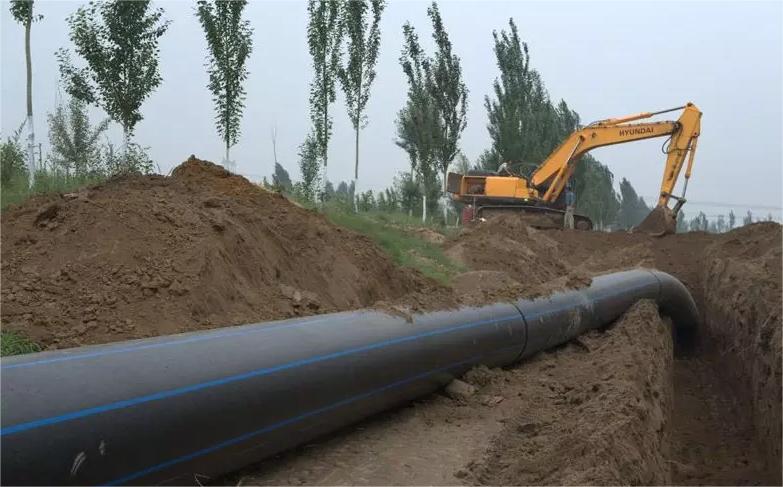
The performance of long PVC pipe is governed by a complex interplay of material properties and engineering design considerations. Hydrostatic pressure resistance is a primary concern, determined by the pipe’s wall thickness, diameter, and the material’s tensile strength and modulus of elasticity. Force analysis involves calculating hoop stress (stress circumferential to the pipe) and longitudinal stress (stress along the pipe’s axis) under internal pressure. Chemical resistance is excellent for many common fluids, but prolonged exposure to certain aromatic hydrocarbons or strong oxidizing agents can cause swelling or degradation. Environmental resistance encompasses UV degradation (addressed through the addition of UV stabilizers to the PVC formulation) and temperature effects. PVC becomes brittle at low temperatures and can soften under prolonged exposure to high temperatures. Industry standards (ASTM D1785, D2241) specify minimum burst pressure requirements, hydrostatic design stress, and allowable tensile strain. Compliance also involves ensuring the pipe’s dimensional accuracy (diameter, wall thickness, ovality) and adherence to specific performance criteria for the intended application (e.g., potable water, irrigation, sewer).
Technical Specifications
| Parameter | Schedule 40 (in) | Schedule 80 (in) | ASTM D1785 Standard |
|---|---|---|---|
| Nominal Pipe Size (NPS) | 0.5 – 12 | 0.5 – 12 | 0.5 – 24 |
| Outside Diameter (OD) | 0.625 – 12.75 | 0.840 – 13.50 | Variable, based on NPS |
| Wall Thickness | 0.065 – 0.375 | 0.110 – 0.438 | Specified by Schedule |
| Hydrostatic Design Stress (HDS) | 4000 psi | 6000 psi | Variable, based on material and temperature |
| Burst Pressure (Minimum) | 2000 psi | 3000 psi | 4x HDS |
| Impact Resistance (IZOD Notched) | >12 ft-lb/in | >15 ft-lb/in | Variable, based on formulation |
Failure Mode & Maintenance
Long PVC pipe is susceptible to several failure modes. Brittle fracture, particularly at low temperatures or due to impact loading, is a common concern. Slow crack growth (SCG) – environmentally induced cracking exacerbated by sustained stress – is a significant long-term failure mechanism, often occurring in areas of stress concentration. Chemical attack from aggressive soil conditions or incompatible fluids can cause material degradation and leaks. UV exposure leads to surface embrittlement and discoloration. Joint failures are common, arising from improper solvent welding techniques (insufficient solvent, inadequate curing time) or gasket failures in mechanical joint connections. Maintenance primarily involves regular visual inspections for cracks, leaks, or deformation. Backfilling procedures must be carefully controlled to avoid excessive soil loading. For solvent-welded joints, periodic testing of joint integrity is recommended. Addressing SCG requires mitigating stress concentrations (e.g., proper bedding support) and selecting compatible materials. If cracks are detected, localized repair using appropriate PVC repair compounds may be possible; however, extensive damage typically necessitates pipe replacement.
Industry FAQ
Q: What is the impact of soil corrosivity on the long-term performance of buried PVC pipe?
A: Soil corrosivity, particularly the presence of sulfates and chlorides, can accelerate PVC degradation. These compounds can leach plasticizers from the PVC, leading to embrittlement and increased susceptibility to cracking. Proper bedding materials and the use of corrosion-resistant PVC formulations (e.g., with enhanced impact modifiers) are crucial mitigation strategies. Geotechnical surveys should be conducted to assess soil conditions before installation.
Q: How does temperature affect the allowable operating pressure of PVC pipe?
A: As temperature increases, the tensile strength and modulus of elasticity of PVC decrease, reducing the pipe’s ability to withstand internal pressure. Industry standards (ASTM D1785) provide derating factors for hydrostatic design stress based on operating temperature. Higher temperatures require a reduction in allowable pressure to maintain safety margins.
Q: What are the key differences between Schedule 40 and Schedule 80 PVC pipe?
A: Schedule 80 PVC pipe has a thicker wall thickness compared to Schedule 40, resulting in higher pressure ratings and greater rigidity. Schedule 40 is typically used for lower-pressure applications like irrigation and residential plumbing, while Schedule 80 is preferred for higher-pressure industrial applications and underground installations subject to significant load.
Q: What are the best practices for solvent welding PVC pipe to ensure a leak-proof joint?
A: Proper solvent welding requires thorough cleaning of both pipe and fitting surfaces with a PVC cleaner/primer. Apply a uniform layer of PVC cement and quickly insert the pipe into the fitting, ensuring a complete seat. Hold the joint firmly for the recommended curing time (typically 30-60 seconds) to allow the cement to set properly. Avoid excessive cement, which can create a weak bond.
Q: How can you mitigate the risk of slow crack growth (SCG) in PVC pipelines?
A: Mitigating SCG involves reducing sustained stress levels, selecting PVC formulations with enhanced resistance to SCG, and avoiding contact with incompatible chemicals. Proper bedding support to prevent stress concentrations, surge pressure control, and avoiding exposure to certain solvents or plasticizers are critical preventive measures.
Conclusion
Long PVC pipe remains a vital component of modern infrastructure due to its cost-effectiveness, corrosion resistance, and ease of installation. However, its long-term performance is critically dependent on material selection, manufacturing quality control, proper installation practices, and consideration of environmental factors. Understanding the potential failure modes – ranging from brittle fracture and SCG to chemical attack and joint failures – is paramount for ensuring the reliability and longevity of PVC piping systems.
Future advancements in PVC formulations, incorporating nano-materials and enhanced impact modifiers, are expected to further improve its performance characteristics and expand its application range. Continued adherence to rigorous industry standards, coupled with proactive monitoring and maintenance programs, will be essential for maximizing the lifecycle of PVC infrastructure and minimizing the risk of costly failures.
-
DN25 HDPE Compression Fitting-HORON INTERNATIONAL|Reliable Irrigation Solutions
NewsFeb.11,2026
-
hdpe coupling joint product Manufacturing Analysis
News2026-11-18
-
ppr pipe heating time products Performance Analysis
News2026-11-16
-
hdpe pipe sizes factory Performance Analysis
News2026-11-09
-
HDPE Pipe Sizes Service Performance Analysis
News2026-10-26
-
wholesale 15mm ppr pipe Material Science and Performance Analysis
News2026-10-20
-
wholesale pvc pipe price per foot Technical Analysis
News2026-09-21
-
wholesale long pvc pipe Technical Analysis and Manufacturing Specifications
News2026-09-15
-
wholesale plumbing kitchen sink water lines Material Performance
News2026-09-15
-
wholesale hdpe drip irrigation Material Science
News2026-09-15
-
wholesale hot water ppr pipe Performance Analysis
News2026-09-15
-
wholesale ppr plumbing Performance Analysis
News2026-09-15
-
wholesale ppr pipe supplier Performance Analysis
News2026-09-13
-
wholesale 50mm ppr pipe Performance Analysis
News2026-09-13
-
wholesale hdpe drip pipe Performance Analysis
News2026-09-13
-
wholesale hdpe pipe 63mm price Manufacturing Specification and Performance Analysis
News2026-09-13