

Feb . 11, 2026 00:01 Back to list
long pvc pipe manufacturer Manufacturing Analysis

Introduction
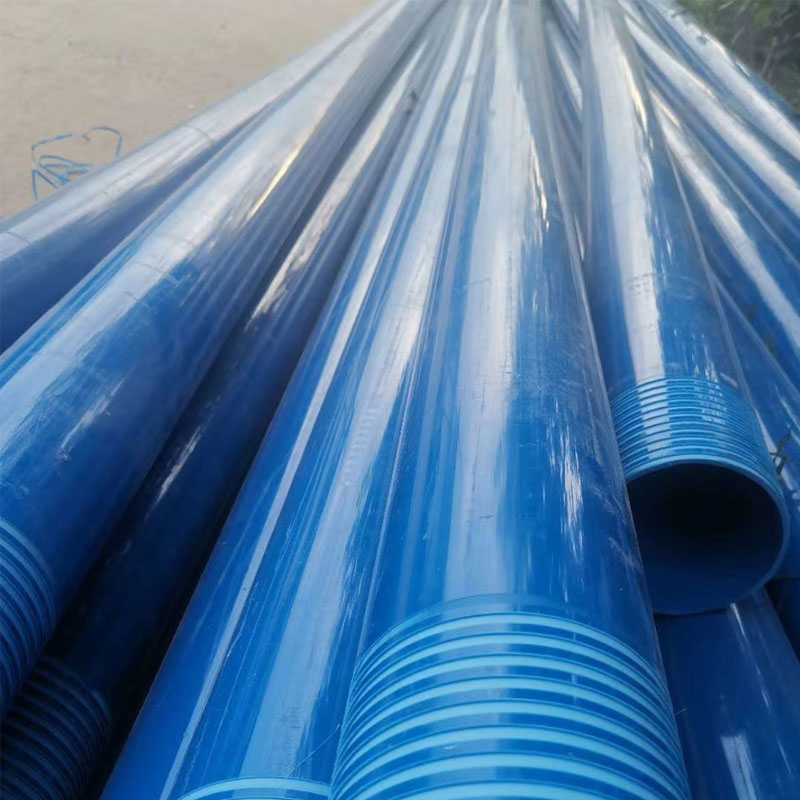
Polyvinyl Chloride (PVC) pipe, particularly long-length PVC pipe, represents a cornerstone material in modern infrastructure. Its application spans potable water distribution, irrigation, drainage systems, sewerage, and increasingly, industrial fluid transfer. Long PVC pipe, defined here as exceeding standard 20-foot lengths, necessitates nuanced manufacturing and handling considerations compared to shorter segments. This technical guide provides an in-depth analysis of long PVC pipe, covering material science, manufacturing processes, performance characteristics, potential failure modes, and relevant industry standards. A key pain point in the industry revolves around maintaining dimensional stability and preventing failures—such as splitting or cracking—during installation and operation, particularly in demanding environments. The need for consistent wall thickness and reliable joint integrity is paramount, driven by pressures for reduced water loss and extended service life. Understanding the interplay of PVC formulation, extrusion parameters, and quality control procedures is vital for mitigating these risks.
Material Science & Manufacturing
Long PVC pipe primarily utilizes Polyvinyl Chloride resin, typically a suspension-grade PVC, known for its balanced properties and processability. Key raw material constituents include PVC resin, plasticizers (often phthalates like DINP or DOTP, though increasingly transitioning to phthalate-free alternatives due to health concerns), heat stabilizers (typically organotin compounds, calcium-zinc stabilizers, or lead-based stabilizers – the latter becoming less common due to environmental regulations), lubricants, impact modifiers (like chlorinated polyethylene or acrylic impact modifiers), and pigments. The choice of plasticizer significantly influences flexibility and low-temperature performance; higher plasticizer content yields greater flexibility but reduces tensile strength and temperature resistance. Extrusion is the dominant manufacturing process. PVC resin and additives are fed into a twin-screw extruder, where they are melted, homogenized, and conveyed through a die to form the pipe. Critical process parameters include screw speed, barrel temperature profile (typically ranging from 180°C to 220°C, depending on the PVC formulation), die temperature, and pull-rate. Maintaining a consistent melt temperature and avoiding shear-induced degradation are crucial. Cooling is achieved through vacuum sizing and water immersion, which establishes the pipe's diameter and initiates solidification. Long-length production requires precise control of dimensional tolerances over extended runs to prevent accumulation of errors. Post-extrusion, pipes are often subjected to hydrostatic testing to verify pressure resistance and identify potential defects. Material selection is determined by the intended application; Schedule 40 PVC is common for general-purpose applications, while Schedule 80 offers higher pressure ratings.
Performance & Engineering
The performance of long PVC pipe is heavily influenced by hydrostatic pressure, temperature, and soil conditions. Force analysis considers both internal pressure, generating hoop stress in the pipe wall, and external loads from soil backfill and traffic. Long pipe runs are susceptible to buckling if not adequately supported. The Barlow formula (S = (P D) / (2 t)) dictates hoop stress (S), where P is internal pressure, D is pipe diameter, and t is wall thickness. Environmental resistance is a major concern. UV exposure can cause degradation and embrittlement, necessitating UV stabilizers in the PVC formulation or protective coatings. Chemical compatibility is crucial; prolonged exposure to certain solvents or aggressive chemicals can cause swelling, cracking, or leaching of plasticizers. PVC exhibits relatively low thermal conductivity, making it suitable for applications where temperature control is important. Compliance requirements vary by region but generally adhere to standards like ASTM D1785 (for PVC pipe dimensions and performance) and NSF/ANSI 61 (for potable water applications). The allowable bending radius is a key engineering consideration to prevent stress concentrations and potential failure at the bend. Proper jointing techniques, utilizing solvent cement or mechanical couplings, are vital for maintaining system integrity and preventing leaks. Expansion and contraction due to temperature fluctuations must be accounted for in the system design to avoid stress build-up.
Technical Specifications
| Parameter | Schedule 40 (inches) | Schedule 80 (inches) | ASTM D1785 Standard |
|---|---|---|---|
| Nominal Pipe Size | 0.5" - 12" | 0.5" - 12" | 0.5" - 24" |
| Wall Thickness | 0.065" - 0.375" | 0.085" - 0.438" | Varies by Size & Schedule |
| Pressure Rating (psi) @ 73°F | Up to 400 | Up to 600 | Dependent on Size & Schedule |
| Tensile Strength (psi) | 6,000 - 8,000 | 6,500 - 8,500 | > 5,500 |
| Flexural Modulus (psi) | 300,000 - 400,000 | 320,000 - 420,000 | > 350,000 |
| Water Absorption (% after 24hr) | < 0.1 | < 0.1 | < 0.5 |
Failure Mode & Maintenance
Long PVC pipe is susceptible to several failure modes. Longitudinal splitting often occurs during installation due to excessive bending stress or improper cutting. Cracking can arise from hydrostatic pressure exceeding the pipe’s rating, particularly in areas with defects or stress concentrations. Impact damage, especially during handling and backfilling, can create localized weaknesses. Slow crack growth (SCG) is a significant concern, particularly in chlorinated water systems, and is exacerbated by residual stresses and the presence of aggressive chemicals. UV degradation leads to embrittlement and surface cracking. Joint failures, stemming from improper solvent cementing or mechanical coupling installation, are common causes of leaks. Maintenance primarily involves regular visual inspections for cracks, leaks, and signs of UV degradation. Proper backfilling techniques are critical to prevent damage from external loads. Pressure testing can identify leaks and assess system integrity. For SCG mitigation, careful control of water chemistry and selection of appropriate PVC formulations are essential. Repairing minor cracks can be achieved with specialized PVC repair compounds, but significant damage typically necessitates pipe replacement. Consideration should be given to cathodic protection in environments with stray electrical currents. Avoiding sharp bends during installation and using proper support structures are preventative measures.
Industry FAQ
Q: What is the impact of temperature on the long-term performance of long PVC pipe?
A: Elevated temperatures reduce the tensile strength and impact resistance of PVC, potentially leading to premature failure. Plasticizers can also leach out at higher temperatures, affecting the pipe's flexibility. Conversely, extremely low temperatures can cause embrittlement and cracking. Proper material selection, accounting for the anticipated operating temperature range, is critical. Derating pressure ratings at elevated temperatures is also recommended.
Q: How does the type of soil affect the lifespan of buried long PVC pipe?
A: Corrosive soils can chemically attack PVC, leading to degradation. Highly expansive soils can exert significant stress on the pipe due to swelling and shrinking with moisture content changes. Proper bedding and backfilling with appropriate materials are essential to minimize these effects. Geotextile fabrics can provide a protective barrier between the pipe and the surrounding soil.
Q: What are the best practices for solvent cementing long PVC pipe to ensure a watertight seal?
A: Surface preparation is paramount. Both the pipe and fitting surfaces must be clean, dry, and free of contaminants. Use a primer specifically designed for PVC, followed by a generous, even application of solvent cement. Ensure complete coverage and allow sufficient curing time before pressurizing the system. Temperature and humidity influence curing time. Following ASTM F493 standards is crucial.
Q: How can slow crack growth (SCG) be prevented in long PVC pipe used for potable water?
A: SCG is often linked to chlorine levels and residual stresses. Using PVC formulations with higher molecular weight resins and improved impact resistance can help. Controlling chlorine concentrations and minimizing water hammer events are also important. Regular monitoring for SCG indicators, such as hairline cracks, is recommended.
Q: What is the recommended maximum burial depth for long PVC pipe, and what factors influence this limit?
A: The recommended maximum burial depth varies depending on the pipe schedule, soil conditions, and anticipated traffic loads. Generally, depths exceeding 6-8 feet require special considerations. The weight of the soil cover increases hoop stress, and excessive depth can lead to buckling. Proper bedding and backfilling are crucial to distribute the load evenly. Local regulations may also impose depth restrictions.
Conclusion
Long PVC pipe represents a durable and cost-effective solution for numerous fluid conveyance applications, but its long-term performance hinges on meticulous attention to material science, manufacturing quality, and installation practices. A comprehensive understanding of the interplay between PVC formulation, external environmental factors, and engineering principles is critical to prevent premature failure. Addressing the core industry pain points—dimensional stability, joint integrity, and resistance to environmental degradation—through careful material selection, precise process control, and adherence to industry standards is paramount.
Future advancements in PVC technology, including the development of enhanced resin formulations and innovative stabilization systems, will continue to improve the performance and longevity of long PVC pipe. Increased adoption of non-phthalate plasticizers reflects a growing commitment to sustainability and environmental responsibility. Continued research into SCG mechanisms and mitigation strategies will further enhance the reliability of PVC piping systems. Maintaining a proactive approach to inspection and maintenance, combined with a commitment to best practices, will ensure the continued safe and efficient operation of long PVC pipe infrastructure.
-
DN25 HDPE Compression Fitting-HORON INTERNATIONAL|Reliable Irrigation Solutions
NewsFeb.11,2026
-
hdpe coupling joint product Manufacturing Analysis
News2026-11-18
-
ppr pipe heating time products Performance Analysis
News2026-11-16
-
hdpe pipe sizes factory Performance Analysis
News2026-11-09
-
HDPE Pipe Sizes Service Performance Analysis
News2026-10-26
-
wholesale 15mm ppr pipe Material Science and Performance Analysis
News2026-10-20
-
wholesale pvc pipe price per foot Technical Analysis
News2026-09-21
-
wholesale long pvc pipe Technical Analysis and Manufacturing Specifications
News2026-09-15
-
wholesale plumbing kitchen sink water lines Material Performance
News2026-09-15
-
wholesale hdpe drip irrigation Material Science
News2026-09-15
-
wholesale hot water ppr pipe Performance Analysis
News2026-09-15
-
wholesale ppr plumbing Performance Analysis
News2026-09-15
-
wholesale ppr pipe supplier Performance Analysis
News2026-09-13
-
wholesale 50mm ppr pipe Performance Analysis
News2026-09-13
-
wholesale hdpe drip pipe Performance Analysis
News2026-09-13
-
wholesale hdpe pipe 63mm price Manufacturing Specification and Performance Analysis
News2026-09-13