

Feb . 11, 2026 00:01 Back to list
long pvc pipe factories Performance Analysis
Introduction
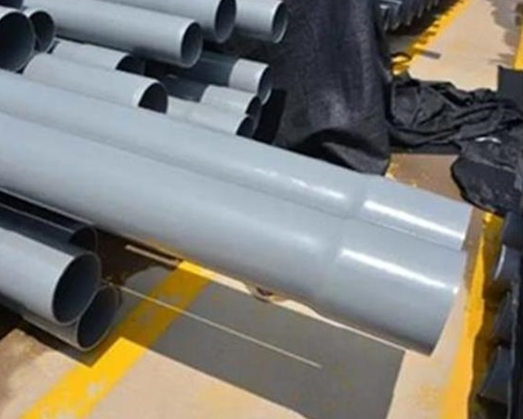
Polyvinyl Chloride (PVC) pipe, particularly long-length PVC pipe, is a foundational component in modern infrastructure, serving critical roles in water distribution, wastewater management, irrigation, and industrial fluid transfer. Its widespread adoption stems from a combination of cost-effectiveness, durability, and relative ease of installation. The manufacturing of long PVC pipes represents a complex process demanding stringent quality control and adherence to international standards. This guide provides an in-depth examination of PVC pipe production, encompassing material science, manufacturing techniques, performance characteristics, potential failure modes, and relevant industry standards. A significant pain point for procurement managers lies in ensuring consistent product quality across different manufacturers, particularly regarding long-term performance and resistance to environmental stressors. Understanding the nuances of PVC formulation and processing is paramount to mitigating these risks and selecting appropriate piping solutions for specific applications.
Material Science & Manufacturing
The primary raw material for PVC pipe is Polyvinyl Chloride resin, a thermoplastic polymer produced through the polymerization of vinyl chloride monomer (VCM). The resin’s properties – molecular weight distribution, K-value (indicating molecular weight), and chlorine content – fundamentally influence the final pipe characteristics. Plasticizers, typically phthalates or adipates, are added to enhance flexibility and impact resistance. Stabilizers, such as organotin compounds or calcium-zinc systems, are crucial for preventing thermal degradation during processing. Lubricants, including stearates, reduce friction during extrusion. Finally, impact modifiers, like chlorinated polyethylene (CPE), improve toughness, especially at low temperatures. Manufacturing predominantly utilizes extrusion processes. PVC compound is fed into a single-screw or twin-screw extruder, where it is heated and melted. The molten PVC is then forced through a die, forming a continuous pipe profile. Key parameters include die temperature (180-220°C), screw speed (20-80 RPM), haul-off speed (synchronized to maintain wall thickness), and cooling water temperature (15-25°C). Proper control of these parameters is essential to avoid defects like dimensional inconsistencies, surface imperfections, and internal stresses. Hydrostatic testing is then conducted to verify pressure integrity. Long-length pipes require specialized handling and cooling systems to prevent warping and maintain concentricity.
Performance & Engineering
The performance of long PVC pipes is critically dictated by their ability to withstand internal hydrostatic pressure, external soil loads, and environmental stressors. Hydrostatic design stress (HDS) is a key engineering parameter, representing the maximum allowable internal pressure the pipe can sustain over a specified service life (typically 50 years). This is calculated based on the pipe’s dimensions, material properties (Minimum Required Strength - MRS), and a safety factor. External loads, including soil bearing pressure and traffic loads, necessitate careful consideration of pipe wall thickness and embedment depth. Long-term creep resistance is also paramount; PVC can exhibit time-dependent deformation under sustained load. Chemical resistance is another vital aspect, particularly in applications involving aggressive fluids. PVC exhibits good resistance to acids, alkalis, and many salts, but is susceptible to attack by certain solvents and chlorinated hydrocarbons. The Long-Term Ring Stiffness (LTRS) is a measure of a pipe's ability to resist collapse under external loads and is a crucial specification for buried pipelines. Compliance with relevant standards (e.g., ASTM D2412, ISO 3126) ensures that pipes meet minimum performance requirements. Force analysis, often employing finite element modeling (FEM), is utilized to optimize pipe designs for specific loading conditions.
Technical Specifications
| Parameter | Unit | Typical Value (Schedule 40) | Typical Value (Schedule 80) |
|---|---|---|---|
| Nominal Pipe Size | inches | 0.5 - 24 | 0.5 - 12 |
| Outside Diameter | inches | 0.625 – 2.375 | 0.840 – 2.625 |
| Wall Thickness | inches | 0.065 – 0.375 | 0.110 – 0.438 |
| Hydrostatic Design Stress (HDS) | psi | 4000 | 6000 |
| Minimum Required Strength (MRS) | psi | 4000 | 6000 |
| Long-Term Ring Stiffness (LTRS) | psi | 225 | 380 |
Failure Mode & Maintenance
PVC pipes are susceptible to several failure modes. Slow Crack Growth (SCG) is a prevalent issue, initiated by sustained tensile stress and exacerbated by aggressive environmental factors. This results in slow, progressive cracking, often leading to catastrophic failure. Environmental Stress Cracking (ESC) is similar to SCG, but induced by contact with specific chemicals. UV degradation causes embrittlement and discoloration, particularly in exposed applications. Fatigue cracking can occur due to cyclic pressure fluctuations or mechanical stresses. Joint failures are common, stemming from improper solvent welding or gasket degradation. Corrosion, while PVC is generally corrosion-resistant, can be induced by certain chemicals or galvanic corrosion in conjunction with metal fittings. Maintenance strategies include regular visual inspections for cracks, leaks, or discoloration. Proper jointing procedures are crucial, ensuring adequate solvent welding or gasket seating. Protection from UV exposure (e.g., painting or burying) can extend service life. Pressure testing should be performed periodically to detect leaks. For significant damage, section replacement is generally the most effective repair method. Proper backfilling and compaction around buried pipes prevent excessive stress.
Industry FAQ
Q: What is the impact of temperature on the long-term performance of PVC pipe?
A: Elevated temperatures accelerate the degradation of PVC, reducing its strength and increasing its susceptibility to creep and SCG. Lower temperatures can increase brittleness and impact sensitivity. The HDS and MRS values are typically specified at a reference temperature (e.g., 23°C), and derating factors may be applied for operation at significantly different temperatures.
Q: How does the type of plasticizer affect the flexibility and chemical resistance of PVC pipe?
A: Different plasticizers impart varying degrees of flexibility. Phthalate plasticizers offer good performance but are subject to increasing regulatory scrutiny due to potential health concerns. Adipate plasticizers provide improved low-temperature flexibility and resistance to extraction. The choice of plasticizer also influences chemical resistance; certain plasticizers are more susceptible to degradation by specific chemicals.
Q: What are the key considerations for solvent welding PVC pipe, and how can joint failures be prevented?
A: Proper surface preparation (cleaning and deburring) is crucial. The solvent cement must be compatible with the PVC resin. Adequate ventilation is required. Apply the cement evenly and firmly seat the pipe and fitting. Avoid excessive cement, which can lead to weak joints. Allow sufficient curing time before pressure testing.
Q: How do different soil types affect the external loads on buried PVC pipe?
A: Clay soils provide better support than sandy soils. Bedrock provides the highest degree of support. The soil’s moisture content and density also influence its bearing capacity. Proper bedding and backfilling procedures are essential to distribute loads evenly and prevent pipe deformation.
Q: What are the advantages and disadvantages of using CPE as an impact modifier in PVC pipe?
A: CPE significantly improves impact resistance, particularly at low temperatures. It enhances toughness and prevents brittle failure. However, CPE can slightly reduce the overall tensile strength and increase the cost of the PVC compound. The grade and loading level of CPE must be carefully optimized to achieve the desired balance of properties.
Conclusion
The production and performance of long PVC pipe are governed by a complex interplay of material science, manufacturing processes, and engineering principles. Ensuring long-term reliability requires meticulous control over raw material quality, extrusion parameters, and installation procedures. A thorough understanding of potential failure modes, such as SCG and ESC, is critical for selecting appropriate materials and implementing preventative maintenance strategies.
As environmental regulations evolve and demand for sustainable infrastructure increases, ongoing research and development efforts are focused on enhancing the performance and durability of PVC pipe while minimizing its environmental impact. This includes the development of alternative plasticizers, improved stabilizers, and more robust manufacturing techniques. Continued adherence to rigorous industry standards and best practices will be essential for maintaining the integrity of PVC piping systems and ensuring their long-term contribution to essential infrastructure.
-
DN25 HDPE Compression Fitting-HORON INTERNATIONAL|Reliable Irrigation Solutions
NewsFeb.11,2026
-
hdpe coupling joint product Manufacturing Analysis
News2026-11-18
-
ppr pipe heating time products Performance Analysis
News2026-11-16
-
hdpe pipe sizes factory Performance Analysis
News2026-11-09
-
HDPE Pipe Sizes Service Performance Analysis
News2026-10-26
-
wholesale 15mm ppr pipe Material Science and Performance Analysis
News2026-10-20
-
wholesale pvc pipe price per foot Technical Analysis
News2026-09-21
-
wholesale long pvc pipe Technical Analysis and Manufacturing Specifications
News2026-09-15
-
wholesale plumbing kitchen sink water lines Material Performance
News2026-09-15
-
wholesale hdpe drip irrigation Material Science
News2026-09-15
-
wholesale hot water ppr pipe Performance Analysis
News2026-09-15
-
wholesale ppr plumbing Performance Analysis
News2026-09-15
-
wholesale ppr pipe supplier Performance Analysis
News2026-09-13
-
wholesale 50mm ppr pipe Performance Analysis
News2026-09-13
-
wholesale hdpe drip pipe Performance Analysis
News2026-09-13
-
wholesale hdpe pipe 63mm price Manufacturing Specification and Performance Analysis
News2026-09-13