

Feb . 11, 2026 00:01 Back to list
irrigation hdpe pipe factories Performance Analysis

Introduction
High-Density Polyethylene (HDPE) pipe for irrigation represents a critical component in modern agricultural infrastructure. These pipes facilitate the efficient and reliable delivery of water to crops, minimizing losses from evaporation and leakage common in traditional irrigation methods. Positioned within the water management supply chain, HDPE pipe factories serve as a crucial link between petrochemical feedstock producers and agricultural end-users. Core performance characteristics include pressure capacity, UV resistance, chemical inertness, and long-term durability, all of which contribute to minimizing operational costs and maximizing crop yields. Addressing the escalating global demand for food security, the efficient conveyance of water through durable and reliable piping systems is paramount, driving the continued evolution and specialization within irrigation HDPE pipe manufacturing.
Material Science & Manufacturing
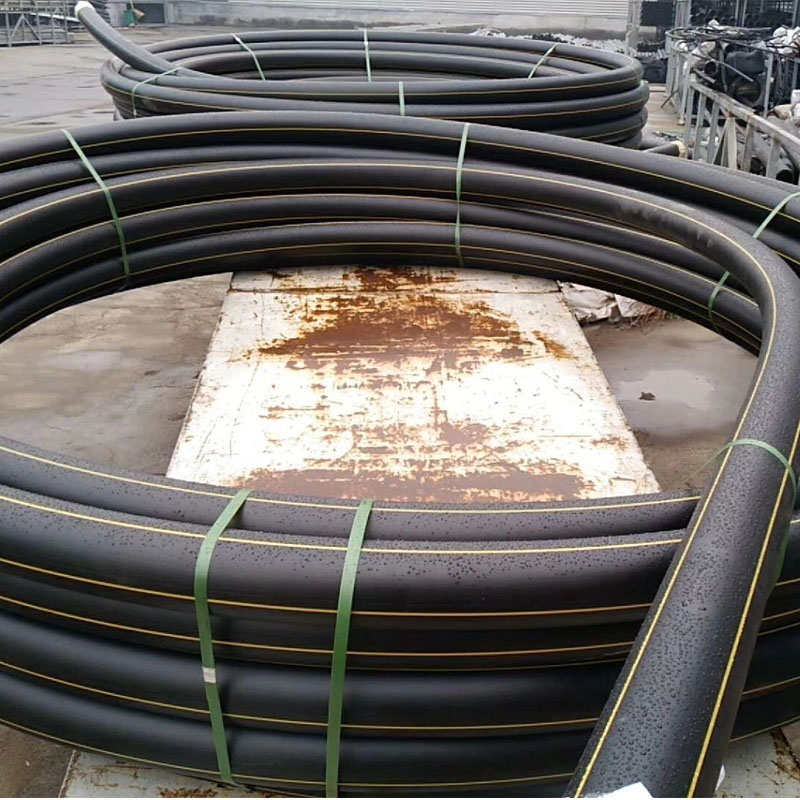
Irrigation HDPE pipe is predominantly manufactured from high-density polyethylene resin, typically grades designated PE3408E or PE4710, selected for their enhanced strength-to-density ratio and resistance to environmental stress cracking. The raw material exhibits a semi-crystalline structure, influencing its mechanical properties and processing characteristics. Key material properties include a density between 0.93 to 0.97 g/cm³, a tensile strength ranging from 20 to 35 MPa, and a relatively low coefficient of friction. Manufacturing primarily utilizes extrusion processes, specifically pressure pipe extrusion. The process begins with the melting of HDPE pellets in a single-screw extruder, followed by shaping the molten polymer through a circular die. Critical parameters during extrusion include melt temperature (180-240°C), die pressure (regulated to maintain dimensional accuracy), and haul-off speed (controlling pipe thickness and cooling rate). Cooling is typically achieved via water tanks, ensuring rapid solidification and dimensional stability. Post-extrusion, pipes undergo hydrostatic testing to verify pressure integrity and conformance to industry standards. Quality control focuses on maintaining consistent wall thickness, diameter, and ensuring the absence of defects such as pinholes or surface cracks. Compounding the HDPE with UV stabilizers, typically carbon black or hindered amine light stabilizers (HALS), is crucial to mitigate degradation from prolonged sun exposure. The percentage of UV stabilizer used directly correlates with the pipe's expected service life in outdoor applications.
Performance & Engineering
The performance of irrigation HDPE pipe is dictated by its ability to withstand internal hydrostatic pressure, external loads (soil pressure, traffic loads), and environmental stressors. Force analysis under pressure considers hoop stress (σh = PD/2t, where P is pressure, D is diameter, and t is wall thickness) and longitudinal stress. Adequate wall thickness is therefore crucial to prevent burst failure. External loads require consideration of soil stiffness and pipe embedment depth to prevent ovalation and collapse. HDPE’s flexibility allows for some degree of ground movement without compromising integrity, a significant advantage over rigid materials like PVC. Environmental resistance is a key engineering consideration. HDPE is inherently resistant to most chemicals encountered in agricultural environments, including fertilizers and pesticides. However, prolonged exposure to strong oxidizing agents should be avoided. Compliance requirements, such as those outlined by ASTM D3261 and ISO 4427, dictate minimum performance criteria for pressure rating, burst pressure, and sustained pressure. Functional implementation requires proper jointing techniques, typically utilizing butt fusion, electrofusion, or mechanical fittings. Butt fusion creates a homogenous weld, providing the highest strength and leak-proof integrity, but requires skilled operators and specialized equipment. Electrofusion uses electrical resistance heating to melt and fuse the pipe ends, offering greater control over the welding process. Proper joint design and execution are paramount to ensure long-term system reliability and minimize water loss.
Technical Specifications
| Parameter | Unit | Typical Value (DN63 - 160) | Test Standard |
|---|---|---|---|
| Nominal Diameter | mm | 63, 90, 110, 125, 160 | ISO 4427 |
| Pressure Rating (PN) | bar | 10, 16, 20, 25 | ASTM D3261 |
| Wall Thickness | mm | 2.3, 2.8, 3.7, 4.4 | ISO 4427 |
| Burst Pressure | bar | >2.25 x PN | ASTM D1597 |
| Hydrostatic Design Stress | MPa | 8-12.5 | ISO 4427 |
| UV Resistance | Years | >50 (with carbon black stabilization) | ASTM D3351 |
Failure Mode & Maintenance
Irrigation HDPE pipe, while durable, is susceptible to several failure modes. Slow Crack Growth (SCG) is a primary concern, particularly in applications with sustained stress and exposure to aggressive chemicals. SCG initiates at stress concentrators (e.g., scratches, gouges) and propagates slowly over time, leading to eventual brittle failure. Environmental Stress Cracking (ESC) is exacerbated by the presence of detergents or certain soil constituents. Fatigue cracking can occur in areas subject to cyclic pressure fluctuations or vibrations, especially around joints. Delamination can occur due to inadequate fusion during jointing, creating a weak point prone to failure under pressure. Oxidation, although slow, can degrade the polymer matrix over extended periods, reducing its mechanical properties. Maintenance involves regular visual inspections for cracks, leaks, and deformation. Joints should be inspected for proper fusion and tightness. Buried pipelines require periodic assessment to identify potential damage from soil movement or external forces. Preventative measures include proper handling and installation to avoid damage, using appropriate jointing techniques, and selecting HDPE grades with adequate UV stabilization for the specific application. If SCG or ESC is suspected, the affected section should be replaced immediately. For minor leaks, repair sleeves or clamps can provide a temporary solution, but permanent repair requires replacing the damaged pipe segment.
Industry FAQ
Q: What is the impact of temperature on the long-term performance of HDPE irrigation pipes?
A: Elevated temperatures can accelerate the creep behavior of HDPE, leading to a gradual reduction in pressure-bearing capacity over time. While HDPE retains reasonable strength at higher temperatures, prolonged exposure to extreme heat (above 60°C) can significantly reduce its service life. Proper pipe selection and burial depth are crucial to mitigate temperature-related degradation. Furthermore, thermal expansion and contraction need to be accounted for during installation to prevent stress buildup at joints.
Q: How does the quality of the butt fusion welding process affect pipe integrity?
A: Butt fusion welding is a critical process, and its quality directly impacts the pipe's strength and leak-proof performance. Improper welding parameters – insufficient heating time, inadequate pressure, or misalignment of pipe ends – can result in incomplete fusion, creating weak points prone to failure. Regular calibration of welding equipment, operator training, and adherence to established welding procedures (e.g., DVS 2208) are essential to ensure consistent weld quality.
Q: What considerations should be made when selecting HDPE pipe for varying soil conditions?
A: Soil corrosivity and load-bearing capacity are key considerations. Highly corrosive soils can accelerate degradation of the HDPE material, particularly if there are underlying electrochemical processes. In areas with poor soil support, increased pipe wall thickness or the use of bedding materials may be necessary to prevent ovalation and collapse under external loads. Soil analysis is recommended to determine the appropriate pipe selection and installation practices.
Q: What are the advantages of HDPE pipe over traditional materials like PVC in irrigation applications?
A: HDPE offers several advantages over PVC, including superior impact resistance, greater flexibility, and higher resistance to chemicals and UV degradation. HDPE's flexibility allows it to conform to ground movements without cracking, reducing the risk of leaks. Its higher tensile strength and burst pressure capabilities provide greater reliability and longer service life, resulting in lower long-term operating costs.
Q: How important is UV stabilization, and what types are commonly used in irrigation HDPE pipes?
A: UV stabilization is critically important for irrigation pipes exposed to sunlight. Without adequate UV protection, HDPE will become brittle and degrade, leading to premature failure. Carbon black is the most common and cost-effective UV stabilizer, providing excellent long-term protection. However, it imparts a black color to the pipe. Hindered Amine Light Stabilizers (HALS) offer comparable UV protection with the option for colored pipes, but are generally more expensive.
Conclusion
Irrigation HDPE pipe represents a robust and reliable solution for modern agricultural water management. Its inherent properties – flexibility, chemical resistance, and durability – coupled with advancements in manufacturing techniques, ensure efficient and long-lasting performance. The selection of appropriate HDPE grades, coupled with correct installation procedures and ongoing maintenance, are paramount to maximizing system longevity and minimizing operational costs. A comprehensive understanding of material science, engineering principles, and industry standards is crucial for successfully deploying HDPE irrigation systems.
Looking forward, the development of enhanced HDPE formulations with improved UV resistance and increased mechanical strength will further extend the service life of irrigation pipelines. Furthermore, the integration of smart technologies, such as embedded sensors for leak detection and pressure monitoring, will optimize water usage and improve overall system efficiency. Continued innovation in jointing technologies will streamline installation processes and enhance long-term reliability, solidifying HDPE's position as the material of choice for irrigation infrastructure.
-
DN25 HDPE Compression Fitting-HORON INTERNATIONAL|Reliable Irrigation Solutions
NewsFeb.11,2026
-
hdpe coupling joint product Manufacturing Analysis
News2026-11-18
-
ppr pipe heating time products Performance Analysis
News2026-11-16
-
hdpe pipe sizes factory Performance Analysis
News2026-11-09
-
HDPE Pipe Sizes Service Performance Analysis
News2026-10-26
-
wholesale 15mm ppr pipe Material Science and Performance Analysis
News2026-10-20
-
wholesale pvc pipe price per foot Technical Analysis
News2026-09-21
-
wholesale long pvc pipe Technical Analysis and Manufacturing Specifications
News2026-09-15
-
wholesale plumbing kitchen sink water lines Material Performance
News2026-09-15
-
wholesale hdpe drip irrigation Material Science
News2026-09-15
-
wholesale hot water ppr pipe Performance Analysis
News2026-09-15
-
wholesale ppr plumbing Performance Analysis
News2026-09-15
-
wholesale ppr pipe supplier Performance Analysis
News2026-09-13
-
wholesale 50mm ppr pipe Performance Analysis
News2026-09-13
-
wholesale hdpe drip pipe Performance Analysis
News2026-09-13
-
wholesale hdpe pipe 63mm price Manufacturing Specification and Performance Analysis
News2026-09-13