

Feb . 11, 2026 00:01 Back to list
HDPE Tubing Sizes Service Performance Analysis
Introduction
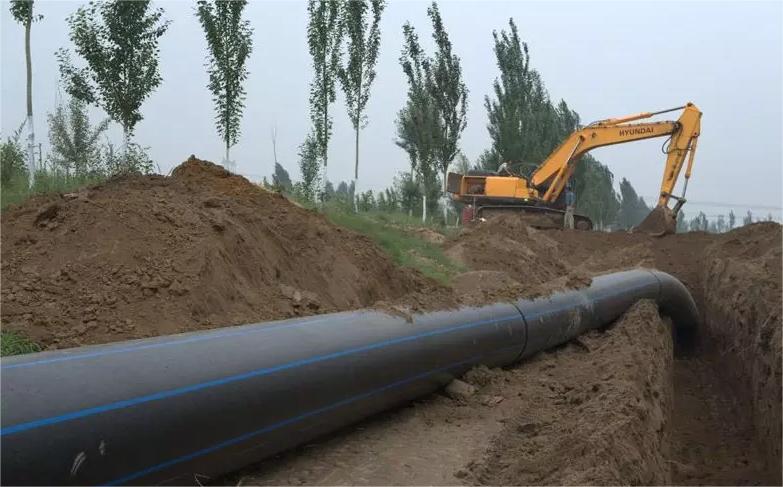
High-Density Polyethylene (HDPE) tubing is a thermoplastic pipe widely utilized across diverse industrial applications, including water distribution, gas transportation, mining, and drainage systems. Its prominence stems from a unique combination of physical and chemical properties, offering a cost-effective, durable, and corrosion-resistant alternative to traditional metallic piping. The ‘sizes service’ aspect of HDPE tubing refers to the comprehensive range of diameters and schedule (wall thickness) configurations available, catering to varying pressure ratings, flow rates, and structural demands. This guide provides an in-depth technical examination of HDPE tubing sizing, material science, manufacturing processes, performance characteristics, potential failure modes, and relevant industry standards. A core industry pain point revolves around accurate sizing calculations to optimize flow efficiency, minimize pressure drop, and ensure long-term structural integrity, particularly in demanding applications like high-pressure gas transmission or corrosive chemical handling. Incorrect sizing can lead to premature failure, increased operational costs, and potential safety hazards.
Material Science & Manufacturing
HDPE’s foundation lies in the polymerization of ethylene, creating a linear polymer structure with minimal branching. This linearity contributes significantly to its high tensile strength, flexibility, and chemical resistance. The density of HDPE typically ranges from 0.93 to 0.97 g/cm³, influencing its mechanical properties. Key raw materials include ethylene gas and catalysts (typically Ziegler-Natta or metallocene catalysts). Manufacturing HDPE tubing primarily involves extrusion processes. The process begins with HDPE resin being fed into an extruder, where it's heated and melted. This molten plastic is then forced through a die, shaping it into the desired tube diameter and wall thickness. Precise temperature control (ranging from 180°C to 220°C, dependent on resin grade) and screw speed are crucial parameters. Cooling is achieved through water baths or air cooling, followed by dimensional stabilization. Fusion welding (butt fusion, socket fusion, electrofusion) is extensively used to join HDPE tubing sections, creating leak-proof, structurally sound pipelines. The weld strength is paramount and is affected by factors such as welding temperature, pressure, and heating time. Molecular weight distribution (MWD) of the HDPE resin significantly impacts processability and end-product properties; a broader MWD can enhance melt strength, while a narrower MWD may provide better stiffness. The degree of crystallinity, controlled during cooling, also affects strength and permeability.
Performance & Engineering
The performance of HDPE tubing is governed by several engineering principles. Hydrostatic pressure rating, a critical parameter, is directly related to the pipe's diameter and wall thickness, adhering to standards like ASTM D1785 and ISO 1167. Force analysis, including hoop stress and longitudinal stress, is essential for determining the pipe's ability to withstand internal pressure and external loads (soil load, traffic load). HDPE exhibits significant creep resistance, although long-term creep deformation must be considered in design calculations, particularly for large-diameter pipes. Environmental resistance is another vital aspect. HDPE demonstrates excellent resistance to many chemicals, including acids, bases, and salts. However, prolonged exposure to strong oxidizing agents or chlorinated hydrocarbons can lead to degradation. UV radiation exposure can also cause embrittlement, necessitating the use of UV stabilizers or protective coatings. For buried pipelines, geotechnical factors such as soil type, moisture content, and thermal conductivity influence pipe behavior. Thermal expansion and contraction are significant due to HDPE’s relatively high coefficient of thermal expansion (approximately 1.7 x 10⁻⁴ /°C). Expansion loops or joints are incorporated into the design to accommodate these movements and prevent stress buildup. Compliance requirements vary based on application; for potable water systems, NSF/ANSI 61 certification is mandatory to ensure material safety and prevent leaching of harmful substances.
Technical Specifications
| Parameter | Units | Typical Value (IPS Schedule 40) | Typical Value (DIPS Schedule 80) |
|---|---|---|---|
| Nominal Pipe Size | inches | 0.5 - 6 | 0.5 - 12 |
| Outside Diameter | inches | 0.625 - 6.625 | 0.840 - 13.500 |
| Wall Thickness | inches | 0.062 - 0.280 | 0.109 - 0.375 |
| Pressure Rating (at 73°F) | psi | Up to 350 | Up to 630 |
| Density | g/cm³ | 0.941 – 0.965 | 0.941 – 0.965 |
| Tensile Strength | psi | 4,000 – 5,000 | 4,000 – 5,000 |
Failure Mode & Maintenance
HDPE tubing, while durable, is susceptible to certain failure modes. Slow Crack Growth (SCG) is a prevalent issue, initiated by stress concentrations around imperfections or notches, exacerbated by sustained tensile stress and exposure to certain chemicals. Environmental Stress Cracking (ESC) is similar, but typically occurs more rapidly. Fatigue cracking can occur under cyclic loading, particularly at weld joints. Oxidation, especially at elevated temperatures, can lead to embrittlement and reduced mechanical properties. UV degradation causes surface chalking and loss of impact strength. Third-party damage during installation or excavation is a common cause of failure. Maintenance primarily focuses on preventative measures. Regular visual inspections should identify any signs of cracking, deformation, or UV damage. Pressure testing can detect leaks. For buried pipelines, corrosion protection (cathodic protection) may be necessary in certain environments. Proper backfilling techniques are crucial to prevent stress concentrations. When repairing HDPE tubing, fusion welding is the preferred method, ensuring a homogeneous and leak-proof joint. Avoid using adhesives, as they may not provide long-term durability. Periodic assessment of weld integrity is recommended, particularly for critical applications. Proper storage of HDPE tubing is also important to prevent UV damage and contamination.
Industry FAQ
Q: What is the impact of temperature on HDPE pipe pressure ratings?
A: HDPE pipe pressure ratings are typically specified at 73°F (23°C). As temperature increases, the tensile strength of HDPE decreases, resulting in a reduced pressure rating. Derating factors are often provided by manufacturers to adjust the allowable pressure at higher temperatures. Conversely, at lower temperatures, the pressure rating may slightly increase, but this is generally not a design consideration.
Q: How do I select the appropriate HDPE pipe schedule for a given application?
A: Pipe schedule selection depends on the operating pressure, fluid type, and external loads. Higher schedules (e.g., Schedule 80) offer thicker walls and higher pressure ratings but are more expensive. Consider the maximum operating pressure, potential surge pressures, and any external loads such as soil cover or traffic. Consult relevant standards (ASTM D1785) and manufacturer’s data sheets.
Q: What are the best practices for welding HDPE pipe?
A: Proper surface preparation is crucial. Ensure the pipe ends are clean, dry, and free of contaminants. Follow the manufacturer’s recommended welding parameters (temperature, pressure, heating time) for the specific fusion method (butt fusion, socket fusion, electrofusion). Use calibrated welding equipment and qualified personnel. Conduct visual inspections and pressure testing to verify weld integrity.
Q: How does HDPE pipe perform in corrosive environments?
A: HDPE exhibits excellent resistance to a wide range of chemicals, including acids, bases, and salts. However, it is susceptible to degradation by strong oxidizing agents and chlorinated hydrocarbons. Check chemical compatibility charts before using HDPE pipe in corrosive applications. Consider using specialized HDPE formulations with enhanced chemical resistance if necessary.
Q: What are the long-term effects of UV exposure on HDPE pipe?
A: Prolonged UV exposure can cause surface chalking, discoloration, and a reduction in impact strength. To mitigate these effects, use UV-stabilized HDPE formulations or protect the pipe with opaque coatings or burial. Avoid prolonged exposure to direct sunlight during storage and installation.
Conclusion
HDPE tubing represents a robust and versatile piping solution, offering a compelling combination of performance characteristics and cost-effectiveness. The successful implementation of HDPE piping systems hinges on a thorough understanding of material science, manufacturing processes, and engineering principles. Accurate sizing, proper installation techniques, and preventative maintenance are paramount to ensuring long-term reliability and minimizing the risk of premature failure.
Looking ahead, advancements in HDPE resin technology will likely focus on enhancing chemical resistance, increasing temperature ratings, and improving weldability. Increased adoption of non-destructive testing methods for weld inspection will further improve quality control. As sustainability concerns grow, the recyclability of HDPE will continue to be a key advantage, driving its wider adoption across various industries.
-
DN25 HDPE Compression Fitting-HORON INTERNATIONAL|Reliable Irrigation Solutions
NewsFeb.11,2026
-
hdpe coupling joint product Manufacturing Analysis
News2026-11-18
-
ppr pipe heating time products Performance Analysis
News2026-11-16
-
hdpe pipe sizes factory Performance Analysis
News2026-11-09
-
HDPE Pipe Sizes Service Performance Analysis
News2026-10-26
-
wholesale 15mm ppr pipe Material Science and Performance Analysis
News2026-10-20
-
wholesale pvc pipe price per foot Technical Analysis
News2026-09-21
-
wholesale long pvc pipe Technical Analysis and Manufacturing Specifications
News2026-09-15
-
wholesale plumbing kitchen sink water lines Material Performance
News2026-09-15
-
wholesale hdpe drip irrigation Material Science
News2026-09-15
-
wholesale hot water ppr pipe Performance Analysis
News2026-09-15
-
wholesale ppr plumbing Performance Analysis
News2026-09-15
-
wholesale ppr pipe supplier Performance Analysis
News2026-09-13
-
wholesale 50mm ppr pipe Performance Analysis
News2026-09-13
-
wholesale hdpe drip pipe Performance Analysis
News2026-09-13
-
wholesale hdpe pipe 63mm price Manufacturing Specification and Performance Analysis
News2026-09-13