

Feb . 11, 2026 00:01 Back to list
hdpe tubing sizes products Technical Analysis
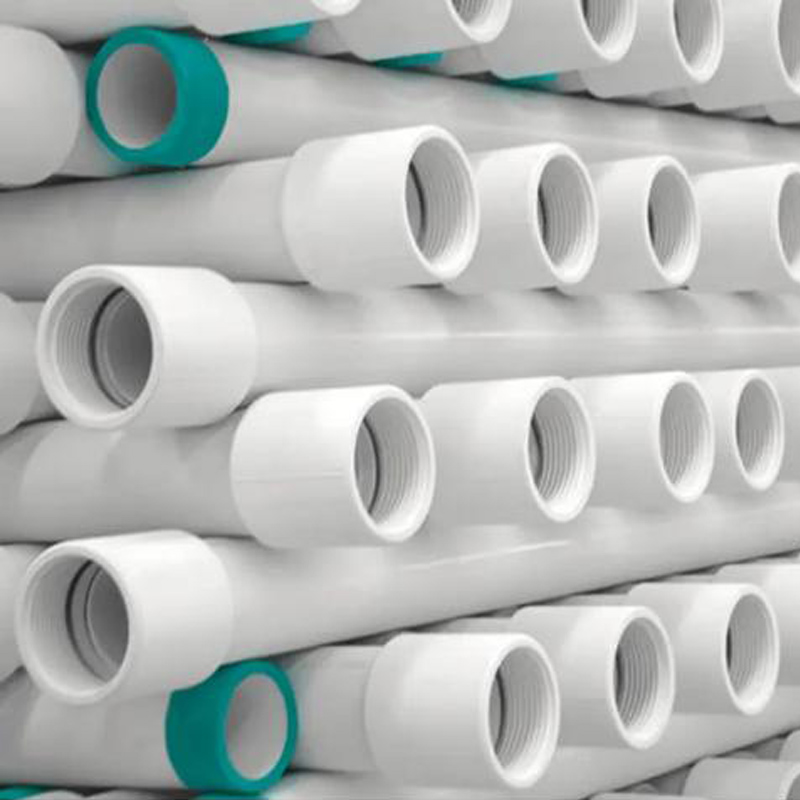
Introduction
High-Density Polyethylene (HDPE) tubing represents a critical component across diverse industrial applications, ranging from potable water distribution and irrigation to gas transportation and industrial fluid conveyance. This guide provides an in-depth technical examination of HDPE tubing sizes, encompassing material science, manufacturing processes, performance characteristics, potential failure modes, and relevant industry standards. HDPE’s prevalence stems from its high strength-to-density ratio, excellent chemical resistance, and cost-effectiveness compared to metallic alternatives. The accurate selection of HDPE tubing size is paramount to ensuring system integrity, optimizing flow rates, and minimizing pressure loss. A core industry pain point revolves around accurately predicting long-term performance under varying environmental conditions and ensuring compliance with stringent regulatory requirements for specific applications, particularly those involving public health or safety. This document aims to address these challenges through a comprehensive technical analysis.
Material Science & Manufacturing
HDPE is a thermoplastic polymer produced from the polymerization of ethylene. The “high density” designation implies minimal branching in the polymer chain, resulting in increased crystallinity, higher tensile strength, and enhanced resistance to chemical degradation. Raw material quality is fundamental; resin grade must conform to standards like ASTM D3350, defining critical properties such as melt flow index (MFI), density, and molecular weight distribution. Manufacturing HDPE tubing predominantly utilizes extrusion processes. The process involves heating HDPE pellets to a molten state and forcing them through a die to create a continuous tube. Key parameters requiring meticulous control include die temperature, extrusion speed, and cooling rates. Variations in these parameters directly impact the tubing’s dimensional accuracy, wall thickness uniformity, and overall mechanical properties. Post-extrusion processes, such as annealing, can further enhance crystallinity and reduce residual stresses. Butt fusion, socket fusion, and electrofusion are common joining methods. The integrity of these joints relies heavily on surface preparation, heating temperatures, and applied pressure – improper fusion leads to weakened joints and potential failure. Chemical compatibility is also crucial. While HDPE exhibits excellent resistance to many chemicals, prolonged exposure to strong oxidizing agents or certain solvents can induce stress cracking and degradation.
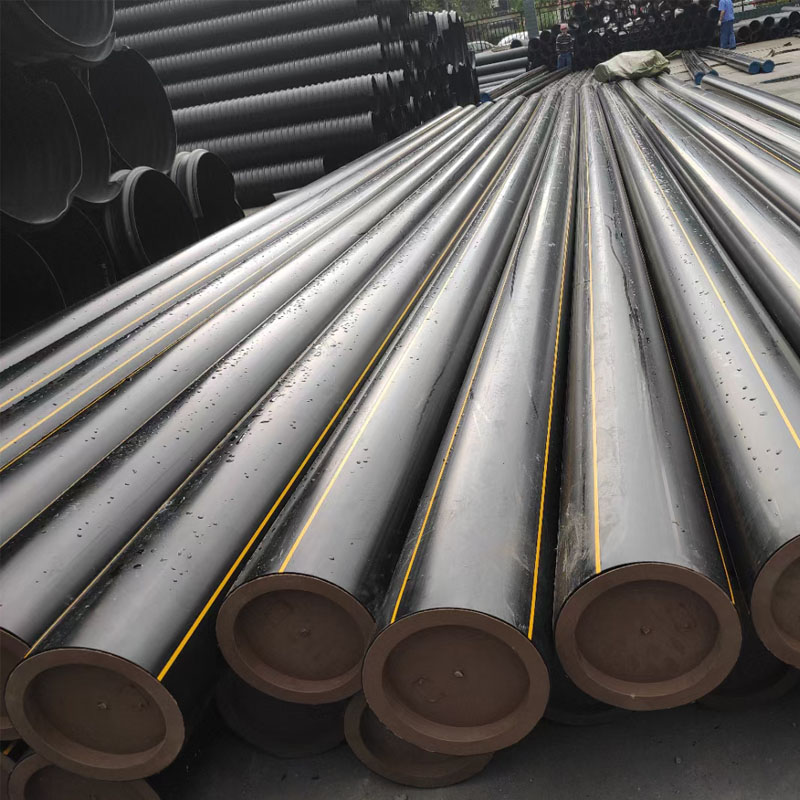
Performance & Engineering
The performance of HDPE tubing is governed by several engineering principles. Pressure rating, a critical parameter, is determined by the Barlow’s formula, considering wall thickness, outside diameter, and the material's hydrostatic design basis (HDB), typically ranging from 8.6 to 12.4 MPa for HDPE. Force analysis during installation and operation must account for external loads, such as soil pressure (for buried pipelines), internal pressure from fluid flow, and thermal stresses induced by temperature fluctuations. HDPE exhibits a degree of creep – time-dependent deformation under sustained load. Long-term performance prediction requires accounting for creep rupture, particularly in high-stress applications. Environmental resistance is another key consideration. UV degradation, while less severe than with other polymers, can still affect surface properties and reduce long-term strength; UV stabilizers are often incorporated into the HDPE formulation. Compliance with relevant standards like AWWA C906 (for potable water) and ASTM F480 (for gas distribution) is non-negotiable. These standards specify requirements for material quality, manufacturing processes, hydrostatic testing, and allowable operating pressures. Furthermore, HDPE's coefficient of thermal expansion (approximately 0.2 mm/m/°C) necessitates proper expansion loops and anchoring systems to accommodate temperature-induced dimensional changes and prevent stress buildup.
Technical Specifications
| Nominal Pipe Size (inches) | Outside Diameter (mm) | Wall Thickness (mm) | Pressure Rating @ 23°C (psi) |
|---|---|---|---|
| 1/2 | 12.7 | 2.4 | 150 |
| 3/4 | 20.0 | 2.3 | 125 |
| 1 | 25.4 | 2.3 | 100 |
| 1 1/4 | 32.4 | 2.3 | 80 |
| 1 1/2 | 38.1 | 2.3 | 70 |
| 2 | 50.8 | 2.3 | 55 |
Failure Mode & Maintenance
HDPE tubing, while robust, is susceptible to several failure modes. Slow Crack Growth (SCG) is a primary concern, initiated by sustained tensile stress in the presence of certain chemicals. This results in brittle fracture over time. Fatigue cracking can occur under cyclic loading, particularly at stress concentrators such as welds or fittings. Oxidation, induced by prolonged exposure to elevated temperatures and oxygen, can lead to embrittlement and reduced mechanical properties. UV degradation, even with stabilizers, can cause surface crazing and loss of impact resistance. Delamination can occur during manufacturing due to inadequate bonding of layers in multi-layer tubing. Maintenance involves regular visual inspections for cracks, deformations, or signs of UV damage. Hydrostatic testing, conducted periodically, verifies the integrity of the tubing and identifies potential leaks. Proper jointing procedures are paramount; ensuring complete fusion and proper alignment minimizes stress concentrations. Buried pipelines require cathodic protection to mitigate corrosion risks, particularly in aggressive soil environments. For systems conveying abrasive fluids, periodic flushing removes sediment buildup and prevents erosion. Damage during installation (e.g., impact during backfilling) must be avoided. Records of installation date, operating conditions, and maintenance activities are essential for effective lifecycle management.
Industry FAQ
Q: What is the impact of temperature on the pressure rating of HDPE tubing?
A: The pressure rating of HDPE tubing decreases with increasing temperature. This is because the material's tensile strength and HDB decrease at higher temperatures. De-rating factors, specified in standards like ASTM D3350, must be applied to calculate the allowable operating pressure at different temperatures. For example, the pressure rating might be reduced by 20% at 60°C.
Q: How do I determine the appropriate HDPE tubing size for a specific flow rate?
A: Determining the appropriate size involves calculating the required internal diameter based on the desired flow rate, fluid viscosity, and allowable pressure drop. The Hazen-Williams equation or Darcy-Weisbach equation are commonly used for this purpose. Factors such as pipe roughness and minor losses (e.g., at fittings) must also be considered.
Q: What are the best practices for joining HDPE tubing to prevent leaks?
A: Proper surface preparation is critical. Ensure the joining surfaces are clean, dry, and free of contaminants. Use appropriate fusion parameters (temperature, pressure, and time) as specified by the manufacturer and relevant standards. For butt fusion, ensure proper alignment and adequate cooling time before applying pressure. For electrofusion, ensure the fitting is properly connected and the welding cycle is completed successfully.
Q: How can I mitigate the risk of Slow Crack Growth (SCG) in HDPE tubing?
A: SCG is often induced by internal pressure and external stress. Select a tubing grade with a high HDB and minimize external stress during installation and operation. Avoid exposure to chemicals known to accelerate SCG. Consider using stress-relieved tubing or incorporating expansion loops to accommodate thermal expansion and contraction.
Q: What are the benefits of using HDPE tubing over metallic piping systems?
A: HDPE offers several advantages, including superior corrosion resistance, lower weight, greater flexibility, and lower cost. It requires less energy to install, eliminates the need for cathodic protection (in most applications), and offers a smooth inner surface, minimizing friction losses. However, HDPE has a lower temperature resistance than some metals and may be more susceptible to mechanical damage.
Conclusion
HDPE tubing sizes represent a versatile and reliable solution for a wide range of fluid conveyance applications. Its performance is fundamentally dictated by material properties, manufacturing precision, and adherence to established engineering principles. Proper selection of tubing size, coupled with correct installation and maintenance procedures, is paramount to ensuring long-term system integrity and minimizing the risk of failure. Understanding potential failure modes, such as SCG and fatigue cracking, is critical for proactive maintenance planning and risk mitigation.
Future advancements in HDPE formulations, including enhanced UV stabilizers and impact modifiers, will further expand its application envelope. Continued development of non-destructive testing techniques for assessing joint integrity and material degradation will also contribute to improved lifecycle management. The increasing emphasis on sustainable infrastructure solutions will likely drive further adoption of HDPE tubing due to its recyclability and reduced environmental impact compared to traditional metallic piping systems.
-
DN25 HDPE Compression Fitting-HORON INTERNATIONAL|Reliable Irrigation Solutions
NewsFeb.11,2026
-
hdpe coupling joint product Manufacturing Analysis
News2026-11-18
-
ppr pipe heating time products Performance Analysis
News2026-11-16
-
hdpe pipe sizes factory Performance Analysis
News2026-11-09
-
HDPE Pipe Sizes Service Performance Analysis
News2026-10-26
-
wholesale 15mm ppr pipe Material Science and Performance Analysis
News2026-10-20
-
wholesale pvc pipe price per foot Technical Analysis
News2026-09-21
-
wholesale long pvc pipe Technical Analysis and Manufacturing Specifications
News2026-09-15
-
wholesale plumbing kitchen sink water lines Material Performance
News2026-09-15
-
wholesale hdpe drip irrigation Material Science
News2026-09-15
-
wholesale hot water ppr pipe Performance Analysis
News2026-09-15
-
wholesale ppr plumbing Performance Analysis
News2026-09-15
-
wholesale ppr pipe supplier Performance Analysis
News2026-09-13
-
wholesale 50mm ppr pipe Performance Analysis
News2026-09-13
-
wholesale hdpe drip pipe Performance Analysis
News2026-09-13
-
wholesale hdpe pipe 63mm price Manufacturing Specification and Performance Analysis
News2026-09-13