

Feb . 11, 2026 00:01 Back to list
hdpe to steel coupling products Performance Analysis
Introduction
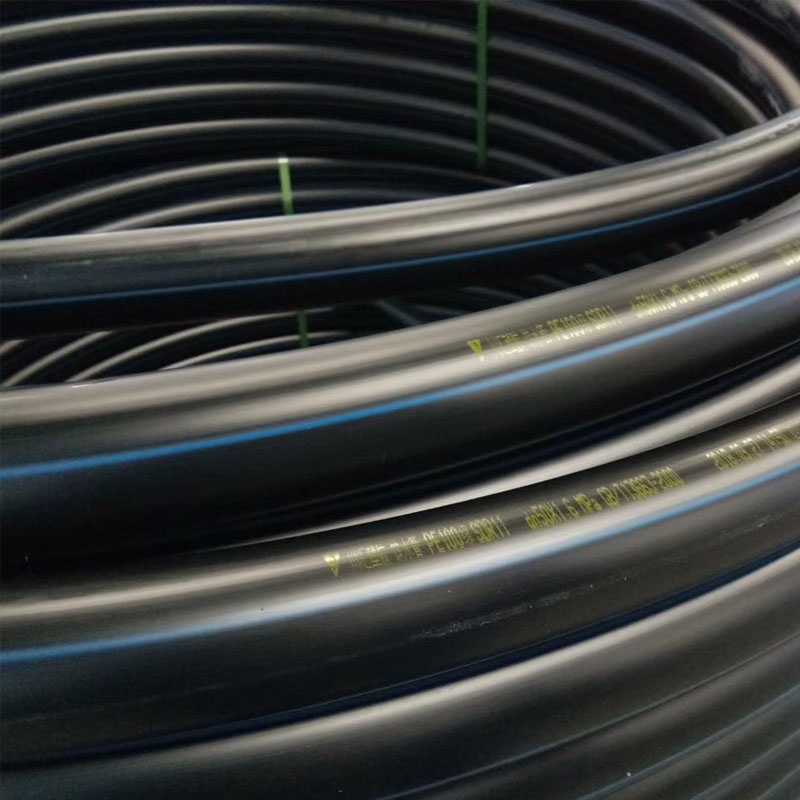
HDPE to steel couplings represent a critical joining solution in a diverse array of industrial applications, bridging the dissimilar material properties of High-Density Polyethylene (HDPE) and steel. These couplings are primarily employed in piping systems for fluid and gas transfer, particularly in sectors such as water and wastewater treatment, mining, irrigation, and oil & gas. The function of these couplings extends beyond simple mechanical connection; they must accommodate differential thermal expansion between the HDPE and steel components, maintain structural integrity under pressure, and provide a reliable, leak-proof seal. A key performance indicator is the ability to prevent galvanic corrosion arising from the interface between dissimilar metals, a prevalent concern in many operating environments. Understanding the intricacies of material selection, manufacturing processes, and failure modes is paramount for ensuring long-term system reliability and minimizing maintenance downtime. Their increasing adoption stems from the advantages offered by HDPE – corrosion resistance, lightweight nature, and cost-effectiveness – coupled with the strength and rigidity provided by steel in critical connection points. This guide provides an in-depth technical analysis of HDPE to steel couplings, covering material science, manufacturing, performance characteristics, failure analysis, and relevant industry standards.
Material Science & Manufacturing
The performance of HDPE to steel couplings is fundamentally dictated by the properties of their constituent materials. HDPE, a thermoplastic polymer produced from the polymerization of ethylene, exhibits excellent chemical resistance, a low coefficient of friction, and high tensile strength-to-density ratio. However, it possesses a relatively low modulus of elasticity and is susceptible to creep under sustained load, and is also prone to UV degradation. Common HDPE grades used in coupling manufacture include HDPE 3408, HDPE 3608, and HDPE 4710, differentiated by their melt flow index and molecular weight distribution, influencing processing characteristics and resulting mechanical properties. The steel component typically utilizes carbon steel (ASTM A53 Grade B or equivalent) or stainless steel (304/316) depending on the application environment and corrosion resistance requirements. Carbon steel offers high strength and cost-effectiveness, while stainless steel provides superior corrosion protection.
Manufacturing processes vary based on coupling type and size. Injection molding is commonly used for the HDPE component, requiring precise temperature and pressure control to ensure dimensional accuracy and material homogeneity. Key parameters include melt temperature (typically 180-220°C), mold temperature (30-50°C), and injection pressure (50-100 MPa). Steel components are often manufactured via machining or forging. The critical step involves creating a robust mechanical interlock between the HDPE and steel. This is commonly achieved through a combination of methods including: (1) Flanged connections with gaskets; (2) Socket welds where the HDPE is thermally welded to a steel socket; (3) Mechanical clamping systems utilizing bolts and sleeves; and (4) Interlocking grooves and adhesives. Surface preparation is crucial for ensuring a strong bond; steel surfaces are typically grit-blasted to create a roughened profile promoting adhesion. Post-processing may involve stress relieving of steel components and quality control checks including dimensional inspection, leak testing, and material certification.
Performance & Engineering
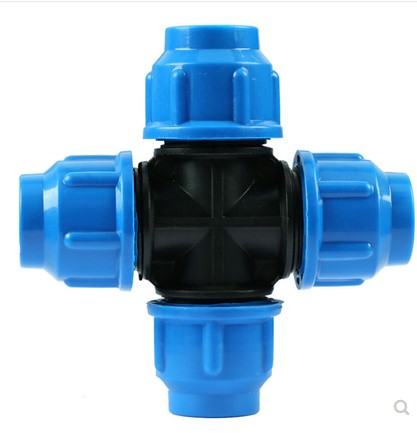
The structural integrity of HDPE to steel couplings is governed by several key engineering principles. Force analysis involves considering internal pressure from the conveyed fluid or gas, axial tensile or compressive loads, bending moments due to pipe misalignment, and external loads from soil or equipment. The HDPE component’s susceptibility to creep necessitates careful design to limit long-term deformation under sustained stress. Finite Element Analysis (FEA) is routinely employed to model stress distributions and optimize coupling geometry. Environmental resistance is a critical consideration. HDPE’s inherent chemical resistance protects against corrosion from most fluids, but prolonged exposure to strong oxidizing agents can lead to degradation. Steel components are susceptible to corrosion, particularly in corrosive environments. Cathodic protection or coatings (epoxy, polyurethane) are often applied to mitigate corrosion risk. Galvanic corrosion, arising from the electrochemical potential difference between steel and HDPE (in the presence of an electrolyte), requires careful design. Insulating gaskets or sleeves are used to electrically isolate the metals. Compliance requirements vary by industry and region. For potable water applications, couplings must meet NSF/ANSI 61 standards for lead content and extractable contaminants. For gas transmission, compliance with DOT regulations (USA) or EN 1594 (Europe) is required, focusing on material traceability, pressure testing, and weld quality. The design must also account for thermal expansion and contraction differences between HDPE and steel, incorporating expansion loops or flexible joints to prevent stress buildup.
Technical Specifications
| Parameter | Unit | HDPE to Steel Coupling (Typical Range) | Test Standard |
|---|---|---|---|
| Maximum Operating Pressure | PSI | 150-300 | ASTM D2412 |
| Operating Temperature Range | °F | -40 to 140 | ASTM D790 |
| HDPE Material Grade | - | PE3408, PE3608, PE4710 | ASTM D1248 |
| Steel Material Grade | - | A53 Grade B, 304/316 Stainless Steel | ASTM A53, ASTM A240 |
| Tensile Strength (HDPE) | PSI | 4000-6000 | ASTM D638 |
| Yield Strength (Steel) | PSI | 36,000-50,000 | ASTM E8 |
Failure Mode & Maintenance
HDPE to steel couplings are susceptible to various failure modes impacting system reliability. Fatigue cracking in the steel component can occur under cyclic loading, particularly at weld points or areas of high stress concentration. This is exacerbated by corrosion and stress corrosion cracking. Delamination at the HDPE-steel interface can result from inadequate bonding, thermal stresses, or chemical attack. Creep deformation of the HDPE can lead to leakage or joint failure over time, especially at elevated temperatures and under sustained pressure. Oxidation of HDPE, particularly due to prolonged UV exposure, can embrittle the material, reducing its strength and toughness. Galvanic corrosion can rapidly degrade the steel component if electrical isolation is compromised. Regular inspection is crucial for proactive maintenance. This includes visual checks for cracks, corrosion, or deformation; leak testing; and non-destructive testing (NDT) methods such as ultrasonic testing (UT) or radiographic testing (RT) to detect subsurface flaws. Preventive maintenance should include re-tightening of bolts, inspection and replacement of gaskets, and application of protective coatings to steel components. For socket weld couplings, periodic weld inspections are recommended. In cases of HDPE degradation, replacement of the coupling is the most effective remedial action. Proper storage of couplings before installation is also critical to prevent UV degradation and contamination.
Industry FAQ
Q: What measures can be taken to mitigate the risk of galvanic corrosion in HDPE to steel couplings used in saltwater environments?
A: Mitigation of galvanic corrosion in saltwater environments requires a multi-faceted approach. First, use stainless steel (316 grade) for the steel component, as it offers superior corrosion resistance. Second, electrically isolate the steel and HDPE components using non-conductive gaskets and sleeves. Third, apply a protective coating (epoxy or polyurethane) to the steel component to create a physical barrier against the electrolyte. Fourth, consider utilizing sacrificial anodes, which corrode preferentially, protecting the steel. Finally, regular monitoring of corrosion potential using electrochemical techniques is recommended.
Q: How does the choice of HDPE grade affect the long-term performance of the coupling under pressure?
A: HDPE grade significantly impacts long-term performance under pressure. Higher molecular weight grades (e.g., PE4710) exhibit superior creep resistance compared to lower grades (e.g., PE3408). Creep is the tendency of a material to deform permanently under sustained stress. Selecting a grade appropriate for the operating pressure and temperature is critical. FEA simulations can help predict creep deformation and optimize material selection. Consideration should also be given to the melt flow index (MFI); a lower MFI generally indicates higher molecular weight and better creep resistance.
Q: What are the critical parameters to control during the thermal welding of HDPE to steel socket couplings?
A: Controlling the thermal welding process is vital for a reliable joint. Key parameters include welding temperature (typically 220-260°C), welding pressure (5-10 MPa), and welding time. Ensure the steel socket surface is clean and free of contaminants. Proper heating of both the HDPE and steel is essential for achieving a homogeneous weld. Maintaining consistent welding speed and pressure is crucial for uniform fusion. Post-weld cooling should be controlled to minimize residual stresses. Non-destructive testing (visual inspection, leak testing) is essential to verify weld integrity.
Q: What is the impact of UV exposure on the lifespan of HDPE components in these couplings and how can it be prevented?
A: Prolonged UV exposure can cause significant degradation of HDPE, leading to embrittlement, cracking, and reduced tensile strength. This is due to the breakdown of polymer chains caused by UV radiation. Prevention involves shielding the HDPE components from direct sunlight during storage and operation. Incorporating UV stabilizers into the HDPE material formulation is also crucial. Protective coatings can provide an additional barrier against UV radiation. Regular inspection for signs of UV degradation is recommended, and damaged components should be replaced.
Q: What quality control procedures should be implemented during the manufacturing process to ensure the integrity of the coupling?
A: Comprehensive quality control is paramount. Procedures should include: (1) Material certification verifying the chemical composition and mechanical properties of both HDPE and steel; (2) Dimensional inspection to ensure compliance with specifications; (3) Leak testing under hydrostatic pressure to verify the seal integrity; (4) Visual inspection for defects (cracks, voids, porosity); (5) Non-destructive testing (NDT) such as ultrasonic testing (UT) to detect internal flaws; (6) Surface roughness measurements to assess adhesion potential; and (7) Documentation of all testing results for traceability.
Conclusion
HDPE to steel couplings represent a robust and versatile joining solution for a wide range of industrial applications. Their effectiveness hinges on a deep understanding of the material science governing HDPE and steel, meticulous control of manufacturing processes, and a proactive approach to performance engineering and maintenance. Addressing the challenges associated with differential thermal expansion, galvanic corrosion, and HDPE creep deformation is crucial for ensuring long-term system reliability. The selection of appropriate material grades, implementation of robust quality control procedures, and adherence to relevant industry standards are paramount.
Looking ahead, advancements in material science, such as the development of enhanced HDPE formulations with improved UV resistance and creep performance, will further enhance the capabilities of these couplings. The integration of smart sensors for real-time monitoring of stress, strain, and corrosion potential will enable predictive maintenance strategies, minimizing downtime and maximizing operational efficiency. Continued research and development in welding techniques and coating technologies will further refine the performance and longevity of HDPE to steel couplings in increasingly demanding environments.
-
DN25 HDPE Compression Fitting-HORON INTERNATIONAL|Reliable Irrigation Solutions
NewsFeb.11,2026
-
hdpe coupling joint product Manufacturing Analysis
News2026-11-18
-
ppr pipe heating time products Performance Analysis
News2026-11-16
-
hdpe pipe sizes factory Performance Analysis
News2026-11-09
-
HDPE Pipe Sizes Service Performance Analysis
News2026-10-26
-
wholesale 15mm ppr pipe Material Science and Performance Analysis
News2026-10-20
-
wholesale pvc pipe price per foot Technical Analysis
News2026-09-21
-
wholesale long pvc pipe Technical Analysis and Manufacturing Specifications
News2026-09-15
-
wholesale plumbing kitchen sink water lines Material Performance
News2026-09-15
-
wholesale hdpe drip irrigation Material Science
News2026-09-15
-
wholesale hot water ppr pipe Performance Analysis
News2026-09-15
-
wholesale ppr plumbing Performance Analysis
News2026-09-15
-
wholesale ppr pipe supplier Performance Analysis
News2026-09-13
-
wholesale 50mm ppr pipe Performance Analysis
News2026-09-13
-
wholesale hdpe drip pipe Performance Analysis
News2026-09-13
-
wholesale hdpe pipe 63mm price Manufacturing Specification and Performance Analysis
News2026-09-13