

Feb . 11, 2026 00:01 Back to list
hdpe to pvc connection service Performance Analysis
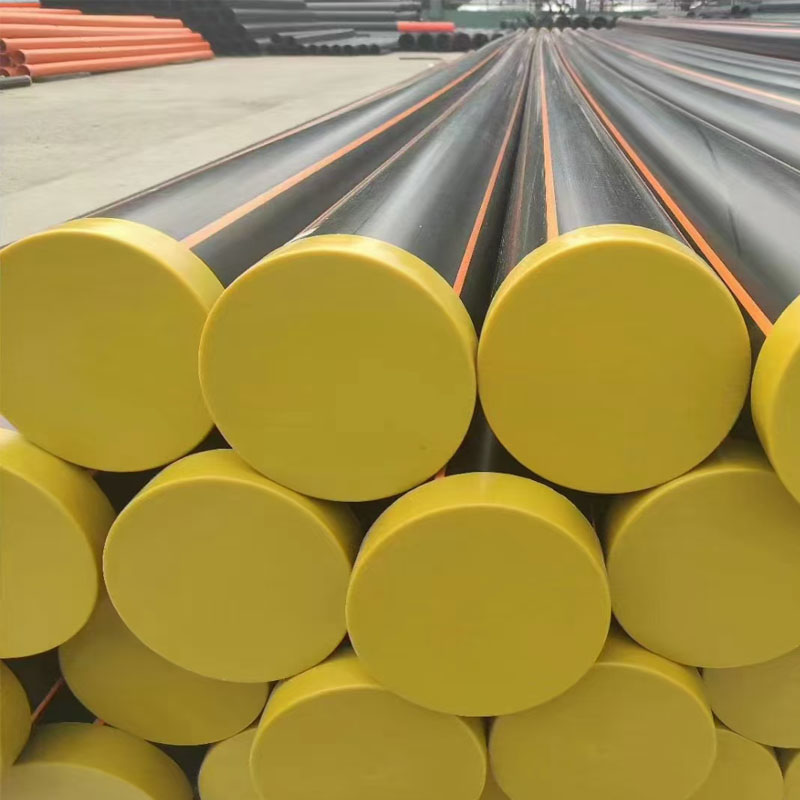
Introduction
The HDPE to PVC connection service addresses a critical juncture in fluid and gas conveyance systems where the dissimilar materials, High-Density Polyethylene (HDPE) and Polyvinyl Chloride (PVC), must be joined to facilitate continuous operation. This service is integral to a wide range of industries including water distribution, irrigation, drainage, chemical processing, and telecommunications ducting. The primary challenge lies in the inherent incompatibility of these polymers – differing thermal expansion rates, chemical compositions, and bonding characteristics. Direct bonding is often impossible without compromising the integrity of either material. This technical guide details the methods, material science, performance considerations, and failure modes associated with establishing and maintaining reliable HDPE to PVC connections, focusing on engineered transition fittings and specialized welding/adhesive techniques. The core performance characteristic is maintaining pressure integrity, leak-proof operation, and long-term durability in the intended service environment. Failure in these connections can lead to significant operational downtime, environmental contamination, and safety hazards.
Material Science & Manufacturing
HDPE, a thermoplastic polymer derived from petroleum, exhibits high tensile strength-to-density ratio, excellent chemical resistance, and flexibility. Its semi-crystalline structure allows for controlled welding processes. Manufacturing typically involves polymerization of ethylene using Ziegler-Natta or metallocene catalysts, resulting in varying molecular weight distributions that influence material properties. PVC, also a thermoplastic, is produced through the polymerization of vinyl chloride. While offering rigidity and cost-effectiveness, PVC is susceptible to degradation under UV exposure and has limited weldability. Its amorphous structure contributes to its brittleness compared to HDPE. The manufacturing of HDPE to PVC connections primarily revolves around the production of transition fittings. These are often molded from polypropylene (PP), a material with intermediate thermal expansion characteristics and good chemical compatibility with both HDPE and PVC. The molding process, typically injection molding, requires precise temperature and pressure control to ensure dimensional accuracy and prevent warping. Alternatively, electrofusion welding utilizes specialized fittings with embedded resistive heating elements. Surface preparation of both HDPE and PVC pipes is critical, involving cleaning and often mechanical roughening to enhance adhesion when using adhesive bonding methods. Adhesives commonly employed are specifically formulated for plastics, requiring thorough understanding of their chemical compatibility and curing parameters. Quality control involves hydrostatic pressure testing of assembled connections to verify leak-proof performance and adherence to industry standards.
Performance & Engineering
The performance of an HDPE to PVC connection is governed by several critical engineering considerations. Thermal expansion and contraction differences between HDPE (approximately 1.1 x 10⁻⁴ in/in/°F) and PVC (approximately 0.5 x 10⁻⁴ in/in/°F) induce stress at the connection point. Fittings and installation techniques must accommodate this differential expansion to prevent joint failure. Force analysis reveals that tensile stress concentrates at the transition point during pressure fluctuations or external loads. The fitting geometry, particularly the radius of curvature, significantly impacts stress distribution. Environmental resistance is another key factor. UV exposure degrades PVC, necessitating protection with coatings or burial. Chemical compatibility dictates material selection; certain chemicals can cause swelling or embrittlement of either HDPE or PVC. Compliance requirements vary by region and application. Potable water systems demand connections that meet NSF/ANSI 61 standards for lead content and extractables. Drainage systems require adherence to local plumbing codes. Functional implementation hinges on selecting the appropriate connection method – mechanical fittings, solvent welding with compatible adhesives, electrofusion welding, or compression fittings – based on pipe size, pressure rating, and operating temperature. Proper alignment and support of the piping system are essential to minimize stress on the connection. Detailed engineering drawings and installation procedures are vital to ensure consistent, reliable performance.
Technical Specifications
| Parameter | HDPE | PVC | Transition Fitting (PP) |
|---|---|---|---|
| Tensile Strength (psi) | 4,000 - 6,000 | 5,700 - 10,000 | 3,500 - 5,000 |
| Thermal Expansion Coefficient (in/in/°F) | 1.1 x 10⁻⁴ | 0.5 x 10⁻⁴ | 0.6 - 0.8 x 10⁻⁴ |
| Operating Temperature Range (°F) | -40 to 180 | 14 to 140 | 32 to 176 |
| Chemical Resistance | Excellent | Good (limited by certain solvents) | Excellent |
| Pressure Rating (psi) | Up to 200 (depending on SDR) | Up to 100 (depending on Schedule) | Matching lowest rated pipe |
| Joint Leakage Rate | < 0.01 gpm per foot of pipe | < 0.01 gpm per foot of pipe | < 0.01 gpm per foot of pipe |
Failure Mode & Maintenance
Failure modes in HDPE to PVC connections are diverse. Fatigue cracking can occur due to cyclic pressure fluctuations and thermal stresses, especially at the connection interface. Delamination of adhesive bonds is common when surface preparation is inadequate or the adhesive is incompatible with the materials. Creep deformation of the transition fitting under sustained load can lead to leakage. Oxidation of PVC, particularly in UV-exposed applications, causes material embrittlement and cracking. Corrosion, although less common with these plastics, can occur due to exposure to aggressive chemicals. Improper installation, such as excessive bending radius or insufficient support, induces stress concentrations and accelerates failure. Maintenance primarily focuses on visual inspection for cracks, leaks, and signs of degradation. Periodic pressure testing can verify joint integrity. For adhesive-bonded connections, re-application of sealant may be necessary. UV-damaged PVC sections should be replaced or coated with UV-resistant materials. Electrofusion welded joints require inspection of the weld bead for defects. Corrective actions involve replacing damaged fittings, re-bonding connections with appropriate adhesives, or providing additional support to the piping system. Preventative maintenance includes protecting PVC from UV exposure and ensuring proper drainage to prevent water accumulation that could accelerate corrosion or degradation.
Industry FAQ
Q: What is the most common cause of leakage at an HDPE to PVC transition?
A: The most frequent cause is inadequate surface preparation prior to adhesive bonding or improper fusion welding parameters. Contaminants on the pipe surfaces, insufficient roughening, or incorrect adhesive application lead to weak bonds prone to failure under pressure. Similarly, improper electrofusion welding parameters can create insufficient weld penetration, resulting in leaks.
Q: Can I directly solvent weld HDPE to PVC?
A: No. Solvent welding relies on softening the PVC surface to create a fusion bond. HDPE does not react to PVC solvents and will not form a cohesive joint. You must use a mechanical fitting, adhesive specifically formulated for plastic connections, or electrofusion welding.
Q: How do I account for thermal expansion when connecting HDPE to PVC in a long pipeline?
A: Expansion loops or flexible connectors should be incorporated into the pipeline design to accommodate the differential thermal expansion between HDPE and PVC. The transition fitting itself should also be designed with some flexibility. Proper anchoring and support are crucial to control pipe movement and prevent stress on the connection.
Q: What adhesive is recommended for bonding HDPE to PVC?
A: A two-part epoxy adhesive specifically formulated for bonding dissimilar plastics is generally recommended. The adhesive should exhibit high shear strength, good chemical resistance, and flexibility. Surface preparation, including cleaning and roughening, is critical for optimal adhesion.
Q: What are the advantages of electrofusion welding over mechanical fittings?
A: Electrofusion welding provides a stronger, more reliable connection compared to mechanical fittings, particularly in high-pressure applications. It creates a homogeneous weld, eliminating potential leak paths associated with fittings. However, it requires specialized equipment and trained personnel, whereas mechanical fittings are simpler to install.
Conclusion
Establishing robust HDPE to PVC connections demands a thorough understanding of the material properties, manufacturing processes, and engineering principles involved. The inherent incompatibility of these polymers necessitates the use of transition fittings, specialized adhesives, or controlled welding techniques. Proper surface preparation, meticulous installation, and consideration of thermal expansion are paramount to ensuring long-term performance and preventing premature failure. Selecting the appropriate connection method depends on factors such as pipe size, pressure rating, operating temperature, and environmental conditions.
Future developments in connection technology may focus on advanced adhesive formulations with enhanced bonding strength and flexibility, as well as innovative fitting designs that better accommodate differential thermal expansion. Continuous monitoring of connected systems for signs of stress or degradation is essential to proactively identify and address potential issues, maximizing the operational lifespan and minimizing the risk of costly failures. Adherence to relevant industry standards and best practices is crucial for maintaining the integrity and reliability of HDPE to PVC connections.
-
DN25 HDPE Compression Fitting-HORON INTERNATIONAL|Reliable Irrigation Solutions
NewsFeb.11,2026
-
hdpe coupling joint product Manufacturing Analysis
News2026-11-18
-
ppr pipe heating time products Performance Analysis
News2026-11-16
-
hdpe pipe sizes factory Performance Analysis
News2026-11-09
-
HDPE Pipe Sizes Service Performance Analysis
News2026-10-26
-
wholesale 15mm ppr pipe Material Science and Performance Analysis
News2026-10-20
-
wholesale pvc pipe price per foot Technical Analysis
News2026-09-21
-
wholesale long pvc pipe Technical Analysis and Manufacturing Specifications
News2026-09-15
-
wholesale plumbing kitchen sink water lines Material Performance
News2026-09-15
-
wholesale hdpe drip irrigation Material Science
News2026-09-15
-
wholesale hot water ppr pipe Performance Analysis
News2026-09-15
-
wholesale ppr plumbing Performance Analysis
News2026-09-15
-
wholesale ppr pipe supplier Performance Analysis
News2026-09-13
-
wholesale 50mm ppr pipe Performance Analysis
News2026-09-13
-
wholesale hdpe drip pipe Performance Analysis
News2026-09-13
-
wholesale hdpe pipe 63mm price Manufacturing Specification and Performance Analysis
News2026-09-13