

Feb . 11, 2026 00:01 Back to list
hdpe straight coupler factory Performance Analysis
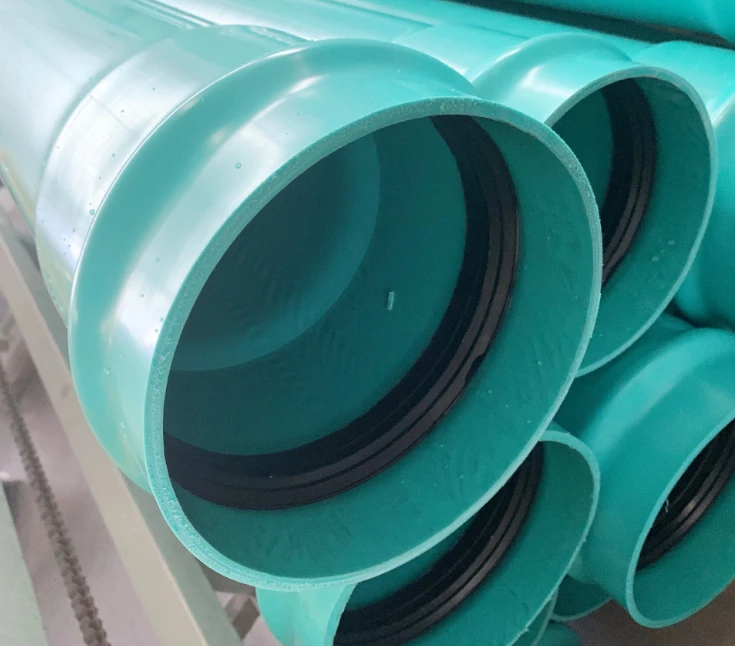
Introduction
High-Density Polyethylene (HDPE) straight couplers are critical components in thermoplastic piping systems, primarily utilized for joining sections of HDPE pipe in a linear configuration. Their function is to maintain consistent internal diameter and structural integrity while allowing for the efficient and reliable conveyance of fluids and gases. Positioned within the broader piping industry supply chain, HDPE couplers represent a specialized product offering, crucial for sectors including water distribution, gas transmission, irrigation, drainage, and industrial process piping. Core performance characteristics hinge upon pressure resistance, leak-proof sealing, chemical inertness, and resistance to environmental stress cracking (ESCR). Unlike metallic counterparts, HDPE couplers inherently lack corrosion issues, offering significant long-term cost benefits and reduced maintenance requirements, though specific installation procedures are vital to ensuring optimal performance and longevity.
Material Science & Manufacturing
The foundational material for HDPE straight couplers is, as the name suggests, High-Density Polyethylene. This thermoplastic polymer is characterized by its long chains of ethylene, resulting in a high degree of crystallinity (typically 60-80%), which contributes to its strength, rigidity, and resistance to chemical degradation. Raw material selection focuses on HDPE grades with defined melt flow indices (MFI), ensuring optimal processability during manufacturing. The manufacturing process generally involves injection molding. Granular HDPE resin is fed into an injection molding machine, heated to its molten state (typically 180-250°C), and then injected under high pressure into a precisely engineered mold cavity. Key parameter control includes melt temperature, mold temperature (typically 30-50°C), injection pressure (ranging from 70-150 MPa), and cooling time. Consistent control of these parameters is essential to prevent warping, shrinkage, and internal stresses within the coupler. Following molding, couplers undergo quality inspection for dimensional accuracy, surface finish, and absence of defects. Some manufacturers employ post-molding annealing to relieve residual stresses and improve long-term creep resistance. The chemical compatibility of HDPE is excellent with a wide range of fluids, but prolonged exposure to strong oxidizing agents and certain solvents should be avoided. The density of the HDPE used is typically between 0.93 and 0.97 g/cm³.
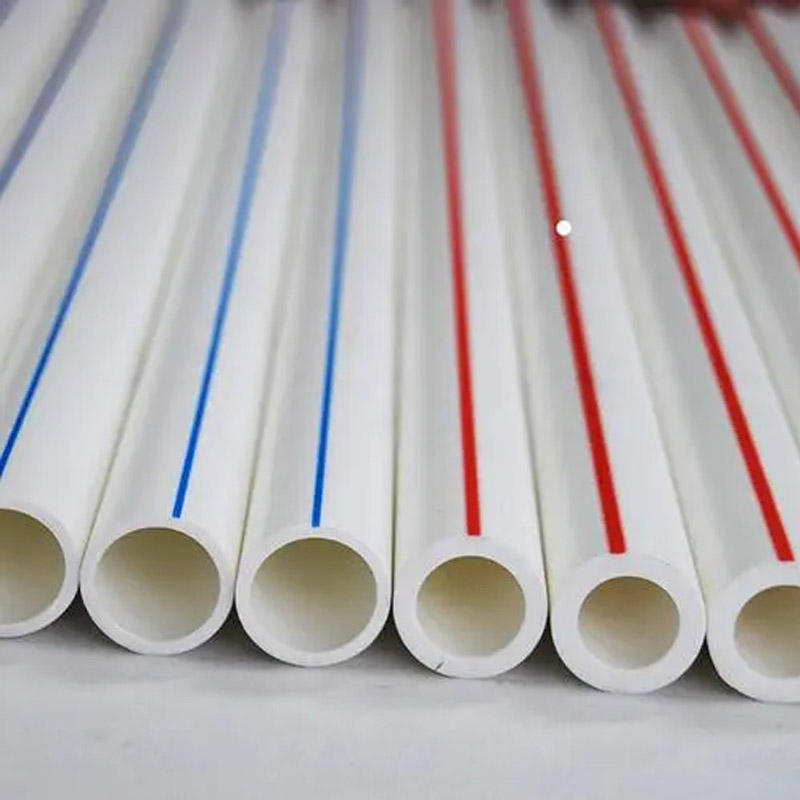
Performance & Engineering
The performance of HDPE straight couplers is governed by several engineering principles. Stress analysis, particularly focusing on hoop stress induced by internal pressure, is crucial for determining the coupler's pressure rating. Couplers are designed to withstand burst pressures significantly exceeding the operating pressure, with safety factors typically ranging from 2.25 to 3.5, depending on application and regulatory requirements. Environmental resistance is another critical consideration. While HDPE exhibits excellent resistance to many chemicals, prolonged UV exposure can lead to degradation and embrittlement. Therefore, couplers intended for outdoor use often incorporate UV stabilizers (typically carbon black or hindered amine light stabilizers - HALS). ESCR is a significant failure mode, particularly in the presence of detergents, surfactants, or hydrocarbons. Coupler design minimizes stress concentrations, as these areas are more susceptible to ESCR. Installation practices, including proper pipe insertion depth and avoiding sharp bends, are critical to prevent localized stress. Compliance requirements vary by region and application. In potable water systems, couplers must meet NSF/ANSI 61 standards for lead content and extractable contaminants. For gas transmission, compliance with DOT regulations (in the US) and similar standards in other countries is mandatory. Finite element analysis (FEA) is commonly used to validate coupler designs and predict performance under various loading conditions.
Technical Specifications
| Parameter | Unit | Standard Specification (Typical) | Range of Variation |
|---|---|---|---|
| Nominal Pipe Size | inch | 1/2, 3/4, 1, 1.25, 1.5, 2, 2.5, 3, 4, 6, 8, 12 | Custom sizes available upon request |
| Pressure Rating | psi | 100, 150, 200 | Dependent on pipe size and HDPE grade |
| Material | - | HDPE (PE100) | PE80, PE63 available for specific applications |
| Density | g/cm³ | 0.95 | 0.93 – 0.97 |
| Operating Temperature | °F | -40 to 140 | Limited by HDPE grade and application |
| UV Resistance | - | ASTM D4451 (Carbon Black Additive) | Varies depending on carbon black concentration |
Failure Mode & Maintenance
HDPE straight couplers, while durable, are susceptible to several failure modes. Environmental Stress Cracking (ESCR) is a primary concern, initiated by the combined effect of tensile stress and exposure to aggressive chemicals. Fatigue cracking can occur due to cyclic pressure fluctuations, particularly in applications involving frequent pressure surges. Oxidation, though slow, can degrade the HDPE over long periods, especially at elevated temperatures. Joint misalignment during installation can induce excessive stress on the coupler, leading to premature failure. Another common failure mode is creep, the time-dependent deformation under sustained load. Proper installation, avoiding excessive bending radius and ensuring complete insertion of the pipe into the coupler, is crucial to mitigating these risks. Maintenance is generally minimal, however, periodic visual inspections should be conducted to identify signs of cracking, deformation, or UV degradation. If damage is detected, the coupler should be replaced immediately. Preventative maintenance includes ensuring that the surrounding soil provides adequate support to the pipeline, preventing excessive bending stresses. For systems conveying abrasive fluids, consider implementing filtration to minimize erosion of the coupler's inner surface. Corrective actions for ESCR involve identifying and eliminating the source of the aggressive chemical.
Industry FAQ
Q: What is the impact of differing HDPE resin grades (PE80, PE100) on coupler performance?
A: PE100 offers significantly higher long-term hydrostatic strength (LTS) compared to PE80. This translates to a higher pressure rating and improved resistance to creep. While PE80 may be suitable for lower-pressure applications, PE100 is generally preferred for critical applications and longer service life. The minimum required strength (MRS) is the key differentiator, with PE100 having a higher MRS.
Q: How does temperature affect the long-term performance of HDPE couplers?
A: Elevated temperatures accelerate creep and oxidation processes, reducing the coupler’s lifespan. While HDPE can withstand temperatures up to 140°F (60°C) for short periods, sustained operation at higher temperatures will degrade its mechanical properties. Conversely, low temperatures can increase brittleness, making the coupler more susceptible to cracking.
Q: What are the critical installation factors to prevent failures related to environmental stress cracking?
A: Proper pipe preparation, including removing any burrs or sharp edges, is essential. Avoid using abrasive cleaners or solvents during installation. Ensure adequate bedding and backfill support to prevent localized stress concentrations. Avoid contact with incompatible materials known to cause ESCR.
Q: What testing is performed to ensure the quality and pressure rating of HDPE couplers?
A: Couplers typically undergo hydrostatic pressure testing to verify their ability to withstand the specified pressure rating. Impact resistance testing (e.g., Charpy impact test) is conducted to assess their resistance to brittle fracture. Dimensional checks are performed to ensure adherence to specifications. Long-term hydrostatic strength (LTS) testing is conducted to predict performance over an extended period.
Q: Are HDPE couplers suitable for use in corrosive environments?
A: HDPE exhibits excellent resistance to many corrosive chemicals. However, prolonged exposure to strong oxidizing agents (like concentrated nitric acid) and certain organic solvents should be avoided. For highly corrosive environments, compatibility testing is recommended before deployment.
Conclusion
HDPE straight couplers represent a robust and reliable joining solution for thermoplastic piping systems, offering advantages in corrosion resistance, longevity, and ease of installation. Their performance, however, is inextricably linked to material selection, manufacturing precision, and adherence to proper installation procedures. Understanding the nuances of HDPE material science, potential failure modes, and relevant industry standards is paramount for ensuring optimal system integrity and minimizing life-cycle costs.
Future advancements in HDPE coupler technology will likely focus on enhancing ESCR resistance through novel material formulations, improving UV stabilization techniques, and integrating smart monitoring capabilities for proactive failure detection. Continued refinement of manufacturing processes and stricter quality control measures will further enhance the reliability and performance of these critical components within the broader industrial infrastructure.
-
DN25 HDPE Compression Fitting-HORON INTERNATIONAL|Reliable Irrigation Solutions
NewsFeb.11,2026
-
hdpe coupling joint product Manufacturing Analysis
News2026-11-18
-
ppr pipe heating time products Performance Analysis
News2026-11-16
-
hdpe pipe sizes factory Performance Analysis
News2026-11-09
-
HDPE Pipe Sizes Service Performance Analysis
News2026-10-26
-
wholesale 15mm ppr pipe Material Science and Performance Analysis
News2026-10-20
-
wholesale pvc pipe price per foot Technical Analysis
News2026-09-21
-
wholesale long pvc pipe Technical Analysis and Manufacturing Specifications
News2026-09-15
-
wholesale plumbing kitchen sink water lines Material Performance
News2026-09-15
-
wholesale hdpe drip irrigation Material Science
News2026-09-15
-
wholesale hot water ppr pipe Performance Analysis
News2026-09-15
-
wholesale ppr plumbing Performance Analysis
News2026-09-15
-
wholesale ppr pipe supplier Performance Analysis
News2026-09-13
-
wholesale 50mm ppr pipe Performance Analysis
News2026-09-13
-
wholesale hdpe drip pipe Performance Analysis
News2026-09-13
-
wholesale hdpe pipe 63mm price Manufacturing Specification and Performance Analysis
News2026-09-13