

Feb . 11, 2026 00:01 Back to list
hdpe pipes service Performance Analysis
Introduction
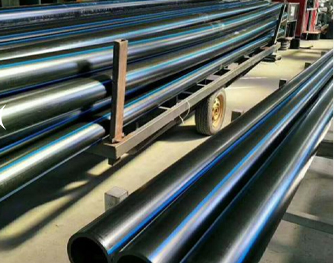
High-Density Polyethylene (HDPE) pipes represent a significant advancement in fluid transfer infrastructure, serving diverse sectors including water distribution, gas transmission, industrial processing, and wastewater management. Positioned as a durable and cost-effective alternative to traditional metallic piping systems, HDPE pipes are characterized by their corrosion resistance, flexibility, and longevity. Their technical positioning within the industry chain involves a progression from raw polyethylene resin production – typically derived from petroleum or natural gas – through extrusion, butt fusion or electrofusion joining, and finally, installation and commissioning within the end-user's network. Core performance characteristics are defined by pressure rating (PN), material density, hydrostatic design stress (HDS), and adherence to relevant industry standards governing dimensional tolerances and material properties. The increasing demand for sustainable and reliable infrastructure solutions is driving continued adoption of HDPE pipe systems globally.
Material Science & Manufacturing
HDPE pipe production relies on high-density polyethylene resin, exhibiting a density of at least 0.941 g/cm³. This density directly correlates with increased tensile strength and improved resistance to environmental stress cracking (ESCR). The raw material's molecular weight distribution is critically controlled to ensure consistent melt flow characteristics during extrusion. Manufacturing predominantly utilizes extrusion processes: spiral winding, and film winding. Spiral winding creates a continuous helix of HDPE strip, continuously heat-welded to form the pipe body. Film winding involves wrapping layers of HDPE film around a mandrel, followed by heating and compaction. Key parameters requiring strict control include die temperature (180-220°C), extrusion pressure (20-40 MPa), cooling rate, and material melt flow index (MFI). The pipe's performance is significantly influenced by the uniformity of the wall thickness, the degree of crystallinity within the HDPE matrix, and the absence of voids or imperfections. Post-extrusion processes, such as annealing, are employed to relieve residual stresses and enhance dimensional stability. Chemical compatibility is paramount; HDPE exhibits excellent resistance to many acids and alkalis, but prolonged exposure to strong oxidizing agents should be avoided.
Performance & Engineering
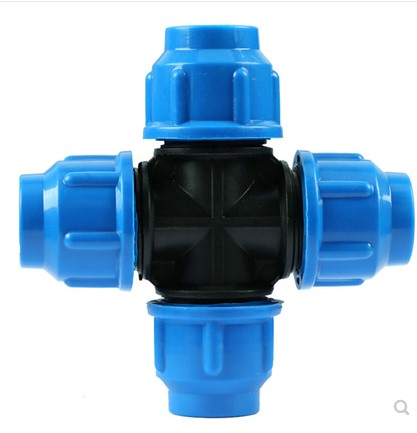
The performance of HDPE pipes is intrinsically linked to their ability to withstand internal pressure and external loads. Force analysis reveals that hoop stress (σh) is the primary stress component resulting from internal pressure (P) and pipe radius (r): σh = (P r) / t, where t is the pipe wall thickness. Therefore, maintaining consistent wall thickness is crucial. HDPE's ductility allows it to undergo significant deformation before failure, providing a degree of safety. Environmental resistance is a key factor; HDPE exhibits excellent UV resistance when stabilized with carbon black, preventing degradation from sunlight exposure. However, prolonged exposure to temperatures exceeding 60°C can reduce its long-term hydrostatic strength. Compliance requirements are dictated by standards such as ASTM D3261 and ISO 4427, which specify hydrostatic design basis (HDB) and minimum required strength (MRS) values. Functional implementation often involves the use of butt fusion or electrofusion welding to create leak-proof joints. Proper welding procedure, including surface preparation, heating temperature, and fusion time, is critical to achieving joint strength equivalent to the base pipe material. Long-term creep resistance is another crucial engineering consideration, particularly for applications involving sustained pressure.
Technical Specifications
| Parameter | Unit | Typical Value (PN10) | Typical Value (PN16) |
|---|---|---|---|
| Pressure Rating (PN) | bar | 10 | 16 |
| Hydrostatic Design Stress (HDS) | MPa | 8.0 | 12.5 |
| Minimum Required Strength (MRS) | MPa | 5.0 | 8.0 |
| Density | g/cm³ | 0.953 - 0.965 | 0.953 - 0.965 |
| Maximum Operating Temperature | °C | 60 | 60 |
| Long-Term Hydrostatic Strength (50 years) | % of HDS | 80 | 80 |
Failure Mode & Maintenance
HDPE pipes, while durable, are susceptible to certain failure modes. Slow Crack Growth (SCG) is a common issue, particularly in areas of high stress concentration or contamination. ESCR, initiated by contact with certain chemicals or detergents, can lead to crack propagation. Fatigue cracking can occur due to cyclic pressure fluctuations or vibrations. Joint failures are frequently attributed to improper welding techniques, inadequate surface preparation, or material incompatibility. Oxidation, although slow, can degrade the HDPE matrix over extended periods, especially at elevated temperatures. Maintenance should involve regular visual inspections for cracks, leaks, or deformation. Pressure testing, conducted periodically, verifies the integrity of the pipeline. Prompt repair of any identified defects is essential to prevent catastrophic failure. For SCG or ESCR, replacement of the affected pipe section is typically recommended. Joint repairs may involve re-welding (after thorough cleaning and preparation) or the use of mechanical couplings. Prevention strategies include proper material selection, adherence to welding procedures, and the implementation of cathodic protection in corrosive environments.
Industry FAQ
Q: What is the impact of soil corrosivity on the long-term performance of HDPE pipes?
A: Unlike metallic pipes, HDPE is inherently resistant to corrosion. However, highly corrosive soils can accelerate degradation of surrounding materials and potentially compromise the pipe's bedding support. Furthermore, galvanic corrosion of any metallic fittings or connections used in conjunction with HDPE pipes remains a concern. Regular monitoring of soil conditions and implementation of appropriate bedding materials are recommended to mitigate these risks.
Q: How does temperature affect the allowable operating pressure of an HDPE pipeline?
A: Higher operating temperatures reduce the long-term hydrostatic strength of HDPE. Standards like ISO 4427 and ASTM D3261 provide derating factors to adjust the allowable operating pressure based on the fluid temperature. Exceeding the maximum operating temperature (typically 60°C) significantly compromises the pipe’s structural integrity.
Q: What welding techniques are preferred for joining HDPE pipes, and what quality control measures are essential?
A: Butt fusion and electrofusion welding are the predominant methods. Butt fusion is suitable for larger diameter pipes, while electrofusion is favored for smaller diameters and complex fittings. Essential quality control measures include visual inspection of the weld bead, destructive testing of weld samples (tensile and bend tests), and non-destructive testing (radiography or ultrasonic testing) to detect internal defects. Proper operator training and adherence to established welding procedures are paramount.
Q: What is the recommended minimum cover depth for buried HDPE pipes to protect against mechanical damage?
A: The minimum cover depth depends on factors such as traffic loading, soil type, and pipe diameter. Generally, a minimum cover of 600mm (24 inches) is recommended for pipes located in areas subject to vehicular traffic. For pipes located in areas with minimal traffic, a minimum cover of 300mm (12 inches) may be sufficient. Protecting the pipe with warning tape or concrete slabs further enhances its protection.
Q: How do HDPE pipes compare to PVC pipes in terms of long-term durability and environmental impact?
A: HDPE generally exhibits superior impact resistance, flexibility, and long-term durability compared to PVC. HDPE also boasts better resistance to chemicals and is less prone to brittle fracture at low temperatures. From an environmental perspective, HDPE is recyclable and does not contain phthalates or other harmful plasticizers commonly found in PVC. However, both materials have their respective applications and cost considerations.
Conclusion
HDPE pipes represent a robust and versatile solution for a wide array of fluid transfer applications. Their inherent corrosion resistance, coupled with their flexibility and relatively low cost, make them an attractive alternative to traditional materials. Understanding the material science, manufacturing processes, and engineering principles governing their performance is essential for ensuring long-term reliability and safety.
Continued advancements in HDPE resin technology and welding techniques are expanding the scope of applications for these pipes. Adherence to relevant industry standards and rigorous quality control procedures are paramount to maximizing their lifespan and minimizing the risk of failure. The increasing focus on sustainable infrastructure will undoubtedly drive further adoption of HDPE pipe systems in the years to come.
-
DN25 HDPE Compression Fitting-HORON INTERNATIONAL|Reliable Irrigation Solutions
NewsFeb.11,2026
-
hdpe coupling joint product Manufacturing Analysis
News2026-11-18
-
ppr pipe heating time products Performance Analysis
News2026-11-16
-
hdpe pipe sizes factory Performance Analysis
News2026-11-09
-
HDPE Pipe Sizes Service Performance Analysis
News2026-10-26
-
wholesale 15mm ppr pipe Material Science and Performance Analysis
News2026-10-20
-
wholesale pvc pipe price per foot Technical Analysis
News2026-09-21
-
wholesale long pvc pipe Technical Analysis and Manufacturing Specifications
News2026-09-15
-
wholesale plumbing kitchen sink water lines Material Performance
News2026-09-15
-
wholesale hdpe drip irrigation Material Science
News2026-09-15
-
wholesale hot water ppr pipe Performance Analysis
News2026-09-15
-
wholesale ppr plumbing Performance Analysis
News2026-09-15
-
wholesale ppr pipe supplier Performance Analysis
News2026-09-13
-
wholesale 50mm ppr pipe Performance Analysis
News2026-09-13
-
wholesale hdpe drip pipe Performance Analysis
News2026-09-13
-
wholesale hdpe pipe 63mm price Manufacturing Specification and Performance Analysis
News2026-09-13