

Feb . 11, 2026 00:01 Back to list
hdpe pipe for water supply specifications service
Introduction
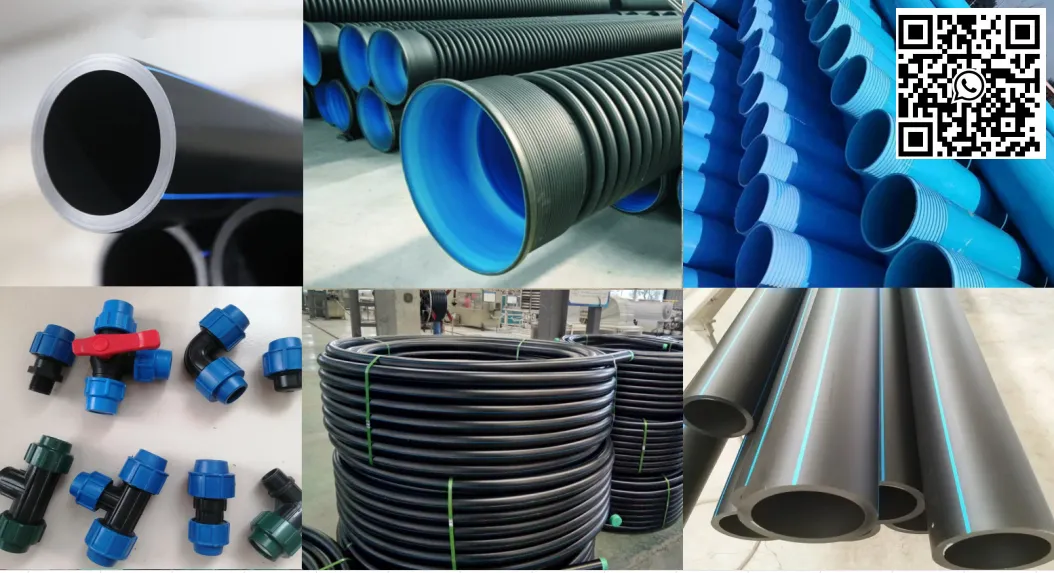
High-Density Polyethylene (HDPE) pipe has become a ubiquitous material in water supply applications globally. Its adoption is driven by a confluence of factors including cost-effectiveness, durability, and superior performance characteristics compared to traditional materials like ductile iron, PVC, and steel. HDPE pipe is a thermoplastic produced from the polymerization of ethylene. In the context of water supply, it serves as a conveyance system for potable water, irrigation, and industrial processes. This guide provides an in-depth analysis of HDPE pipe for water supply, detailing material science, manufacturing processes, performance parameters, failure modes, and relevant industry standards. A key industry pain point is ensuring long-term integrity and leak-free performance, particularly concerning pressure fluctuations, soil stress, and potential chemical interactions with transported fluids. Proper material selection, installation techniques, and ongoing maintenance are critical to address these concerns and maximize the service life of HDPE water supply systems.
Material Science & Manufacturing
HDPE pipe derives its properties from the characteristics of the polyethylene resin used in its production. High-density polyethylene boasts a highly linear polymer chain with minimal branching, resulting in a crystalline structure that imparts strength and rigidity. Raw materials typically include PE100, PE80, and PE63 resins, categorized by their minimum required strength (MRS) as per ISO 1167. Additives such as stabilizers, antioxidants, and carbon black are incorporated to enhance resistance to UV degradation and oxidative stress.
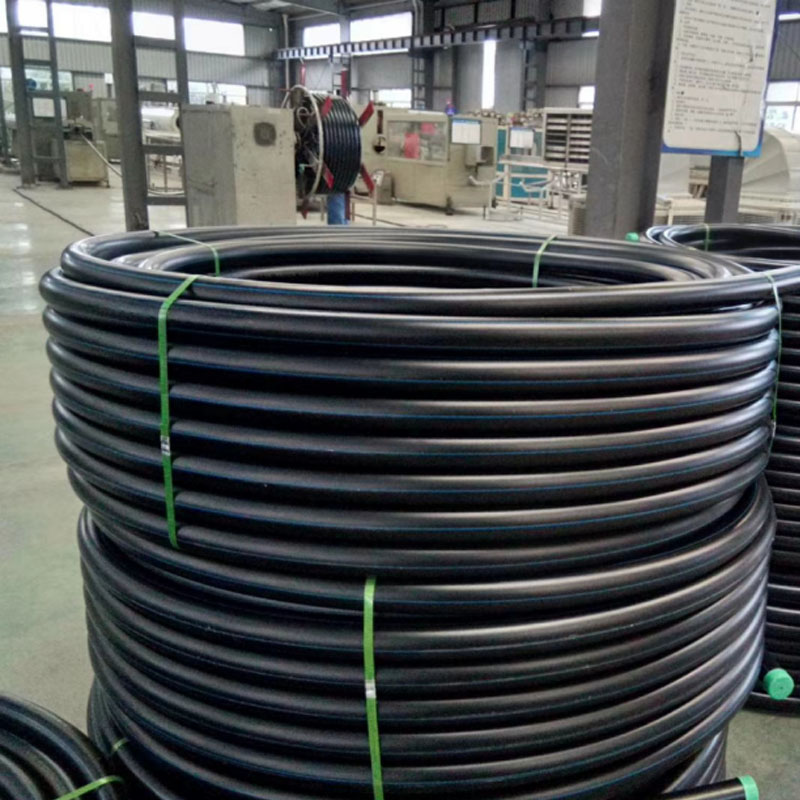
The primary manufacturing process for HDPE pipe is extrusion. This involves melting polyethylene pellets and forcing them through a die to form a continuous pipe. Key parameters requiring rigorous control include melt temperature (typically between 180-220°C), extrusion pressure, die geometry, and cooling rate. Cooling is typically achieved using water baths, and the pipe is subsequently resized and cut to specified lengths. For larger diameter pipes, a co-extrusion process may be employed to create a multi-layer structure, incorporating stripes for identification or enhanced protection. Jointing methods are crucial, with butt fusion being the most common for larger diameters, ensuring a homogenous weld providing strength comparable to the base material. Electrofusion welding, using electrically heated coils, is employed for smaller diameters or complex fittings. Poor parameter control during extrusion can lead to variations in wall thickness, residual stresses, and potential weaknesses at weld points.
Performance & Engineering
The performance of HDPE pipe in water supply applications hinges on its ability to withstand internal pressure, external loads, and environmental factors. Hydrostatic design stress (HDS) is a critical engineering parameter, calculated based on the pipe's MRS, safety factors, and design life. The HDS determines the maximum allowable internal pressure the pipe can sustain. External loads, including soil cover, traffic loads, and hydrostatic uplift, are assessed using established engineering principles, considering the pipe’s stiffness and embedment conditions.
HDPE's flexibility offers advantages in seismic zones and areas prone to ground movement, as it can accommodate deformation without fracturing. However, this flexibility necessitates proper anchoring and restraint systems to prevent buckling. Chemical resistance is another key performance attribute; HDPE is generally inert to most substances commonly found in potable water, but prolonged exposure to strong oxidants or solvents should be avoided. Compliance requirements vary by region, but generally adhere to standards set by organizations such as NSF International (for potable water safety) and AWWA (American Water Works Association) for overall system performance. Creep, the time-dependent deformation under sustained stress, is a consideration for long-term performance, particularly at elevated temperatures. Proper selection of pipe grade (PE100 exhibiting superior creep resistance) and limiting operating temperatures are crucial mitigation strategies.
Technical Specifications
| Parameter | Unit | PE80 | PE100 |
|---|---|---|---|
| Minimum Required Strength (MRS) | MPa | 8.0 | 10.0 |
| Hydrostatic Design Stress (HDS) (50-year design life) | MPa | 6.3 | 7.5 |
| Density | kg/m³ | 950-965 | 950-965 |
| Operating Temperature Range | °C | -40 to +60 | -40 to +60 |
| Diameter Range | mm | 20 - 1800 | 20 - 3000 |
| Wall Thickness | mm | Variable, based on pressure rating and diameter | Variable, based on pressure rating and diameter |
Failure Mode & Maintenance
HDPE pipe, while durable, is susceptible to several failure modes. Slow Crack Growth (SCG) is a primary concern, induced by sustained tensile stress in the presence of aggressive chemicals or notches. This leads to brittle fracture over time. Another failure mode is Rapid Crack Propagation (RCP), a catastrophic failure initiated by a sharp crack that propagates rapidly under pressure. UV degradation, although mitigated by carbon black additives, can still occur in exposed sections. Joint failures, particularly at butt fusion welds, can arise from improper welding procedures (insufficient heating time, inadequate pressure) or contamination.
Maintenance practices should include regular visual inspections for cracks, deformation, or signs of UV degradation. Pressure testing can identify leaks and potential weak points. For butt fusion welds, non-destructive testing (NDT) methods like ultrasonic testing can assess weld integrity. In areas prone to soil movement, regular checks of anchoring systems are essential. Should SCG or RCP be suspected, a thorough investigation is required, including material analysis and stress evaluation. Repair options range from localized patching to complete pipe replacement, depending on the severity and extent of the damage. Preventative maintenance, including proper backfill compaction and protection from external loads, significantly extends the service life of HDPE water supply systems.
Industry FAQ
Q: What is the impact of surge pressure on HDPE pipe systems?
A: Surge pressure, or water hammer, can induce significant stress on HDPE pipe, potentially leading to cracks or joint failures. Proper surge protection measures, such as surge relief valves and slow-closing valves, are crucial to mitigate these effects. The pipe’s ability to absorb surge pressure also depends on its diameter, wall thickness, and burial depth. A thorough hydraulic transient analysis should be performed during system design.
Q: How does soil corrosivity affect HDPE pipe longevity?
A: While HDPE is chemically inert, highly corrosive soils can impact the surrounding environment and potentially compromise supporting structures or cathodic protection systems (if utilized). The pipe itself is unaffected, but the integrity of associated components may be compromised. Soil testing is recommended to assess corrosivity levels and implement appropriate protective measures.
Q: What are the best practices for backfilling around HDPE pipes?
A: Proper backfilling is critical to prevent pipe deformation and ensure long-term stability. Compaction should be performed in layers, using appropriate compaction equipment to achieve the specified density without over-compaction. Granular bedding materials are preferred to provide uniform support and distribute loads evenly. Avoid using rocks or sharp objects that could damage the pipe.
Q: How does the PE100 grade compare to PE80 in terms of long-term performance?
A: PE100 offers significantly improved creep resistance and a higher MRS compared to PE80. This translates to a longer design life and the ability to withstand higher internal pressures over time. While PE80 remains suitable for lower-pressure applications, PE100 is generally preferred for larger diameter pipes and more demanding operating conditions.
Q: What certifications are essential for HDPE pipe used in potable water systems?
A: NSF International certification is paramount to ensure the pipe materials are safe for contact with potable water and meet stringent health standards. AWWA standards (specifically AWWA C906) provide guidelines for the design, materials, and installation of HDPE pipe for water distribution. Certification from reputable third-party organizations demonstrates compliance with industry best practices.
Conclusion
HDPE pipe represents a robust and reliable solution for water supply infrastructure, offering a compelling combination of durability, cost-effectiveness, and installation ease. Understanding the nuances of material science, manufacturing processes, and performance characteristics is paramount to ensure long-term integrity and minimize the risk of failure. Proper design, installation, and maintenance practices, coupled with adherence to relevant industry standards, are essential to maximize the service life and realize the full potential of HDPE water supply systems.
Future advancements in HDPE technology may focus on enhancing creep resistance, improving weldability, and developing more sustainable manufacturing processes. Continued research and development, alongside rigorous quality control measures, will further solidify HDPE's position as a leading material in the water supply industry, addressing evolving challenges and meeting the demands of a growing global population.
-
DN25 HDPE Compression Fitting-HORON INTERNATIONAL|Reliable Irrigation Solutions
NewsFeb.11,2026
-
hdpe coupling joint product Manufacturing Analysis
News2026-11-18
-
ppr pipe heating time products Performance Analysis
News2026-11-16
-
hdpe pipe sizes factory Performance Analysis
News2026-11-09
-
HDPE Pipe Sizes Service Performance Analysis
News2026-10-26
-
wholesale 15mm ppr pipe Material Science and Performance Analysis
News2026-10-20
-
wholesale pvc pipe price per foot Technical Analysis
News2026-09-21
-
wholesale long pvc pipe Technical Analysis and Manufacturing Specifications
News2026-09-15
-
wholesale plumbing kitchen sink water lines Material Performance
News2026-09-15
-
wholesale hdpe drip irrigation Material Science
News2026-09-15
-
wholesale hot water ppr pipe Performance Analysis
News2026-09-15
-
wholesale ppr plumbing Performance Analysis
News2026-09-15
-
wholesale ppr pipe supplier Performance Analysis
News2026-09-13
-
wholesale 50mm ppr pipe Performance Analysis
News2026-09-13
-
wholesale hdpe drip pipe Performance Analysis
News2026-09-13
-
wholesale hdpe pipe 63mm price Manufacturing Specification and Performance Analysis
News2026-09-13