

Feb . 11, 2026 00:01 Back to list
hdpe pipe for water supply specifications products Performance Engineering
Introduction
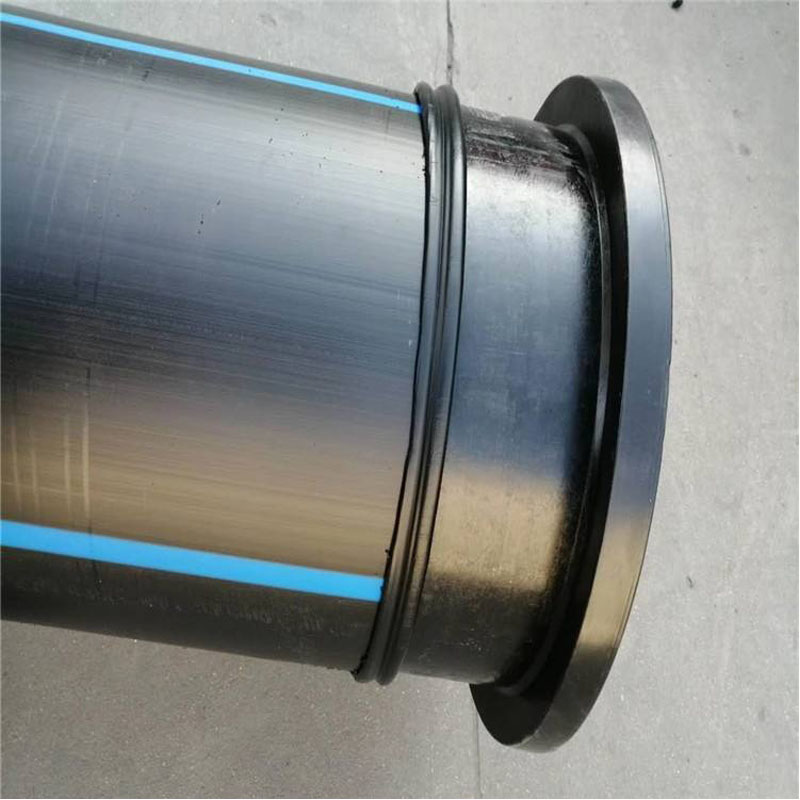
High-Density Polyethylene (HDPE) pipe has become a dominant material in water supply systems globally, representing a significant advancement over traditional materials like cast iron, ductile iron, and PVC. Its position in the industry chain is critical, acting as the final delivery mechanism for potable water from treatment facilities to consumers. HDPE’s core performance characteristics – including its corrosion resistance, lightweight nature, flexibility, and long service life – address longstanding pain points within the water infrastructure sector. Specifically, it minimizes leakage due to its heat-fused joints, reducing non-revenue water and associated costs. Its flexibility allows for trenchless installation techniques, minimizing disruption to urban environments and lowering installation expenses. Furthermore, HDPE’s inherent resistance to many chemicals commonly found in water treatment processes ensures water quality is maintained throughout the distribution network. This guide details the material science, manufacturing, performance engineering, and maintenance considerations for HDPE pipe utilized in water supply applications, alongside relevant industry standards.
Material Science & Manufacturing
HDPE is a thermoplastic polymer produced from the polymerization of ethylene. Its primary raw material, ethylene, is typically derived from the cracking of ethane or naphtha. The properties of HDPE are dictated by its molecular weight distribution, density, and degree of branching. For water supply applications, HDPE pipe typically utilizes resins with a density ranging from 0.93 to 0.97 g/cm³. Higher density correlates with improved tensile strength and creep resistance. Key physical properties include a tensile strength ranging from 20 to 35 MPa, a flexural modulus of 800-1200 MPa, and a relatively low coefficient of friction.
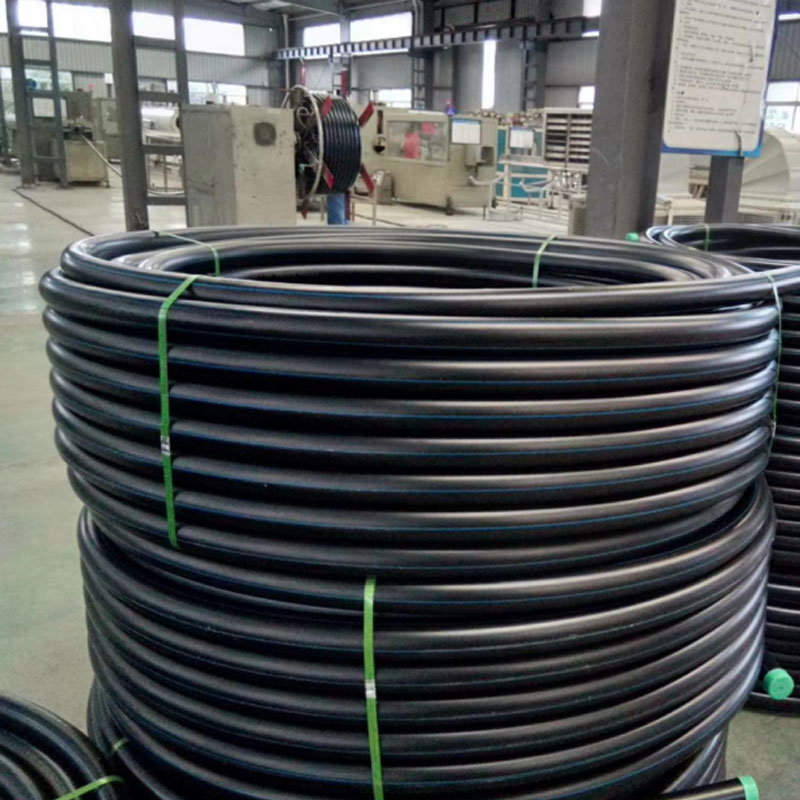
Manufacturing HDPE pipe primarily involves extrusion. The process begins with HDPE resin pellets being fed into a hopper and conveyed into an extruder. The extruder utilizes a rotating screw to melt and homogenize the resin. The molten HDPE is then forced through a die, forming a continuous pipe profile. Critical parameters during extrusion include barrel temperature control (typically ranging from 180-220°C), screw speed, and die pressure. Maintaining precise temperature control is crucial to prevent degradation of the polymer and ensure consistent pipe dimensions. Cooling systems are then employed to solidify the extruded pipe. Once cooled, the pipe is marked with identification information (size, material, manufacturer, standard compliance) and cut to length. For larger diameter pipes, a spiral winding process may be used to reinforce the pipe wall. Further processing involves butt fusion or electrofusion jointing techniques for creating leak-proof connections, a critical aspect of water supply infrastructure. The quality of the fusion process is directly dependent on surface preparation, heating temperature, and pressure applied.
Performance & Engineering
The performance of HDPE pipe in water supply systems is dictated by its ability to withstand internal pressure, external loads, and environmental factors. Internal pressure resistance is determined by the pipe’s dimensions (diameter and wall thickness) and the material’s hydrostatic design stress (HDS). HDS, a critical parameter, is typically specified by standards organizations and represents the long-term allowable stress the pipe can withstand without failure. External loads, such as soil loading and traffic loads, require careful consideration during installation. HDPE’s flexibility allows it to deflect under load without cracking, but excessive deflection can lead to ovality and potential joint failure.
Creep rupture, the time-dependent failure of a material under sustained stress, is a key engineering concern for HDPE pipe. Factors influencing creep rupture include temperature, HDS, and the presence of any defects in the pipe wall. Environmental resistance is another important consideration. While HDPE is highly resistant to most chemicals found in water, prolonged exposure to ultraviolet (UV) radiation can cause degradation. Therefore, HDPE pipe intended for above-ground applications requires UV stabilization additives. Compliance requirements, dictated by national and international standards (detailed in the footer), specify minimum performance criteria for HDPE pipe used in potable water systems. These standards address material quality, dimensional accuracy, hydrostatic pressure testing, and joint integrity. Proper bedding and backfill procedures are also critical to ensure long-term performance and prevent damage during installation. Finite element analysis (FEA) is commonly used in the design and analysis of HDPE pipeline systems to optimize pipe selection and installation parameters.
Technical Specifications
| Parameter | Units | Typical Value (PE100) | Testing Standard |
|---|---|---|---|
| Hydrostatic Design Stress (HDS) | MPa | 12.5 | ISO 1167 |
| Tensile Strength at Yield | MPa | 35 | ASTM D638 |
| Elongation at Break | % | >350 | ASTM D638 |
| Flexural Modulus | MPa | 1000 | ASTM D790 |
| Impact Strength (Charpy) | kJ/m² | >10 | ISO 148-M |
| Density | g/cm³ | 0.955 | ISO 1183 |
Failure Mode & Maintenance
HDPE pipe, while durable, is susceptible to several failure modes. Slow Crack Growth (SCG) is a primary concern, particularly in systems subjected to sustained tensile stress and aggressive environments. SCG initiates from surface flaws or scratches and propagates slowly through the pipe wall, eventually leading to failure. Environmental Stress Cracking (ESC) is similar to SCG but is exacerbated by the presence of certain chemicals. Fatigue cracking can occur in areas subjected to cyclic loading, such as near joints or where the pipe is restrained. Oxidation can degrade the pipe material over time, especially at elevated temperatures. Joint failures are also common, often resulting from improper fusion techniques or inadequate surface preparation. Delamination can occur if layers within the pipe wall separate.
Preventive maintenance is crucial for extending the service life of HDPE pipelines. Regular inspections should be conducted to identify any signs of damage, such as cracks, scratches, or deformation. Pressure testing can help detect leaks. Proper bedding and backfill are essential to protect the pipe from external loads. For minor scratches or abrasions, appropriate repair compounds can be used. In cases of significant damage, pipe sections should be replaced using compatible fusion techniques. Joints should be periodically inspected to ensure their integrity. Maintaining a cathodic protection system (where applicable) can mitigate corrosion risks. Detailed records of inspections, repairs, and maintenance activities should be maintained to track the condition of the pipeline and identify any recurring problems. Regular flushing of the pipeline can remove sediment and debris, preventing blockages and maintaining water quality.
Industry FAQ
Q: What is the impact of water hammer on HDPE pipe systems, and how can it be mitigated?
A: Water hammer, a pressure surge caused by sudden changes in flow velocity, can induce significant stress on HDPE pipe walls and joints. This can lead to cracks, leaks, or even catastrophic failure. Mitigation strategies include the use of surge protection devices (e.g., air valves, surge tanks), slow-closing valves, and proper pipeline design to minimize flow velocity changes. Careful consideration of pipe support and anchoring is also crucial.
Q: How does the long-term creep behavior of HDPE affect its suitability for high-pressure water supply applications?
A: Long-term creep is a critical factor. While HDPE has a good initial strength, it experiences time-dependent deformation under sustained stress. This is addressed through careful selection of the HDS based on the anticipated operating temperature and design life. Standards like ISO 1167 provide guidance on determining appropriate HDS values. Regular monitoring of pipe strain and deflection can also help detect potential creep issues.
Q: What are the key differences between PE80, PE100, and other HDPE resin grades, and how do they impact pipe performance?
A: The number following “PE” indicates the minimum required long-term hydrostatic strength (MRS). PE80 has an MRS of 8 MPa, while PE100 has an MRS of 10 MPa. PE100 offers superior creep resistance and durability, making it the preferred choice for high-pressure water supply applications. Lower grades, like PE80, are suitable for lower-pressure applications.
Q: What are the recommended procedures for joining HDPE pipes to dissimilar materials, such as ductile iron?
A: Joining HDPE to dissimilar materials requires specialized transition fittings and techniques. Flanged connections are commonly used, employing appropriate gaskets and bolting materials to ensure a watertight seal. Electrofusion welding can also be used with compatible transition fittings. Careful attention must be paid to thermal expansion differences between the two materials.
Q: What is the role of UV stabilizers in HDPE pipe used for above-ground applications, and how effective are they?
A: UV stabilizers are additives incorporated into the HDPE resin to protect it from degradation caused by ultraviolet radiation. UV exposure can cause chain scission and embrittlement, reducing the pipe’s mechanical properties. Effective UV stabilizers significantly extend the service life of HDPE pipe in above-ground applications, but their effectiveness diminishes over time. The concentration and type of UV stabilizer are critical factors.
Conclusion
HDPE pipe represents a robust and reliable solution for water supply infrastructure, offering significant advantages over traditional materials in terms of corrosion resistance, flexibility, and installation efficiency. Its performance, however, is highly dependent on careful material selection, proper manufacturing processes, and adherence to industry standards. Understanding the material’s limitations, particularly concerning creep rupture and environmental stress cracking, is crucial for ensuring long-term system integrity.
Continued advancements in HDPE resin technology, coupled with improved installation techniques and monitoring systems, will further enhance the reliability and sustainability of HDPE water supply pipelines. Proactive maintenance programs, informed by a comprehensive understanding of potential failure modes, are essential for maximizing the service life and minimizing the lifecycle costs of these critical infrastructure assets. The future of water distribution relies on durable, resilient materials, and HDPE continues to play a central role in meeting that demand.
-
DN25 HDPE Compression Fitting-HORON INTERNATIONAL|Reliable Irrigation Solutions
NewsFeb.11,2026
-
hdpe coupling joint product Manufacturing Analysis
News2026-11-18
-
ppr pipe heating time products Performance Analysis
News2026-11-16
-
hdpe pipe sizes factory Performance Analysis
News2026-11-09
-
HDPE Pipe Sizes Service Performance Analysis
News2026-10-26
-
wholesale 15mm ppr pipe Material Science and Performance Analysis
News2026-10-20
-
wholesale pvc pipe price per foot Technical Analysis
News2026-09-21
-
wholesale long pvc pipe Technical Analysis and Manufacturing Specifications
News2026-09-15
-
wholesale plumbing kitchen sink water lines Material Performance
News2026-09-15
-
wholesale hdpe drip irrigation Material Science
News2026-09-15
-
wholesale hot water ppr pipe Performance Analysis
News2026-09-15
-
wholesale ppr plumbing Performance Analysis
News2026-09-15
-
wholesale ppr pipe supplier Performance Analysis
News2026-09-13
-
wholesale 50mm ppr pipe Performance Analysis
News2026-09-13
-
wholesale hdpe drip pipe Performance Analysis
News2026-09-13
-
wholesale hdpe pipe 63mm price Manufacturing Specification and Performance Analysis
News2026-09-13