

Feb . 11, 2026 00:01 Back to list
hdpe pipe for water supply specifications factory Performance Analysis
Introduction
High-Density Polyethylene (HDPE) pipe has become a cornerstone material in modern water supply systems. Its inherent properties, combined with cost-effectiveness and ease of installation, have positioned it as a preferred alternative to traditional materials like ductile iron, steel, and PVC. This technical guide provides a comprehensive overview of HDPE pipe for water supply applications, encompassing material science, manufacturing processes, performance characteristics, failure modes, and relevant industry standards. Specifically, we will focus on the requirements for factory-produced HDPE pipe intended for potable water distribution, addressing common concerns surrounding long-term durability, chemical resistance, and compliance with regulatory guidelines. The rising demand for sustainable infrastructure and the need to minimize water loss due to leakage drive the adoption of HDPE, requiring thorough understanding of its capabilities and limitations. This document is geared towards engineers, procurement managers, and quality control personnel involved in the selection, specification, and implementation of HDPE pipe systems.
Material Science & Manufacturing
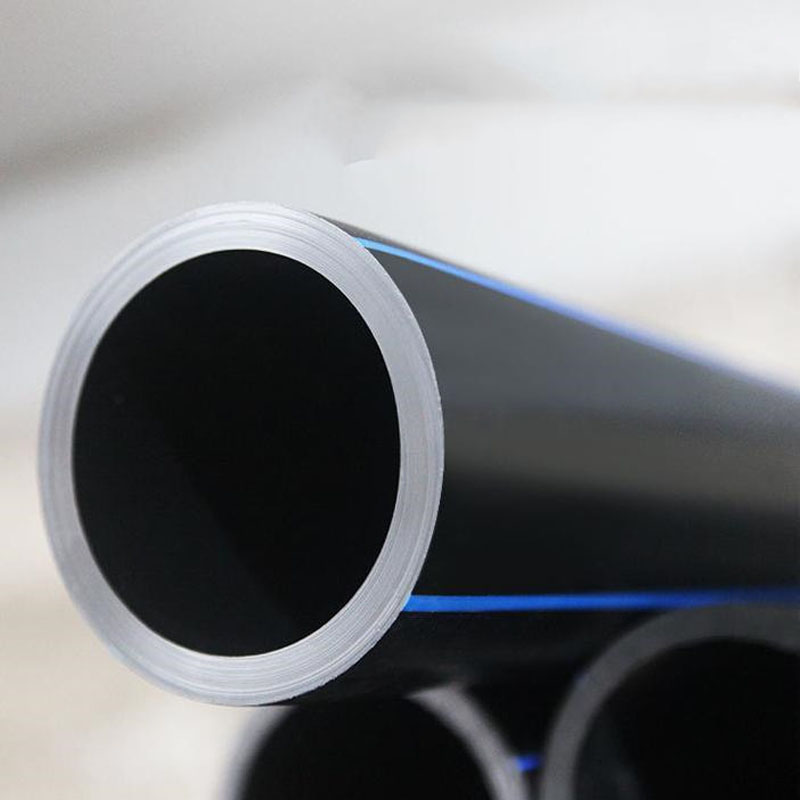
HDPE pipe is manufactured from a thermoplastic polymer derived from the polymerization of ethylene. The ‘high-density’ designation refers to the polymer’s density, typically ranging from 0.93 to 0.97 g/cm³, which correlates with increased crystallinity and improved mechanical properties. Raw material selection is crucial; HDPE grades specifically designed for pressure pipe applications, designated PE 100, are most commonly utilized due to their superior slow crack growth resistance (SCGR) and long-term hydrostatic strength (LTHS). The manufacturing process predominantly employs extrusion. Ethylene resin pellets are fed into an extruder, where they are heated, melted, and forced through a die to form a continuous pipe profile. Key parameters during extrusion include temperature control across multiple zones, screw speed, and die geometry. Precise temperature regulation is essential to prevent polymer degradation and ensure consistent melt viscosity. The cooling process, typically involving water baths, is equally critical to maintain dimensional stability and prevent warping. Pipe diameter and wall thickness are precisely controlled by adjusting the die and extrusion speed. Post-extrusion, pipes undergo quality control checks, including hydrostatic testing to verify pressure integrity, dimensional measurements, and visual inspection for defects. The addition of carbon black is common to provide UV protection, although specialized HDPE compounds with enhanced UV resistance are also available. Molecular weight distribution (MWD) of the PE resin significantly influences processing characteristics and the final pipe’s performance.
Performance & Engineering
The performance of HDPE pipe in water supply applications is governed by several key engineering considerations. Hydrostatic strength, defined as the ability to withstand internal pressure, is a primary design parameter. This is influenced by pipe dimensions (diameter and wall thickness) and the material’s LTHS, determined through long-term creep rupture testing. HDPE exhibits excellent resistance to corrosion and scaling, eliminating the need for cathodic protection commonly required for metallic pipes. However, it is susceptible to slow crack growth (SCGR), particularly in the presence of sustained tensile stresses and aggressive chemicals. Therefore, careful consideration must be given to stress concentration points, such as fittings and joints, and the selection of compatible materials. Jointing methods commonly include butt fusion, socket fusion, and electrofusion. Butt fusion is preferred for larger diameter pipes, providing a homogeneous weld with strength comparable to the base material. Thermal expansion and contraction are significant factors. HDPE has a coefficient of thermal expansion approximately ten times higher than steel, necessitating the incorporation of expansion loops or bends in long pipeline runs to accommodate temperature fluctuations and prevent stress buildup. Soil loading and external pressures must also be accounted for in the design, particularly for buried pipelines. Finite Element Analysis (FEA) is frequently employed to model the stress distribution within the pipe and surrounding soil, ensuring adequate structural integrity. The pipe's flexibility allows it to adapt to ground movements and seismic activity, reducing the risk of catastrophic failure.
Technical Specifications
| Parameter | Unit | PE 100 (Typical) | ASTM/ISO Reference |
|---|---|---|---|
| Hydrostatic Design Stress (HDS) | MPa | 12.5 - 16.0 | ASTM D3261 / ISO 1167 |
| Slow Crack Growth Resistance (SCGR) | Hours | >1000 | ASTM D3261 / ISO 1167 |
| Tensile Strength at Yield | MPa | >35 | ASTM D638 / ISO 527 |
| Elongation at Break | % | >350 | ASTM D638 / ISO 527 |
| Density | g/cm³ | 0.93 – 0.97 | ASTM D1505 / ISO 1183 |
| Water Absorption | % (24hr) | <0.5 | ASTM D570 / ISO 62 |
Failure Mode & Maintenance
HDPE pipe, while durable, is susceptible to specific failure modes. Slow Crack Growth (SCGR) is a prevalent concern, initiated by sustained tensile stresses, particularly around stress concentrators like fittings or areas with gouges/scratches. Environmental Stress Cracking (ESC) can occur due to exposure to aggressive chemicals or detergents. Oxidation, while less common due to the inherent stability of HDPE, can occur over extended periods, especially at elevated temperatures. Fatigue cracking can develop under cyclic pressure or mechanical loading. Joint failures are also possible, primarily due to improper fusion techniques or contamination during welding. Regular inspection is crucial for proactive maintenance. Visual inspections should focus on identifying any cracks, deformation, or discoloration. Pressure testing can be conducted to detect leaks. For buried pipelines, ground penetrating radar (GPR) can be used to locate pipes and assess their condition. If SCGR is suspected, detailed crack analysis should be performed to determine the root cause and implement appropriate remediation measures. Preventative maintenance includes ensuring proper backfill compaction to minimize external stresses and avoiding the use of incompatible chemicals in the water supply. Repair techniques include cut-and-replace sections or the use of specialized repair couplings. Maintaining accurate records of pipe installation, jointing procedures, and inspection results is essential for long-term asset management.
Industry FAQ
Q: What is the impact of UV exposure on HDPE pipe, and what mitigation strategies are recommended?
A: Prolonged UV exposure can cause degradation of HDPE, leading to embrittlement and reduced mechanical properties. While carbon black additives provide some UV protection, they are not always sufficient for long-term exposure. Mitigation strategies include using HDPE compounds with enhanced UV stabilizers, burying the pipe, painting the pipe with a UV-resistant coating, or utilizing opaque pipe materials.
Q: How does the presence of chlorine in potable water affect the long-term performance of HDPE pipe?
A: Chlorine, at typical concentrations used in potable water treatment, generally has minimal impact on HDPE pipe. However, high chlorine concentrations or prolonged exposure to chlorinated water can accelerate oxidative degradation. Utilizing PE 100 materials with enhanced resistance to oxidative degradation is recommended in such environments.
Q: What are the key considerations for selecting the appropriate jointing method (butt fusion, socket fusion, electrofusion) for a specific application?
A: Butt fusion is generally preferred for larger diameter pipes due to its superior strength and consistency. Socket fusion is suitable for smaller diameter pipes and is less demanding in terms of operator skill. Electrofusion offers precise control and is often used for complex geometries or critical joints. The choice depends on pipe size, application requirements, and available resources.
Q: What are the implications of improper backfill compaction on the performance of buried HDPE pipe?
A: Improper backfill compaction can lead to uneven support, excessive stress concentrations, and potential pipe deformation. Insufficient compaction can also allow for settlement, creating voids that can compromise the pipe’s integrity. Proper compaction, following established geotechnical guidelines, is crucial for ensuring long-term stability.
Q: What testing procedures are commonly employed to verify the quality and performance of HDPE pipe before installation?
A: Common testing procedures include hydrostatic testing (ASTM D1610 / ISO 1167) to verify pressure integrity, dimensional measurements (ASTM D2412 / ISO 1055) to ensure compliance with specifications, and impact resistance testing (ASTM D2444 / ISO 14805). Material property testing, such as tensile strength and elongation (ASTM D638 / ISO 527), is also performed to verify the resin characteristics.
Conclusion
HDPE pipe represents a significant advancement in water supply infrastructure, offering a compelling combination of durability, corrosion resistance, and cost-effectiveness. However, successful implementation necessitates a thorough understanding of its material properties, manufacturing processes, and potential failure modes. Proper design, installation, and maintenance are crucial for maximizing the lifespan and reliability of HDPE pipe systems. The selection of appropriate materials (specifically PE 100), meticulous jointing techniques, and proactive inspection protocols are paramount to mitigating risks associated with SCGR and other degradation mechanisms.
Looking ahead, advancements in HDPE resin technology, such as the development of enhanced UV stabilizers and improved SCGR performance, will further expand the applications of this versatile material. The integration of smart monitoring technologies, enabling real-time assessment of pipe integrity, will also play an increasingly important role in optimizing asset management and minimizing water loss. Continued adherence to industry standards and best practices will be essential for ensuring the long-term sustainability and resilience of water supply infrastructure reliant on HDPE pipe.
-
DN25 HDPE Compression Fitting-HORON INTERNATIONAL|Reliable Irrigation Solutions
NewsFeb.11,2026
-
hdpe coupling joint product Manufacturing Analysis
News2026-11-18
-
ppr pipe heating time products Performance Analysis
News2026-11-16
-
hdpe pipe sizes factory Performance Analysis
News2026-11-09
-
HDPE Pipe Sizes Service Performance Analysis
News2026-10-26
-
wholesale 15mm ppr pipe Material Science and Performance Analysis
News2026-10-20
-
wholesale pvc pipe price per foot Technical Analysis
News2026-09-21
-
wholesale long pvc pipe Technical Analysis and Manufacturing Specifications
News2026-09-15
-
wholesale plumbing kitchen sink water lines Material Performance
News2026-09-15
-
wholesale hdpe drip irrigation Material Science
News2026-09-15
-
wholesale hot water ppr pipe Performance Analysis
News2026-09-15
-
wholesale ppr plumbing Performance Analysis
News2026-09-15
-
wholesale ppr pipe supplier Performance Analysis
News2026-09-13
-
wholesale 50mm ppr pipe Performance Analysis
News2026-09-13
-
wholesale hdpe drip pipe Performance Analysis
News2026-09-13
-
wholesale hdpe pipe 63mm price Manufacturing Specification and Performance Analysis
News2026-09-13