

Feb . 11, 2026 00:01 Back to list
hdpe pipe for sale service Performance Analysis
Introduction
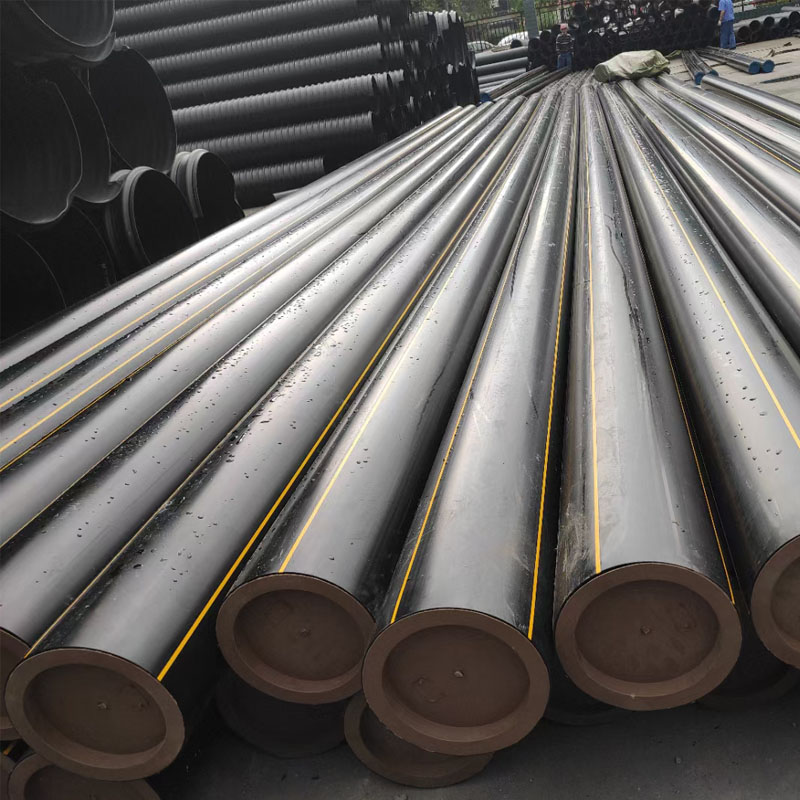
High-Density Polyethylene (HDPE) pipe represents a significant advancement in fluid transfer infrastructure, serving diverse applications from municipal water distribution and irrigation to industrial chemical conveyance and gas pipelines. Positioned within the broader polymer piping industry, HDPE offers a compelling alternative to traditional materials like ductile iron, steel, and PVC, primarily due to its superior chemical resistance, durability, and ease of installation. Its technical position centers on providing a long-lasting, low-maintenance, and cost-effective solution for pressurized and non-pressurized applications. Core performance characteristics include excellent flow capacity due to smooth internal surfaces, high tensile strength, and the ability to withstand significant ground movement without fracturing. The increasing demand for sustainable infrastructure and reduced lifecycle costs drives the growing adoption of HDPE pipe systems.
Material Science & Manufacturing
HDPE pipe is manufactured from high-density polyethylene, a thermoplastic polymer produced from the polymerization of ethylene. The raw material’s key physical properties are its semi-crystalline structure, leading to high tensile strength and resistance to cracking. Density typically ranges from 0.93 to 0.97 g/cm³. The manufacturing process typically involves extrusion. Polyethylene resin is melted and forced through a die, creating a continuous pipe profile. Parameter control is critical, focusing on melt temperature (typically 180-210°C), extrusion pressure, die geometry, and cooling rates. Butt fusion, socket fusion, electrofusion, and mechanical fitting methods are utilized for joining pipe sections. Butt fusion, the most common method for larger diameters, involves heating the pipe ends and pressing them together under controlled pressure to create a homogenous weld. Quality control throughout the process requires rigorous testing, including hydrostatic pressure testing, dimensional accuracy checks, and material analysis via Differential Scanning Calorimetry (DSC) to verify crystallinity and melt flow index. Chemical compatibility is also critical. While HDPE exhibits excellent resistance to most acids and bases, prolonged exposure to strong oxidizing agents and certain solvents should be avoided. The addition of carbon black is common to enhance UV resistance and protect the polymer from degradation.
Performance & Engineering
The performance of HDPE pipe is dictated by its ability to withstand internal pressure, external loads, and environmental stressors. Stress analysis, based on the Barlow formula (σ = PR/t, where σ is stress, P is pressure, R is radius, and t is wall thickness), is fundamental in determining the appropriate wall thickness for a given application and operating pressure. External loads, including soil loading and traffic loads, are addressed through pipe embedment and the pipe's inherent flexibility. HDPE’s high ductile-to-brittle transition temperature ensures it doesn’t become brittle and crack under stress, even at low temperatures. Environmental resistance is another crucial factor. While HDPE is inert to many chemicals, long-term exposure to UV radiation can cause degradation. Therefore, UV stabilizers are incorporated into the polymer formulation, and pipes are often buried or shielded from direct sunlight. Compliance with industry standards (detailed in the footer) is paramount. This includes pressure ratings, dimensional tolerances, and material specifications. Furthermore, the hydraulic performance is directly linked to the pipe's Hazen-Williams roughness coefficient (typically 140-150), minimizing friction losses and maximizing flow efficiency. Creep rupture, a time-dependent failure mode under sustained pressure, requires careful consideration in long-term applications, demanding appropriate safety factors in design calculations.
Technical Specifications
| Parameter | Unit | Specification (Typical) | Testing Standard |
|---|---|---|---|
| Material | - | High-Density Polyethylene (HDPE) | ASTM D3350 |
| Density | g/cm³ | 0.95 - 0.97 | ASTM D1505 |
| Pressure Rating (PN) | bar | PN6, PN10, PN16, PN20 | ISO 1167 |
| Operating Temperature | °C | -40 to +60 | ASTM D3350 |
| Hydrostatic Design Stress (HDS) | MPa | 8.0 - 12.5 (dependent on PE grade) | ASTM D3350 |
| Outside Diameter | mm | 20 - 630 | ISO 4427 |
Failure Mode & Maintenance
Several failure modes can affect HDPE pipe performance. Slow Crack Growth (SCG), induced by sustained stress and exposure to certain chemicals, is a prevalent concern, particularly in applications involving external loads or aggressive soil conditions. Environmental Stress Cracking (ESC) is similar but often initiated by surface defects. Fatigue cracking can occur under cyclical pressure fluctuations. UV degradation, despite stabilizers, can lead to surface embrittlement and reduced impact resistance over extended exposure. Oxidation, accelerated by high temperatures, causes polymer chain scission and loss of mechanical properties. Maintenance strategies focus on preventative measures. Proper installation techniques, including adequate bedding and backfill support, are crucial. Regular visual inspections for cracks, deformations, or discoloration are recommended. Joint integrity should be periodically assessed through non-destructive testing methods like ultrasonic testing. In the event of a leak, repairs can be performed using butt fusion welding or mechanical couplings. Properly storing HDPE pipe before installation – shielded from sunlight and extreme temperatures – is essential to prevent pre-installation degradation. For buried pipelines, corrosion protection of metallic fittings (if any) is vital to avoid galvanic corrosion.
Industry FAQ
Q: What are the key advantages of HDPE pipe over ductile iron for water distribution?
A: HDPE offers significantly lower weight, reducing installation costs and handling challenges. It is completely corrosion-resistant, eliminating the need for expensive coating systems and reducing maintenance. The smooth inner surface minimizes friction loss, improving hydraulic efficiency. HDPE’s flexibility allows for installation in areas with ground movement without fracturing, and its fusion joints create a leak-free system.
Q: How does temperature affect the performance of HDPE pipe?
A: While HDPE maintains its integrity at low temperatures, extremely cold temperatures can increase brittleness. High temperatures can lead to creep deformation under sustained pressure. The specified operating temperature range (-40 to +60°C) ensures optimal performance. Thermal expansion and contraction must be accounted for during installation, particularly in long pipeline runs.
Q: What is the expected service life of a properly installed HDPE pipe system?
A: A properly installed and maintained HDPE pipe system can have a service life exceeding 50 years, and in many cases, 100 years or more. This longevity is due to its inherent corrosion resistance and the integrity of fusion-welded joints. Factors influencing service life include operating pressure, temperature, chemical exposure, and soil conditions.
Q: How does HDPE pipe perform in seismic areas?
A: HDPE’s flexibility and inherent resistance to cracking make it an excellent choice for seismic areas. It can absorb ground movement and deformation without fracturing, reducing the risk of pipeline failure during earthquakes. The fusion-welded joints maintain their integrity even under significant stress.
Q: What are the environmental considerations associated with HDPE pipe?
A: HDPE is a recyclable material (resin code #2), promoting sustainability. Its lightweight nature reduces transportation energy consumption. The leak-free joints minimize water loss, conserving resources. HDPE does not leach harmful chemicals into the environment, ensuring water quality. However, proper disposal of HDPE scrap is essential to minimize environmental impact.
Conclusion
HDPE pipe represents a robust and reliable solution for a wide spectrum of fluid transfer applications. Its superior material properties, coupled with advancements in manufacturing and installation techniques, position it as a frontrunner in the evolution of piping infrastructure. Understanding the fundamental principles of material science, performance engineering, and potential failure modes is critical for ensuring long-term system integrity and minimizing lifecycle costs.
The continued development of HDPE formulations with enhanced UV resistance and creep rupture performance, alongside advancements in non-destructive testing methods, will further solidify its position as a sustainable and cost-effective alternative to traditional piping materials. A proactive approach to maintenance, coupled with adherence to relevant industry standards, is crucial for maximizing the lifespan and reliability of HDPE pipe systems.
-
DN25 HDPE Compression Fitting-HORON INTERNATIONAL|Reliable Irrigation Solutions
NewsFeb.11,2026
-
hdpe coupling joint product Manufacturing Analysis
News2026-11-18
-
ppr pipe heating time products Performance Analysis
News2026-11-16
-
hdpe pipe sizes factory Performance Analysis
News2026-11-09
-
HDPE Pipe Sizes Service Performance Analysis
News2026-10-26
-
wholesale 15mm ppr pipe Material Science and Performance Analysis
News2026-10-20
-
wholesale pvc pipe price per foot Technical Analysis
News2026-09-21
-
wholesale long pvc pipe Technical Analysis and Manufacturing Specifications
News2026-09-15
-
wholesale plumbing kitchen sink water lines Material Performance
News2026-09-15
-
wholesale hdpe drip irrigation Material Science
News2026-09-15
-
wholesale hot water ppr pipe Performance Analysis
News2026-09-15
-
wholesale ppr plumbing Performance Analysis
News2026-09-15
-
wholesale ppr pipe supplier Performance Analysis
News2026-09-13
-
wholesale 50mm ppr pipe Performance Analysis
News2026-09-13
-
wholesale hdpe drip pipe Performance Analysis
News2026-09-13
-
wholesale hdpe pipe 63mm price Manufacturing Specification and Performance Analysis
News2026-09-13