

Feb . 11, 2026 00:01 Back to list
hdpe pipe for sale product Performance Analysis

Introduction
High-Density Polyethylene (HDPE) pipe is a thermoplastic pipe manufactured from petroleum. Within the infrastructure industry chain, HDPE pipe occupies a critical position as a conduit for fluid and gas transport, replacing traditional materials like ductile iron, steel, and PVC in numerous applications. Its core performance characteristics – high strength-to-density ratio, corrosion resistance, flexibility, and lightweight nature – are driving its increasing adoption across sectors including water distribution, gas transmission, sewer systems, mining, and industrial applications. Unlike brittle materials, HDPE exhibits significant ductility, offering enhanced resistance to cracking and impact damage. This guide provides an in-depth technical overview of HDPE pipe, covering material science, manufacturing, performance, failure modes, and relevant industry standards.
Material Science & Manufacturing
HDPE pipe derives its properties from the polymerization of ethylene. The material itself is characterized by its semi-crystalline structure, imparting strength and rigidity. Raw material properties critical to HDPE pipe performance include molecular weight distribution, density (typically ranging from 0.93 to 0.97 g/cm³), and the degree of branching within the polymer chains. Higher density equates to increased strength and stiffness, but also reduced ductility. Manufacturing typically utilizes extrusion processes. Ethylene is heated and pressurized, then formed into a molten state which is forced through a die to create the pipe’s cylindrical shape. Key process parameters include die temperature, extrusion speed, and cooling rate. Improper control of these parameters can lead to inconsistencies in wall thickness, residual stress, and dimensional inaccuracies. Butt fusion, electrofusion, and mechanical fittings are commonly employed for joining HDPE pipe segments. Butt fusion involves heating the pipe ends and pressing them together under controlled pressure, creating a homogeneous weld. Electrofusion utilizes resistive heating within a fitting to melt the pipe and fitting material, creating a similar fusion bond. Quality control is paramount, encompassing hydrostatic pressure testing (to verify burst strength), dimensional checks (ensuring adherence to specified tolerances), and material property verification (via techniques like Differential Scanning Calorimetry – DSC – to assess crystallinity).
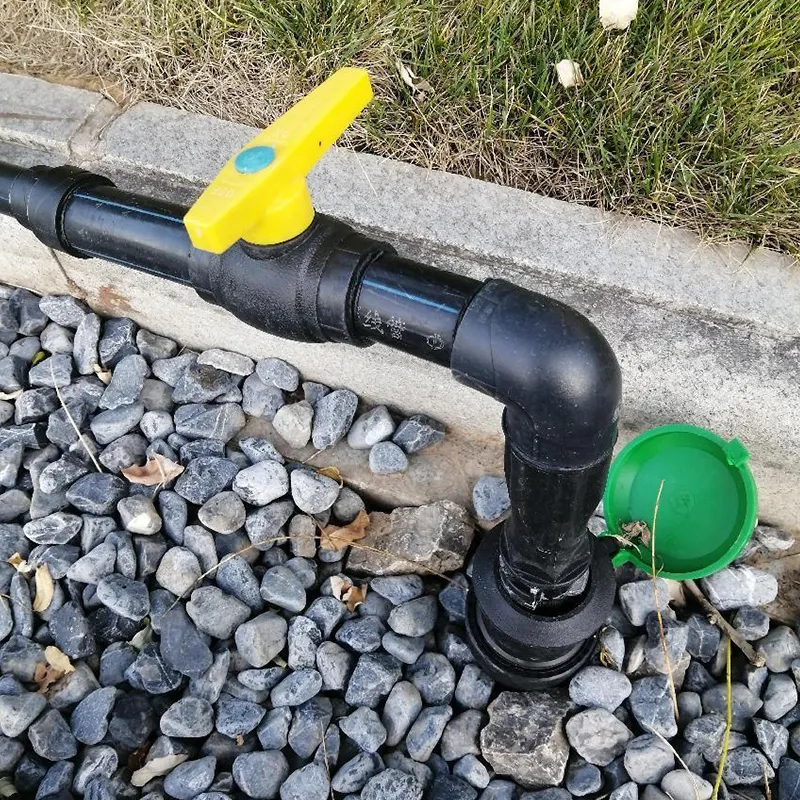
Performance & Engineering
The performance of HDPE pipe is governed by its ability to withstand internal pressure, external loads, and environmental stresses. Stress analysis, often utilizing Finite Element Analysis (FEA), is crucial for determining appropriate pipe wall thickness and burial depth. Internal pressure capacity is dictated by Barlow's formula, considering hoop stress and longitudinal stress. External loads, such as soil overburden and traffic loading, necessitate consideration of pipe ovality and buckling resistance. HDPE exhibits excellent chemical resistance to a wide range of acids, bases, and solvents, making it suitable for transporting aggressive fluids. However, prolonged exposure to strong oxidizing agents can lead to degradation. Environmental resistance also encompasses UV degradation. While HDPE itself is susceptible to UV damage, the incorporation of carbon black (typically 2-8% by weight) provides significant UV stabilization. HDPE pipe must comply with relevant industry standards, including ASTM D3261 (for polyethylene pipe for potable water distribution), ASTM F480 (for polyethylene pipe for gas distribution), and EN 12201 (for water supply – pipes and fittings made of polyethylene). Furthermore, considerations regarding thermal expansion and contraction are vital during installation. HDPE has a relatively high coefficient of thermal expansion, requiring appropriate expansion loops or flexible connections to accommodate temperature fluctuations and prevent stress buildup.
Technical Specifications
| Parameter | Unit | Typical Value (Schedule 40) | Typical Value (Schedule 80) |
|---|---|---|---|
| Outside Diameter | inches | 4.500 | 6.625 |
| Wall Thickness | inches | 0.218 | 0.375 |
| Pressure Rating (Hydrostatic) | psi | 630 | 860 |
| Density | g/cm³ | 0.953 | 0.953 |
| Tensile Strength | psi | 4000 | 4000 |
| Elongation at Break | % | 300 | 300 |
Failure Mode & Maintenance
Common failure modes in HDPE pipe include slow crack growth (SCG), particularly in systems transporting gas. SCG is initiated by stress concentrations and exacerbated by the presence of contaminants. Environmental Stress Cracking (ESC) represents a similar failure mechanism influenced by chemical exposure and sustained stress. Rapid Crack Propagation (RCP) is a catastrophic failure mode where a small crack rapidly expands due to pressure surges and brittle fracture. Oxidation, induced by long-term exposure to high temperatures and oxygen, can lead to embrittlement and reduced mechanical properties. UV degradation, while mitigated by carbon black, can still occur with prolonged exposure. Maintenance primarily involves visual inspection for cracks, deformation, and signs of corrosion. Pressure testing is crucial for identifying leaks and assessing the integrity of the pipeline. Proper jointing procedures are vital to prevent failures at connection points. Preventative measures include cathodic protection in corrosive environments, surge suppression to mitigate RCP risk, and regular cleaning to remove contaminants. For SCG prevention, gas quality monitoring is essential to minimize the presence of contaminants like oxygen and acetic acid. Should a failure occur, localized repair utilizing electrofusion welding is often employed, provided the damage is not extensive.
Industry FAQ
Q: What is the long-term impact of soil acidity on HDPE pipe performance?
A: Prolonged exposure to highly acidic soil can accelerate the degradation of HDPE, particularly at joints. Acidic conditions can leach stabilizers from the polymer, making it more susceptible to cracking. Protective coatings or the use of corrosion inhibitors are recommended in such environments. Regular monitoring of soil pH and pipe condition is also crucial.
Q: How does temperature affect the allowable operating pressure of HDPE pipe?
A: Higher temperatures reduce the pressure-bearing capacity of HDPE. As temperature increases, the material softens, decreasing its yield strength and making it more vulnerable to creep and burst failure. Derating factors, as specified in relevant standards like ASTM D3261, must be applied to account for elevated operating temperatures.
Q: What are the key considerations for installing HDPE pipe in areas prone to seismic activity?
A: In seismic zones, HDPE’s flexibility is an advantage, allowing it to accommodate ground movement without fracturing. However, proper anchoring and restraint mechanisms are necessary to prevent excessive displacement and stress at joints. Burial depth and soil compaction are also critical to ensure stability.
Q: Can HDPE pipe be used for transporting abrasive slurries?
A: While HDPE is relatively abrasion-resistant, highly abrasive slurries can cause wear over time, particularly at bends and fittings. The use of higher density HDPE grades and/or protective liners can mitigate this issue. Regular inspection for wall thinning is essential.
Q: What are the advantages of electrofusion welding over butt fusion?
A: Electrofusion welding offers greater control over the welding process and is particularly suitable for smaller diameter pipes and complex fittings. It produces a more consistent weld quality and is less sensitive to weather conditions. However, it generally has a slower cycle time than butt fusion.
Conclusion
HDPE pipe represents a robust and versatile solution for a wide array of fluid and gas transport applications. Its inherent properties – including corrosion resistance, flexibility, and high strength-to-density ratio – coupled with established joining techniques, position it as a preferred alternative to traditional piping materials in numerous scenarios. A thorough understanding of the material science, manufacturing processes, and engineering principles governing HDPE pipe performance is essential for ensuring long-term reliability and operational efficiency.
Looking ahead, advancements in HDPE resin technology, including the development of enhanced stabilization systems and impact modifiers, will further expand its application envelope. Continued adherence to rigorous quality control standards, combined with proactive maintenance strategies, will be critical to maximizing the lifespan and minimizing the risk of failure in HDPE piping systems. Furthermore, sustainable end-of-life solutions for HDPE pipe, such as recycling and repurposing, will become increasingly important.
-
DN25 HDPE Compression Fitting-HORON INTERNATIONAL|Reliable Irrigation Solutions
NewsFeb.11,2026
-
hdpe coupling joint product Manufacturing Analysis
News2026-11-18
-
ppr pipe heating time products Performance Analysis
News2026-11-16
-
hdpe pipe sizes factory Performance Analysis
News2026-11-09
-
HDPE Pipe Sizes Service Performance Analysis
News2026-10-26
-
wholesale 15mm ppr pipe Material Science and Performance Analysis
News2026-10-20
-
wholesale pvc pipe price per foot Technical Analysis
News2026-09-21
-
wholesale long pvc pipe Technical Analysis and Manufacturing Specifications
News2026-09-15
-
wholesale plumbing kitchen sink water lines Material Performance
News2026-09-15
-
wholesale hdpe drip irrigation Material Science
News2026-09-15
-
wholesale hot water ppr pipe Performance Analysis
News2026-09-15
-
wholesale ppr plumbing Performance Analysis
News2026-09-15
-
wholesale ppr pipe supplier Performance Analysis
News2026-09-13
-
wholesale 50mm ppr pipe Performance Analysis
News2026-09-13
-
wholesale hdpe drip pipe Performance Analysis
News2026-09-13
-
wholesale hdpe pipe 63mm price Manufacturing Specification and Performance Analysis
News2026-09-13