

Feb . 11, 2026 00:01 Back to list
hdpe pipe for sale manufacturer Performance Analysis
Introduction
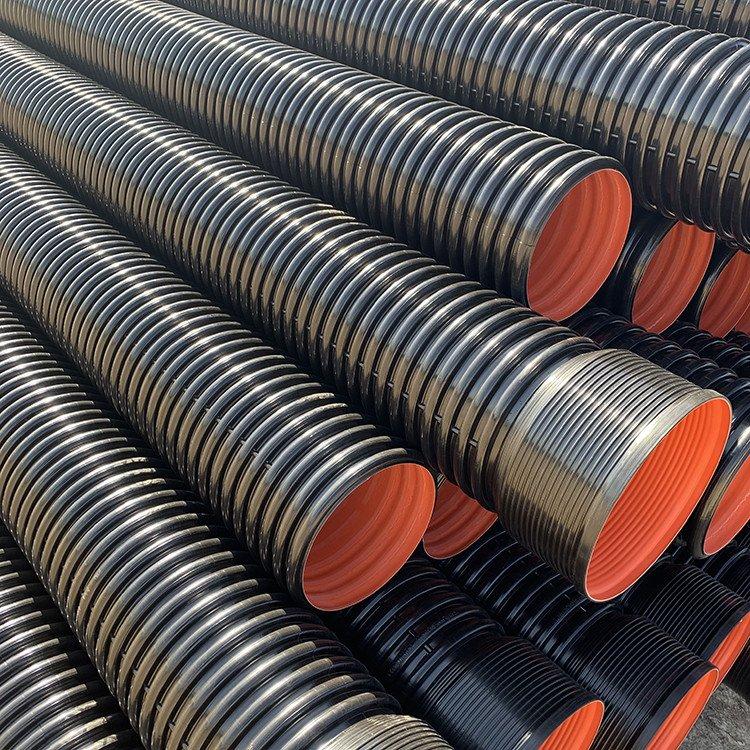
High-Density Polyethylene (HDPE) pipe represents a significant advancement in fluid and solid transport systems across diverse industries. As a manufacturer specializing in HDPE pipe for sale, our position within the value chain focuses on providing robust, long-lasting solutions for applications ranging from potable water distribution and industrial process piping to drainage, irrigation, and gas transportation. HDPE pipe distinguishes itself through a unique combination of properties, including high strength-to-weight ratio, excellent chemical resistance, flexibility, and ease of installation. Core performance characteristics center around maintaining pressure integrity, resisting corrosion, and minimizing long-term maintenance costs. The increasing adoption of HDPE over traditional materials like ductile iron, steel, and PVC is driven by its superior lifecycle cost and environmental benefits, particularly in demanding applications where long-term reliability is paramount. Understanding the nuances of HDPE pipe manufacturing, material science, and performance criteria is crucial for engineers, procurement managers, and project stakeholders seeking optimal solutions.
Material Science & Manufacturing
HDPE pipe is produced from high-density polyethylene resin, a thermoplastic polymer derived from the polymerization of ethylene. The raw material’s density – typically between 0.931 and 0.953 g/cm³ – dictates its mechanical properties. Higher density correlates with increased tensile strength and rigidity. Manufacturing processes typically involve extrusion. In this process, HDPE resin is melted and forced through a die to create a continuous pipe profile. Key parameters during extrusion include melt temperature (typically 180-210°C), die pressure, and cooling rate. Precise control of these parameters is critical to achieving uniform wall thickness, consistent diameter, and desired mechanical properties. Different grades of HDPE, designated as PE32, PE40, PE63, PE80, PE100 and beyond, offer varying levels of molecular weight and density, impacting performance characteristics. Butt fusion, electrofusion, and socket fusion are the primary joining methods. Butt fusion involves heating the pipe ends and pressing them together under controlled pressure, creating a homogeneous weld. Electrofusion utilizes an internal heating element within a fitting to melt and fuse the pipe and fitting together. Proper surface preparation and adherence to established welding parameters (temperature, pressure, and dwell time) are essential to ensure joint integrity and prevent premature failure. Chemical compatibility with transported fluids is also crucial; HDPE exhibits excellent resistance to acids, bases, and many solvents, but prolonged exposure to certain aromatic hydrocarbons and oxidizing agents can lead to degradation.
Performance & Engineering
The performance of HDPE pipe is governed by several engineering principles. Hydrostatic pressure testing, conducted according to standards like ASTM D1597, verifies the pipe’s ability to withstand internal pressure without failure. The long-term hydrostatic strength (LTHS) of HDPE is a critical parameter, indicating the pressure the pipe can sustain over an extended period (typically 50 years). This is determined through extrapolation of short-term hydrostatic strength data, accounting for factors like temperature and material grade. HDPE’s flexibility allows for installation in challenging terrains and minimizes the need for expansion joints. Stress analysis, utilizing finite element methods (FEM), is often employed to assess the pipe’s response to external loads (soil pressure, traffic loads) and thermal stresses. Resistance to slow crack growth (SCG) is a critical consideration, particularly in gas transportation applications. SCG can be initiated by residual stresses, corrosive environments, and cyclic loading. Adding carbon black to the HDPE formulation enhances resistance to SCG by providing UV protection and acting as a stress reliever. Environmental factors such as temperature fluctuations, UV exposure, and soil conditions significantly impact long-term performance. Burial depth, soil cover, and the use of protective coatings (e.g., polyethylene sleeving) are essential design considerations to mitigate these effects. Compliance requirements vary depending on the application and geographical location, often encompassing standards related to material quality, manufacturing processes, and installation procedures.
Technical Specifications
| Parameter | Unit | PE63 | PE80 |
|---|---|---|---|
| Hydrostatic Design Stress (HDS) | MPa | 8.0 | 10.0 |
| Minimum Tensile Strength | MPa | 12.4 | 16.0 |
| Elongation at Break | % | 300 | 400 |
| Service Temperature Range | °C | -40 to +60 | -40 to +60 |
| Density | g/cm³ | 0.931-0.941 | 0.941-0.953 |
| Oxidation Induction Time (OIT) | min | >20 | >30 |
Failure Mode & Maintenance
HDPE pipe failures can arise from several mechanisms. Slow crack growth (SCG), as previously mentioned, is a common failure mode in gas applications, particularly under sustained stress and in the presence of certain chemicals. Fatigue cracking can occur due to cyclic loading, such as that experienced in applications involving fluctuating water hammer pressures. Environmental stress cracking (ESC) results from the combined effect of stress and exposure to aggressive chemicals. UV degradation can cause embrittlement and loss of mechanical properties in exposed sections of pipe. Joint failures are often attributed to improper welding procedures, inadequate surface preparation, or material defects. Third-party damage during excavation is a frequent cause of pipe rupture. Maintenance strategies involve regular inspections to identify potential issues such as corrosion, cracking, or joint leaks. Leak detection surveys, utilizing acoustic methods or tracer gases, can pinpoint the location of leaks. Preventative maintenance includes proper burial depth, adequate soil cover, and the use of protective coatings. For repairs, cut and replace sections, or employ specialized repair fittings. Regular pressure testing and flushing can help maintain system integrity and prevent the buildup of sediment or debris. Implementing a corrosion monitoring program, especially in aggressive environments, is crucial for extending pipe lifespan.
Industry FAQ
Q: What is the impact of surge pressure on HDPE pipe systems?
A: Surge pressure, also known as water hammer, can create significant stress waves within the pipe. Excessive surge pressure can exceed the HDS of the pipe and lead to catastrophic failure. Mitigation strategies include the use of surge arrestors, slow-closing valves, and properly designed air release valves. Detailed hydraulic modeling is essential to accurately assess surge pressure levels and design appropriate protective measures.
Q: How does HDPE pipe perform in seismic regions?
A: HDPE's flexibility provides excellent resistance to seismic forces. The pipe can deform and absorb energy without fracturing, making it a preferred material in earthquake-prone areas. However, proper joint design and restraint systems are crucial to prevent separation and movement during seismic events. Buried HDPE pipe generally performs better than rigid pipes.
Q: What are the advantages of HDPE over PVC in potable water applications?
A: HDPE offers several advantages over PVC. It has a higher pressure rating, greater flexibility, and better resistance to impact and cracking. HDPE doesn't contain phthalates and is less prone to leaching of harmful chemicals into the water supply. Furthermore, HDPE is fully recyclable, aligning with sustainability goals.
Q: What quality control measures are implemented during HDPE pipe manufacturing?
A: Stringent quality control measures are integral to the manufacturing process. These include raw material testing, dimensional checks, hydrostatic pressure testing, and impact resistance testing. Statistical process control (SPC) is employed to monitor critical process parameters and ensure consistent product quality. Third-party certification, such as from NSF International, provides independent verification of compliance with relevant standards.
Q: What is the expected service life of HDPE pipe, and what factors influence it?
A: The expected service life of HDPE pipe typically exceeds 50 years, and often extends to 100 years or more. Factors influencing service life include material grade, operating pressure, temperature, soil conditions, UV exposure, and the presence of corrosive chemicals. Proper installation and maintenance practices are also crucial for maximizing lifespan.
Conclusion
HDPE pipe represents a robust and versatile solution for a wide array of fluid and solid transport applications. Its inherent properties – high strength, flexibility, chemical resistance, and ease of installation – coupled with its lifecycle cost advantages, position it as a superior alternative to traditional piping materials. Careful consideration of material selection, manufacturing processes, and engineering principles, alongside adherence to established industry standards, is paramount for ensuring long-term performance and reliability.
As infrastructure projects increasingly prioritize sustainability and longevity, the demand for HDPE pipe is poised to grow. Continued advancements in material science and welding technologies will further enhance its performance and expand its application range. Investments in corrosion monitoring, preventative maintenance programs, and operator training are essential for maximizing the lifespan and minimizing the total cost of ownership of HDPE piping systems.
-
DN25 HDPE Compression Fitting-HORON INTERNATIONAL|Reliable Irrigation Solutions
NewsFeb.11,2026
-
hdpe coupling joint product Manufacturing Analysis
News2026-11-18
-
ppr pipe heating time products Performance Analysis
News2026-11-16
-
hdpe pipe sizes factory Performance Analysis
News2026-11-09
-
HDPE Pipe Sizes Service Performance Analysis
News2026-10-26
-
wholesale 15mm ppr pipe Material Science and Performance Analysis
News2026-10-20
-
wholesale pvc pipe price per foot Technical Analysis
News2026-09-21
-
wholesale long pvc pipe Technical Analysis and Manufacturing Specifications
News2026-09-15
-
wholesale plumbing kitchen sink water lines Material Performance
News2026-09-15
-
wholesale hdpe drip irrigation Material Science
News2026-09-15
-
wholesale hot water ppr pipe Performance Analysis
News2026-09-15
-
wholesale ppr plumbing Performance Analysis
News2026-09-15
-
wholesale ppr pipe supplier Performance Analysis
News2026-09-13
-
wholesale 50mm ppr pipe Performance Analysis
News2026-09-13
-
wholesale hdpe drip pipe Performance Analysis
News2026-09-13
-
wholesale hdpe pipe 63mm price Manufacturing Specification and Performance Analysis
News2026-09-13