

Feb . 11, 2026 00:01 Back to list
hdpe pipe connectors product Performance Analysis
Introduction
High-Density Polyethylene (HDPE) pipe connectors are critical components in fluid and gas transmission systems, offering robust and reliable joining solutions for HDPE pipelines. Positioned within the broader infrastructure supply chain, these connectors bridge the gap between manufactured pipe sections, facilitating leak-proof and structurally sound networks. Their core performance characteristics revolve around maintaining pressure integrity, resisting chemical degradation, and accommodating thermal expansion and contraction of the HDPE pipe itself. Unlike traditional metal connectors susceptible to corrosion, HDPE connectors provide a long-term, low-maintenance solution, increasingly favored in municipal water distribution, industrial chemical conveyance, mining operations, and oil & gas gathering systems. The demand for these connectors is driven by the growing adoption of HDPE piping due to its durability, cost-effectiveness, and environmental advantages over alternatives like ductile iron or steel.
Material Science & Manufacturing
HDPE pipe connectors are predominantly manufactured from High-Density Polyethylene resin, specifically grades formulated for pressure applications. These resins exhibit high crystallinity, leading to increased tensile strength, rigidity, and chemical resistance. Key raw material properties include a density typically ranging from 0.93 to 0.97 g/cm³, a melt flow index (MFI) optimized for the chosen manufacturing process, and a long-term hydrostatic strength (LHS) capable of withstanding sustained pressures. Manufacturing processes vary based on connector type and size. Injection molding is prevalent for smaller, intricate connectors, allowing for complex geometries and tight tolerances. Parameters such as mold temperature (typically 60-80°C), injection pressure (ranging from 50-150 MPa), and cooling rates are rigorously controlled to minimize shrinkage and ensure dimensional accuracy. Larger diameter connectors and specialized fittings are often produced via extrusion, followed by machining or hot gas welding to achieve the final form. Electrofusion welding, a common joining method for HDPE pipelines, requires connectors specifically designed with integral heating elements. Quality control during manufacturing includes rigorous testing of material properties, dimensional checks using Coordinate Measuring Machines (CMMs), and pressure testing to verify leak-proof performance. The inclusion of UV stabilizers during the compounding process is crucial for connectors intended for above-ground applications, mitigating degradation from prolonged sun exposure.
Performance & Engineering
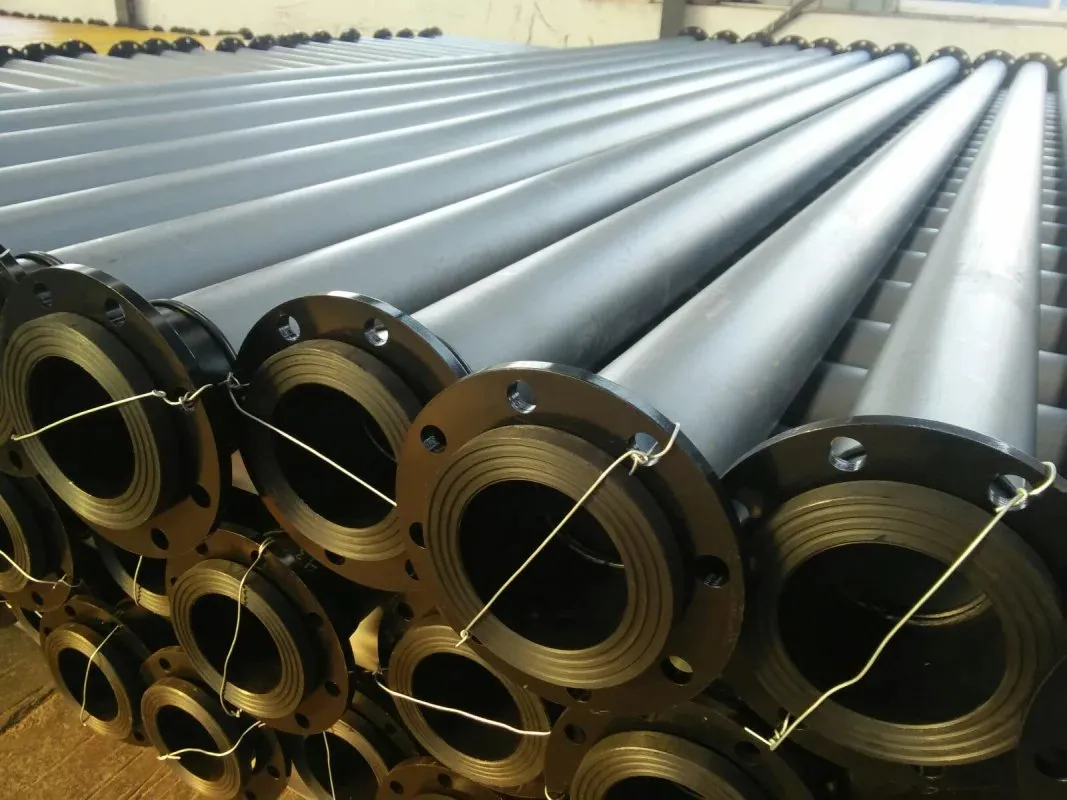
The performance of HDPE pipe connectors is fundamentally governed by principles of stress analysis and fluid mechanics. Connectors must withstand internal pressure, external loads (soil loading, traffic), and axial forces resulting from pipe expansion/contraction. Finite Element Analysis (FEA) is routinely employed during the design phase to optimize geometry and material distribution, ensuring sufficient strength and stiffness. Key engineering considerations include the sealing mechanism – typically utilizing elastomeric O-rings or gasket materials compatible with the conveyed fluid. These sealing elements must exhibit excellent compression set resistance and maintain a reliable seal over a wide temperature range. The connector's geometry directly impacts flow resistance; minimizing turbulence and abrupt changes in cross-section reduces pressure drop and energy loss. For electrofusion connectors, the precise control of heating element resistance and voltage is paramount to ensure a uniform weld interface. Compliance with industry standards, such as ASTM D3261 (for butt fusion joints) and ASTM F477 (for socket fusion joints), is essential to guarantee long-term performance and reliability. Furthermore, the thermal expansion coefficient of HDPE (approximately 1.1 x 10⁻⁴ /°C) must be accounted for in system design to prevent stress concentrations and potential connector failure. Proper installation techniques, including correct pipe preparation and adherence to recommended fusion parameters, are critical to achieving optimal performance.
Technical Specifications
| Parameter | Unit | Typical Value (Electrofusion Connector, 125mm) | Testing Standard |
|---|---|---|---|
| Nominal Pipe Size | mm | 125 | ISO 4427 |
| Operating Pressure (PN) | bar | 16 | ISO 4427 |
| Material | - | HDPE (PE100) | ISO 4427 |
| Density | g/cm³ | 0.95 | ASTM D1505 |
| Long-Term Hydrostatic Strength (LHS) | bar | 12.4 | ISO 1167 |
| Operating Temperature Range | °C | -20 to +60 | Manufacturer Specification |
Failure Mode & Maintenance
HDPE pipe connector failures can manifest in several forms. Slow Crack Growth (SCG), induced by sustained tensile stress and exposure to aggressive chemicals, is a primary concern, particularly in older systems or those conveying fluids containing contaminants. Fatigue cracking can occur in connectors subjected to cyclic loading from pressure fluctuations or ground movement. Delamination, particularly in electrofusion joints, arises from inadequate fusion parameters or contamination at the weld interface. UV degradation leads to embrittlement and reduced mechanical properties in above-ground connectors lacking sufficient UV protection. Oxidation, while less common in HDPE than in metals, can occur at elevated temperatures or in the presence of oxidizing agents. Preventative maintenance involves regular visual inspections for cracks, deformation, or discoloration. Periodic pressure testing can identify leaks or weaknesses in the system. In the event of a failure, proper repair procedures are critical. For minor cracks, a patching compound compatible with HDPE may be used, followed by careful monitoring. For significant damage, complete connector replacement is generally recommended. When replacing connectors, it is essential to use compatible materials and adhere to established fusion procedures. Implementing corrosion monitoring programs in specific application settings may aid in identifying potential degradation issues before major failures occur.
Industry FAQ
Q: What are the key differences between electrofusion and butt fusion connectors?
A: Electrofusion connectors utilize an internal heating element to melt the connector and pipe simultaneously, creating a homogenous weld. Butt fusion involves heating both the pipe ends and connector externally before bringing them together under pressure. Electrofusion is generally preferred for smaller diameters and field installations due to its portability, while butt fusion is more common for larger diameters and factory fabrication, offering potentially higher weld strength.
Q: How does temperature affect the performance of HDPE connectors?
A: Elevated temperatures can reduce the long-term hydrostatic strength (LHS) of HDPE, increasing the risk of failure under pressure. Low temperatures can make the material more brittle and susceptible to cracking, particularly under impact. Maintaining operating temperatures within the specified range is crucial for optimal performance.
Q: What chemicals are incompatible with HDPE pipe connectors?
A: While HDPE exhibits excellent chemical resistance, prolonged exposure to strong oxidizing agents, aromatic hydrocarbons, and chlorinated solvents can cause swelling, cracking, or degradation. A chemical compatibility chart should be consulted prior to using HDPE connectors in a specific application.
Q: What is the recommended storage procedure for HDPE connectors?
A: HDPE connectors should be stored in a cool, dry, and well-ventilated area, protected from direct sunlight and extreme temperatures. Avoid stacking connectors excessively, as this can cause deformation. Proper storage minimizes the risk of material degradation and ensures optimal performance.
Q: What are the common causes of leakage in HDPE pipe connector systems?
A: Leakage can result from improper fusion parameters, contamination at the weld interface, damage to O-rings or gaskets, thermal expansion/contraction exceeding the connector's accommodation capacity, or mechanical damage during installation or operation. Thorough inspection and adherence to best practices are crucial for preventing leaks.
Conclusion
HDPE pipe connectors represent a durable, reliable, and cost-effective solution for joining HDPE pipelines across a diverse range of industries. Their performance is intrinsically linked to material properties, manufacturing precision, and adherence to established engineering principles. Proper selection, installation, and maintenance are paramount to ensuring long-term system integrity and minimizing the risk of failure.
Looking forward, advancements in HDPE resin formulations, coupled with improved connector designs and automated welding technologies, will further enhance the performance and efficiency of these critical components. Increased focus on predictive maintenance strategies, leveraging sensor data and machine learning, will allow for proactive identification of potential issues, extending service life and reducing overall lifecycle costs. The continued adoption of HDPE piping systems, driven by sustainability initiatives and infrastructure renewal projects, will solidify the importance of robust and reliable HDPE pipe connector technology.
-
DN25 HDPE Compression Fitting-HORON INTERNATIONAL|Reliable Irrigation Solutions
NewsFeb.11,2026
-
hdpe coupling joint product Manufacturing Analysis
News2026-11-18
-
ppr pipe heating time products Performance Analysis
News2026-11-16
-
hdpe pipe sizes factory Performance Analysis
News2026-11-09
-
HDPE Pipe Sizes Service Performance Analysis
News2026-10-26
-
wholesale 15mm ppr pipe Material Science and Performance Analysis
News2026-10-20
-
wholesale pvc pipe price per foot Technical Analysis
News2026-09-21
-
wholesale long pvc pipe Technical Analysis and Manufacturing Specifications
News2026-09-15
-
wholesale plumbing kitchen sink water lines Material Performance
News2026-09-15
-
wholesale hdpe drip irrigation Material Science
News2026-09-15
-
wholesale hot water ppr pipe Performance Analysis
News2026-09-15
-
wholesale ppr plumbing Performance Analysis
News2026-09-15
-
wholesale ppr pipe supplier Performance Analysis
News2026-09-13
-
wholesale 50mm ppr pipe Performance Analysis
News2026-09-13
-
wholesale hdpe drip pipe Performance Analysis
News2026-09-13
-
wholesale hdpe pipe 63mm price Manufacturing Specification and Performance Analysis
News2026-09-13